João 17
Nuevo Testamento yin̈ abxubal · Toque num versículo para ver as referências cruzadas.
Yet Istxahli Comam Jesús yin̈ ebnaj iscuywom
1Yet lahwi yalnicano Comam Jesús huntekꞌan tiꞌ xin, istꞌan̈xican̈ Comam satcan̈, yalni Comam:
—Mam, maapni yorahil hayenilo yip Hacꞌahol tiꞌ, cat isyenipaxilo Hacꞌahol hawip. 2Wal xin caw ayxaco anma yalan̈ wipan hawu, yun̈e wakꞌnihan kꞌinale mach istan̈bal tet anma xahawakꞌ yul inkꞌaban. 3Kꞌinale mach istan̈bal chaliloj, to chaẍyohtan̈elo anma ta hachn̈echꞌan caw Dios yin̈ caw isyelal, cat xin quinyohtan̈enilojan anma tato haninan Cristo hinan, hach an̈einpaxtijan.
4Caw xainyelojan hawip yul sat yiban̈kꞌinal tiꞌ, yuto xainlahan munil hawakꞌ inwatxꞌehan. 5Wal tinan̈ xin Mam, yepaxilo wipan tawintaj, huneꞌ wipan ikꞌbilticꞌa wuhan yet ayinan tacꞌatan̈ yet yalan̈to maẍto chiwatxꞌi huneꞌ yul sat yiban̈kꞌinal tiꞌ.
6Huntekꞌan mac xahasiqꞌuilo xol anma yul sat yiban̈kꞌinal tiꞌ, hawati yul inkꞌaban, xacachwakꞌan yohtan̈elo ebnaj. Huntekꞌan ebnaj tiꞌ xin caw hawetxaticꞌa yehi, caw xin chisyije ebnaj tzet chawala. 7Wal tinan̈ xin caw yohtaxa tato sunil tzet akꞌbil wetan hawu, tacꞌatan̈ titnaj. 8Cuybanile hawakꞌ wetan, caw xawalan yabeꞌ ebnaj, ischahni ebnaj yul yanma. Yuxinto caw yohta ebnaj tato caw yeli tacꞌatan̈ titnajinan. Caw ischayto ebnaj yul yanma tato hach an̈eintijan.
9Caw chiwaben̈ecanojan ebnaj yul hakꞌab, maẍtaj anma yet yul sat yiban̈kꞌinal tiꞌ chiwaben̈etojan yul hakꞌab, to han̈cꞌan̈e ebnaj hawakꞌ wetan, yuto caw hawet ye ebnaj. 10Macta chiwalan wetojan, caw hawetpaxoj, yeb xin macta caw hawet, wetpaxojan, yin̈ xin chiilchalo sunil wipan.
11Caw hanicꞌxan̈e tiempohal ayinicꞌojan yul sat yiban̈kꞌinal tiꞌ, cat xin inpaxtojan tacꞌatan̈. Walpaxo ebnaj tiꞌ xin, chicancano ebnaj bey tiꞌ. Walach hach tiꞌ Mam, caw cꞌul hachn̈eticꞌa. Macta xahawakꞌ wetan, chawil yu hahelanil, haxinwal hunxan̈e chute isnabal, hacaꞌ je han̈on̈ tiꞌ. 12Yet ayinicꞌojan xol ebnaj bey yul sat yiban̈kꞌinal tiꞌ, caw ilbil ebnaj wuhan, yu hawip ayco ebnaj yul inkꞌaban. Ebnaj hawakꞌ wetan, caw xin machi hunu mac cꞌaytoj, cachann̈e huneꞌ naj tꞌin̈anxaticꞌa yetanto isba; yun̈e yijni isba tzet aycanayo yul Hatzotiꞌ.
13Wal tinan̈ Mam, chinpaxtojan tacꞌatan̈, yaj yet ayintocꞌojan ninoxa yul sat yiban̈kꞌinal tiꞌ, chiwalcanojan huntekꞌan tiꞌ haxinwal hacaꞌticꞌa yehico tzalahilal yin̈ wanmatiꞌan, hac tuꞌ chupaxico tzalahilal yin̈ yanma ebnaj. 14Caw xawalan hatzotiꞌ yabeꞌ ebnaj, yaj wal anma yet yul sat yiban̈kꞌinal tiꞌ, caw chichiwa iscꞌul yin̈ ebnaj yuto caw matxa yeto yul sat yiban̈kꞌinal tiꞌ ye ebnaj. Hacaꞌ inpaxojan mach yeto yul sat yiban̈kꞌinal tiꞌ wehan. 15Wal xin mach chinkꞌanan tawet ta chawilo ebnaj yul sat yiban̈kꞌinal tiꞌ, han̈cꞌan̈e chinkꞌanan tawet ta chacꞌuba ebnaj tet naj matzwalil. 16Caw mach yeto yul sat yiban̈kꞌinal tiꞌ wehan, hacpax tuꞌ ebnaj, caw mach yeto yul sat yiban̈kꞌinal tiꞌ ye ebnaj. 17Watxꞌeco isnabal ebnaj tawin̈ yu hahelanil, Hatzotiꞌ xin, haꞌ ton isyelal. 18Hacaꞌ yu quinhawanitijan xol anma ay yul sat yiban̈kꞌinal tiꞌ, hac tuꞌ chiyu wanipaxtojan ebnaj xol anma. 19Yu ebnaj hawaco yul inkꞌaban, yuxin chiwaco inbahan yin̈ munil hawakꞌ wetan; hac tuꞌ xin chiwatxꞌico ebnaj yul hakꞌab yu isyelal.
20Maẍn̈etajpaxo yin̈ ebnaj tiꞌ chinkꞌanan hacꞌulal, caw chinkꞌanpaxojan hacꞌulal yin̈ sunil anma chinchahnihan yul yanma yu Hatzotiꞌ chalaꞌco ebnaj tiꞌ. 21Wal tinan̈ xin Mam, caw chinkꞌanan tawet tato caw hunn̈ehojab chiyute isnabal ebnaj. Hacaꞌticꞌa je han̈on̈ tiꞌ, hawetbi wehan, wetbipaxojan hawehi. Hac tuꞌ Mam, chiwochehan tato caw hunxan̈ehojab chucano isnabal ebnaj. Hac ton tuꞌ xin chiyu yanayto anma yul yanma tato hach an̈eintijan yul sat yiban̈kꞌinal tiꞌ.
22Haꞌ iscꞌulchꞌanil hawakꞌ wetan xawakꞌpaxojan tet ebnaj tuꞌ, yun̈e caw lahanxan̈e chiyucano isnabal hacaꞌticꞌa je han̈on̈ tiꞌ. 23Caw wetbi inbahan yeb ebnaj, caw xin jetbipaxo coba. Hac tuꞌ xin caw hunxan̈e chucano ebnaj. Hac ton tuꞌ xin chiyu istxumchalo yu anma ay yul sat yiban̈kꞌinal tiꞌ tato caw hach quinhachejtijan, cat xin isnachalo yu tato caw hacaꞌ isxahanil ayinan hawu, hac tuꞌ isxahanil aypaxo anma ayxaco yul inkꞌabtiꞌan hawu.
24Mam, ebnaj ayxaco yul inkꞌabtiꞌan hawu, caw chiwochehan tato bay chinehan haꞌ tuꞌ xin chiehpaxo ebnaj incꞌatan̈an yun̈e yilni ebnaj wipan akꞌbil wetan hawu, yuto caw xahan ayinan hawu yalan̈to yet maẍto huneꞌ yul sat yiban̈kꞌinal tiꞌ. 25Walach hach tiꞌ Mam, caw toholcano sunil tzet chawatxꞌe. Wal anma ay yul sat yiban̈kꞌinal tiꞌ, caw mach cachyohtajoj. Walinan xin, caw ohtabilach wuhan, caw xin yohtapaxo ebnaj ayco yul inkꞌabtiꞌan tato hach an̈eintijan. 26Caw xacachinyelojan tet ebnaj, yuxin chachyohtan̈elo ebnaj, yaj chito cam cachwakꞌaꞌan yohtan̈elo ebnaj. Yun̈e hacaꞌ isxahanil ayinan hawu, hac tuꞌ isxahanil aypaxo ebnaj hawu, haxinwal hun chiwupaxojan yeb ebnaj, ẍi Comam Jesús tet Comam Dios.
Você sabia?
João 17: a hora chegou
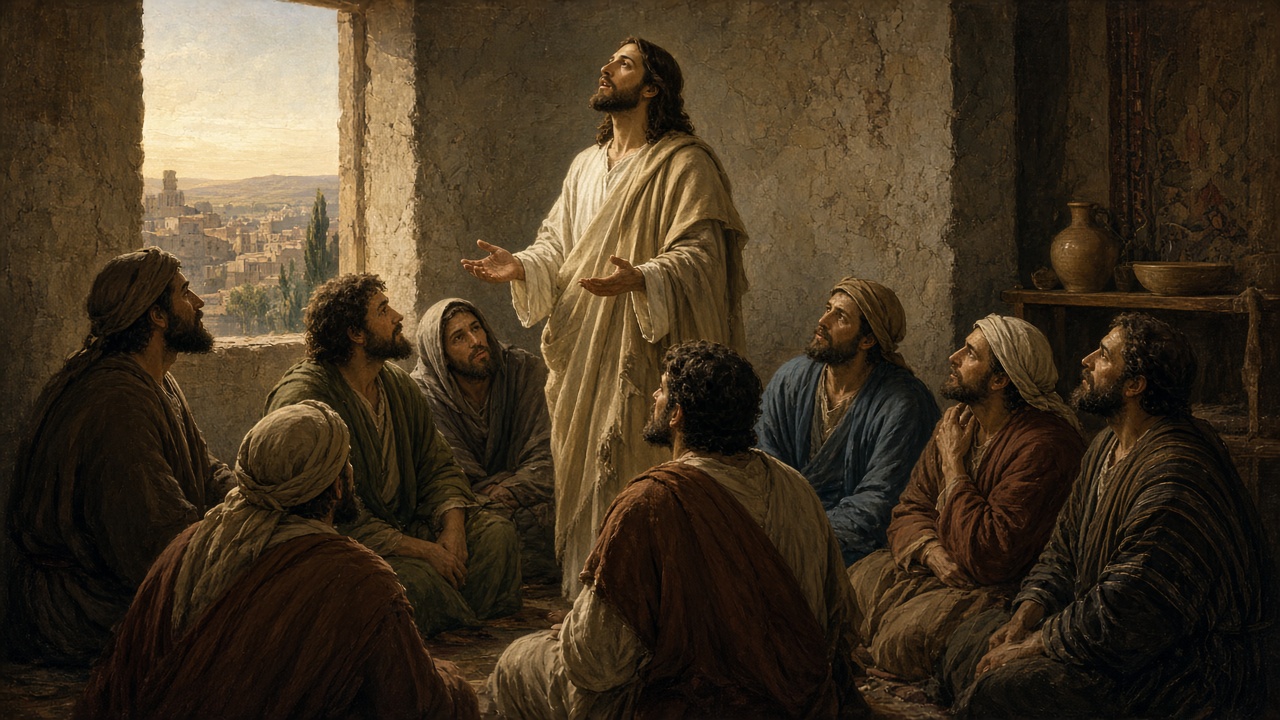
- A oração começa quando Jesus, depois de ter dito essas coisas, ergue os olhos ao céu e diz que a hora chegou. Ela está associada ao Discurso do Cenáculo, indicado como um dia, e à Semana Santa, indicada como oito dias.Fontes: o próprio texto bíblico · Upper Room Discourse · Holy Week
- Aqui a vida eterna é conhecer o único Deus verdadeiro e Jesus Cristo, a quem o Pai enviou. Jesus também fala da glória que tinha com o Pai antes de o mundo existir e do amor do Pai por ele antes da fundação do mundo.Fontes: o próprio texto bíblico
- Ele ora por aqueles que o Pai lhe deu do mundo, os que guardaram a palavra, e também por quem crerá por meio da mensagem deles, pedindo que sejam um. Não pede que sejam tirados do mundo, mas que sejam guardados do maligno e santificados pela verdade, que ele identifica como a palavra do Pai.Fontes: o próprio texto bíblico
Notas escritas com auxílio de IA a partir de fontes abertas (Theographic Bible Metadata, CC BY-SA 4.0; Easton’s Bible Dictionary, domínio público) e revisadas antes de publicar.
Créditos e licença desta tradução
Nuevo Testamento yin̈ abxubal
New Testament in Jakalteko Eastern; jac (GT:jac:Jakalteko)
copyright © 1997 Wycliffe Bible Translators, Inc.
Language: Jakalteko
Translation by: Wycliffe Bible Translators, Inc.
Copyright Information
© 1997, Wycliffe Bible Translators, Inc. All rights reserved.
This translation text is made available to you under the
terms of the Creative Commons License: Attribution-Noncommercial-No Derivative Works.
( http://creativecommons.org/licenses/by-nc-nd/3.0/ )
In addition, you have permission to port the text to different file formats, as long as you
do not change any of the text or punctuation of the Bible.
You may share, copy, distribute, transmit, and extract portions
or quotations from this work, provided that you include the above copyright
information:
You must give Attribution to the work.
You do not sell this work for a profit.
You do not make any derivative works that change any of the actual words or punctuation of the Scriptures.
Permissions beyond the scope of this license may be
available if you contact
us with your request.
The New Testament
in Jakalteko
© 1997, Wycliffe Bible Translators, Inc. All rights reserved.
This translation is made available to you under the terms of the
Creative Commons Attribution-Noncommercial-No Derivatives license 4.0.
You may share and redistribute this Bible translation or extracts from it in any format, provided that:
You include the above copyright and source information.
You do not sell this work for a profit.
You do not change any of the words or punctuation of the Scriptures.
Pictures included with Scriptures and other documents on this site are licensed just for use with those Scriptures and documents.
For other uses, please contact the respective copyright owners.
2016-05-05
Fonte: http://ebible.org/jacNT/ · eBible.org