Salmos 14
Alkitab Yang Terbuka · Toque num versículo para ver as referências cruzadas.
Nyanyian tentang Si Bodoh
1Kepada pemimpin pujian: Nyanyian Daud.
Orang bodoh berkata dalam hatinya,
“Tidak ada Allah.”
Mereka rusak,
dan melakukan perbuatan keji;
tidak ada yang berbuat baik.
2TUHAN melihat ke bawah dari surga
kepada anak-anak manusia,
untuk melihat jika ada seseorang yang bijaksana
yang mencari Allah.
3Mereka semua telah menyimpang;
Mereka bersama-sama telah menjadi keji.
Tidak ada seorang pun yang berbuat baik.
Seorang pun tidak!
4Apakah semua orang yang berbuat fasik tidak tahu;
yang memakan habis umat-Ku seperti memakan roti,
dan tidak berseru kepada TUHAN?
5Di sana, mereka berada dalam ketakutan besar
karena Allah ada bersama dengan keturunan orang benar.
6Kamu mempermalukan nasihat orang tertindas,
tetapi TUHAN ialah tempat perlindungannya.
7Kiranya keselamatan bagi orang Israel datang dari Sion!
Ketika TUHAN memulihkan keadaan umat-Nya,
Yakub akan bersukacita,
Israel akan bergembira.
Você sabia?
A corrupção humana e a esperança de Sião
- O Salmo 14 descreve a negação prática de Deus como a causa de corrupção generalizada e de opressão aos desamparados, afirmando que Deus permanece como refúgio para os justos.Fontes: o próprio texto bíblico
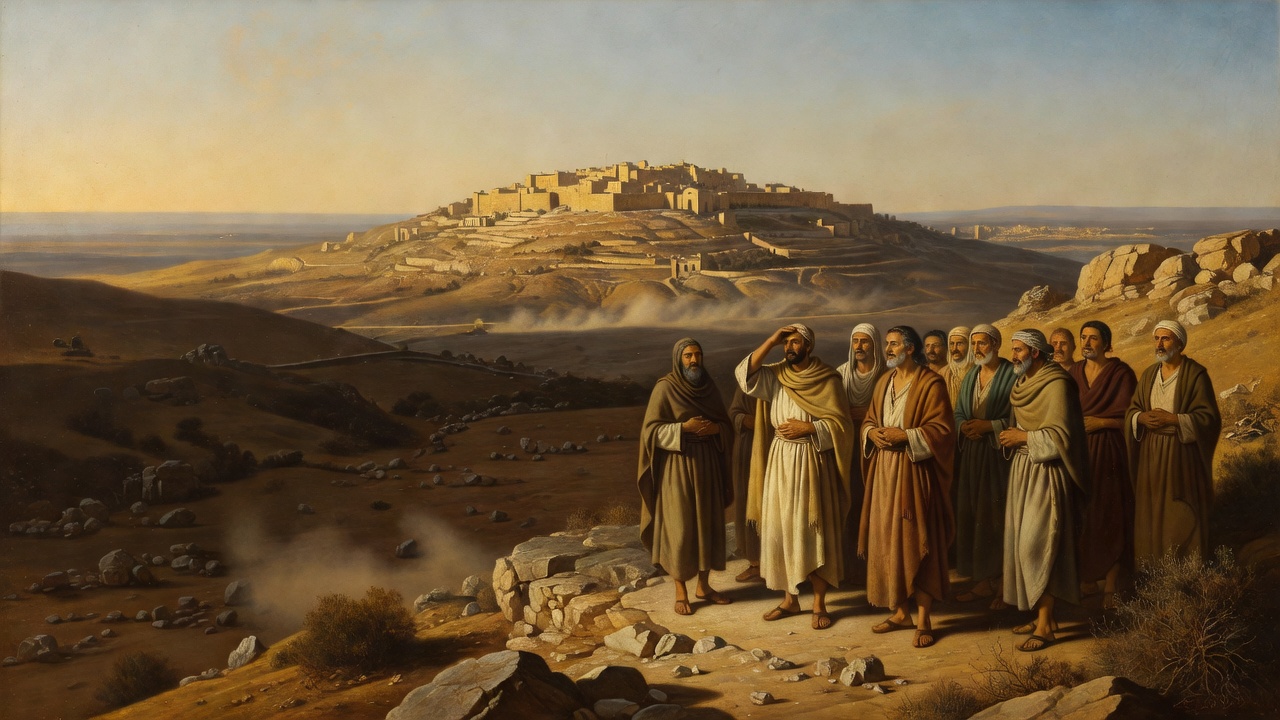
- No último versículo, o livramento é aguardado a partir de Sião, a colina ao sudeste de Jerusalém onde o rei Davi estabeleceu sua cidadela e cidade real.Fontes: Zion · o próprio texto bíblico
- A menção paralela de Jacó e Israel faz referência ao patriarca Jacó, o segundo filho gêmeo de Isaque que também recebeu o nome de Israel, nomes que passaram a representar toda a nação.Fontes: Jacob (Israel) · o próprio texto bíblico
Notas escritas com auxílio de IA a partir de fontes abertas (Theographic Bible Metadata, CC BY-SA 4.0; Easton’s Bible Dictionary, domínio público) e revisadas antes de publicar.
Lugares deste capítulo
- Zion · Hoje: Jerusalem · 31.777, 35.234 · versículo 7
Só aparecem lugares com identificação de alta confiança (90% ou mais segundo as fontes acadêmicas reunidas pelo OpenBible). Mapa da época: DARE (Digital Atlas of the Roman Empire), CC BY 4.0; mapa atual: © colaboradores do OpenStreetMap; lugares: OpenBible.info (CC BY 4.0).
Créditos e licença desta tradução
Alkitab Yang Terbuka
The Holy Bible in Indonesian, Alkitab Yang Terbuka (AYT) translation
copyright © 2011-2024 YLSA-AYT
Language: bahasa Indonesia (Indonesian)
AYT (Alkitab Yang Terbuka)
AYT is Alkitab Yang Terbuka, PB (2010,..-2024) and PL (2014,...2024).
AYT - text is Copyrighted, YLSA-AYT 2011,2024© -- this is to preserve and protect the quality of the Text.
Suggestions, Comments, Changes, Corrections are encouraged, and can be submitted to YLSA-AYT.
AYT - usage (non-commercial) is CopyLefted, 2011 -- this is to allow free usage/distribution of the text
AYT - derivatives (form, format, media, tools, resources) is CC, YLSA-AYT 2011(cc) -- we encourage you to use the AYT in creative ways, and to share the results. Creative Commons(CC) type is Credit(BY), Non-Commercial(NC), Shareable(SA)
AYT - translation license is freely given, 2011-2024 -- information and/or reporting is appreciated, but not required.
AYT permissions are managed by YLSA.
AYT (and Alkitab Yang Terbuka) name are Trademarks associated with the AYT Bible, and AYT ecosystem/tools.
URL: AYT: https://ayt.co
YLSA : https://ylsa.org
Email : [email protected]
This translation is made available to you under the terms of the
Creative Commons Attribution-No Derivatives license 4.0.
You may share, redistribute, or adapt this Bible translation or extracts from it in any format, provided that:
You include the above copyright and source information.
You do not use this work for commercial purposes.
Pictures included with Scriptures and other documents on this site are licensed just for use with those Scriptures and documents.
For other uses, please contact the respective copyright owners.
2024-07-26
Fonte: http://ebible.org/indayt/ · eBible.org