João 10
Tẹsitamenti Ikne n'Ọnu Ikwere · Toque num versículo para ver as referências cruzadas.
Jizọsi ọmamarna nye // znụ atnụrnu
1Jizọsi kaa, “Me kanụ anụ ezi ọka, nye ọbula ke gála nụ ọnu-mgbo bna n'ọro atnụrnu, kọvu garụ apna berere bna, bụ nye buznu n'ezi. 2Nye ke garụ n'ọnu-mgbo bna n'ọro atnụrnu bụ nye nọoznu atnụrnu. 3Nye neese ọnu-mgbo jaagbanụ a ọro, rụmu atnụrnu a nụrnu nkọli a, o sukwu rụmu atnụrnu a nụ rẹwhna be, duru be whọga. 4Nga ọ chịhiaru be, o beru be ọsno, rụmu atnụrnu a snornu a n'aznụ, kwnornu nụ be magwụ nkọli a. 5Be jóosno nye berere, kọvu be jaagbawhu, kwnornu nụ be máa nkọli nye izne.” 6Ka bụ elulu Jizọsi tnụnnu be, kọvu be ghọ́yage nhne ọ naakanụ be.
7Jizọsi kanụ be berere, “Me kanụ anụ ezi ọka, mawa bụ ọnu-mgbo ke atnụrnu. 8Kpakara ele beru m ọsno va bụ ele buznu n'ezi. Atnụrnu wam bnóne be nsnị. 9Mawa bụ ọnu-mgbo. Be jọoznohia nye ọbula ke jeehi nụ rime m bna, ọ jaabna nụ rime, whọga kwno n'ederezi, whnụ ọri ọ jaata. 10Nye buznu varụ ma o znu buznu, gbu ogbu, lulu nhne, kọvu m varụ m ma be nwehịa bụdnu, bụ bụdnu ke zuru ozu.
11“Mawa bụ ọmamarna nye znụ atnụrnu. Ọmamarna nye znụ atnụrnu jiknernu ọ nwụnu atnụrnu a ẹnwu. 12Nye be gnornu ẹrnu, nye atnụrnu wam bụ́o ke a, jẹesigbasi atnụrnu gbawhu nga ọ whnụrnu edu naava. Edu tagbu atnụrnu, chikeme kwo be. 13Ọ gbarụ ẹso kwnornu nụ atnụrnu bụ́o ke a, ọ bụ nye be gnornu ẹrnu, bụdnu rụmu atnụrnu wam zị́la a mkpa.
14“Mawa bụ ọmamarna nye znụ atnụrnu. M maam atnụrnu m, atnụrnu m magwụ m masị. 15Lele kpa Nda m magwụ m, bụ kpa me magwụ Nda m. M nọotusanu rụmu atnụrnu m bụdnu m. 16M nwernu m rụmu atnụrnu berere ke zá n'ogbori atnụrnu ka, m jeegweya be. Be masị jọonu nkọli m, kpakara be jọoburu otu ogbori atnụrnu. Be jeenwe otu nye znụ atnụrnu. 17Ka bụ nhne kpayarụ Nda m jiri whnụ m n'anya kwnornu nụ m kweru m ọ tụbita bụdnu m, ma m gwelizọ a berere. 18Ọ zá nye nanahịa m bụdnu m. Mawa bịtaru a hite nụ mkpọma m. M nwernu rikne ọ bịta a, m nwe masịri m rikne o gwelizọ a. Ka bụ nhne Nda m nyernu m n'iwu.”
19Ka kpayarụ okewa kwno n'esilawụru ele Ju. 20Agịda be naakaa, “Rẹnwu ọjo nwụgwu a, ọ bụ nye ẹra. Kịni mernu anụ noobno a nsnị?”
21Kọvu ele berere kaa, “Nye rẹnwu ọjo nwụgwu, o jookwu ọka kpa? Ndaa kpa rẹnwu ọjo jookpumeli anya nye isni?”
Ókwe ekwe ke ele Ju
22N'ige Iriri Onyewhete Ọro Nsọ Chiokike dụru nụ Jerusẹlem, n'ige okirika, 23Jizọsi zị n'Ọro Nsọ Chiokike neezne izne nụ mgbemgbe ọro Solomọni. 24Ele Ju gba a gburugburu, znekwnusi a, kaa, “Ị bịtaru a n'ọchichiri ogologo ige, kawamanụ aị ọ bụru nụ jịwa bụ Karaịsi.”
25Jizọsi sarụ be, “M kannụ m anụ, kọvu anụ kwége. Ẹrnu ndu-ẹhni me nọornu nụ rẹwhna Nda m naagbanụ m akebne. 26Kọvu anụ kwége kwnornu nụ anụ bụ́o atnụrnu ke m. 27Atnụrnu ke m nọonu nkọli m, m maam be, be noosno m n'aznụ. 28M neenye be bụdnu kwó okwo, be jọ́onwu rịa rịa. Ọ zá nye nwernu rikne dọhala be n'aka m. 29Nda m nye nyernu m be kakwo kpakara nhne berere. Ọ zá nye nwernu rikne dọhala be n'aka Nda m. 30Me nụ Nda m bụ otu.”
31Ele risi ele Ju tụturu kwno akaworugwu be jọotu a. 32Jizọsi kanụ be, “M rnụrnu m agịda ẹrnu ndu-ẹhni nụ ruwhnu anụ ke Nda m nyernu m, ndaa ẹrnu ke anụ kwnornu nụ a nọotu m akaworugwu?”
33Ele Ju sarụ a, “A jọ́otu ị akaworugwu kwnornu nụ ẹrnu ọma, kọvu kwnornu nụ ị kwuluru Chiokike hne ị bụ badnụ etekne, ị neeme ẹhni ị Chiokike.”
34Jizọsi sarụ be, “Ọkwukwo nsọ anụ kwuru nụ Chiokike sukwuru be chi. 35O sukwuru be chi bụ ele nụrnu ikwu-ọnu Chiokike, aghalaghala zị́la nụ nhne be gbarụ n'ọkwukwo nsọ. 36Nda m họhiaru m, bịta m nsọ, ziya m n'ọwa. Ndaa kpa me nookwulu Chiokike kwnornu nụ m karụ m nụ m bụ m Nnwọ Chiokike? 37Anụ kwé, ọ bụru nụ m zá m nọornu ẹrnu Nda m. 38Kọvu ọ bụru nụ m nọornu ẹrnu Nda m, ọ bụbedi nụ anụ kwéle nụ me, anụ kweru n'ẹrnu m, ma anụ mahịa nụ Nda m zị nụ rime m, me nụ rime Nda m.” 39Be pio ọ nwudne a berere, kọvu o hi n'aka be whọgaru.
40Jizọsi lahna n'aznụ Osimini Jọdani kịyari, hne Jọni wụru mini nụ mbọm. Ọ dazịri pịi. 41Agịda ele badnụ vakwnusi a, kaa, “Jọni rnụ́ge ẹrnu ndu-ẹhni, kọvu kpakara nhne Jọni kwuru gbasịri nwerukna ka bụ ezi ọka.” 42Agịda be kweru nụ ya pịi.
Você sabia?
O Bom Pastor
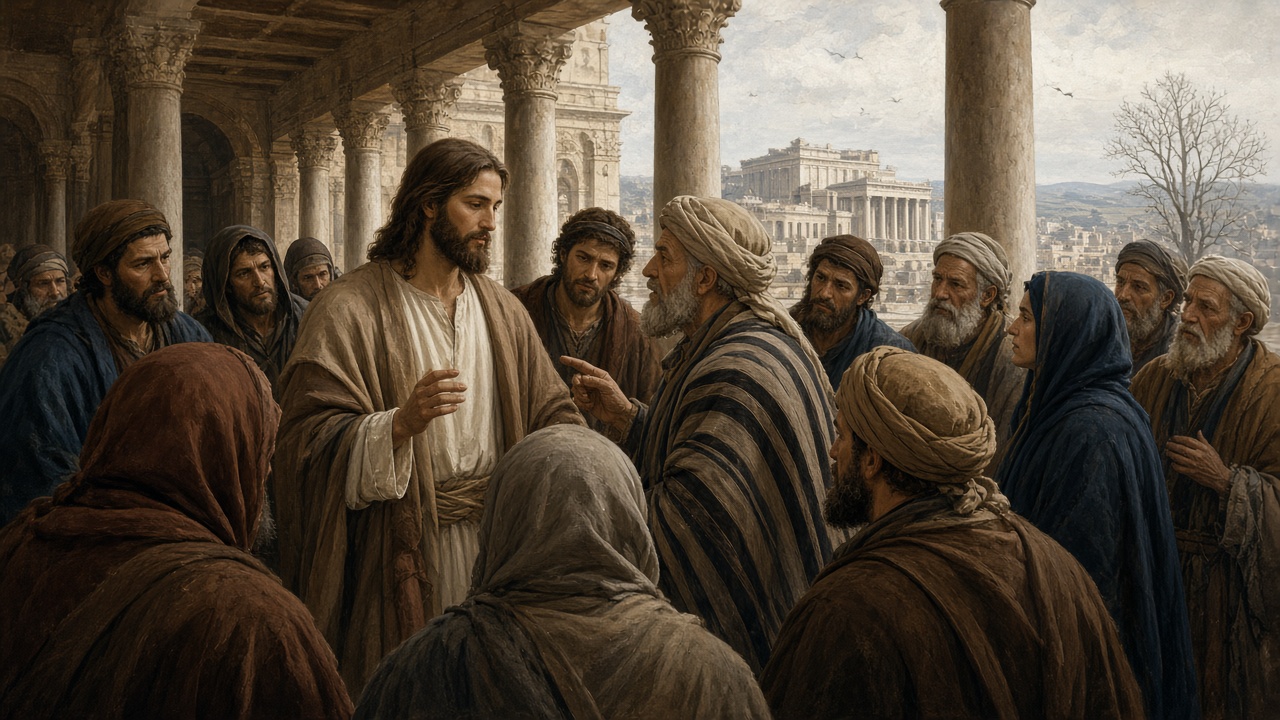
- Na Festa da Dedicação, em Jerusalém, era inverno, e Jesus caminhava pelos pátios do templo, no Pórtico de Salomão. O nome Jerusalém, na forma dual do original, significa "posse da paz" ou "fundação da paz"; essa forma provavelmente se refere aos montes Sião e Moriá ou, como alguns supõem, à cidade alta e à cidade baixa. O nome hebraico de Salomão, Shelomoh, significa "pacífico".Fontes: o próprio texto bíblico · Jerusalem · Solomon
- Uma cronologia dos episódios evangélicos situa o ensino do Bom Pastor em 29 d.C. e um tempo de ensino e cura, de Pereia a Jerusalém, em 30 d.C.Fontes: The Good Shepherd Teaching · Teaching and Healing in Perea to Jerusalem
- Jesus voltou então para o outro lado do Jordão, ao lugar onde João tinha começado a batizar, e muitas pessoas ali creram nele. João era de linhagem sacerdotal: seu pai, Zacarias, era sacerdote da turma de Abias, e sua mãe, Isabel, era das filhas de Arão. O nascimento dele, seis meses antes do de Jesus, foi anunciado por um anjo; os que vinham diziam que João nunca fez sinal algum, mas que tudo o que dissera a respeito de Jesus era verdade.Fontes: o próprio texto bíblico · John the Baptist
Notas escritas com auxílio de IA a partir de fontes abertas (Theographic Bible Metadata, CC BY-SA 4.0; Easton’s Bible Dictionary, domínio público) e revisadas antes de publicar.
Lugares deste capítulo
- Jerusalem · 31.777, 35.234 · versículo 22
- Solomon’s Portico · Hoje: in Jerusalem · 31.777, 35.234 · versículo 23
- Jordan · Hoje: Jordan River · 31.761, 35.558 · versículo 40
Só aparecem lugares com identificação de alta confiança (90% ou mais segundo as fontes acadêmicas reunidas pelo OpenBible). Mapa da época: DARE (Digital Atlas of the Roman Empire), CC BY 4.0; mapa atual: © colaboradores do OpenStreetMap; lugares: OpenBible.info (CC BY 4.0).
Créditos e licença desta tradução
Tẹsitamenti Ikne n'Ọnu Ikwere
New Testament in Ikwere
copyright © 2010 Wycliffe
Language: Ikwere
Translation by: Wycliffe
Ikwerre – (ikw) Nigeria
The Iwerre language of Nigeria can also be spelled Ikwere and Ikwerri. This language is spoken primarily by the Ikwerre people who live in the Rivers State of Nigeria and is one of the many ethnic groups in the Niger Delta. There were more than 23,000 speakers of this language in 1973. There is also a considerable local interest in literacy and grammar.
Copyright Information
© 2010, The Nigeria Bible Translation Trust. All rights reserved.
This translation text is made available to you under the
terms of the Creative Commons License: Attribution-Noncommercial-No Derivative Works.
( http://creativecommons.org/licenses/by-nc-nd/3.0/ )
In addition, you have permission to port the text to different file formats, as long as you
do not change any of the text or punctuation of the Bible.
You may share, copy, distribute, transmit, and extract portions
or quotations from this work, provided that you include the above copyright
information:
You must give Attribution to the work.
You do not sell this work for a profit.
You do not make any derivative works that change any of the actual words or punctuation of the Scriptures.
Permissions beyond the scope of this license may be
available if you contact
us with your request.
Printed book ISBN 9789789076369
New
The New Testament
in Ikwere
© 2010, The Nigeria Bible Translation Trust. All rights reserved.
This translation is made available to you under the terms of the
Creative Commons Attribution-Noncommercial-No Derivatives license 4.0.
You may share and redistribute this Bible translation or extracts from it in any format, provided that:
You include the above copyright and source information.
You do not sell this work for a profit.
You do not change any of the words or punctuation of the Scriptures.
Pictures included with Scriptures and other documents on this site are licensed just for use with those Scriptures and documents.
For other uses, please contact the respective copyright owners.
2019-08-09
Fonte: http://ebible.org/ikwNT/ · eBible.org