Atos 4
Tẹsitamenti Ikne n'Ọnu Ikwere · Toque num versículo para ver as referências cruzadas.
Pita nụ Jọni zị nụ // ruwhnu ele eze-ikpe
1Kpa Pita nụ Jọni zị nookwunu ele badnụ ọka n'Ọro Nsọ Chiokike, ele arịohna nụ nye risi ele neese Ọro Nsọ Chiokike nụ ele Sadusi vakwnusiri be. 2Ovu weru be ẹhni nụ ele izi lawụru wam neezni ele badnụ nụ Jizọsi hiri n'ẹnwu lizọ, ke neegesi nụ ele nwụrnu ọnwu jeehi n'ẹnwu lizọ berere. 3Be nwudne be, yisi be ikelu tem chi bọ, kwnornu nụ ọbochi zneminem. 4Kọvu agịda ele nụrnu izi ọma be kweruru, ọnu ọgwnugwnu be bụ pokwu badnụ isne.
5N'ekile a, ele risi ele Ju nụ ele okno badnụ nụ ele zni iwu ele Ju gbakọru nụ Jerusẹlem, 6be nụ nye risi arịohna Anasị, nụ Kayafasị, nụ Jọni nụ Alẹkizanda, nụ ele ọro nye risi arịohna. 7Be kwuya Pita nụ Jọni gwuzote be nụ ruwhnu be, be sịkwa be, “Ndaa rikne mọbu rẹwhna nyele hne anụ jiri neeme nhne ka?”
8Enine Nsọ jipihịaru nụ rime Pita, ọ kaa, “Ele risi nụ ele okno badnụ Izirẹli, 9anụ nẹesikwa aị ajịji tna kwnornu nụ nhne ọma ke be mennu nye mgwọro ka nụ kpa be jiri gwọ a. 10Kpakara anụ ma kpakara ele Izirẹli mahịa, nụ nyerukna ka gwuzo hna nụ ruwhnu anụ n'ẹhni zuru ozu, bụ nye be gwọru hite nụ rikne ke zị nụ rẹwhna Jizọsi Karaịsi nye Nazarẹti. Anụ kpọgidnernu a n'ọgba, kọvu Chiokike mernu o hi n'ẹnwu lizọ. 11Ya bụ
‘akaworugwu ke anụ ele noowu ọro jụru,
kịyam ghọlam risi nsụkala ọro.’
12“Ọznohia zị nụ rẹwhna a kpọi. Kwnornu nụ ọ zá rẹwhna berere nụ mkpururu oligwe be nyernu ke badnụ jeenwe ọznohia.”
13Ọnu rikne Pita nụ Jọni duru ele risi ikpe ẹhni. Be mahịaru nụ be bụ ele ọ zá nhne be bụ, ele mụ́ge ọkwukwo. Be mahịaru kwno nụ be nụ Jizọsi zịri. 14Ọ zá nhne be nwernu rikne kwu kwnornu nụ be whnụrnu nyerukna wam be gwọru gwuzo nụ ngeri Pita nụ Jọni. 15Be kanụ be whọga n'ọro ikpe, be gba iznuznu n'esilawụru be. 16Be kaa, “Ndaa nhne a jeeme ele rukna ka. Kpakara ele wu nụ Jerusẹlem magwụ nụ be rnụrnu okne ẹrnu ndu-ẹhni ka, a nwée rikne gọnahoru a. 17Kọvu a jéekwe be gbasa ọtnutnu ka n'esilawụru ele badnụ, a dọ be aka nụ nsnị be kwú ọka berere nụ rẹwhna Jizọsi.”
18Be sukwu ele rukna wam, kanụ be, be kwúma ọka rịa rịa mọbu zni nhne nụ rẹwhna Jizọsi. 19Kọvu Pita nụ Jọni sarụ be, “Anụ tule a ma ọ bụru ọma nụ anya Chiokike, a bnonu anụ nsnị sọbu a bnonu Chiokike nsnị. 20Kwnornu nụ a nwée rikne gharụ o kwu nhne a whnụrnu nụ nhne a nụrnu.”
21Ele ikpe wam dọsi be aka nụ nsnị rikne, sịgbasi be la. Be nwée nhne be jeeji ta be awhnụwhnu kwnornu nụ ele badnụ naaznarnị Chiokike nụ nhne mernu. 22Nyerukna be gwọru ẹrnu ndu-ẹhni ka wheru nri awha ẹno.
Ele Karaịsi kperu okpukpe
23Nga be sịgbasiri be, Pita nụ Jọni lakwnusi ele ke be, kanụ be nhne ele risi arịohna nụ ele okno badnụ kwuru. 24Nga be nụrnu a, be yisi ọnu n'otu kwnakwu Chiokike n'okpukpe, kaa, “Nyenwe aị Chiokike, nye keru oligwe nụ ọwa, nụ okne osimini, nụ kpakara nhne zị nụ rime be. 25I jiri Enine Nsọ kwu ọka hite n'ọnu ọhi ị Devidi, nda aị ọknani, kaa,
‘Kịni vuteru ele bụ́o ele Ju ọnuma
kịni mernu ele badnụ naagba iznuznu etekne?
26Ele eze k'ọwa ka gwuzoru
be nụ ele nẹechi ẹchi, gba iznuznu
megidne Nyenwe aị
megidne nye ke a o teru mọno.’
27N'ezi ọka, Erọdu nụ Pọntiosi Paịleti gbakọru n'otu n'ẹli ka, be nụ ele bụ́o ele Ju nụ ele Izirẹli, megidne Nnwọ nsọ ị Jizọsi, nye i teru mọno. 28Be gbakọru ma be mee nhne i jiri rikne i nụ echiche i kaa nụ ọ bụ nhne be jeeme. 29Nyenwe aị, bikno, le be naakpasị aị ogwnu, nyega aị ele izi ị, ọnu rikne a jeeji zni izi ọma ị. 30Dọsnihala aka ị nụ ọgwo ẹhni igbugbu nụ ọrnu elekema nụ ẹrnu ndu-ẹhni hite nụ rẹwhna ọhi i zị nsọ Jizọsi.”
31Nga be kperu okpukpe, hne be zị neekpe okpukpe znụrnu biri biri. Enine Nsọ dnakwasị kpakara be, be bete nookwu ikwu-ọnu Chiokike n'ọnu rikne.
Ele kweru neekeri // kpakara nhne n'otu
32Kpakara ele kweru ekwe bụ otu nụ echiche be ma nụ mkpọma be. Ọ zá nye kanụ nhne o nwernu bụ ke a, kọvu be neekeri kpakara nhne be nwernu. 33Ele izi wam ji ọnu rikne naagba akebne olizọ n'ẹnwu Nyenwe aị Jizọsi. Chiokike tụkwasinu be agịda oru. 34Ọ zá nye ọbula n'esilawụru be nhne kọgwu. Ele nwernu ẹli mọbu ọro re be, gweya ịwai be reru a, 35be nyee a ele izi, ele izi keme ịwai wam lele kpa mkpa kparụ nye ọbula.
36Josefu, nye Livaị be mụrnu nụ Saịporosi, nye ele izi jịri Banabasị, ke bụ “Nnwọ ọsnuta mkpọma,” 37o re ẹli o nwernu, gweya ịwai a bịta a n'ọchi ele izi.
Você sabia?
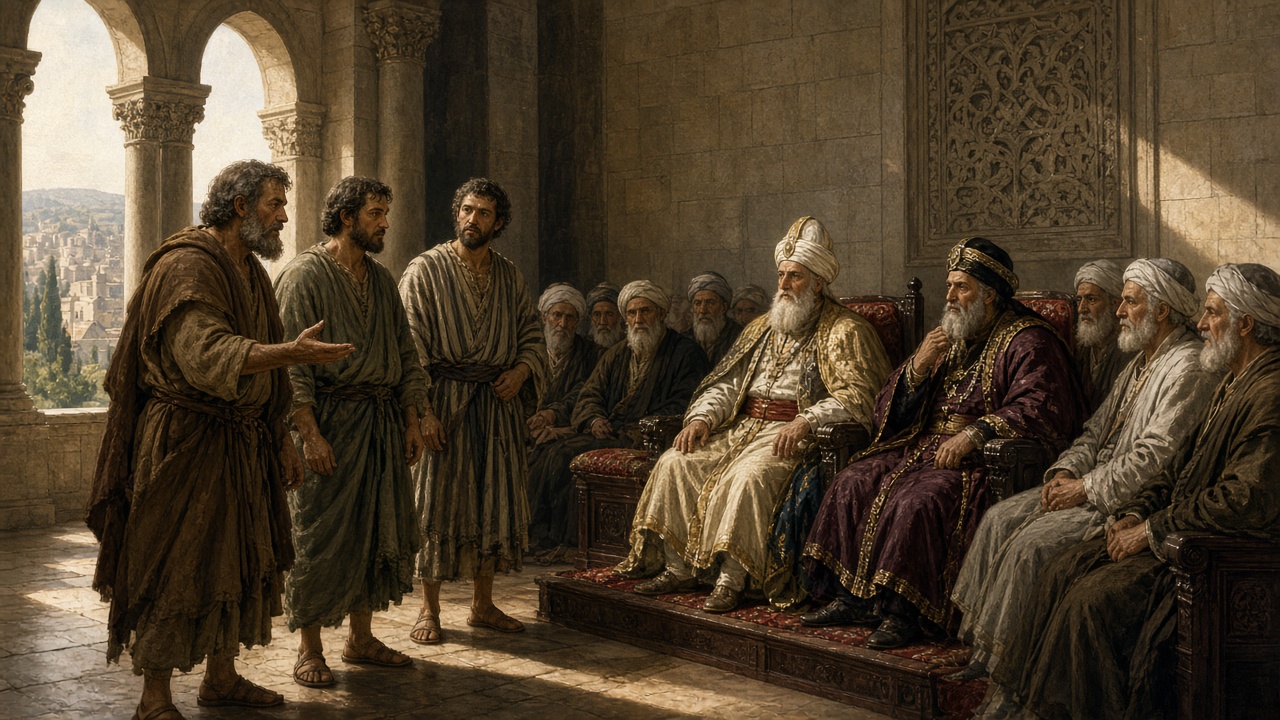
Pedro e João diante do Sinédrio
- Os sacerdotes, o capitão da guarda do templo e os saduceus prenderam Pedro e João porque eles ensinavam o povo e anunciavam em Jesus a ressurreição dos mortos. Caifás, que participou da assembleia no dia seguinte, pertencia aos saduceus.Fontes: o próprio texto bíblico · Caiaphas
- Anás, chamado aqui de sumo sacerdote, ocupou esse cargo de 7 a 14 d.C., até que um procurador romano o depôs. Caifás, que havia se casado com a filha de Anás, foi elevado ao cargo em 25 d.C.; mesmo assim, alguns judeus ainda podiam considerar Anás o sumo sacerdote legal, pois a lei mosaica tratava o ofício como vitalício, e Anás provavelmente era presidente ou auxiliar do Sinédrio. João e Alexandre, parentes do sumo sacerdote e de outro modo desconhecidos, estavam sentados com eles.Fontes: o próprio texto bíblico · Annas · John (Relative of the High Priest) · Alexander (Son of Simon)
- Pedro, pescador de Betsaida, e João, também pescador e filho de Zebedeu, foram levados perante os governantes, os anciãos e os escribas. O conselho admirou-se da ousadia deles ao perceber que eram homens sem instrução e comuns, e notou que haviam estado com Jesus.Fontes: o próprio texto bíblico · Simon Peter · John the Apostle
Notas escritas com auxílio de IA a partir de fontes abertas (Theographic Bible Metadata, CC BY-SA 4.0; Easton’s Bible Dictionary, domínio público) e revisadas antes de publicar.
Lugares deste capítulo
- Jerusalem · 31.777, 35.234 · versículos 5, 16
- Nazareth · 32.702, 35.298 · versículo 10
- Cyprus · 35.000, 33.000 · versículo 36
Só aparecem lugares com identificação de alta confiança (90% ou mais segundo as fontes acadêmicas reunidas pelo OpenBible). Mapa da época: DARE (Digital Atlas of the Roman Empire), CC BY 4.0; mapa atual: © colaboradores do OpenStreetMap; lugares: OpenBible.info (CC BY 4.0).
Créditos e licença desta tradução
Tẹsitamenti Ikne n'Ọnu Ikwere
New Testament in Ikwere
copyright © 2010 Wycliffe
Language: Ikwere
Translation by: Wycliffe
Ikwerre – (ikw) Nigeria
The Iwerre language of Nigeria can also be spelled Ikwere and Ikwerri. This language is spoken primarily by the Ikwerre people who live in the Rivers State of Nigeria and is one of the many ethnic groups in the Niger Delta. There were more than 23,000 speakers of this language in 1973. There is also a considerable local interest in literacy and grammar.
Copyright Information
© 2010, The Nigeria Bible Translation Trust. All rights reserved.
This translation text is made available to you under the
terms of the Creative Commons License: Attribution-Noncommercial-No Derivative Works.
( http://creativecommons.org/licenses/by-nc-nd/3.0/ )
In addition, you have permission to port the text to different file formats, as long as you
do not change any of the text or punctuation of the Bible.
You may share, copy, distribute, transmit, and extract portions
or quotations from this work, provided that you include the above copyright
information:
You must give Attribution to the work.
You do not sell this work for a profit.
You do not make any derivative works that change any of the actual words or punctuation of the Scriptures.
Permissions beyond the scope of this license may be
available if you contact
us with your request.
Printed book ISBN 9789789076369
New
The New Testament
in Ikwere
© 2010, The Nigeria Bible Translation Trust. All rights reserved.
This translation is made available to you under the terms of the
Creative Commons Attribution-Noncommercial-No Derivatives license 4.0.
You may share and redistribute this Bible translation or extracts from it in any format, provided that:
You include the above copyright and source information.
You do not sell this work for a profit.
You do not change any of the words or punctuation of the Scriptures.
Pictures included with Scriptures and other documents on this site are licensed just for use with those Scriptures and documents.
For other uses, please contact the respective copyright owners.
2019-08-09
Fonte: http://ebible.org/ikwNT/ · eBible.org