Jó 4
Biblica® Baịbụlụ Nsọ nʼIgbo Ndị Ugbu a nke dịrị onye ọbụla ịgụ · Toque num versículo para ver as referências cruzadas.
Okwu Elifaz
1Mgbe ahụ, Elifaz onye obodo Teman zara Job sị:
2“Iwe ọ ga-ewe gị ma ọ bụrụ na mmadụ agwa gị okwu?
Onye kwanụ nwere ike ịnọ nʼebe a hapụ ikwu okwu?
3Lee ka i siri nye ọtụtụ mmadụ ndụmọdụ,
na ka i si mee ka ndị na-ada mba nwee ume.
4Okwu ọnụ gị abụrụla ihe ịgbaume nye ọtụtụ mmadụ,
ị bụrụla ịgbaume nye ndị ikpere ha na-ama jijiji.
5Ma leenụ ugbu a, nsogbu abịakwasịla gị, ị bụrụla onye na-ada mba;
nsogbu etiela gị aka, i na-ama jijiji.
6Egwu ị na-atụ Chineke ọ gaghị abụ ihe ịgbaume nye gị,
izi ezi nke ndụ gị abụrụkwa olileanya gị?
7“Chee echiche ugbu a! Onye, bụ onye aka ya dị ọcha, nke a larala nʼiyi?
Ebee ka i hụrụ ka e bibiri ndị na-eme ihe ziri ezi?
8Dịka m si hụ ya, ndị na-agha ajọ ihe dịka mkpụrụ na ndị na-akụ okwu na ụka
na-aghọta ya dịka ihe ubi.
9Chineke na-ala ha nʼiyi site nʼume ọ na-ekupụta.
Ọ na-esitekwa nʼoke iwe ya repịa ha.
10Ọdụm nwere ike gbọọ ụja, maọbụ bigbọọ,
ma eze ọdụm dị ike ka a gbajisiri.
11Oke ọdụm na-ala nʼiyi site na-enweghị ihe ọ dọgbutara,
ụmụ nne ọdụm niile ka a na-achụsa.
12“E mere ka okwu rute m nʼụzọ nzuzo,
ntị m nụrụ ya nʼịgba izu.
13Nʼime nkụja nke oke nrọ nke abalị,
mgbe oke ụra na-adakwasị ụmụ mmadụ,
14oke ụjọ na ahụ ịma jijiji dakwasịrị m,
meekwa ka ọkpụkpụ niile dị nʼahụ m maa jijiji.
15Otu mmụọ sitere nʼihu m gafee.
Ọ bụladị ajị dị m nʼahụ guzochara ọtọ nʼihi ụjọ.
16Ọ kwụsịrị;
ma apụghị m ịkọ ihe ọ bụ.
Onyinyo guzooro nʼanya m,
anụrụ m olu dị nro, nke kwuru sị:
17‘Mmadụ efu ọ nwere ike bụrụ onye ezi omume karịa Chineke?
Ọ bụladị nwoke dị ike, ọ pụrụ ịdị ọcha nʼobi karịa Onye kere ya?
18Ọ bụrụ na Chineke adịghị atụkwasị ndị ozi ya obi,
ọ bụrụ na ọ na-ebo ndị mmụọ ozi ya ebubo imejọ ihe,
19ọ ga-esi aṅaa ghara ibo ndị bi nʼụlọ ụrọ ebubo karịa,
bụ ndị ntọala ha dị nʼaja,
ndị nke a na-azọpịa ngwangwa dịka nla.
20Site nʼụtụtụ ruo nʼanyasị, a na-etipịasị ha:
ha na-ala nʼiyi ruo mgbe ebighị ebi, ihe niile a na-agakwa dịka o si aga.
21Ọ bụ na-eholiteghị eriri ụlọ ikwu ha elu,
mee ka ha nwụọ na-enweghị amamihe?’
Você sabia?
O Primeiro Discurso de Elifaz
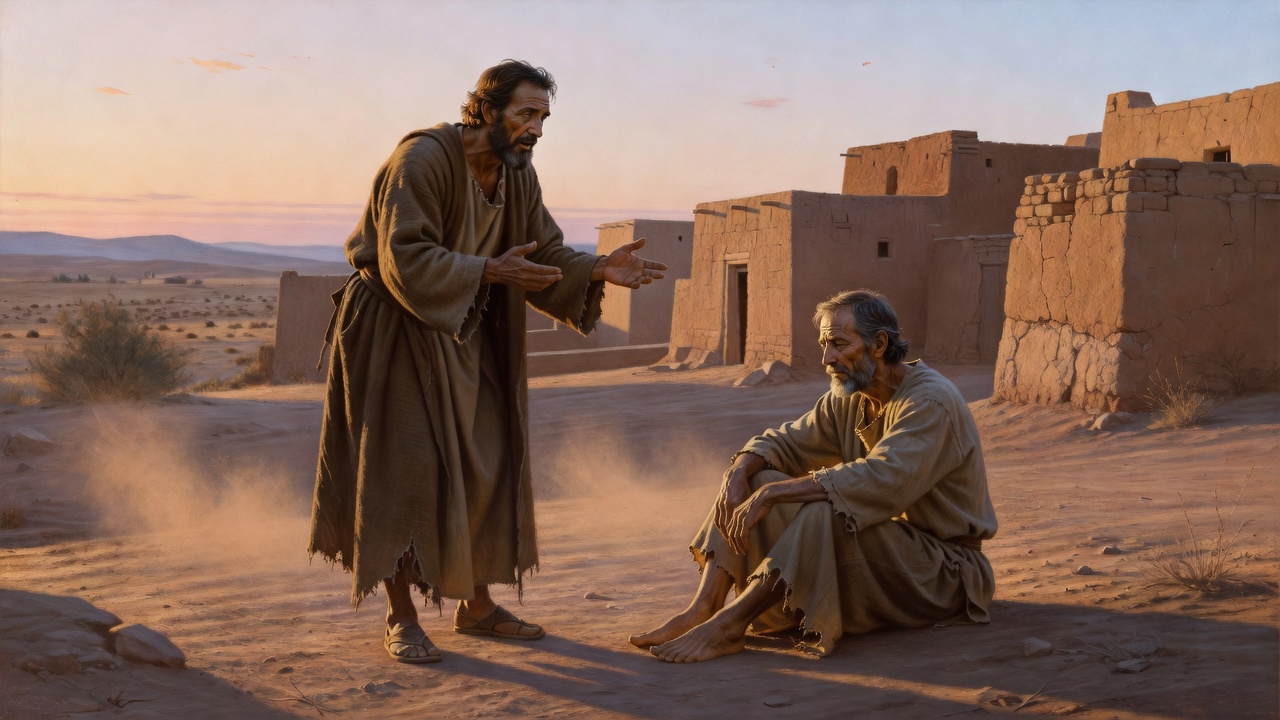
- Elifaz, o temanita, é o primeiro dos companheiros de Jó a responder, rompendo o silêncio de sete dias. Ele reconhece a reputação passada de Jó de consolar e fortalecer os aflitos antes de questionar por que Jó não consegue aplicar essa mesma firmeza ao seu próprio sofrimento.Fontes: o próprio texto bíblico · Eliphaz
- Elifaz introduz o princípio tradicional da retribuição, argumentando que os inocentes nunca perecem e que as pessoas colhem aquilo que semeiam na vida.Fontes: o próprio texto bíblico
- Para fundamentar seu argumento teológico, Elifaz relata uma visão noturna estarrecedora na qual um espírito misterioso surgiu diante dele na escuridão, declarando que mortais frágeis, que habitam em casas de barro, não podem ser mais justos ou puros do que o seu Criador.Fontes: o próprio texto bíblico
Notas escritas com auxílio de IA a partir de fontes abertas (Theographic Bible Metadata, CC BY-SA 4.0; Easton’s Bible Dictionary, domínio público) e revisadas antes de publicar.
Créditos e licença desta tradução
Biblica® Baịbụlụ Nsọ nʼIgbo Ndị Ugbu a nke dịrị onye ọbụla ịgụ The Holy Bible in the Igbo language of Nigeria: Biblica® Baịbụlụ Nsọ nʼIgbo Ndị Ugbu a nke dịrị onye ọbụla ịgụ copyright © 2020 Biblica, Inc. Language: Igbo Contributor: Biblica, Inc. This work is made available under the Creative Commons Attribution-ShareAlike 4.0 International License (CC BY-SA). To view a copy of this license, visit http://creativecommons.org/licenses/by-sa/4.0 or send a letter to Creative Commons, PO Box 1866, Mountain View, CA 94042, USA. Biblica® is a trademark registered by Biblica, Inc., and use of the Biblica® trademark requires the written permission of Biblica, Inc. Under the terms of the CC BY-SA license, you may copy and redistribute this unmodified work as long as you keep the Biblica® trademark intact. If you modify a copy or translate this work, thereby creating a derivative work, you must remove the Biblica® trademark. On the derivative work, you must indicate what changes you have made and attribute the work as follows: “The original work by Biblica, Inc. is available for free at www.biblica.com and open.bible.” Notice of copyright must appear on the title or copyright page of the work as follows: Biblica® Baịbụlụ Nsọ nʼIgbo Ndị Ugbu a nke dịrị onye ọbụla ịgụ Ndị Biblica, Inc. degharịrị ya nʼafọ © 1980, 1988, 2019, 2020 Biblica® Open Igbo Contemporary Bible™ Copyright © 1980, 1988, 2019, 2020 by Biblica, Inc. “Biblica” bụ akara e ji mara ụlọ ọrụ a, nke edebanyere dịka iwu si kwado nʼụlọ ọrụ dị nʼobodo United States, ebe a na-enye akara a na ikike maka azụm ahịa ndị Biblica, Inc. Ọ bụ ha ka e nyere ikike idenye ya. “Biblica” is a trademark registered in the United States Patent and Trademark Office by Biblica, Inc. Used with permission. You must also make your derivative work available under the same license (CC BY-SA). If you would like to notify Biblica, Inc. regarding your translation of this work, please contact us at https://open.bible/contact-us. This translation is made available to you under the terms of the Creative Commons Attribution Share-Alike license 4.0. You have permission to share and redistribute this Bible translation in any format and to make reasonable revisions and adaptations of this translation, provided that: You include the above copyright and source information. If you make any changes to the text, you must indicate that you did so in a way that makes it clear that the original licensor is not necessarily endorsing your changes. If you redistribute this text, you must distribute your contributions under the same license as the original. Pictures included with Scriptures and other documents on this site are licensed just for use with those Scriptures and documents. For other uses, please contact the respective copyright owners. Note that in addition to the rules above, revising and adapting God's Word involves a great responsibility to be true to God's Word. See Revelation 22:18-19. 2023-04-12
Fonte: http://ebible.org/ibo/ · eBible.org