Ezequiel 19
Habo nalolene bi gahenge lo winigo ogo · Toque num versículo para ver as referências cruzadas.
Esegielehanda dugu daraore bia henego ogo
1Anduane Homogo ibugua i̱hondo lalu, Isaraele kinibi Yuda kinibi libunaga dugu daraore bia halu iba gana ogobi labe, laya.
2Í̠ ai̱ya ibu gabua laiono timbuniore hene.
Ibugua laiono wangabe dewa bu hearu ti dege dombeneha howa
ibu iginiru bayuwa handayaho hayagola ti bayale anda hai haya.
3Ibu igini mbiraore wangabe timbuni anda hayagola
ibugua igini ogoni nogo tara tara gabua taya helo biawai haya.
Ibu laiono hongoheore howa agalibi bo nagane helo biawai haya.
4Hameigini tara tara dindi tarani bu hearume laiono ogonime mana biaga ngago hale hai haya.
Tigua ibalu laiononaga gundu uli tombo wiyagola laiono uli ogoniha pilaya.
Tigua ibu ne harigaha wena langame helowa Iyibi dindiha gililo yalu piya.
5Ai̱yahanda ibu igini dai bilo maliaho biraabo heagola igini biago dai nabiya.
Dai nabiya handala ibu igini dege mende heago
ibu laiono dalua bayale dege helo dabo helene.
6Laiono igini ogoni andaho heagola
ibu laiono maru hearu baba mandagi ibaga bu haya.
Ibugua nogo tara tararu bolene mana bu manda bialu howa
nogo gabua tara tara taya bialu agalibi bo nagane dege hene.
7Ibugua tinaga wai pabe anda hongohe hearubi
tano wiarubi bo gialo wahai haga bialu hene.
Ibugua bi hongo howa layagola
wali agali bibahende hearume gi hai haga hene.
8Hameigini tara tara dindi tara wiaruha howa laiono ogoni baba wai bule íbu ngoai hene.
Tigua gono wiago mo tigabu ngelo howa
gonoha dayagola hadene.
9Tigua ibu wena langame hende howa
mbogoyi mbiraha minu berelowa Babilono kini hearia yalu pene.
Ibu pora bialu tagira napelo
ibu garabaya anda hongohe wiagoha helo helene.
Wali agali Isaraele dindi hari ngaruha hearume
ibunaga bi hongo howa laruane lone hale nahelo ani bini.
10Kini ogonilabo libu ai̱ya ibu pu mbira lini daga mini gerebi
iba angeni hengene mbira haraligobi bereneya.
Pu gerebi ogoni iba bayale bereagoria hengenego
timbuni anda howa gene maganeni yuni dewahe gerebi linibi dewaore deneya.
11Pu gerebi ogoninaga gene magane hongoheore halu
kininaga halimbu hongohe ngaligobi haya.
Irane ogoni luniore halu hari beraliba ela habehe haya.
Ibu luniore halu magane yunibi timbuni dewaorebi heago
bibahende hearume de handai hene.
12Pu gerebi ogonibi heagola agali bu hearume keba howa
irane ogoni minu dugualu dindini bape haya.
Tigua ani biyagola ni tagira ibiragohayagi howa
puyabu poboyogobi ibiyagome gerebi lini deago bibahende yogo bialu gaulai haya.
Agali urunime ira magane hearu dandape hai halu
magane bibahende irani delai haya.
13Mani tigua pu gerebi ogoni dugu yalu puwa
dindi ko yobini iba nabiraga wiagoha hangaya.
14Ogoninaga teneha howa
ira datagi halu gene magane yuni linibi irame dai haya.
Ibunaga magane bayale mbira hongohe ndo howa
kininaga halimbu wabibehe mbira naheneya.
Bi ogoni dugu daraore binigo tigua iba gana lalu haabo haga winigo nga.
Você sabia?
Um Lamento pelos Príncipes de Israel
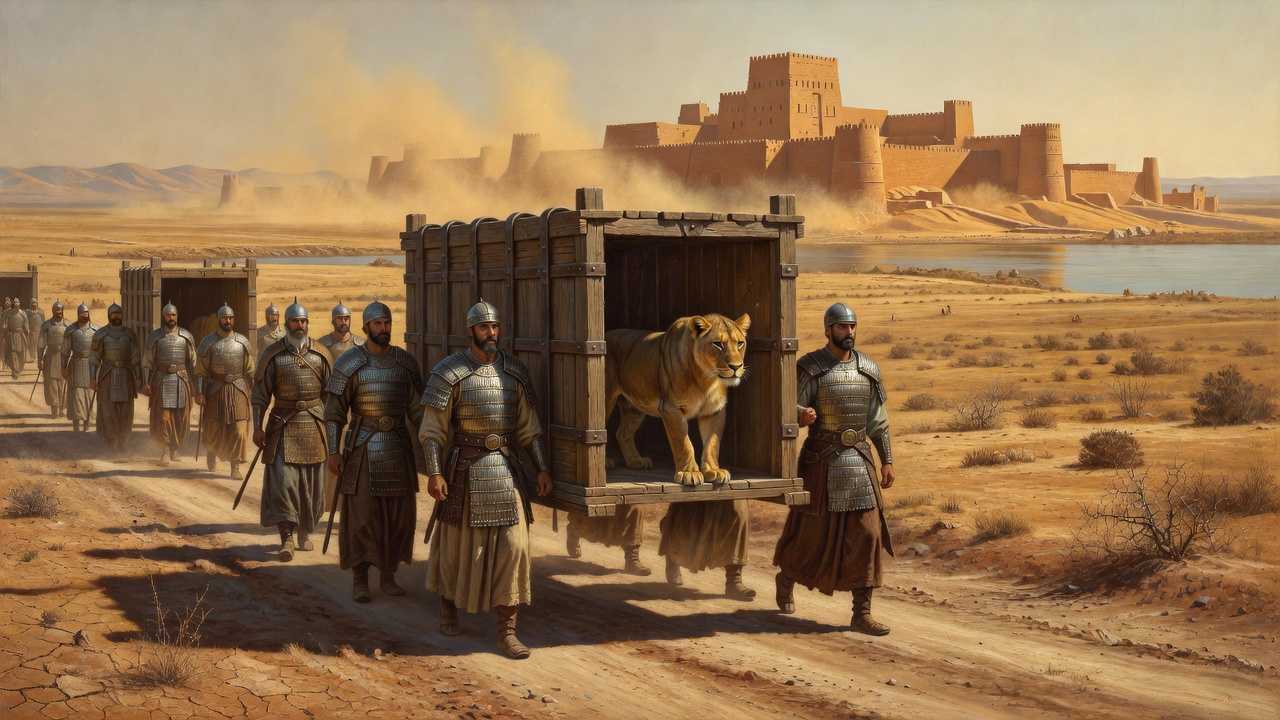
- Ezequiel estrutura este cântico fúnebre como uma alegoria de uma leoa criando seus filhotes. O primeiro filhote aprende a despedaçar a presa, mas é capturado com ganchos e levado ao Egito, enquanto o segundo é apanhado numa rede, colocado em uma jaula e levado cativo ao rei da Babilônia.Fontes: o próprio texto bíblico · Egypt · Babylon
- A segunda metade do lamento compara a linhagem real a uma videira viçosa plantada junto a muitas águas, que produzia ramos fortes adequados para cetros de governantes. Ela retrata a videira sendo arrancada com furor, ressecada pelo vento oriental, consumida pelo fogo e transplantada para um deserto árido.Fontes: o próprio texto bíblico
Notas escritas com auxílio de IA a partir de fontes abertas (Theographic Bible Metadata, CC BY-SA 4.0; Easton’s Bible Dictionary, domínio público) e revisadas antes de publicar.
Lugares deste capítulo
Só aparecem lugares com identificação de alta confiança (90% ou mais segundo as fontes acadêmicas reunidas pelo OpenBible). Mapa da época: DARE (Digital Atlas of the Roman Empire), CC BY 4.0; mapa atual: © colaboradores do OpenStreetMap; lugares: OpenBible.info (CC BY 4.0).
Créditos e licença desta tradução
Habo nalolene bi gahenge lo winigo ogo
The Holy Bible with Deuterocanon in the Huli Language of Papua New Guinea
Buk Baibel long tokples Huli long Niugini
Copyright © 1983, 1991, 2002 Bible Society of Papua New Guinea
℗ Faith Comes by Hearing
Language: Huli
Translation by: Bible Society of Papua New Guinea
This translation is made available to you under the terms of the
Creative Commons Attribution-Noncommercial-No Derivatives license 4.0.
You may share and redistribute this Bible translation or extracts from it in any format, provided that:
You include the above copyright and source information.
You do not sell this work for a profit.
You do not change any of the words or punctuation of the Scriptures.
Pictures included with Scriptures and other documents on this site are licensed just for use with those Scriptures and documents.
For other uses, please contact the respective copyright owners.
2014-12-11
Fonte: http://png.bible/hui/ · eBible.org