Mateus 10
Hset Hadròeh · Toque num versículo para ver as referências cruzadas.
Jesus thê moeq jàt baiq ngai loh lam
1Chuaq Jesus creo ka moeq jàt baiq ngai tiaq hŏc trùh ti cla haq, am ka wì cwìang drùh hnan kiac chŏc jròng, rai broq brêh kan yinìq tôq, ùh hrŏc. 2Kô hiniq moeq jàt bài ngai Tiaq cla: mangai baxèm aih Simôn, bèn loq xan creo ka haq Phiero, xam Anrê (aih oh haq); Jaco kon Sêƀêđê xam Jon oh haq, 3Philip xam Bathêlêmi; Thôma, xam Mathio (mangai yŏc thèq); Jaco kon Aphê, xam Thađê, 4Simôn mangai Cana-an, xam Juđa Icariôt, mangai ma blòq Chuaq Jesus.
5Aih raq, moeq jàt baiq ngai Tiaq cla, Chuaq Jesus thê wì loh lam rai tanap ka wì haq: “Apaq lam tanòe ùh xài mangai Juđa, ùh dùh mùt ta plài leq da mangai Samari. 6Mahaq lam chaq ƀài kon trìu Isorsli ma khoe hnhung. 7Jò lam ti trong pì anoe bàu kô: “Diac Plình trùh khoe haten”. 8Broq brêh ka mangai ùh hrŏc, broq ka mangai cachìt rìh hlài, broq ka magai bacùn jah brêh, drùh hnan kan kiac jròng. Pì khoe jah dech pì hadai am dech. 9Ta caqnam pì ùh dùh catonh wê dèh ka wang, yac ka bac jèn hadai. 10Lam ti trong ùh dùh wê ayôp, apaq racop baiq blah eo, yac ka jep hanoh qmang aih, apaq wê long ka nhra, majah qmang aih, yiniq da pì ma abroq khòh jah acaq. 11Pì mùt gùng leq, plài leq pì ti chaq ngan mangai leq ma tajì ka đìh pì, khoe aih oe hnim wì haq trùh jò pì loh lam. 12Jò pì mùt hnim leq, waiq kan catèm am ka hnem aih; 13Tàng joq hnim aih tajì, kan catèm enh pì hi loh am ka wì haq, tàng joq ùh aih, kan catèm pì hlài ta cla pì. 14Tàng mangai leq ùh đìh pì, ùh tamàng bàu pì, jò pì loh enh hnim aih, plài aih, drah hapùih blo ma top ta jènh pì. 15Joq qnàng Au doe ka pì, trùh hì hadrah èh, gùng Sôđôm xam gùng Gômôro pòq kan hadrah yeo biaq ka wì aih.
16“Au thê pì loh lam tìah ka trìu oe taqne calùh koq yiang. Qmang aih pì ep rabiaq qmang ka bìh, khun khauq tìah ka trù. 17Pì ep hamang ngan oq, majah qmang aih èh wì rùp qnoh pì tanòe hadrah, jêh pì roc hnim tagop qyoh, 18Qnah hòm, taiq au kô èh wì majah rùp qnoh pì enh ngèa ƀài cwan ƀài bùa, đòeq pì yòng anoe enh ngèa ka wì haq hloe xam ƀài ùh xài mangai Juda. 19Mahaq jò wì rùp pì, apaq lèt ka anoe qmang leq, anoe bàu cleq, gleq ma jah qmang aih, bàu leq ma troq ka anoe, trùh jò aih èh hi am ka pì. 20Aih ùh xài cla pì pì capoch đeh ma joq qnàng aih Yiang Hadròeh Baq pì oe enh dalam ka pì capoch qnoh. 21Daq rùp dèh oh, dôq wì jêh đac, baq rùp dèh kon dôq wì jêh đac, mangai kon yòng tablêq dèh ka miq baq, waq ka dìq baiq wa aih cachìt. 22Jao yiniq au kô èh, dìq ka phù cròng majah tagit ka pì, mahaq mangai leq cajap manoh trùh lùch trùh gêh, mangai aih èh ma jah dèch. 23Jò wì rùp pì ta plài kô, pì puplech lam ta plài qnoeq, joq qnàng au anoe ka pì, pì lam qnhòq jàp ka plài mangai Isorali, Kon mangai khoe trùh.
24Mangai tiaq hŏc ma lah yi ùh hnau ka mangai hnài, hapŏng malah yi ùh hnau ka cla wì craq. 25Mangai tiaq hŏc jah dàng mangai hnài, hapŏng jah dàng cla wì craq aih khoe wìa. Tàng joq wì khoe doe ka cla wì craq ta hnim aih Bênxêbun, loq ka mangai ta hnem. 26Qmang aih, pì apaq yùq, ùh i cleq cadoc èh ma ùh ep paqnoh dŏng, ùh i cleq bahlèp atìq èh ma ùh loq. 27Aih ìq raq, bàu au anoe ka pì ta clam, drah anoe qnoh ta qngah, bàu pì tàng gìt ajang don, drah yòng ta kùa po hnim hu anoe qnoh. 28Ùh dùh yùq dèh ka mangai jah jêh toq chac pì mahaq ùh jah jêh mahua yiang pì; ma khòh yùq aih Mangai jah broq hnhung xam mahua xam chac pì oe ta hwinh ùnh. 29Baiq toq chim prùch ùh xài wì hmaq tech moeq jèn bac raq qmòh? Mahaq tàng joq ùh xài tiaq manoh Baq pì, qnhòq lah i mòeq toq chim leq ma taclìh ta haqneq. 30Xàc ta gàu pì qmat hadai rènh khoe dìq. 31Qmang aih, apaq yùq cleq, pì yeo canaq ùh hnau ka chìm prùch. 32Aih ìq raq, cabô ràu trùh au enh ngèa ka phù cròng, au hanoh ràu trùh haq enh ngèa ka Baq au oe ta plình; 33Cabô hangah đac au enh ngèa phù cròng, au hadai hangah đac haq enh ngèa ka Baq au oe ta plình.
34Apaq xoh au trùh đòeq aràng kan catèm ta crŏng taneh, au trùh ùh xài đòeq aràng kan catèm, mahaq aràng chang aràng jaoq. 35Au trùh đòeq lah kon calô khoe ka baq haq, lah kon cadrì khoe ka miq haq, lah kon mai khoe ka yaq haq; 36qmang aih, mangai oe ta hnim pì raq, ma tablêq hlài ka pì. 37Cabô loq waq dèh ka miq baq ùh hnau ka au, mangai aih ùh tajì đòeq hu tiaq au, cabô loq waq dèh ka kon calô kon cadrì ùh hnau ka au, mangai aih hadai ùh tajì ka tiaq au, 38Cabô ùh xùi dèh long pagat đòeq tiaq au, mangai aih hanoh ùh tajì ka tiaq au. 39Cabô àu wèq dèh toq kan rìh dèh cla, haq aih èh jah hnhung, mahaq cabô chìuq cađac dèh kan rìh đòeq hu tiaq au, aih èh jah chaq hnoq hlài dèh.
40Cabô đìh pì, haq aih đìh au, cabô đìh au, haq aih đìh Mangai ma khoe thê au. 41Cabô đìh mòeq ngai pajàu taiq mangai aih broq pajàu, haq aih jah kan baha da mangai pajàu, cabô đìh mòeq ngai taq atoq, taiq mangai taq atoq, aih èh haq aih jah kan baha ka mangai ta atoq. 42Cabô chìuq am ka mòeq ngai kon qyoh taqne ƀài kon qyoh kô, ôq moeq chrŏng diac hangeo, taiq mangai qyoh aih broq mangai tiaq hŏc au, joq qnàng au doe ka pì, kan baha da haq aih èh ùh jò leq hnhung.
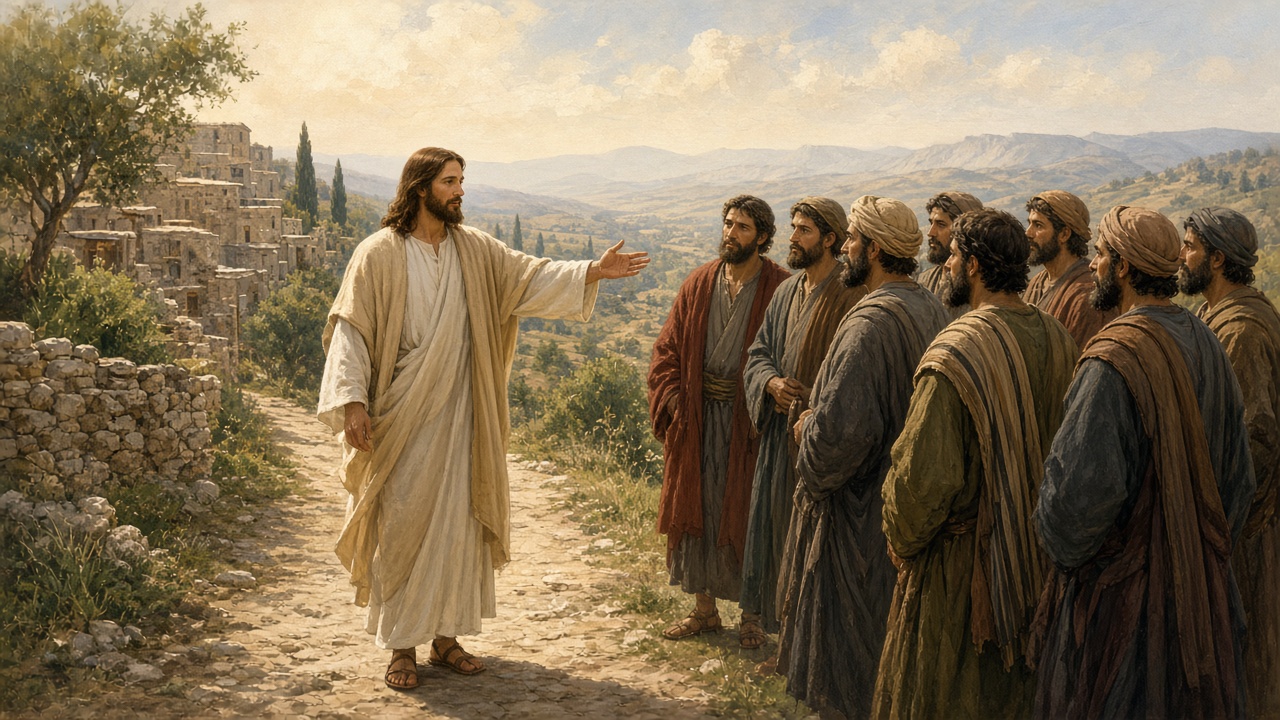
Você sabia?
Os doze enviados em missão
- Simão, chamado Pedro, e seu irmão André — o primeiro par nomeado entre os doze — eram pescadores de Betsaida, na costa ocidental do mar da Galileia. Tiago e João, citados em seguida, eram filhos de Zebedeu, um pescador da Galileia que tinha os próprios barcos e empregados.Fontes: o próprio texto bíblico · Simon Peter · Andrew · Zebedee
- Mateus, identificado na lista como o cobrador de impostos, era filho de Alfeu e antes era conhecido como Levi; recolhia impostos em Cafarnaum, e o nome Mateus significa “dom de Deus”. Tomé, nomeado ao lado dele, também era chamado Dídimo, o equivalente grego do nome hebraico, que significa “gêmeo”. Bartolomeu significa “filho de Tolmai” e, em geral, se supõe que seja a mesma pessoa que Natanael.Fontes: o próprio texto bíblico · Matthew · Thomas · Bartholomew
- Jesus adverte que o dia do juízo será mais tolerável para Sodoma e Gomorra do que para uma cidade que recusar os doze apóstolos. O Dicionário Bíblico de Easton (1897) descreve essas cidades da planície de Sidim como destruídas pelo fogo e proverbiais pela maldade, e as situa, provavelmente próximas uma da outra, perto da extremidade norte do que hoje é o mar Morto.Fontes: o próprio texto bíblico · Sodom · Gomorrah
Notas escritas com auxílio de IA a partir de fontes abertas (Theographic Bible Metadata, CC BY-SA 4.0; Easton’s Bible Dictionary, domínio público) e revisadas antes de publicar.
Créditos e licença desta tradução
Hset Hadròeh
The New Testament in the Hre language of Vietnam, translated by Baq Thi
Copyright © 2024 Baq Thi
Language: (Hre)
This translation is made available to you under the terms of the
Creative Commons Attribution Share-Alike license 4.0.
You have permission to share and redistribute this Bible translation in any format and to make reasonable revisions and adaptations of this translation, provided that:
You include the above copyright and source information.
If you make any changes to the text, you must indicate that you did so in a way that makes it clear that the original licensor is not necessarily endorsing your changes.
If you redistribute this text, you must distribute your contributions under the same license as the original.
Pictures included with Scriptures and other documents on this site are licensed just for use with those Scriptures and documents.
For other uses, please contact the respective copyright owners.
Note that in addition to the rules above, revising and adapting God's Word involves a great responsibility to be true to God's Word. See Revelation 22:18-19.
2026-07-18
Fonte: http://ebible.org/hrebt/ · eBible.org