Levítico 17
Hset Hadròeh · Toque num versículo para ver as referências cruzadas.
Kon ramènh ep pàc nòe hadròeh.
1Chuaq Jêhowa doe ka Môise qmang kô: 2Anoe ka Arôn, xam wì kon haq xam dìq dŏng ka Isorali: Kô bàu da Chuaq Jêhowa tanap: 3Tàng mòeq ngai calô ta Isorali pàc moeq toq ƀo, mòeq toq trìu, ùh meh mòeq toq bubi yac ka ta traiq lình qnì enh gùng ka traiq lình qnì, 4ùh aràng trùh jang qmang traiq taglàm đòeq broq ramènh dèch ka Chuaq Jêhowa, enh ngèa ka hnim kùh waiq đò da Chuaq Jêhowa, mangai aih èh khoe pòq yiniq broq ta-ùc mahim, wì haq khoe broq ta-ùc mahim, dài majah ep hnan qnoh enh gùng ka Isorali. 5Qmang aih dôq mangai Isorli yŏc dèh ramènh đeh ma dèch ta gùng aràng ajang mangai pajàu, enh ngèa ka Chuaq Jêhowa, jang qmang traiq taglàm, đòeq dèch broq ramènh waiq kan catèm ka Chuaq Jêhowa. 6Mangai pajàu ùc mahim kon ramènh aih ta prang tadreo da Chuaq Jêhowa ma đòeq ajang qmang traiq taglàm, bùh bòq i kan xua thùm ka Chuaq Jêhowa. 7Mangai Isorali hanoh pi khòh dèch deh ramènh cleq ka kiac bubi hòm, aih la ƀài kiac wì haq ma xan tango yôt. Kô raq ranenh mòeq đòeq ka wì haq enh qnhòng kô trùh qnhòng tau. 8Qmang ai, ìh ep anoe ka mangai Isorali rameh: Yac ka cabô taqne mangai Isorali qnì, mangai diac wì ma rìh oe taqne wì haq qnì, dèch ramènh bùh qnì ramènh cleq qnì, 9mahaq ùh aràng trùh ajang qmang traiq taglàm đòeq dèch ka Chuaq Jêhowa, mangai aih èh ep qnoh đac enh gùng ka Isorali.
Ùh lòh kaq mahim.
10Yac ka mangai Isorali yac ka mangai diac wì rìh oe taqne wì haq, acaq mahim cleq ùh dèh, aih èh au panòeh ka mangai aih, hnan qnoh đac khoe ka Isorali. 11majah qmang aih kan rìh Nguyên-bổn rằng: Linh-hồn vẫn ở trong huyết da xech akia oe ta mahim; au khoe am ka pì mahim pùc ta prang tadreo đòeq broq ramènh baxon yiniq lui mahua yiang rađeh; majah qmang aih canòm kan rìh mahim men jah baxon yiniq lui. 12Dài aih au majah khoe doe ka mangai Isorali: Taqne pì paq i cabô kaq mahim; mangai diac wì ma rìh oe qne pì hanoh ùh khòh kaq mahim. 13Tàng i cabô, yac ka mangai Isorali, yac ka mangai diac wì rìh oe qne wì haq, loq axan jah mòeq toq jam gùng qnì mòeq toq chìm ma khòh kaq jam, aih ep pot mahim haq khoe aih hi yŏc taneh catùh hlài; 14Majah qmang aih kan rìh da rìm ngè rìh, aih la mahim haq; ta mahim i kan rìh. Dài aih raq, au majah khoe doe ka Isorali: Pì ùh khòh kaq mahim rìm ƀài ngè rìh, majah qmang aih kan rìh da rìm ngè rìh aih la manhim haq; cabô kaq ep hnan qnoh đac.
15Ùh dèh ka cabô, yac ka ha-uang ta gùng cla, yac ka mangai diac wì, cabô acaq jam ngè cachìt ùh meh ngè rôm khoe hit hanang haq, aih ep rùh dèh eo cwàn, hùm ta diac, mangai loh ka ùh hruah trùh xèq clam, khoe aih hi jah hreo hlài. 16Mahaq tàng wì aih ùh rùh dèh eo cwàn èh ùh hùm rađeh ta diac, aih èh wì haq pòq wê deh yiniq lui.
Você sabia?
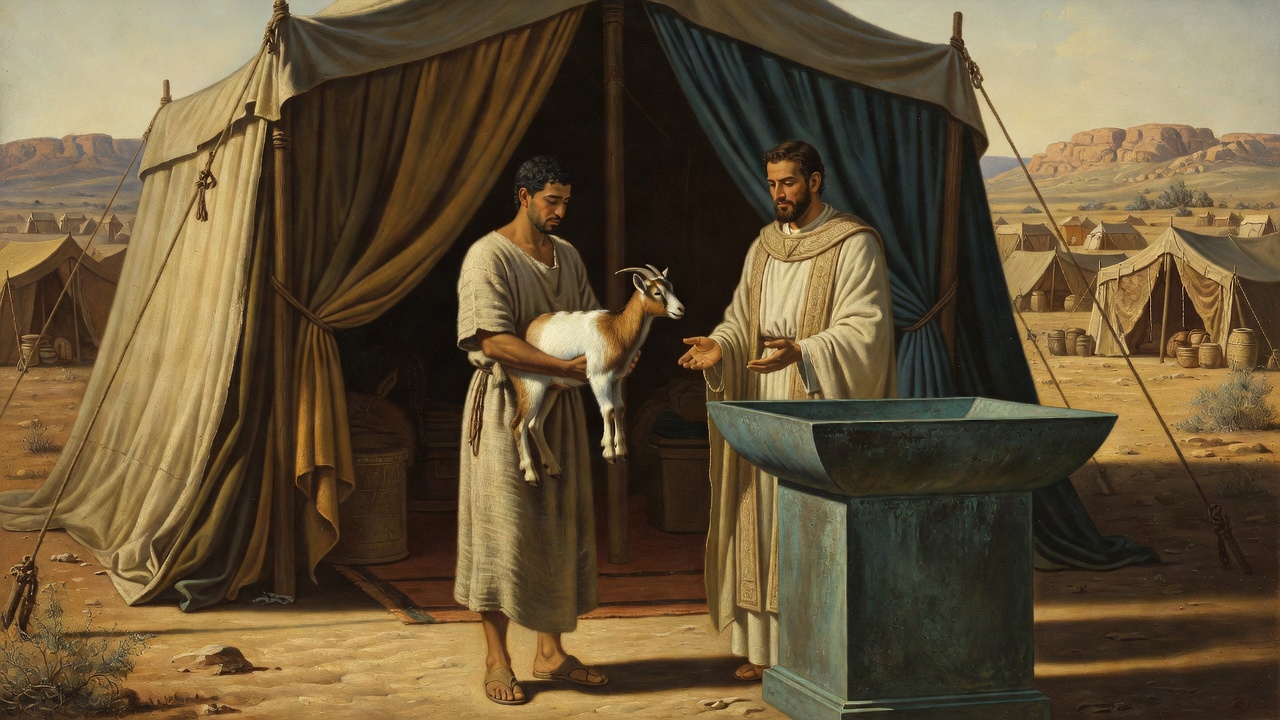
O abate sacrificial e a santidade do sangue
- O Levítico determina que animais domésticos como bois, cordeiros e bodes fossem levados diretamente à entrada da Tenda do Encontro, em vez de serem abatidos em campo aberto. Essa norma garantia que os sacrifícios fossem oferecidos exclusivamente como ofertas de paz ao SENHOR e impedia sacrifícios ilícitos a demônios em forma de bode.Fontes: o próprio texto bíblico
- Tanto os israelitas nativos quanto os estrangeiros residentes eram estritamente proibidos de comer sangue, sob pena de serem eliminados da comunidade. O texto fundamenta essa lei no princípio teológico de que a vida da carne está no sangue, o qual Deus designou especificamente para fazer expiação sobre o altar.Fontes: o próprio texto bíblico
- Quando caçavam animais selvagens ou aves permitidas para alimentação, os israelitas e estrangeiros deviam drenar o sangue na terra e cobri-lo com pó. Essa instrução reforçava que a vida pertence a Deus e preservava a santidade do sangue fora do santuário sacrificial.Fontes: o próprio texto bíblico
Notas escritas com auxílio de IA a partir de fontes abertas (Theographic Bible Metadata, CC BY-SA 4.0; Easton’s Bible Dictionary, domínio público) e revisadas antes de publicar.
Créditos e licença desta tradução
Hset Hadròeh
The New Testament in the Hre language of Vietnam, translated by Baq Thi
Copyright © 2024 Baq Thi
Language: (Hre)
This translation is made available to you under the terms of the
Creative Commons Attribution Share-Alike license 4.0.
You have permission to share and redistribute this Bible translation in any format and to make reasonable revisions and adaptations of this translation, provided that:
You include the above copyright and source information.
If you make any changes to the text, you must indicate that you did so in a way that makes it clear that the original licensor is not necessarily endorsing your changes.
If you redistribute this text, you must distribute your contributions under the same license as the original.
Pictures included with Scriptures and other documents on this site are licensed just for use with those Scriptures and documents.
For other uses, please contact the respective copyright owners.
Note that in addition to the rules above, revising and adapting God's Word involves a great responsibility to be true to God's Word. See Revelation 22:18-19.
2026-07-18
Fonte: http://ebible.org/hrebt/ · eBible.org