Gênesis 4
Hset Hadròeh · Toque num versículo para ver as referências cruzadas.
Ca-in xam Abên.
1Ađam acaq oe ti Êwa, aih mai dadeh; Êwa hadràp ha-uang loh Ca-in. haq doe: “Canòm ka Jêhowa wiang am, au men jah ha-uang loh mòeq ngai. 2Atìq ka aih haq ha-uang loh oh da Ca-in aih la Aƀên; Aƀên broq mangai ban trìu, Ca-in aih mangai abèq ruàng.
3Atìq ka aih ùh dùnh, Ca-in aràng dahwèq loh enh taneh broq ramènh dèch ka Jêhowa. 4Aƀên hadai yŏc deh enh calùh trìu ma ramua xam bòq haq. Jêhowa ngan toq da Abên rai dì yŏc da haq, 5mahaq ùh blèch ngan Ca-in èh hadai ùh dì yŏc ramènh da haq; dài aih Ca-in majah nòeh toq kùp hadrò. 6Jêhowa bòch Ca-in: Gleq ìh majah nòeh, hagleq ìh ma toq kùp hadrò? 7tàng joq ìh broq troq, ma ùh joq da ìh khoe jah dì qmòh? Mahaq tàng joq ìh broq ùh troq aih èh yiniq lui khoe rap đòeq ìh ajang trong qmang, haq enh ka ìh pi cajaq; mahaq ìh ep wèq haq.
8Ca-in doe deh ka Aƀên aih oh cla haq. “Beq ba lam taruàng”. Jò wa haq oe taruàng, Ca-in clàm ta Aƀên aih oh haq, rai jêh đac. 9Jêhowa bòch Ca-in: Aƀên oh ìh taleq? haq tèu: Au ùh qnì, au ma mangai ngan deh oh qmòh? 10Jêhowa doe: Ìh khoe broq cleq qmang aih? Bàu mahim oh da ìh enh taneh creo dang khoe trùh ta au. 11Manòeq kô èh, ìh ep pòq kan hamaiq enh taneh, aih la taneh ma khoe hah hacùng lonh mahim oh ìh majah qmang aih tì kŏng cla ìh khoe broq ta-ùc. 12Jò ìh tamìt acaq, taneh pi loh dahwèq ka ìh hòm; ìh ep lam jac rai amot jàp jìa ta crŏng taneh. 13Ca-in anoe ka Jêhowa: Kan baxa au trap hrìn ùh hlàt pòq. 14Hì kô ìh khoe hnan qnoh au loh enh taneh kô, au wia ka mat ìh, ep lam palac amot ta taneh; èh i cabô chaq hnoq au, wì hi jêh đac. 15Jêhowa padreo bàu “Ùh i qmang aih, tàng cabô jêh đac Ca-in, mangai aih ep chìuq kan patem chau tapèh yàng”. Jêhowa hi pateo hadro ta chac Ca-in, đòeq ùh hìaq i bô jêh đac jò wì hnoq haq. 16Ca-in hi lùi khoe ka enh ngèa Jêhowa, lam oe tagùng Nôt, enh pah mat mahì loh da wuàn Êđen.
Xinoe da Ca-in.
17Ca-in acaq oe deh ti mai, mai haq hadràp ha-uang loh Hênoc; Ca-in broq mòeq toq plài, haq hi creo deh Hênoc tiaq deh yiniq kon calô. 18Hênoc baq da Yrat, Yrat baq da Mêhuđa-ên, Mêhuđa-ên baq da Mêtusa-ên, Mêtusa-ên baq da Lêmec.
19Lêmec yŏc baiq toq mai, mòeq ngai yiniq haq Ađa, mòeq ngai yiniq haq Sila. 20Ađa ha-uang loh Jaƀan, Jaƀan aih la kan cadraq da ƀài mangai rìh roc traiq rai aban ƀài ngè rìh tahnim. 21Oh haq aih Jiuƀan, aih la kan cadraq da ƀài ngai rawêh broc, hlui taliaq. 22Sila hanoh ha-uang loh Tuƀan Ca-in, aih la mangai atèm loh ƀài ranac hin xi đùng xi mem. Oh cadrì da Tuban Ca-in aih la Na-ama. 23Lêmec doe deh ka wa mai:
“Ađa xam Sila, drah tamàng bàu au,
Cadrì da Lêmec, drah tàng bàu au,
Òq au khoe jêh đac moeq ngai, majah qmang aih haq khoe broq ka au habau,
Moeq ngai radam, taiq haq jêh au loh ka pràm,
24Tàng joq Ca-in jah tapèh yàng patem chau,
Aih èh Lêmec jah tapèh jàt yàng patem chau”.
25Ađam acaq oe deh ti mai; haq ha-uang loh mòeq ngai kon calô yiniq haq Sêt; majah qmang aih haq doe: “Boc Plình khoe am ònh ka au moeq ngai kon calô qnoeq đòeq hu thai ka Abên, Ca-in ma khoe jêh đac”. 26Sêt hanoh i moeq toq kon calô, haq yiniq deh ka kon aih la Ênoc. Pang kô kon mangai ma hi creo dang yiniq Jêhowa.
Você sabia?
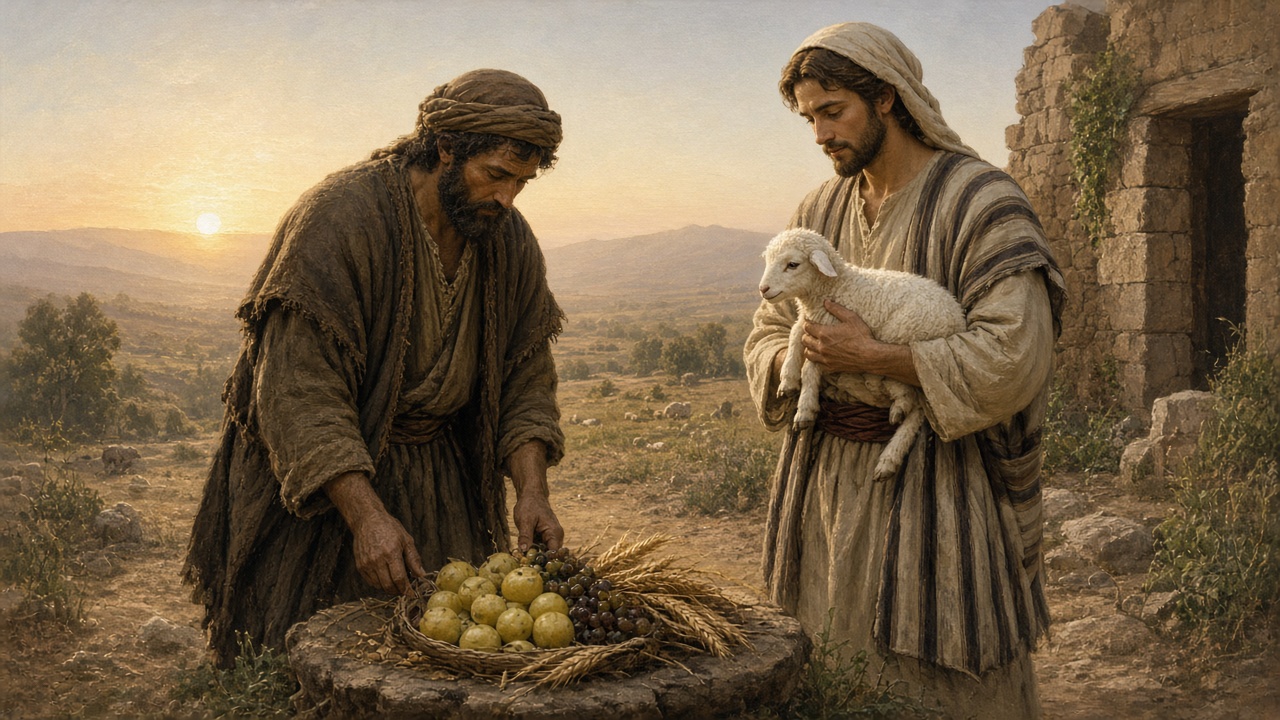
Caim, Abel e a vida a leste do Éden
- O nome hebraico de Abel significa “sopro” ou “vaidade”. Ele cuidava de ovelhas, enquanto seu irmão Caim cultivava o solo: Abel trouxe as melhores porções dos primogênitos do rebanho, e Caim trouxe fruto do solo. O Dicionário Bíblico de Easton (1897) lê a expressão “no decorrer do tempo” (à margem, “ao fim dos dias”) como provável referência ao sábado.Fontes: Abel · Cain · o próprio texto bíblico
- Depois da morte de Abel, Caim foi morar na terra de Node, a leste do Éden, nome que significa exílio, errância ou inquietação. Ali construiu uma cidade e deu-lhe o nome de seu filho Enoque. O Dicionário Bíblico de Easton observa que essa é a primeira cidade mencionada nas Escrituras.Fontes: Nod · Enoch (son of Cain) · o próprio texto bíblico
- Lameque, quinto na descendência de Caim, casou-se com duas mulheres, Ada e Zilá. O Dicionário Bíblico de Easton chama o discurso dele a elas de único exemplo conservado de poesia antediluviana, às vezes conhecido como “cântico da espada de Lameque”. Os filhos deles se ligam a modos de vida antigos: Jabal, às tendas e ao gado; Jubal, à harpa e à flauta; e Tubalcaim, à forja de bronze e ferro.Fontes: Lamech (descendant of Cain) · Adah (wife of Lamech) · Zillah · o próprio texto bíblico
Notas escritas com auxílio de IA a partir de fontes abertas (Theographic Bible Metadata, CC BY-SA 4.0; Easton’s Bible Dictionary, domínio público) e revisadas antes de publicar.
Créditos e licença desta tradução
Hset Hadròeh
The New Testament in the Hre language of Vietnam, translated by Baq Thi
Copyright © 2024 Baq Thi
Language: (Hre)
This translation is made available to you under the terms of the
Creative Commons Attribution Share-Alike license 4.0.
You have permission to share and redistribute this Bible translation in any format and to make reasonable revisions and adaptations of this translation, provided that:
You include the above copyright and source information.
If you make any changes to the text, you must indicate that you did so in a way that makes it clear that the original licensor is not necessarily endorsing your changes.
If you redistribute this text, you must distribute your contributions under the same license as the original.
Pictures included with Scriptures and other documents on this site are licensed just for use with those Scriptures and documents.
For other uses, please contact the respective copyright owners.
Note that in addition to the rules above, revising and adapting God's Word involves a great responsibility to be true to God's Word. See Revelation 22:18-19.
2026-07-18
Fonte: http://ebible.org/hrebt/ · eBible.org