Lucas 16
God Lavayiyat Aṅ Puhuvasiwni · Toque num versículo para ver as referências cruzadas.
The Dishonest Manager
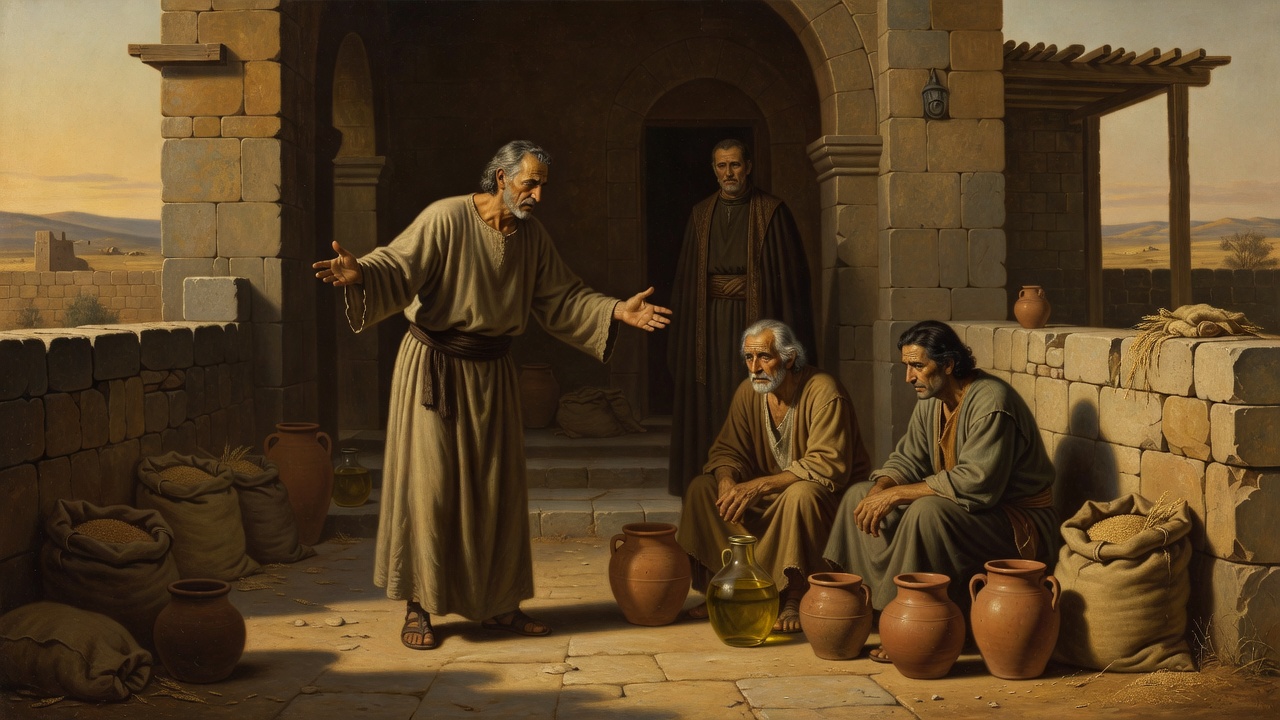
1Pu piw pam put aw nánatuwnayaqamuy amumi paṅqawu: Hak k̇ahaktaqa hakiy put eṅem hihta himuyat aw tunatyawtaniqat aw tavi. Noqw yaw put himuyat aw tunatyawtaqa put himuyat hovalantaqat moṅwíyat āawnaya. 2Noqw pam wáṅwayhqe, put aw paṅqawu: Ya nu it hihta navota? Um hin hihta ihimuy as tunatyawtaqey nuy āawnani; pay um soon pāpu hihta ihimuy aw tunatyawtani. 3Pu pahsat pam hak hihta aw tunatyawtaqa unaṅwpeq paṅqawu: Ya sen nu hinhtini? Imoṅwi itumalay nuy nawhkiniq’ö. Kurs nu hin pasva tumalay’tani; nu hihta tuṅlay’taniqey hahmana. 4Hal kurs nu yanhtini. Noqw hisat nu itumalmakiway aṅqw ayo tūviwhq, sinom nuy kiy ep pās taviyani. 5Kítahqe, ōviy pam moṅwíyat aw pöiwyuṅqamuy nānap wáṅwayhqe, mohti’maqat aw paṅqawu: Um hihsa’haqam imoṅwiy aw pöiwta? 6Noqw pam paṅqawu: Pay tsivót‐sikip sunat tuwanit wihkuyita. Noqw pam put aw paṅqawu: Uhpöiy pey’taqat kwusut, ayam suqtuptut, lȫq sunat pakwt sihk̇ay’taqat pēnaa. 7Pahsat pu pam piw sukwat aw paṅqawu: Noqw umwa hihsa’haqam pöiwta? Noqw pam paṅqawu: Pay tsivót‐sikip sunat tuwanit söhövosita. Noqw pam put aw paṅqawu: Uhpöiy pey’taqat kwusut, nālöp sunat pēnaa. 8Noqw put moṅwíat put ep put aw tayawinlavayhti, pas pam tuhishinhtiqw ōviy’o, nāmahin pi as pam qa súan hinhtiq’ö. Pi yep qatsit tunatyayat aṅ hinwisqam nāp sinomuy amumiwat pas qa ūunatu. Noqw pay tālat aṅ hinwisqam qa pumuy amún tutuhistu. 9Noqw nu umumi paṅqawni: Uma yep qatsit ep hihta umuhimuy akw nenṅem tūkwatslalwani; noqw ason umuhimu súlawhtiqw, puma umuy haqam sutsep yesniqat aw ökinayani. 10Hak sustsa’ ep qa paysoq hintsakqa piw nihtiwtaqat ep qa paysoq hintsakṅwu; pu sustsa’ ep paysoq hintsakqa piw nihtiwtaqat ep paysoq hintsakṅwu. 11Paniqw ōviy kurs uma yep qatsit ep hímuy’tiwhqat paysoq hintsatsne’, ya sen hak hihta hihk̇ay’taqat pas antsanihqat umumi nóani? 12Pu uma hihta qa umuhimuy aw qa suan tunatyawwisq, ya sen hak hihta pas umuhimuyniniqat umumi nóani. 13Kurs hin tumal’aya lȫqmuy moṅwímuy amuṅem tumalay’tani; ispi soon pam qa sukwat aw pay qa yan unaṅway’k̇aṅw, súkwat‐sa pas hahlayni; sen pay hihtawat‐sa aw pas yuki’k̇aṅw, pu sukwat pay qa hímuni. Kurs hin uma k̇āhakiwuy ōviy tumalay’k̇ahk̇aṅw, piw God eṅem tumalay’yuṅwni.
Some Sayings of Jesus
14Noqw Pharisee‐sinom sīvat tuṅlay’yuṅqam sohsok it nanapta; nihqe put aw tututsiwya. 15Noqw pam pumuy amumi paṅqawu: Uma pi sinmuy amumi lolmat nālavaytaṅwu; noqw pi God umumi umuh’unaṅway navoti’ta. Pi himu sinmuyniqw pas hímunihqa God‐niqw tuyoy’eway’o. 16Hisat John pítuhqat aw pahsavo hin hinwisniqa tutavo yuaatiwa, pu God lavay’aymuyatuy lavayiam pīwu. Noqw pahpiy pu’ God moṅwtunatyayat yuaatiwhq, sinom sohsoyam aqw nānaqasya. 17Pay tokpela, pu tūwaqatsi tūwayaniqw, pam pantaqa qa pas hinta; noqw pay tutavot ep sushihsay pey’taqa alöṅtiniqw, pam pantaqa pas qatuvosi. 18Nȫmay mātapqa piw sukw amum qatupte’, tokot sokoptaṅwu; pu puwsuṅway aṅqw mātaviwhqat amum qatuptuqa tokot sokoptaṅwu.
The Rich Man and Lazarus
19Hak k̇ahaktaqa tsatsákwmötsaput a’nö hihk̇ay’taqat yuwsi’k̇aṅw, nāqavo hihta nasani’taṅwu. 20Noqw pu piw hak okiw hihta nuhtumi tuṅlay’taqa, Lazarus yan mātsiwhqa put hötsíwat epeq taviwa, u’yasanīk̇aṅwo. 21Nihqe pay okiw as ṅas’ew pam k̇ahaktaqat nönöspiyat aṅqw hihta piṅput tūmoytaniqey nāwakna. Noqw popkot ök̇e’, okiw put uyayat aṅ leñitsmitotaṅwu. 22Noqw ahpiy pantaqw, i’ okiwsino mōki, Noqw God hoṅviaymat put ōmiq wikyaqw, pam Abraham aqlap qatuptu. Noqw pu tuwat k̇ahaktaqa mokqe āmiwa. 23Nihqe maskiveq k̇ānavoti’k̇aṅw, kwuhpukqe, Abraham yāvoq tuwa, pu Lazarus put aqlap qátuhqata. 24Pu pam tsa’lawhqe paṅqawu: Inaa, Abraham, um okiw nuy ōkwatuwe’, peqw Lazarus hōnaqw, pam malatsiy tsukuyat kūyit aqw móroknat, ileñiy huk̇anani; taq nu yepeq ūwiṅwuy ep pas okiw k̇ānavoti’ta. 25Noqw Abraham paṅqawu: Itii, pay ura um uhqatsiy ep hihta úhimuy lolmat ömahta; noqw pu pan piw Lazarus hihta qalolmat ömahta. Nit pu’ pam suyan unaṅwtiqw, umwa tuwat k̇ānavoti’ta. 26Pu piw pi itamuhtsave a’nö tupqa yukilti; pantaqw ōviy as yaṅqw umumiqyaniqam kurs hinyani; pu piw as umuṅaqw peqwyaniqam kurs hinyani. 27Pahsat pu pam paṅqawu: Inaa, um as turs inay kīyat aw put hōnani. 28Taq nu tsivot tupkomuy’ta. Noqw pam hin yórikqey pumuy āawnaqw, puma qa tuwat peqw k̇ānanvotpit aqwyani. 29Noqw Abraham put aw paṅqawu: Pay pi puma Moses‐nik̇aṅw pu God lavay’ayamuyatuy lavayiyamuy oyi’yuṅwa. Pay ason pumuy amumi tūqayyuṅwni. 30Noqw pam paṅqawu: Qae, Ina Abraham, pay hak so’pumuy amuṅaqw amuminiqw, soon puma tunatyay aṅqw qa lasyani. 31Noqw pam put aw paṅqawu: Pay pi puma Moses‐nik̇aṅw pu God lavay’aymuyatuy lavayiyamuy qa aw tūqayyuṅwe’, nāmahin pi hak so’pumuy amuṅaqw ahoy tātayhq soon tūtuptsiwani.
Você sabia?
Riqueza, dois senhores e Lázaro
- Nas palavras de Jesus sobre o rico e Lázaro, o rico clama: 'Pai Abraão', e Abraão responde: 'Filho'. O Dicionário Bíblico de Easton (1897) explica o nome Abraão como 'Pai de uma multidão' e o descreve como herdeiro das promessas.Fontes: o próprio texto bíblico · Abraham
- Falando aos fariseus, que zombavam dele, Jesus diz que a Lei e os Profetas foram proclamados até João, e que, desde então, o evangelho do reino de Deus está sendo pregado. O Dicionário Bíblico de Easton (1897) chama João Batista de 'precursor de nosso Senhor', afirma que sua missão foi objeto de profecia, inclusive Isaías 40:3 e Malaquias 3:1, e declara que seu nascimento ocorreu seis meses antes do de Jesus.Fontes: o próprio texto bíblico · John the Baptist
- Um administrador acusado de desperdiçar os bens de seu senhor recebe ordem de prestar contas e deixar o cargo. Ele faz os devedores reescreverem suas contas, reduzindo cem medidas de azeite a cinquenta e cem medidas de trigo a oitenta, e o senhor elogia o administrador desonesto porque havia agido com astúcia. Jesus diz então que nenhum servo pode servir a dois senhores, e que ninguém pode servir ao mesmo tempo a Deus e ao dinheiro.Fontes: o próprio texto bíblico
Notas escritas com auxílio de IA a partir de fontes abertas (Theographic Bible Metadata, CC BY-SA 4.0; Easton’s Bible Dictionary, domínio público) e revisadas antes de publicar.
Créditos e licença desta tradução
God Lavayiyat Aṅ Puhuvasiwni
New Testament in Hopi (US:hop:Hopi)
copyright © 2012 Wycliffe Bible Translators, Inc.
Language: Hopi
Translation by: Wycliffe Bible Translators, Inc.
Hopi [hop], USA
Copyright Information
© 2012, Wycliffe Bible Translators, Inc. All rights reserved.
This translation text is made available to you under the
terms of the Creative Commons License: Attribution-Noncommercial-No Derivative Works.
( http://creativecommons.org/licenses/by-nc-nd/3.0/ )
In addition, you have permission to port the text to different file formats, as long as you
do not change any of the text or punctuation of the Bible.
You may share, copy, distribute, transmit, and extract portions
or quotations from this work, provided that you include the above copyright
information:
You must give Attribution to the work.
You do not sell this work for a profit.
You do not make any derivative works that change any of the actual words or punctuation of the Scriptures.
Permissions beyond the scope of this license may be
available if you contact
us with your request.
The New Testament
in Hopi
© 2012, Wycliffe Bible Translators, Inc. All rights reserved.
This translation is made available to you under the terms of the
Creative Commons Attribution-Noncommercial-No Derivatives license 4.0.
You may share and redistribute this Bible translation or extracts from it in any format, provided that:
You include the above copyright and source information.
You do not sell this work for a profit.
You do not change any of the words or punctuation of the Scriptures.
Pictures included with Scriptures and other documents on this site are licensed just for use with those Scriptures and documents.
For other uses, please contact the respective copyright owners.
2014-04-25
Fonte: http://ebible.org/hopNT/ · eBible.org