1 Coríntios 10
God Lavayiyat Aṅ Puhuvasiwni · Toque num versículo para ver as referências cruzadas.
Warning against Idols
1Pu pīwu, itupkomu, pay uma it navoti’yuṅwniqat nu nāwakna: Ura itanam sohsoyam ōmawuy atpik̇aqeya; pu sohsoyam wuhkovatuphat aṅqe’ nöṅa. 2Pu puma sohsoyam ōmawuy akw Moses aw tuvoylatoti, pu wuhkovatuphat akw’a. 3Nihqe puma sohsoyam nȫsiwhqat God aṅqwnihqat aṅqw nȫnösa. 4Pu sohsoyam kūyit God aṅqwnihqat aṅqw hikwya. Pi puma owat hihta tuawi’taqat aṅqw hikwya. Pam owa Christ tuawi’ta. Noqw pam suyan pumuy amumum hinma. 5Noqw pi ura God pumuy amuṅaqw k̇aysiwhqamuy amuhpe qa salayhti; ōviypi ura puma qayēsiwhpuvehaqam wuhko soa. 6Noqw i’ yantaqa hapi itamuy u’nantoyna, itam aṅ hihta qalomáhinyuṅqat qa aw kwaṅwátayyuṅwniqat ōviy’o, panhtotiqamuy qa amun hinhtotini. 7Piw ura pumuy amuṅaqw haqawat nāp yukit aw nāwakintotaqw, uma qa pumuy amún hintsatsk̇ani. Taq ura yan pey’ta: Sinom aṅ yesvat nōnova, pu piw hīhikwya, pu pahsat hoṅvaqe tīvantiva. 8Pu itam qa amún nuvöqatsit tumalay’yuṅwni. Ura pumuy amuṅaqw haqawat pantsatsk̇aqe sūkw tāwat ep sunat aṅqw payhkomuy sihk̇ay’tasikip sōmorit pahsa’nihqam súlawhti. 9Pu itam qa Christ puhtsemokintotani, ura pumuy amuṅaqw haqawat panhtotiqamuy qa amunhtotini. Taq puma panhtotiqe tsūtsu’tuy amuhpiy soa. 10Pu uma piw pay qa yan umuh’unaṅway hiṅqaqwani, ura pumuy amuṅaqw haqawat panhtotiqamuy qa amunhtotini; taq puma panhtotiqw, God hoṅviayay ayataqw, pam pumuy qöya. 11Noqw as sinom pumuy amuhpiy hihta tuwi’vayaniqat ōviy puma it sohsok hihta aṅ kūkuyva. Noqw itamuy so’ṅwamiq ökiwisqamuy u’nantoynaniqe ōviy pāvam pēniwa. 12Paniqw ōviy pay hūrs wúnuhqey namiwuwantaqa tunatyaltimantani; taq nāp hisat ūnate’, pam múnukni. 13Pay qa hak hihta alöṅöt akw unaheviwhqey wūwantani, ispi wūhaknihqam pay pan hapi unaheviwyaq’ö. Pi God soon lavayiy qa an hinmani; nihqe pam hakiy öqaltaqw, soon unaheppi hakiy epnihqe öqalay’tani. Pi God hin ayo yámakniqat hakiy āawnaqw, hak unaheppit aṅ kuyvani. 14Noqw ōviy’o aw iunaṅwamu, uma nāp yukit aw nāwakintiwhqat pas qe’yani. 15Nu hapi pās wuwni’yuṅqamuy amumi yuaata. Uma nuy hiṅqawhqat aw wūwayani. 16It kuyapkuyit aṅqw hahlayhpit kūyiwtaqat itam hahlayhtote’, itam soñawnen Christ uṅwáyat aṅqw sūp hikwyaṅwu. Pu itam pölavikit yóṅoyhtote’, itam Christ tokoyat aṅqw sūp nȫnösaṅwu. 17Pay as pi itam k̇aysiwhqamyak̇ahk̇aṅw sūkw pölavikit anyuṅwa, piw sūkw tokot anyuṅwa. Pi itam sohsoyam put sūkw pölavikit aṅqw nōnova. 18Kurs uma yep qatsit ep Israel‐sinmuy amumi wūwayani. Ya ima hom’oyit aṅqw nōnovaqam God hom’oyvihk̇ayat qa amum God aw nāwakintiwisa? 19Ya nu hihta paṅqawu: Sen pi nāp yuki pas antsa hímunihqat, sen nāp yukit aw himu noiwhqa pas antsa hímunihqat nu paṅqawu? Qae. 20Nu hapi paṅqawu: Ima qa‐Jew‐sinom hihta hom’o’ye’, puma nukpanhihikwsimuy amumi put hom’o’yaṅwu, qa God aw’i. Noqw uma nukpanhihikwsimuy amumum hintsatsk̇aniqat nu qa nāwakna. 21Soon uma Tutuyqawhqat kuyapkuyiyat nukpanhihikwsimuy kuyapkuyiyamuy enaṅ hīhikwyani. Soon uma Tutuyqawhqat tunösvoñayat nukpanhihikwsimuy tunösvoñayamuy enaṅ nōnovani. 22Ya sen itam Tutuyqawhqat puvuhtsemoqnayani? Ya sen itam put epnihqe ö’qaltu? 23Pay as nu hihta hinhtiniqw pam sohsoy k̇a inumi súanta, nīk̇aṅw pay qa sohsoy nukṅwa. Pay as nu hihta hinhtiniqw pam sohsoy k̇a inumi súanta, nīk̇aṅw pay qa sohsoy hakiy öqalaṅwu. 24Qa hak hapi nēṅem‐sa hihta ōviy tunatyawtat, ayo sukw eṅem hihta lolmat tunatyawtani. 25Uma huhyankiva hihta huhyaniwhqat nōnovani, nen umuh’unaṅwpeq umuhsunvotiy tunatyawk̇ahk̇aṅw qa pas hihta tūviṅlalwani. 26Pi tūwaqatsi Tutuyqawhqat himuata, pu aṅ himu hinyuṅqa. 27Kurs qatuptsiwni’yuṅqamuy amuṅaqw haqawa umuy tūtsamhq, uma ámumyaniqey unaṅwtote’, himu umutpip poñahtiwhqat uma nōnovamantani, qa tūviṅlalwak̇ahk̇aṅw umuh’unaṅwpeq umuhsunvotiy tunatyawk̇ahk̇aṅwo. 28Nīk̇aṅw ason kurs haqawa put nāp yukit aw noiwhqat umumi kitaqw, pay uma qa aṅqw nȫnösamantani, umuy āawanaqat k̇aptsi’totaniqe ōviy’o, put unaṅwpeq sunvotiyat tunatyawk̇ahk̇aṅwo. Pi tūwaqatsi Tutuyqawhqat himuata, pu aṅ himu hinyuṅqa. 29Nu uh’unaṅwpeq uhsunvotiy qa kitat, ayam sukwat unaṅwpeq sunvotiyat nu kita. Noqw hak k̇a inumi paṅqawni: Pi nu qenive wunuk̇aṅw hihta tūmoytaqw, ya hinoqw ayam suk̇a pas nāp unaṅwpeq sunvotiy ahpiy nuy ōvelantani? 30Pi nu put ep God aw hahlayhtit, put aṅqw nösṅwu. Noqw ya hinhtiqw ōviy nu put ep hahlayhtiqw ayam suhk̇a pas nāt piw put ep inumiq qalomáhiṅqawni? kítani. 31K̇a pi panta. Nīk̇aṅw um as God tayawniwniqat ōviy sohsok hintsakmantani, sen um tūmoytani, sen um hikwni, sen pay nāp hihta hintsakni. 32Uma qa hakiy unaṅwmoknayani, imuy Jew‐sinmuyu, pu pay qa‐Jew‐sinmuyu, pu imuy God aw tōnawtaqamuyu. 33Nu tuwat sohsokmuy hihta aṅ ahsupoq unaṅwve mamavisqe qa nēṅem hihta tunatyawtat, as k̇aysiwhqamuy hihta akw moṅwvasye’ ayo nö́ṅakniqat ōviy amuṅem tunatyawta.
Você sabia?
Advertências do deserto e a mesa do Senhor
- Paulo diz que não quer que os coríntios ignorem que os antepassados estiveram todos debaixo da nuvem e passaram todos pelo mar, e que foram batizados em Moisés na nuvem e no mar. Todos comeram o mesmo alimento espiritual e beberam a mesma bebida espiritual da rocha espiritual que os acompanhava, e ele afirma que essa rocha era Cristo.Fontes: o próprio texto bíblico
- Paulo diz que Deus não se agradou da maioria deles, pois foram abatidos no deserto. Ele menciona a idolatria, a imoralidade sexual em que vinte e três mil morreram num só dia, o ato de pôr Cristo à prova, que trouxe morte por serpentes, e as queixas, punidas pelo anjo destruidor, e chama esses fatos de exemplos registrados como advertências.Fontes: o próprio texto bíblico
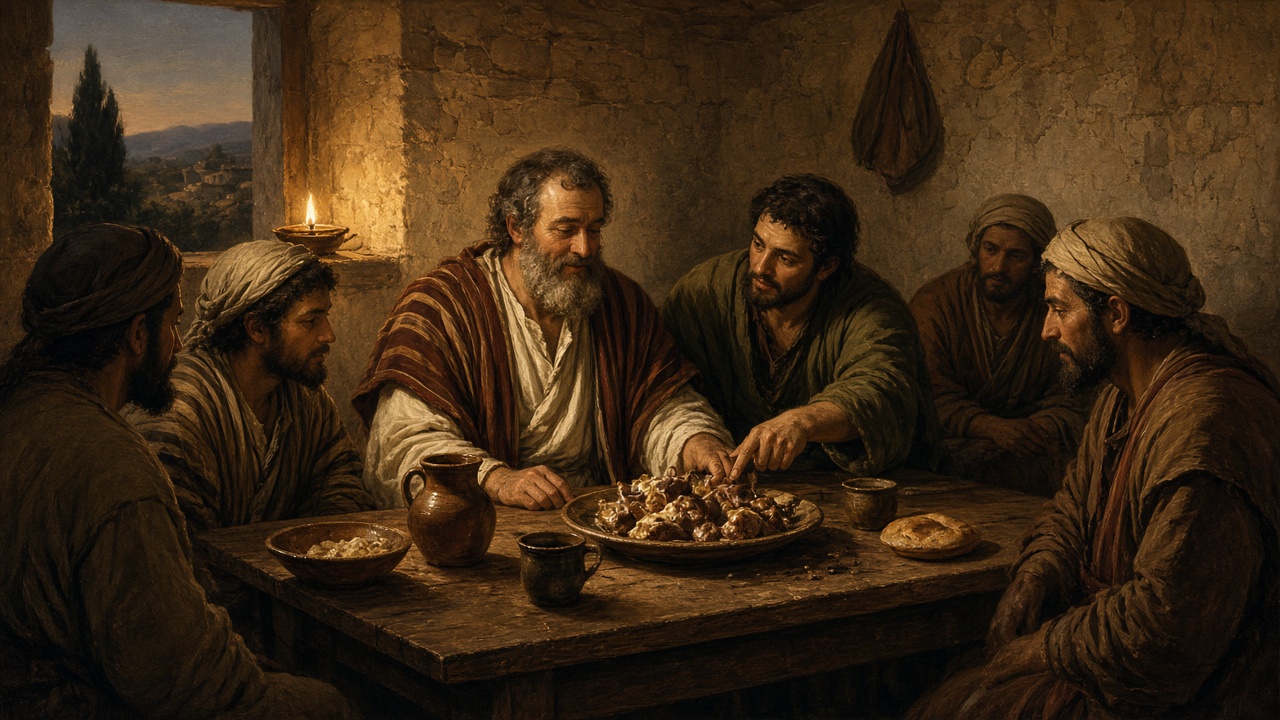
- Ele chama o cálice da bênção e o pão que é partido de participação no sangue e no corpo de Cristo, e afirma que os sacrifícios dos pagãos são oferecidos a demônios, não a Deus, de modo que as duas mesas não podem ser partilhadas. O que se vende no mercado de carne pode ser comido sem levantar questões de consciência, pois "Do Senhor é a terra e a sua plenitude", mas, se alguém disser que foi oferecido a ídolos, convém recusar por causa da consciência dessa pessoa.Fontes: o próprio texto bíblico
Notas escritas com auxílio de IA a partir de fontes abertas (Theographic Bible Metadata, CC BY-SA 4.0; Easton’s Bible Dictionary, domínio público) e revisadas antes de publicar.
Créditos e licença desta tradução
God Lavayiyat Aṅ Puhuvasiwni
New Testament in Hopi (US:hop:Hopi)
copyright © 2012 Wycliffe Bible Translators, Inc.
Language: Hopi
Translation by: Wycliffe Bible Translators, Inc.
Hopi [hop], USA
Copyright Information
© 2012, Wycliffe Bible Translators, Inc. All rights reserved.
This translation text is made available to you under the
terms of the Creative Commons License: Attribution-Noncommercial-No Derivative Works.
( http://creativecommons.org/licenses/by-nc-nd/3.0/ )
In addition, you have permission to port the text to different file formats, as long as you
do not change any of the text or punctuation of the Bible.
You may share, copy, distribute, transmit, and extract portions
or quotations from this work, provided that you include the above copyright
information:
You must give Attribution to the work.
You do not sell this work for a profit.
You do not make any derivative works that change any of the actual words or punctuation of the Scriptures.
Permissions beyond the scope of this license may be
available if you contact
us with your request.
The New Testament
in Hopi
© 2012, Wycliffe Bible Translators, Inc. All rights reserved.
This translation is made available to you under the terms of the
Creative Commons Attribution-Noncommercial-No Derivatives license 4.0.
You may share and redistribute this Bible translation or extracts from it in any format, provided that:
You include the above copyright and source information.
You do not sell this work for a profit.
You do not change any of the words or punctuation of the Scriptures.
Pictures included with Scriptures and other documents on this site are licensed just for use with those Scriptures and documents.
For other uses, please contact the respective copyright owners.
2014-04-25
Fonte: http://ebible.org/hopNT/ · eBible.org