Apocalipse 21
Parmeswar ke naawa poestak · Toque num versículo para ver as referências cruzadas.
Naawa swarag aur doenia
1Tab ham ekgo naawa swarag aur dhartie dekhlie. Pahiela swarag aur dhartie ab biet gail raha, aur samoendar bhie na raha. 2Tab ham dekhlie kaise Parmeswar pawietr naawa Jeroesaalem sahar ke swarag me se oetaare hai. Oe sahar etana biesaal dekhaail, djaise ek doelahien aapan doelaha khaatien saparies hai. 3Tab Parmeswar ke gaddie alang se ek aawaadj djor se soenaail kie: „Dekh! Ab Parmeswar aapan rahe ke djagaha manai ke bietj me banaais hai. Oe maange hai oelogke saathe rahe. Oesab okar djaatie log rahiega aur oe apane oelogke sanghe rahiega. 4Oe har ek manai ke aas potjhiega. Ab se koi na mariega, koi ke doekh na oethaawe ke pariega, koi na roiga aur koi ke moesiebat na sahe ke pariega. Sab pahiele ke tjiedj ab biet gail.”
5Tab gaddie par baithal Waala bolies: „Soen. Ham har ek tjiedj naawa banaaila.” Aur oe hamse bolies: „Ie sab baat liekh de. Ie satj baat hai aur toe opar bharosa kar sake hai.” 6Oe hamse bhie bolies: „Ab sab tjiedj samaap hoi gail hai. Ham djaise alfa (A) aur omega (Z) baatie, ham har ek tjiedj ke soeroe aur ant baatie. Aur dje ke diel ke piaas lagie, ham oke djiewan ke paanie ke dhaara me se moeft me pieje ke debe begar koetjh lautaare. 7Dje djietiega, oe hamaar naawa sahar me khoesiaalie se bhaag leiga. Ham okar Parmeswar rahabe aur oe hamaar larka rahiega. 8Bakie darpokh waalan, be-bieswaasie log, ghienna tjiedj sotje aur kare waalan, djaanmarwan aur tjhatjhoendar logan, odjha logan, naklie bhagwaan ke poedje waalan, aur sab djhoettha logan, oelog baroed ke aagie ke petie me biegal djaaiga. Iesab to ehie laaik ke hai. Aur ie doesara maut rahiega.”
Naawa Jeroesaalem sahar
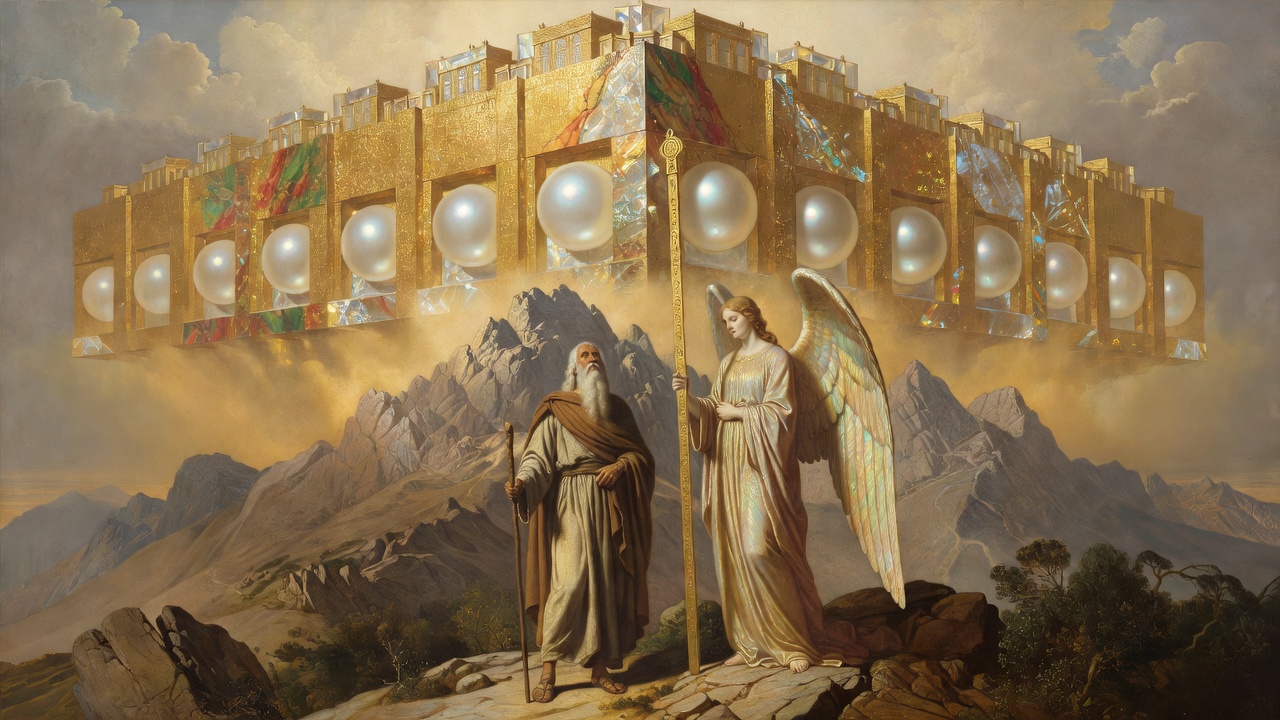
9Tab Parmeswar ke saato parie djaun aapan kobba me se antiem goessa oedjhlies raha, oelog me se ekgo aaike hamse bolies: „Aaw hia, ham toke doelahien dekhaabe. Oe bhera ke Battja ke aurat rahiega.” 10Tab ham Pawietr Aatma se bhar gailie aur parie hamme ek oetja pahaar par legail. Hoewa se oe hamme pawietr Jeroesaalem sahar dekhaais. Ham dekhlie kaise Parmeswar eke swarag me se oetaare hai. 11Oe sahar Parmeswar ke andjor me hiera-motie ghat tjamkat raha aur djaise djhaadjhar jasab dekhaat raha. 12Sahar ke tjaaro alang bahoet tjakala aur oetja dewaal raha, aur oman baaraago dwaarie raha. Har ek dwaar ke lage ek ek parie thara raha. Aur dwaar ke oeppar Israel ke baara koel me se ek ek ke naam liekhal raha. 13Har ek alang se tien-tiengo dwaar raha aur poerab, oettar, datjhien aur patjhiem kait me tien-tiengo dwaar raha. 14Aur oe dewaal baaraago barka ieta par banaawal raha. Epar bhera ke Battja ke baara pathaawal waalan ke naam liekhal raha.
15Tab parie djaun hamse batiaat raha, oe ek sona ke danda leis sahar, dwaar aur dewaal naape khaatien. 16Tab djab oe naape lagal tab dekhies kie sahar ke lambaai aur tjakalaai ekke hai. Aur okar oetjaai bhie oisane raha. Ek kait doei hadjaar kilometer se djaada raha. Sahar ke tjaar kona raha. 17Tab oe bhie dewaal ke motaai naapies, aur oe lagbhag sattar (70) meter raha. Parie naapat raha djaise iensaan logan naape hai.
18Dewaal jasab se banaawal raha, aur sahar ekdam poera sona ke dekhaat raha djaise ekdam djhaadjhar kaatj. 19Oe baara ieta djaun par dewaal raha, oe har ek rakam rang-bierang ke hiera-motie se sadjaawal raha. Pahiela ieta
jasab se banaawal raha,
doesara nielmanie ke,
tiesara laalrie ke,
tjautha markat ke,
20patjwa gomedak ke,
tjhatwa maaniekia ke,
satwa pietmanie ke,
athwa perodj ke,
nauwa poekhraadj ke,
daswa lahasnie ke,
gjerahwa dhoemrakaant ke aur
baarahwa jaakoet ke hiera-motie se banaawal raha.
21Aur sahar ke baara dwaarie ek ek nag se banaawal raha. Hoewa ke rasta poera sona se banaawal raha, aur ekdam se djhaadjhar djaise kaatj ke dekhaat raha.
22Sahar me ham Parmeswar ke mahal na dekhlie. Sab se maahaan Prabhoe Parmeswar aur bhera ke Battja hoewa apane rahe hai, aur okar aadar karal dja hai. 23Hoewa par soeroedj aur tjandarma ke djaroerie na hai. Parmeswar ke maahaanta apane andjor dewe hai, aur bhera ke Battja oe sahar ke tjieraag ghat hai. 24Aur doenia ke djaatie log ie andjor me tjaliega. Aur oelogke raadja logan aapan dhan-daulat sahar me laaiga. 25Hoewa kabhie raat na hoiga, ohie se okar dwaarie hardam khaatien khoelal rahiega. 26Doenia ke sab djaatie logan ke barhia barhia tjiedj sahar me pathaawal djaaiga Parmeswar ke aadar kare khaatien. 27Bakie ekko kharaab tjiedj bhiettar na djaaiga. Aur bhie ekko manai na djaun malietj kaam kare hai aur djhoeth bole hai. Khaalie djekar naam bhera ke Battja ke djiewan ke poestak me liekhal hai, oe sahar me bhiettar djaaiga.
Você sabia?
A nova Jerusalém
- Nesta visão, a cidade que desce do céu é chamada de cidade santa, a nova Jerusalém. Jerusalém também era conhecida como a cidade santa e a cidade de Deus, e em árabe é el-Khuds, que significa a santa. O nome está numa forma dual e significa posse da paz ou fundamento da paz.Fontes: o próprio texto bíblico · Jerusalem
- O vidente é levado no Espírito a um monte grande e alto e vê essa cidade santa descendo. Jerusalém é descrita como uma cidade de montanha entronizada numa fortaleza de montanha, e a forma dual do nome provavelmente se refere aos dois montes sobre os quais foi construída, Sião e Moriá, ou, como alguns supõem, à cidade alta e à cidade baixa.Fontes: o próprio texto bíblico · Jerusalem
- A muralha da cidade tem doze portas, três de cada lado, inscritas com os nomes das doze tribos de Israel. Israel é outro nome de Jacó, explicado como aquele que segue os calcanhares de outro, ou como um suplantador.Fontes: o próprio texto bíblico · Jacob (Israel)
Notas escritas com auxílio de IA a partir de fontes abertas (Theographic Bible Metadata, CC BY-SA 4.0; Easton’s Bible Dictionary, domínio público) e revisadas antes de publicar.
Lugares deste capítulo
Só aparecem lugares com identificação de alta confiança (90% ou mais segundo as fontes acadêmicas reunidas pelo OpenBible). Mapa da época: DARE (Digital Atlas of the Roman Empire), CC BY 4.0; mapa atual: © colaboradores do OpenStreetMap; lugares: OpenBible.info (CC BY 4.0).
Créditos e licença desta tradução
Parmeswar ke naawa poestak
New Testament in Hindustani, Caribbean (NS:hns:Hindustani, Caribbean)
copyright © 2010 Wycliffe Bible Translators, Inc.
Language: Hindustani, Caribbean
Translation by: Wycliffe Bible Translators, Inc.
Hindustani, Caribbean [hns], Suriname
Copyright Information
© 2010, Wycliffe Bible Translators, Inc. All rights reserved.
This translation text is made available to you under the
terms of the Creative Commons License: Attribution-Noncommercial-No Derivative Works.
( http://creativecommons.org/licenses/by-nc-nd/3.0/ )
In addition, you have permission to port the text to different file formats, as long as you
do not change any of the text or punctuation of the Bible.
You may share, copy, distribute, transmit, and extract portions
or quotations from this work, provided that you include the above copyright
information:
You must give Attribution to the work.
You do not sell this work for a profit.
You do not make any derivative works that change any of the actual words or punctuation of the Scriptures.
Permissions beyond the scope of this license may be
available if you contact
us with your request.
The New Testament
in Hindustani, Caribbean
© 2010, Wycliffe Bible Translators, Inc. All rights reserved.
This translation is made available to you under the terms of the
Creative Commons Attribution-Noncommercial-No Derivatives license 4.0.
You may share and redistribute this Bible translation or extracts from it in any format, provided that:
You include the above copyright and source information.
You do not sell this work for a profit.
You do not change any of the words or punctuation of the Scriptures.
Pictures included with Scriptures and other documents on this site are licensed just for use with those Scriptures and documents.
For other uses, please contact the respective copyright owners.
2014-04-25
Fonte: http://ebible.org/hnsNT/ · eBible.org