João 16
Parmeswar ke naawa poestak · Toque num versículo para ver as referências cruzadas.
1Ham toelogse se ie sab baat bataaila nahie to toelog aapan bieswaas tjhor deihe. 2Dharam ke barkwan toelogke to na khaalie aapan partjaar ke ghar me se niekaswaai dei, bakie bhie ek dien toelogke marwaai dhaarie. Aise karke oesab sotjiega kie oelog Parmeswar khaatien barhia kaam kare hai. 3Iesab Parmeswar ke aur hamke na djaane hai, ohie se oesab aise kariega. 4Ham toelogse ie sab bataaila, tab djab tem aai tab toelogke hamaar baat jaad hoi.
Tieha dewe Waala ke kaam
Ham toelogke lage rahielie, ohie se ham toelogse sataawe ke biese me koetjh na bataawat rahielie. 5Bakie ab ham aapan pathaawe Waala ke paas lautke djaabe. Tabbo toelog me se koi na poetjhe hai kie: ‘Toe kaaha djaihe?’ 6Toelogke ie baat se bahoet doekh hai. 7Bakie ham toelogse sattje ke bataaila kie toelog khaat bestar hai kie ham djaabe. Djab ham na djaabe tab tieha dewe Waala na aai sakie. Bakie djab ham djaabe tab ham oke toelogke lage pathaabe. 8Aur djab oe aaiga tab oe doenia ke dekhaaiga kie paap kaun tjiedj hai. Oe sab ke samdjhaaiga ekgo iensaan kaise be-kasoer ghat Parmeswar se ek hoi sake hai, aur bhie kie Parmeswar saitaan ke oeppar faisala kariega. 9Oelog hamare me bieswaas na kare hai, ohie se oe dekhaaiga kie oesab paapie hai. 10Ham aapan Baap ke paas tjal djaabe aur toelog hamme na dekh paihe. Ese dekhal djaai kaise ek iensaan be-kasoer aur Parmeswar se ek hoi sakie. 11Aur bhie dekhaawal djaai kie Parmeswar saitaan ke oeppar faisala kar tjoekal hai, tjaahe oe ab talak doenia ke raadj tjalaawe waala hai.
12Hamme bahoet koetjh hai bataawe ke, bakie toelog abbe na sahie paihe. 13Pawietr Aatma ‘sattjaai ke Aatma’ bolaawal dja hai. Aur djab oe aaiga, tab oe toelogke Parmeswar ke poera sattjaai siekhaaiga. Oe na apane se bataaiga, bakie khaalie djaun Parmeswar ose boliega. Aur oe toelogke aane waala tjiedj djanaaiga. 14Oe toelogse hamaar baat bataaiga. Aisane oe dekhaaiga kie ham ketana maahaan baatie. 15Pieta Parmeswar ke sab tjiedj hamaar bhie hai. Ohie se ham bollie kie oe toelogse hamaar baat bataaiga.”
Doekh aur khoesiaalie
16Oe bolies: „Thora dien auro tab toelog hamme na dekhiehe. Tab koetjh dien baad toelog hamme phien dekhiehe.” 17Tab ekaatgo tjela log apane me poetjhe lagal: „Ekar matlab ka hai? Oe kaahe ke bole hai kie: ‘Thora dien auro tab toelog hamme na dekhiehe, tab koetjh dien baad toelog hamme phien dekhiehe’? Aur bhie: ‘Ham Pieta Parmeswar ke paas djaab’? 18‘Thora dien’ ke matlab ka hai? Hamlog na samdjhiela kie oe kaun tjiedj ke biese me batia hai.”
19Jiesoe djaan gail kie oelog koetjh maange hai poetjhe. Tab bolies: „Ka, toelog ie baat na samdjhe hai? 20Ham toelogse bataaila kie toelog tjhaatie piet-pietke roihe, bakie be-bieswaasie logan khoesie rahie. Toelogke doekh rahie, bakie oe doekh khoesiaalie me badal djaai. 21Ekgo aurat ke djab larka paida howe hai, tab oke bahoet doekh aur piera oethe hai. Bakie djab larka paida hoi dja hai, tab oe piera bhoel dja hai aur bahoet khoesie hai kie oe ek naawa iensaan ke djanam deis hai. 22Aisahie tohoelogse hoi. Abbe toelogke doekh hai, bakie djab ham toelogke phien dekhab tab toelog khoesiaalie me rahiehe. Aur ie khoesiaalie koi na tjhien paai. 23Tab toelogke djaroerie na rahie hamse koetjh maange ke. Ham toelogse sattje ke boliela kie toelog djab Pieta Parmeswar se koetjh mangiehe, tab oe hamaar naam se deiga. 24Ab talak toelog Parmeswar se koetjh na mangle hai hamaar naam se. Aise kariehe, tab mieliega aur toelogke khoesiaalie ekdam poera hoi djaaiga.”
Tjela log ke bieswaas
25Oe bolies: „Ab talak ham baat topal-dhaapal bolat rahielie, bakie ek tem aaiga kie ham Pieta Parmeswar ke biese me toelogse kholke bataabe. 26Oe same se toelog hamare naam se ose koetjh maang sakiehe, aur hamke djaroerie na rahie toelog khaatien maange ke. 27Toelog hamme pjaar kare hai aur bieswaas kare hai kie ham Parmeswar lage se ailie hai. Ohie se oe toelogke bhie tjaahe hai aur toelog apane se ose koetjh maang sakiehe. 28Ham Pieta Parmeswar lage se doenia par ailie baatie. Aur ab ham doenia tjhorke phien Pieta Parmeswar ke paas djaabe.”
29Tab tjela log bolies: „Dekh, ab hamlog samdjhiela toe ka bole hai aur tor baat topal-dhaapal na hai. 30Ab hamlog djaaniela kie toe sab tjiedj djaane hai aur bhie kie hamlog ka maangiela poetjhe. Ohie se hamlog bieswaas kariela kie toe Parmeswar lage se aile baate.” 31Tab oe bolies: „Ka, toelog ab bieswaas kare hai? 32Soen ham ka boliela. Ek tem aaiga aur ab aail hai kie toelog tjaaro alang bhaag djaihe. Toelog aapan aapan djagaha tjal djaihe aur hamme akel tjhor deihe. Tabbo ham akele na rahab, Pieta Parmeswar hamare saath hai. 33Toelog hamare me saamiel baate. Aur ham maangiela kie ekare dwaara toelogke diel me sjaantie rahie. Ohie se ham toelogse ie sab baat aage se bataaila. Be-bieswaasie log toelogke bahoet moesiebat deiga. Bakie hiemmat na hariehe. Dje doenia par manai log se boeraai karwaawe hai, ham oke djiet tjoekalie.”
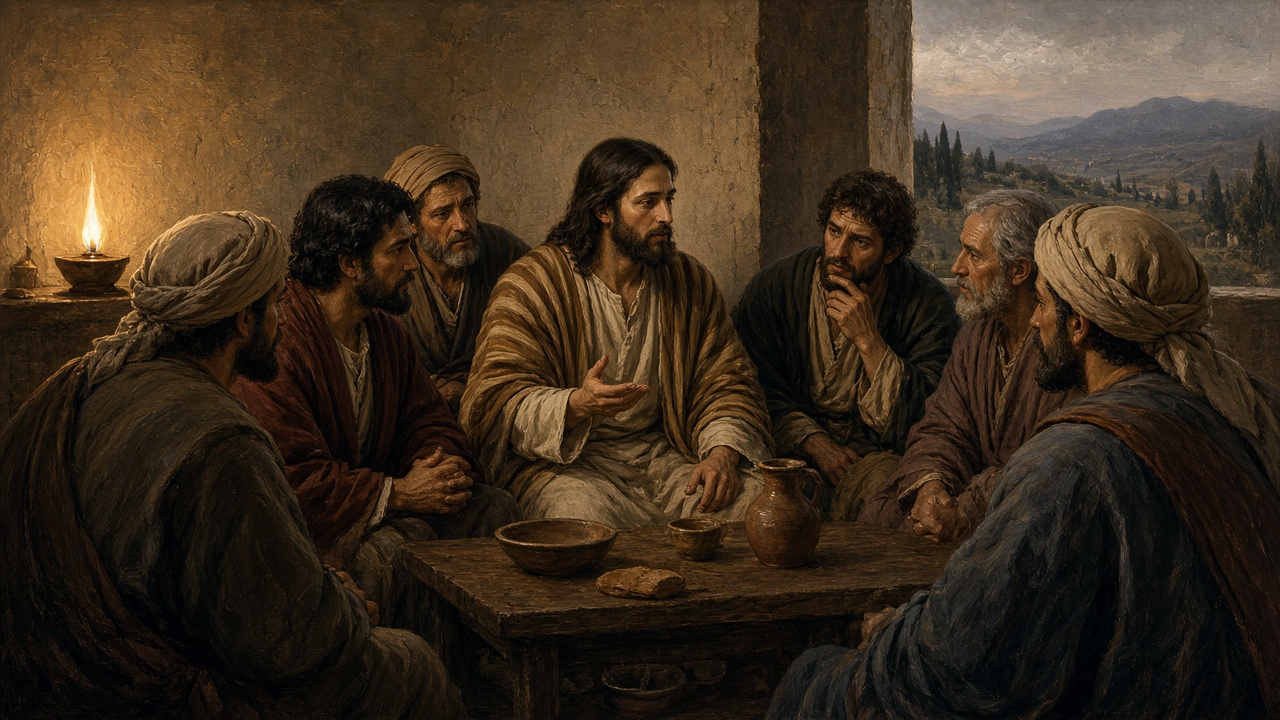
Você sabia?
A partida, o Advogado e a alegria após a tristeza
- As anotações dos eventos situam este capítulo no Discurso do Cenáculo, um episódio de um dia dentro da Semana Santa, que essas anotações indicam como um período de oito dias.Fontes: Upper Room Discourse · Holy Week
- Jesus diz aos discípulos que eles serão expulsos das sinagogas. Acrescenta que virá um tempo em que quem os matar pensará que está oferecendo um serviço a Deus, porque não conheceram o Pai nem a ele.Fontes: o próprio texto bíblico
- Ele diz que é para o bem deles que está indo embora, pois, se não partir, o Advogado não virá. Quando o Espírito da verdade vier, os guiará a toda a verdade, não falando por si mesmo, mas dizendo o que ouve e anunciando o que está por vir.Fontes: o próprio texto bíblico
Notas escritas com auxílio de IA a partir de fontes abertas (Theographic Bible Metadata, CC BY-SA 4.0; Easton’s Bible Dictionary, domínio público) e revisadas antes de publicar.
Créditos e licença desta tradução
Parmeswar ke naawa poestak
New Testament in Hindustani, Caribbean (NS:hns:Hindustani, Caribbean)
copyright © 2010 Wycliffe Bible Translators, Inc.
Language: Hindustani, Caribbean
Translation by: Wycliffe Bible Translators, Inc.
Hindustani, Caribbean [hns], Suriname
Copyright Information
© 2010, Wycliffe Bible Translators, Inc. All rights reserved.
This translation text is made available to you under the
terms of the Creative Commons License: Attribution-Noncommercial-No Derivative Works.
( http://creativecommons.org/licenses/by-nc-nd/3.0/ )
In addition, you have permission to port the text to different file formats, as long as you
do not change any of the text or punctuation of the Bible.
You may share, copy, distribute, transmit, and extract portions
or quotations from this work, provided that you include the above copyright
information:
You must give Attribution to the work.
You do not sell this work for a profit.
You do not make any derivative works that change any of the actual words or punctuation of the Scriptures.
Permissions beyond the scope of this license may be
available if you contact
us with your request.
The New Testament
in Hindustani, Caribbean
© 2010, Wycliffe Bible Translators, Inc. All rights reserved.
This translation is made available to you under the terms of the
Creative Commons Attribution-Noncommercial-No Derivatives license 4.0.
You may share and redistribute this Bible translation or extracts from it in any format, provided that:
You include the above copyright and source information.
You do not sell this work for a profit.
You do not change any of the words or punctuation of the Scriptures.
Pictures included with Scriptures and other documents on this site are licensed just for use with those Scriptures and documents.
For other uses, please contact the respective copyright owners.
2014-04-25
Fonte: http://ebible.org/hnsNT/ · eBible.org