Atos 16
Parmeswar ke naawa poestak · Toque num versículo para ver as referências cruzadas.
Tiemotias ke hakiekat
1Tab Paulas Derbe aur Liestra sahar me aail. Liestra me ek Tiemotias naam ke bieswaasie naudjawaan rahat raha. Okar maai ek Israel djaatie ke iesaai raha. Bakie okar baap Griek djaat ke raha. 2Tiemotias ke tjaal-tjalan Liestra aur Iekoniam sahar ke iesaai bhaai-bahien ke bahoet attjha lagat raha. 3Paulas maangat raha oke aapan sanghe ledjaai. Bakie hoewa ke Israel logan djaanat raha kie okar baap ek Griek ke aadmie raha. Ohie se oe pahiele okar hakiekat karwaais.
4Tab oesab ie sahar se oe sahar gail. Aur bieswaasie log se bataais kie Prabhoe ke pathaawal waalan Jeroesaalem ke iesaai ke barkwan sanghe sallaah karies raha kaun tjiedj doesar djaat ke iesaai khaatien mienaahie hai. 5Aisane sab iesaai ke bieswaas barhat djaat raha aur dien par dien auro manai bieswaas kare lagal.
Paulas log Maasadonia diehaat me
6Tab Paulas aapan saathie sanghe Friegia aur Gaalaatsia diehaat me aur aage gail. Pawietr Aatma oesabke djanaai deis raha Aasia des me khoes khabar na partjaar kare ke. 7Tab djab oesab Miesia diehaat me pahoetjal, tab Bietienia diehaat maangat raha djaai. Bakie Jiesoe ke Aatma oesabke phien na djaain deis.
8Tab oesab Miesia diehaat dharke gail Troas sahar talak samoendar ke kienaare. 9Oe raat me Prabhoe Paulas ke koetjh dekhaais. Oe ek Maasadonia diehaat ke aadmie thara dekhies. Aadmie ose bolies: „Ham tor gor gieriela, aaw samoendar ke oepaar Maasadonia me hamlogke sahaaita kare khaatien.” 10Tab hamlog ohie laage kausies karlie Maasadonia diehaat djaai ke. Oe sapana dwaara hamlog samadjh gailie kie Parmeswar hamlogke bolwaais hoewa ke manai log se khoes khabar partjaar kare ke.
Fielepie sahar me
11Tab hamlog djahaadj se Troas sahar se samoendar ke oepaar gailie aur Saamotraaka diehaat se paas hoi gailie. Biehaan bhaile hamlog aur aage Niaapoles sahar ke or gailie. 12Tab djab hamlog oe sahar me pahoetjlie, tab paidar Fielepie gailie. Oe sahar Maasadonia diehaat ke ie bhaag ke sab se kaamiel waala sahar hai. Roma djaat log oe sahar banaais raha, aur Roma ke kaanoen thiek se maanal dja hai. Hoewa par hamlog koetjh dien khaatien rahat rahielie.
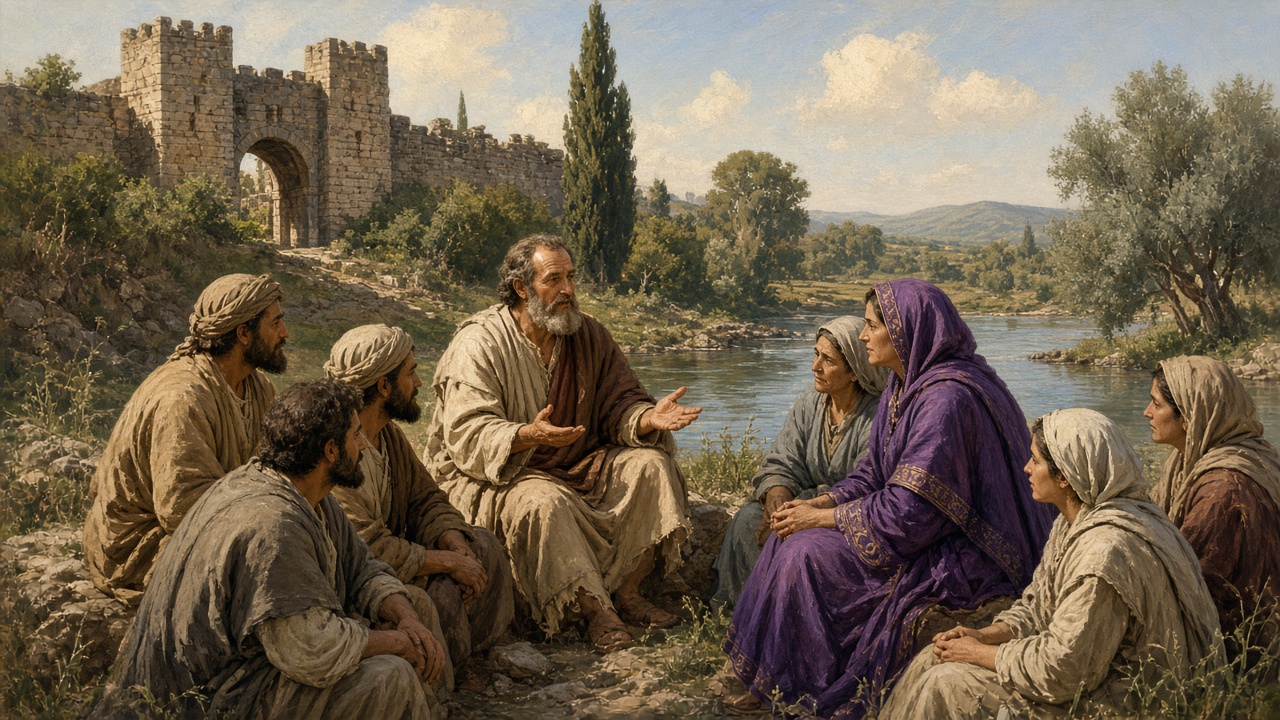
13Tab sabat ke dien hamlog sahar me se nadie lage gailie. Hamlog sotjlie kie hoewa par ek Israel djaat ke praatna ke djagaha hoi. Tab oe djagaha par hamlog ekaat saamiel aurat ke bhetailie aur baithke oesabse koetjh baat batailie. 14Oman ek Liedia naam ke aurat raha. Oe Tiaatiera sahar me tjatak liela rang ke kapra betjat raha aur oe Israel ke Parmeswar ke barka maanat raha. Tab Prabhoe aisan karies kie oe aapan diel kholke Paulas ke partjaar par dhiaan kare lagal. 15Tab oe aapan ghar-paraanie sanghe dopoe bhail. Ekare baad oe hamlogse bolies: „Djab toelog dekhle kie ham sattje ke Prabhoe me bieswaas kariela, tab aaw hamaar ghar me rahoe.” Aur bahoet bole se hamlog gailie.
Agam-djaanie goelaam aurat
16Bas ek dien djab hamlog praatna ke djagaha gailie, tab ek kienal goelaam aurat ke bhetailie. Okar oeppar bhoet raha. Aurat okar dwaara djanta se aagam ke baat bataawat raha aur aisane aapan barkwan khaatien bahoet paisa kamaat raha. 17Oe hamlogke aur Paulas ke paatjhe tjale lagal aur tjiellaaike bolies: „Ie aadmie sab se maahaan Parmeswar ke kamkartan hai. Iesab djanaawe hai Parmeswar kaise maange hai iensaan ke aapan aane waala goessa me se batjaawe!”
18Aisane oe dher dien talak hamlogke paatjhe tjiellaat bolat djaat raha. Tab djab Paulas na sahie paais, tab oe bhoet se bolies: „Ham toke Jiesoe Kriest ke naam se hoekoem deila kie aurat par se hat dja.” Bas toerante saitaan okar oeppar se bhaag gail.
Fielepie sahar ke djahal me
19Tab djab goelaam aurat ke barkwan dekhies kie oesabke paisa ke rasta band hoi gail hai, tab oesab Paulas aur Sielaas ke ghietjke legail ekdam badjaar talak. Hoewa par sahar ke barkwan baithat raha.
20Tab oesab barkwan ke aage doeno ke kasoer dewe lagal. Bolies: „Ie mardaana log hamlogke sahar me haltjal matjaawe hai. Oelogan Israel ke djaatie hai. 21Oesab aisan hoekoem siekhaawe hai djaun Roma ke djaatie khaatien mienaahie hai.” 22Tab hoewa ke djaatie djoetke bhie doeno ke oeppar goessaail. Bas barkwan Paulas log ke kapra tjier-phaarke oetarwaais aur tjhatkoen se oesabke khoeb marwaais. 23Tab oesabke djahal me daar deis. Aur bhie djahal ke rakhwaala ke hoekoem deis oesabke khoeb thiek se rakhaawe ke. 24Ohie khaatien oe oesabke djahal ke sab se bhiettar kothrie me legail. Aur oesabke gor doei djabar lakarie ke bietj me taala kar deis.
25Tab bietj raat me Paulas aur Sielaas Parmeswar se praatna karies aur giet gaais okar aadar kare khaatien. Aur sab djahalian soenat raha.
26Bas atjakke me bhoeidol aail. Oe etana djabar-djas waala raha kie djahal ekdam se hiele lagal. Bas ohie laage sab kamaarie aur bhie djahalian ke ketie khoel gail. 27Tab djahal ke rakhwaala djab tjaukke djaagal, tab dekhies kie djahal ke kamaarie khoelal hai. Bas dar ke maare oe aapan talwaar niekaaske maangat raha aapan djaan maare. Oe sotjies kie sab djahalian bhaag gail hai. 28Bakie Paulas tjiellaaike bolies: „Apane ke koetjh na kar! Hamlogan hia baatie!” 29Tab rakhwaala tjieraag maangies aur haalie se bhiettar gail. Hoewa par oe kaapat Paulas aur Sielaas ke aage gaathie par gieral. 30Tab oe doeno ke kothrie se bahare legail aur poetjhies: „Bhaija, Parmeswar ke goessa me se batj djaai khaatien ham ka kar sakab?” 31Tab oesab bolies: „Prabhoe Jiesoe me bieswaas kar, tab ghar-paraanie sanghe batj djaihe.” 32Aur oesab Prabhoe ke khoes khabar oke aur okar ghar bhar ke samdjhaawe lagal.
33Oe raat me rakhwaala oesabke ghaaw dhois. Tab oe toerant aapan sab ghar-paraanie sanghe dopoe leis. 34Tab oe Paulas aur Sielaas ke leike aapan djahal ke oeppar ghar me gail aur oesabke baithaaike khaaik deis. Oe etana khoesie raha kie oe aapan ghar bhar sanghe Parmeswar me bieswaas kare lagal.
35Biehaan bhaile sahar ke barkwan ekaat siepaahie ke pathaais rakhwaala se bataawe ke kie: „Ie mardaana log djaai sake hai.” 36Tab rakhwaala Paulas se bolies: „Barkwan sanesa pathaais kie aadj se toelog tjhoet gaile hai. Barhia se djaiho!” 37Bakie Paulas siepaahie log se bolies: „Hamlogke Roma ke djaatie ke hak hai, tabbo kalhia oesab hamlogke biena khodjie kare sab koi ke aage marwaais aur djahal me dharwaais. Aur ka, oelog maange hai hamlogke aadj tjoeppe se pathaai dewe? Oesabse bol de bhoelaai djaai! Oelogke tjaahie apane se aawe ke hamlogke niekaare.” 38Siepaahie log gail ie sab baat sahar ke barkwan se bataawe. Tab barkwan djab soenies kie Paulas aur Sielaas ke Roma ke djaatie ke hak hai, tab oelogke dar lagal.
39Tab oesab gail maafie maange aur doeno ke kaida se djahal me se legail. Bolies: „Barhia rahat kie ab se toelog ie sahar se tjal djaite.” 40Tab Paulas aur Sielaas djahal se Liedia ke ghare gail. Hoewa par oelog bieswaasie bhaai-bahien se bhet karies aur oelogke tieha deis. Tab oesab sahar se tjal gail.
Você sabia?
De Listra a Filipos
- Em Listra, Paulo encontrou Timóteo, um discípulo de quem os irmãos de Listra e Icônio falavam bem, filho de uma judia crente e de pai grego. Querendo-o como companheiro, Paulo o circuncidou por causa dos judeus dali, que sabiam que seu pai era grego. O dicionário bíblico de Easton (1897) diz que Timóteo provavelmente morava em Listra e parece ter se convertido na visita anterior de Paulo.Fontes: o próprio texto bíblico · Timotheus
- Depois de serem impedidos de falar na província da Ásia, Paulo e seus companheiros viajaram pela Frígia e pela Galácia. Na fronteira da Mísia não lhes foi permitido entrar na Bitínia, e então desceram a Trôade, o principal porto da Mísia, na costa noroeste da Ásia Menor, cidade que recebeu o nome da antiga Troia, cerca de quatro milhas ao norte. Ali, uma visão noturna de um homem da Macedônia que pedia ajuda os levou a navegar para essa província romana ao norte da Grécia.Fontes: o próprio texto bíblico · Mysia · Troas · Macedonia
- Na colônia romana de Filipos, Paulo e seus companheiros encontraram, junto ao rio e fora da porta da cidade, um lugar onde era costume orar, e ali mulheres estavam reunidas. Entre elas estava Lídia, comerciante de tecidos de púrpura, de Tiatira, e adoradora de Deus; depois que ela e os de sua casa foram batizados, ela convenceu os viajantes a ficarem em sua casa. O dicionário bíblico de Easton (1897) a descreve como uma prosélita de riqueza considerável e como a primeira pessoa na Europa a abraçar o cristianismo.Fontes: o próprio texto bíblico · Lydia
Notas escritas com auxílio de IA a partir de fontes abertas (Theographic Bible Metadata, CC BY-SA 4.0; Easton’s Bible Dictionary, domínio público) e revisadas antes de publicar.
Lugares deste capítulo
- Lystra · Hoje: Tel Lystra · 37.602, 32.338 · versículos 1, 2
- Iconium · Hoje: Konya · 37.872, 32.492 · versículo 2
- Jerusalem · 31.777, 35.234 · versículo 4
- Asia · 38.400, 28.300 · versículo 6
- Galatia · 39.267, 32.983 · versículo 6
- Phrygia · 39.000, 31.000 · versículo 6
- Bithynia · 40.500, 31.000 · versículo 7
- Mysia · 40.000, 28.500 · versículos 7, 8
- Troas · Hoje: Alexandria Troas · 39.752, 26.159 · versículos 8, 11
- Greece · 37.972, 23.727 · versículo 9
- Macedonia · 41.600, 22.540 · versículos 9, 10, 12
- Neapolis · Hoje: Kavala · 40.935, 24.415 · versículo 11
- Samothrace · Hoje: Samothraki · 40.450, 25.583 · versículo 11
- Philippi · 41.012, 24.285 · versículo 12
- Thyatira · Hoje: Akhisar · 38.920, 27.837 · versículo 14
Só aparecem lugares com identificação de alta confiança (90% ou mais segundo as fontes acadêmicas reunidas pelo OpenBible). Mapa da época: DARE (Digital Atlas of the Roman Empire), CC BY 4.0; mapa atual: © colaboradores do OpenStreetMap; lugares: OpenBible.info (CC BY 4.0).
Créditos e licença desta tradução
Parmeswar ke naawa poestak
New Testament in Hindustani, Caribbean (NS:hns:Hindustani, Caribbean)
copyright © 2010 Wycliffe Bible Translators, Inc.
Language: Hindustani, Caribbean
Translation by: Wycliffe Bible Translators, Inc.
Hindustani, Caribbean [hns], Suriname
Copyright Information
© 2010, Wycliffe Bible Translators, Inc. All rights reserved.
This translation text is made available to you under the
terms of the Creative Commons License: Attribution-Noncommercial-No Derivative Works.
( http://creativecommons.org/licenses/by-nc-nd/3.0/ )
In addition, you have permission to port the text to different file formats, as long as you
do not change any of the text or punctuation of the Bible.
You may share, copy, distribute, transmit, and extract portions
or quotations from this work, provided that you include the above copyright
information:
You must give Attribution to the work.
You do not sell this work for a profit.
You do not make any derivative works that change any of the actual words or punctuation of the Scriptures.
Permissions beyond the scope of this license may be
available if you contact
us with your request.
The New Testament
in Hindustani, Caribbean
© 2010, Wycliffe Bible Translators, Inc. All rights reserved.
This translation is made available to you under the terms of the
Creative Commons Attribution-Noncommercial-No Derivatives license 4.0.
You may share and redistribute this Bible translation or extracts from it in any format, provided that:
You include the above copyright and source information.
You do not sell this work for a profit.
You do not change any of the words or punctuation of the Scriptures.
Pictures included with Scriptures and other documents on this site are licensed just for use with those Scriptures and documents.
For other uses, please contact the respective copyright owners.
2014-04-25
Fonte: http://ebible.org/hnsNT/ · eBible.org