Salmos 148
Tuivang Holy Bible · Toque num versículo para ver as referências cruzadas.
1Bawipa taw kyihcah lah uh. Khan nakawng Bawipa ce kyihcah unawh, sawsang soeih awh Bawipa ce kyihcah lah uh. 2Ak khan ceityihkhqi boeih aw, amah ce kyihcah lah uh. 3Khawmik ingkaw pihla aw, amah ce kyihcah lah, nangmih aihchi ak ngaihkhqi boeih aw, amah ce kyihcah lah uh. 4Nangmih khan ak sangkhqi aw, amah ce kyihcah lah uh. 5Bawipang ming ce kyihcah lah u seh, kawtih amah ing awi pe nawh ik-oeih a sai na awm hy. 6Cekkhqi ce amah a hun boeih awh kumqui dyna tahy, amak khum thai awipeek ce cekkhqi venawh pehy. 7Khawmdek awhkawng Bawipa ce kyihcah lah uh, nangmih tuicunli khui awhkaw a sai ik-oeih ak bau soeih khqi ingkaw tuihdungkhqi aw, 8khawkphla ingkaw kqeek khqi, vyl ingkaw cingmaikhqi, ak awipeek ak ngai khawhli, 9nangmih tlangkhqi ingkaw cungkhqi, ak thaih kawi thingkhqi ingkaw sidar thingkhqi, 10kqawng qamsakhqi ingkaw khqinkhqi, qamsa ak zawikhqi ingkaw ak ding phakhqi, 11khawmdek awhkaw sangpahrangkhqi ingkaw phynlum boeih, nangmih boei a cakhqi ingkaw khawmdek ak ukkungkhqi boeih, 12cadawngkhqi ingkaw nulakhqi, pacawngkhqi ingkaw naasenkhqi boeih aw, Bawipa ce kyihcah lah uh. 13Cekkhqi ing Bawipang ming ce kyihcah u seh, kawtih anih ang ming doeng ni zoeksang aham a awm; a boeimangnaak taw dek ingkaw khan ak khan awh awm hy. 14Anih ing ak thlangkhqi ham kii hak thawh pehy, ak thlangciimkhqi am kyihcahnaak ing, ak kawlung ing ak zoe khet Israelkhqi kyihcahnaak awm sai pehy. Bawipa taw kyihcah uh.
Você sabia?
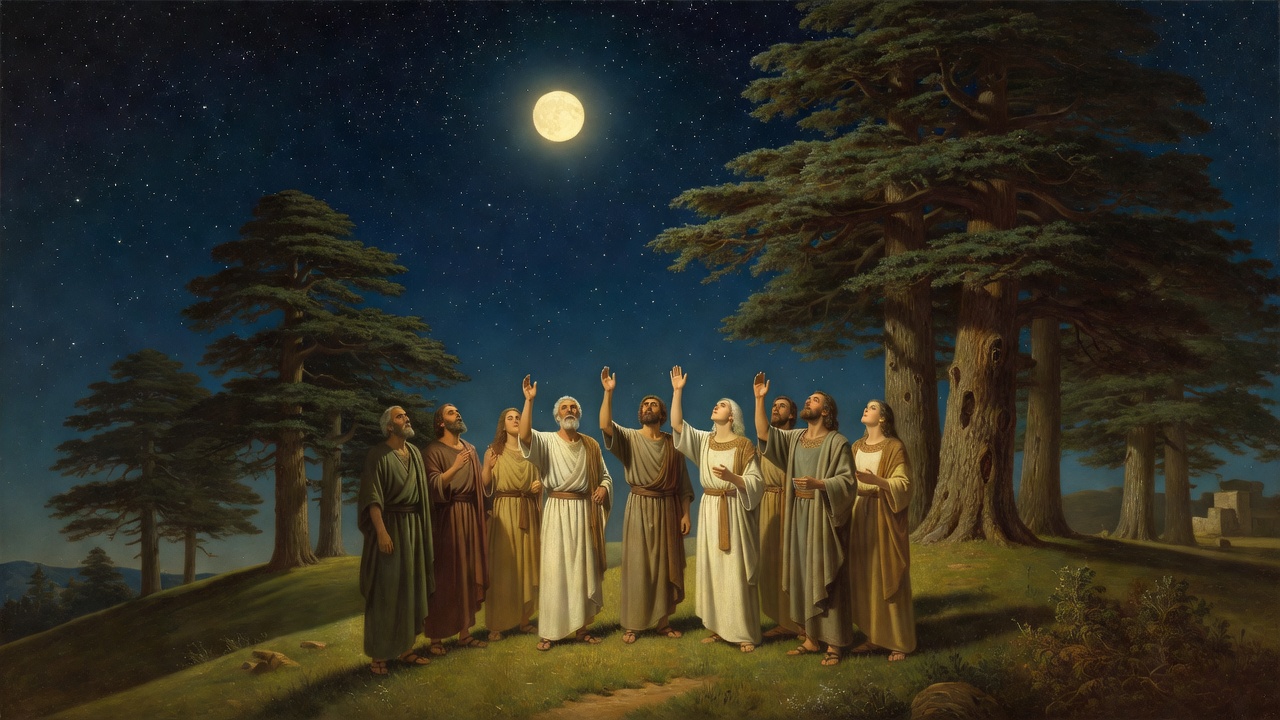
Louvor universal dos céus e da terra
- O Salmo 148 está estruturado como um inventário cósmico abrangente, convocando todos os níveis da criação a louvar a Deus. Ele se inicia nas alturas dos céus com os anjos, os exércitos celestiais, o sol, a lua, as estrelas e as águas acima do firmamento, descendo depois para a terra.Fontes: o próprio texto bíblico
- A seção terrestre abrange elementos meteorológicos, relevos, árvores, animais selvagens e domesticados, além de todos os segmentos da sociedade humana, desde monarcas e governantes até jovens, donzelas e anciãos.Fontes: o próprio texto bíblico
- O cântico conclui seu alcance abrangente concentrando-se no povo da aliança, destacando que Deus levantou o poder de Seus servos e descrevendo Israel como um povo achegado a Ele.Fontes: o próprio texto bíblico · Jacob (Israel)
Notas escritas com auxílio de IA a partir de fontes abertas (Theographic Bible Metadata, CC BY-SA 4.0; Easton’s Bible Dictionary, domínio público) e revisadas antes de publicar.
Créditos e licença desta tradução
Tuivang Holy Bible
The Holy Bible in the Tuivang dialect of the Matu Chin language of Myanmar (Burma)
Copyright © 2020 Batupei Christian Fellowtship
Language: Tuivang (Chin, Matu)
Dialect: Tuivang
Copyright applies only in Myanmar. Outside Myanmar, this work is in the Public Domain.
This translation is made available to you under the terms of the
Creative Commons Attribution Share-Alike license 4.0.
You have permission to share and redistribute this Bible translation in any format and to make reasonable revisions and adaptations of this translation, provided that:
You include the above copyright and source information.
If you make any changes to the text, you must indicate that you did so in a way that makes it clear that the original licensor is not necessarily endorsing your changes.
If you redistribute this text, you must distribute your contributions under the same license as the original.
Pictures included with Scriptures and other documents on this site are licensed just for use with those Scriptures and documents.
For other uses, please contact the respective copyright owners.
Note that in addition to the rules above, revising and adapting God's Word involves a great responsibility to be true to God's Word. See Revelation 22:18-19.
2026-07-26
Fonte: http://ebible.org/hltthb/ · eBible.org