João 3
U BULUNGANA U NIGA · Toque num versículo para ver as referências cruzadas.
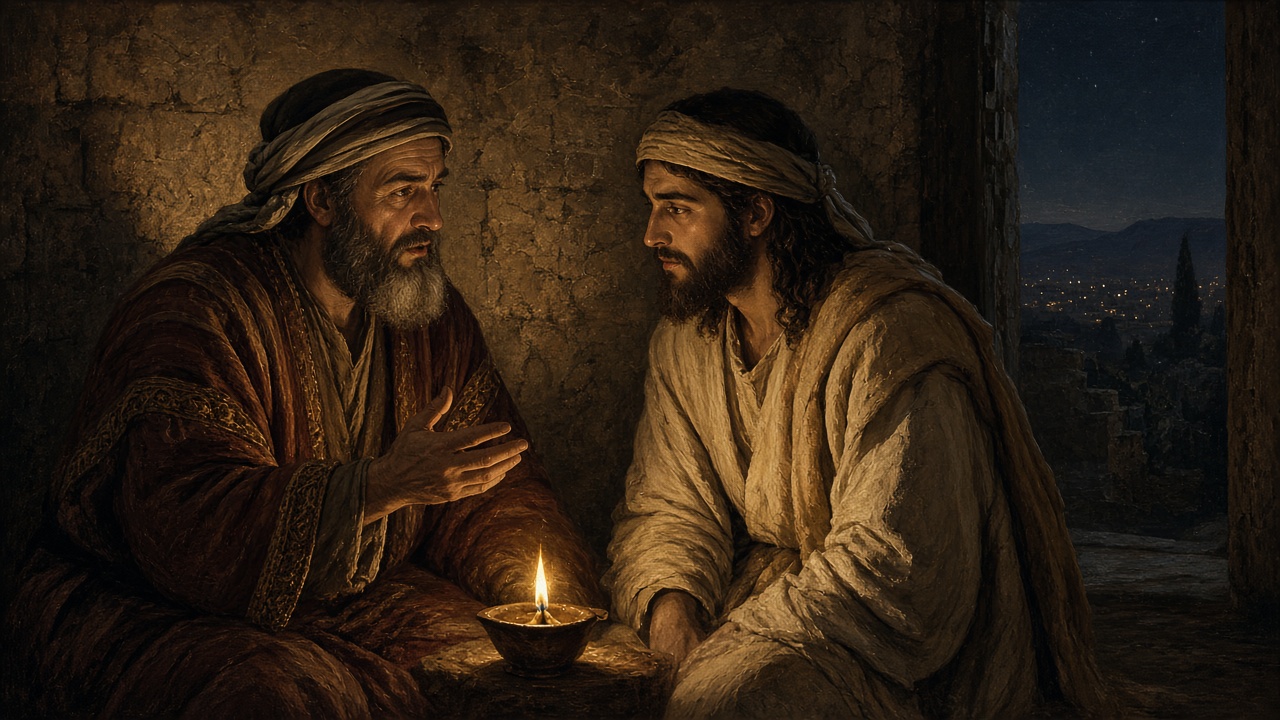
E Iesu ne Nikodimas
1A toa katun a solonen e Nikodimas e la uama tere Iesu tara toa bong. Nonei a toa kapan turu Jiu na nonei a pala has turu Parisi. Ba nonei e poiena tere Iesu, “O Tson Hihatuts, alam e atei silem alö u lama tere Sunahan e go mi hatutsir lam. Taraha, e moa ta toa ta katun te go tatei kato a man mirakul te katoe mulö te go ma taguhu menien e Sunahan.” 3Be Iesu e ranga palise nen me poiena, “U mana koru alia e hateie golö, te ma posa lele ria a katun, e ma tatei atei sile nei a man kana tara Nipepeito tere Sunahan.” 4Be Nikodimas e poiena i tanen, “Ime te tatei posa halona lel mena roi a katun te pan hakapa? Nonei e tatei la poutsuna i iahana u ongungon-pien tere tsinanen ba te posa hahuol lele riou?” 5Be Iesu e ranga palis uana i tanen me poiena, “U mana koru alia e hateie golö, te ma pose ria a katun turu ramun na turu namnamei, nonei e ma tatei tasu nei tara Nipepeito tere Sunahan. 6U tuanrei e hatuhanena u tuanrei, nu namnamei e hatuhanena u namnamei. 7Alö go ma asingotoi te hatei mena gulei lia alö, ‘Alimiu gi posa lel riou.’ 8A lomolomo e bahu uana te ngil uanen, ba lö te hengoem te ling uanen. Kaba alö e ma atei silemi te la namen na te la uanen. Ne kato has uana i iesana tara katun te pose ria turu Namnamei.” 9Be Nikodimas e poiena i tanen, “Ime te tatei mar butu halona uana a ka teka?” 10Be Iesu e ranga palisina i tanen me poiena, “Alö a tson hihatuts pan i Israel ba lö te ma atei silemi a ka teka? 11U mana koru alia e hateie golö, alam mera pal barebana i tar e raranga nem a man ka te atei sile mulam na man ka tu ruto hakapi lam, kaba alimiu e rama namiu u raranga i tamulam. 12Alia u hatei rai limiu a man kana i puta. Te ma hamane mia limiu a man ka teka, ba te moa koruna te go tatei hamana uam limiu i tar te go hatei meri lia limiu a man kana i Kolö. 13E moa ta toa ta katun te ga la sei i Kolö. Kaba alia tu butun katunuma u koulma i Kolö. 14E Moses e haka sei u keisan kukutsi turu roei tara latu pinopino. Ba lia tu butun katunuma e haka sei noa has menari romana i iesana. 15E kato uana teka bu katun hoboto te hamana roa i tar e tatei ka meriou romana a nitoatoa te ka nitoana.” 16E Sunahan e tatagi sil koru rema u katun hoboto me hala nenama a toa koru a Pien Tson i tanen. Na katun te hamana uana i tanen e ma tatei tia nei romana kaba e tatei ka menou a nitoatoa te ka nitoana. 17E Sunahan e ma hala sile mei a Pien Tson i tanen i puta te go mi kot sil merien u katun i puta. E moa. Nonei e hala sile meien te go mi taguhu merien u katun. 18A katun te hamana uana tara Pien Tson tere Sunahan e moa tu kot te ga butuia i tanen. Kaba a katun te ma hamana nei e ka noa has mena u kot, taraha nonei e ma hamana uai tara toa koru a Pien Tson tere Sunahan. 19U kot e mar kato uana teka: u ualesala e la uama i puta. Nu ualesala teka e haharoei nena u niateina tara man ka hamana tere Sunahan. Bu katun e ngiler u kuhil me rama ner u ualesala, taraha a markato i taren e omina. 20Taraha, a katun a omi e rama koru nena u ualesala, ba nonei te ma la uana mei turu ualesala, te gi ma haruto menien a markato i tanen. 21Kaba a katun te kato hamatsköna e la uanama turu ualesala, bu ualesala te haruto nanou e Sunahan e hanige iena a markato i tanen.
Iesu ne Jon
22Ba i murimuri, be Iesu nu katunun tsitsilo i tanen e la hoboto uar tara provins i Judia. Ba nori e na ka ria tara han teka ba te baptais rer a barebana. 23E Jon i ma haka noei tara karabus. Nonei e baptais hasir u katun i Inon te sukusukuia tara han i Selim. Taraha, a ramun e gono. Ba barebana e mi luer a baptais. 25Ba palair u katunun tsitsilo tere Jon na toa Jiu e hiangengangena siler a saha mar baptais te matsköna. 26Ba nori e la uarima tere Jon me poier i tanen, “Tson Hihatuts, alö e atei silem nonei a katun te ka gono meio lö i hapalana ramun i Jodan, nonei a katun tu rangein lö? Nonei e baptais has rena u katun, nu barebana e la hoboto uar i tanen!” 27Be Jon e ranga hakopis mera nen, “A katun e ka talasi mena a ka te hale meien e Sunahan. 28Alimiu u hengo mam buniam tu poe meni lia, ‘Alia e moa te go Mesaia u. E Sunahan e hala sile moi lia te go mam mena meien lia.’ 29E Iesu e here nei a tsonun tölo na lia e heregi a tsonun hitaguhu i tanen. Poata te hitöl mena a tson a tahol i tanen, ba tsonun hitaguhu te tuol hatalisina ba te sasala koruna te hengo mena neien u ranga tara tsonun tölo. E kato uana teka ba lia te sasala koru hasigu. 30Nonei a katun e ga pan, na lia e go tetenei pouts.”
A katun te lama i Kolö
31Nonei a katun te lama i iasa e pan bala rena u katun hoboto. A katun te kato uana i tar te butuia i puta. Kaba nonei a katun te lama i Kolö e kana i iasa turu katun hoboto. 32Nonei e hatei nena a man ka te tare ien na te hengoe ien. Kaba e moa ta katun te go hengo u ranga i tanen. A ma tsi palabi lasi te hengoe ren. 33Kaba a katun te hengoe nen e sabiena te mana uana e Sunahan. 34E Sunahan te hale iema a katun teka ba nonei te mi hatei nena u ranga tere Sunahan. Na nonei e saputena u Namnamei u Goagono te hala nenama e Sunahan i tanen. 35E tamanen e Sunahan e ngil korue nen me hale neien a mamana ka te go tsunono nen. 36A katun te hamanena nonei a Pien tere Sunahan e ka mena a nitoatoa te ka nitoana. Na katun te hahamanana na te ma hengoe neien, nonei e ma tatei lue nei a nitoatoa hamana, na raharaha tere Sunahan e ka nitoana i tanen.
Você sabia?
O novo nascimento e o testemunho de João
- Nicodemos, cujo nome significa "o povo é vencedor", era fariseu e membro do Sinédrio. Ele foi a Jesus de noite para conhecer melhor o seu ensino, e o Evangelho o chama de líder dos judeus; Jesus se dirige a ele como mestre de Israel.Fontes: Nicodemus · o próprio texto bíblico
- Depois dessa conversa, Jesus e seus discípulos foram para a região rural da Judeia, que sob os romanos era a mais meridional das três divisões da Palestina. João também batizava em Enom, perto de Salim, porque ali havia água em abundância; Salim, cujo nome significa "pacífico", ficava a oeste do Jordão. Enom significa "fontes", e o Dicionário Bíblico de Easton (1897) situa o lugar provavelmente perto da nascente superior do Wady Far'ah, um vale aberto cheio de fontes que vai do monte Ebal até o Jordão.Fontes: o próprio texto bíblico · Judea · Aenon · Salim
- Neste capítulo, João diz a seus discípulos que não é o Cristo, mas que foi enviado adiante dele, e a narrativa observa que ele ainda não tinha sido preso. O Dicionário Bíblico de Easton (1897) o descreve como o precursor de Jesus, de descendência sacerdotal, e diz que sua missão foi objeto de profecia.Fontes: o próprio texto bíblico · John the Baptist
Notas escritas com auxílio de IA a partir de fontes abertas (Theographic Bible Metadata, CC BY-SA 4.0; Easton’s Bible Dictionary, domínio público) e revisadas antes de publicar.
Lugares deste capítulo
- Jerusalem · 31.777, 35.234 · versículo 22
- Judea · Hoje: Judea 1 · 31.777, 35.234 · versículo 22
- Jordan · Hoje: Jordan River · 31.761, 35.558 · versículo 26
Só aparecem lugares com identificação de alta confiança (90% ou mais segundo as fontes acadêmicas reunidas pelo OpenBible). Mapa da época: DARE (Digital Atlas of the Roman Empire), CC BY 4.0; mapa atual: © colaboradores do OpenStreetMap; lugares: OpenBible.info (CC BY 4.0).
Créditos e licença desta tradução
U BULUNGANA U NIGA
The New Testament in the Halia Language of Papua New Guinea
Nupela Testamen long tokples Halia long Niugini
copyright © 2020 Wycliffe Bible Translators, Inc.
Language: Halia
Translation by: Wycliffe Bible Translators
This translation is made available to you under the terms of the
Creative Commons Attribution-Noncommercial-No Derivatives license 4.0.
You may share and redistribute this Bible translation or extracts from it in any format, provided that:
You include the above copyright and source information.
You do not sell this work for a profit.
You do not change any of the words or punctuation of the Scriptures.
Pictures included with Scriptures and other documents on this site are licensed just for use with those Scriptures and documents.
For other uses, please contact the respective copyright owners.
2022-06-08
Fonte: http://png.bible/hla/ · eBible.org