Jó 2
KAKAƗYARI NIUKIEYA XAPAYARI WIXARIKAKƗ · Toque num versículo para ver as referências cruzadas.
Hutarieka Kuwi kemɨtiuta'inɨatsie
1'Ana tukari kanaye'akaitɨni Kakaɨyari niwemama Yawé hɨxie memɨ'axɨanikɨ, mɨkɨ wahamatɨa Kauyumarie kaninuanita Yawé hɨxie mɨtakenikɨ. 2Yawé mɨpaɨ katinita'iwawiya:
―¿Hakewa pepeyetɨa?
Kauyumarie mɨpaɨ katinita'eiya:
―Naitsarie kwiepa nekanakuyani, naitsarie kemakuyewa.
3Yawé tawarita mɨpaɨ katinita'iwawiya:
―¿Kuwi neti'uximayatsiriwame hepaɨtsita kepetiku'eriwa? Xewitɨ mɨkɨ hepaɨ 'anetɨ kwiepa kaniumaweni, tewi heitseriemekɨ yamɨtiyuriene meta hetsiena mɨkarahɨiwa kanihɨkɨtɨni, kenemɨrehɨawe kaneni'enieka meta 'axamɨti'anekɨ kaniyɨ'ɨwiyani, tsepanetɨ 'ekɨ waɨriyarika pemɨnetsi'utawawiri 'axanemiyurienikɨ tsepa 'atsikatiuyuri, matsi 'akuxi mɨyatɨtɨ nehetsie yuri pɨti'erie.
4Kauyumarie mɨpaɨ kaniutayɨni:
―Xɨka matsi 'akuxi xewitɨ katiukwinitɨarieni hakewa meikukukuinetsie tixaɨtɨ pɨkareuyehɨwa. Peru matsi yutukari mɨtawikweitsitɨanikɨ, tewi tita mɨrexeiya naime katiniyetuamɨkɨ. 5Tsiparatsɨ keneumayɨa ketineukwinitɨa, hekɨatsɨ 'ahepaɨtsita 'ahɨxie 'axamɨkatayɨni.
6Yawé Kauyumarie mɨpaɨ katiniutahɨawe:
―'Aixɨa kani'aneni. Kuwi 'amamatsie nekaniyetuaka. Matsi xeikɨa nekamaniwawirieka, tukarieya pepɨka'ikunawairiwani.
7Mɨyatiutahɨawarieka, Kauyumarie Yawé hɨxie 'uwetɨ kanayeyani Kuwi mu'uximatɨanikɨ, haiyakɨ tikwinitɨanike naime kemutewi, ketateyatsie naitɨ 'atsita mu'uyatsie. 8Kuwi naxi hixɨapa 'ukaitɨ, xari tarimeyarikɨ yukaherɨkatɨ katiniuyeixakaitɨni.
9'Ɨyaya mɨpaɨ katinikɨhɨawekaitɨni:
―¿'Akuxi yuri peti'erie? Kakaɨyari hepaɨtsita 'axakeneutayɨka keneumɨtsi.
10Kuwi mɨpaɨ katinita'eiya:
―'Ukaratsi, 'atsimɨkatimate kemɨreuyewetse yamɨtiyuriene hepaɨ pepɨtiuxaxata. Xɨka Kakaɨyari hetsɨa 'aixɨa mɨti'ane tetehanunanakeni, ¿yaxeikɨata tekatemaikakeyu 'axamɨti'ane tahetsie mɨtinakenikɨ?
Tsepanetɨ 'ikɨ naitɨ mɨyamɨtiɨyɨ, Kuwi 'axapɨkatiuyuri yuniukikɨ.
Kuwi hamikumama memuyuhaika
11Hikɨ Kuwi hamikumama memuyuhaika yamepɨtehetima 'uximatɨarika kemɨrexeiyakai yuhetsie, mete'utaxataka mekanayekɨne hakewa memetitetɨkateitsie yunaitɨ memuhukɨ memeinɨtɨanikɨ kemutiukakukuinekai hepaɨtsita. Mɨkɨ mepɨhɨmetɨkai 'Eripaxi Temani kiekame, Wirirari Tsuha kiekame meta Tsupaxi Namati kiekame. 12'Ateewa me'uhutɨ 'akuxi menixeiya, matsi mepɨka'imaiwawekai. Mekaniutitsuani kememuyuatɨka, yukamixate mekaneukatsanaxɨani, kwie teikɨ mehewiwiwatɨ meta yumu'utsie naxi mekaneutiwiwiexɨani, 13hikɨ 'atahuta tukari meta 'atahuta tɨkari Kuwi 'aurie mekanititekaitɨni me'iteɨtatɨ. Nixewitɨ mɨkɨ 'atsipɨkatitahɨawixɨ, memixeiyakaikɨ matsi waɨkawa kemɨtiukakukuinekaikɨ.
Você sabia?
A Aflição de Jó e a Chegada de Seus Amigos
- No texto hebraico de Jó, o termo traduzido como Satanás aparece com o artigo definido como o adversário ou acusador. Nesse segundo conselho celestial, o adversário argumenta que, embora Jó tenha suportado a perda de seus bens e família, ferir sua própria carne e ossos o faria abandonar sua integridade.Fontes: Satan · o próprio texto bíblico
- Os companheiros de Jó — Elifaz, o temanita, Bildade, o suíta, e Zofar, o naamatita — vieram de regiões distantes associadas à Arábia. A origem de Bildade é ligada a Suá, filho de Abraão com Quetura, enquanto a antiga tradução grega Septuaginta conecta Zofar aos mineus do sul da Arábia.Fontes: Bildad · Zophar · o próprio texto bíblico
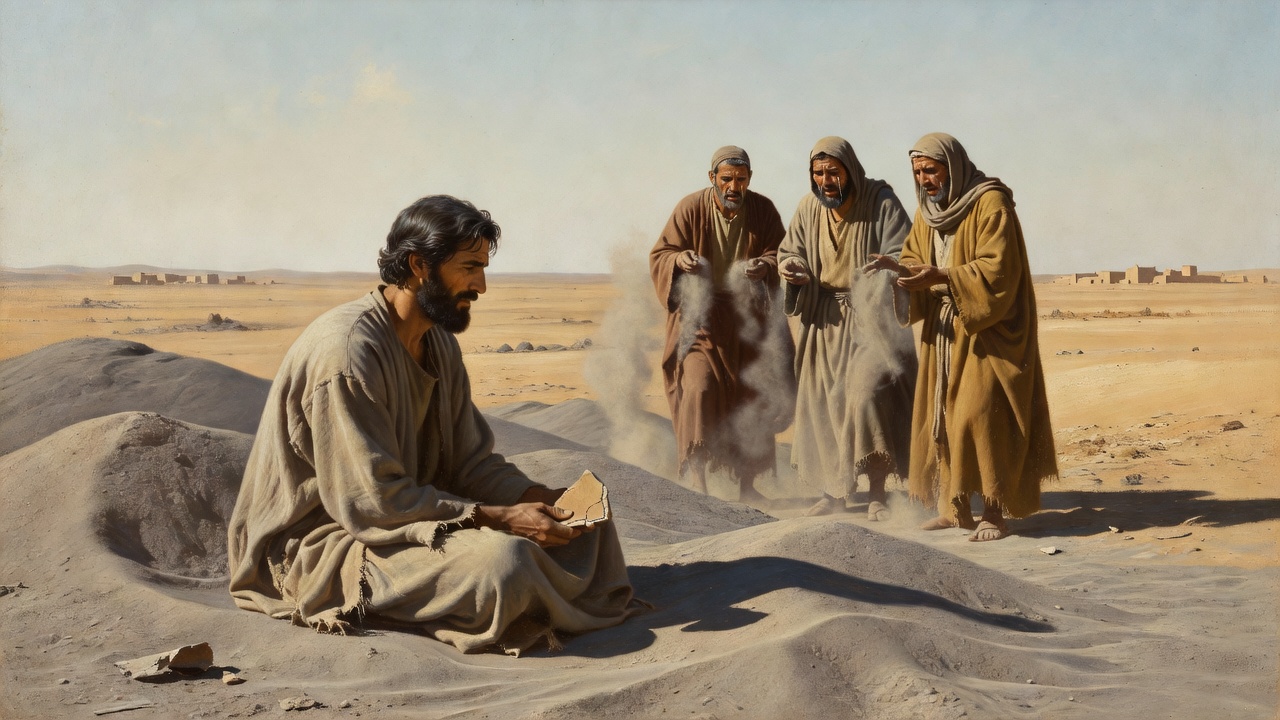
- Ao verem o sofrimento extremo de Jó, seus três amigos rasgaram seus mantos, lançaram pó ao ar sobre suas cabeças e sentaram-se com ele no chão em total silêncio por sete dias e sete noites. Essa vigília compartilhada refletia costumes antigos de profundo luto quando a dor era intensa demais para palavras.Fontes: o próprio texto bíblico
Notas escritas com auxílio de IA a partir de fontes abertas (Theographic Bible Metadata, CC BY-SA 4.0; Easton’s Bible Dictionary, domínio público) e revisadas antes de publicar.
Créditos e licença desta tradução
KAKAƗYARI NIUKIEYA XAPAYARI WIXARIKAKƗ
The Holy Bible in the in Huichol language of Mexico, 2020 edition
La Santa Biblia en lengua huichol de México, edición 2020
copyright © 2020 Wycliffe Bible Translators, Inc.
Language: Huichol
Translation by: Wycliffe Bible Translators, Inc.
Huichol [hch], Mexico
Copyright Information
© 1988-2020, Wycliffe Bible Translators, Inc.
This translation text is made available to you under the
terms of the Creative Commons License: Attribution-Noncommercial-No Derivative Works.
( http://creativecommons.org/licenses/by-nc-nd/3.0/ )
In addition, you have permission to port the text to different file formats, as long as you
do not change any of the text or punctuation of the Bible.
You may share, copy, distribute, transmit, and extract portions
or quotations from this work, provided that you include the above copyright
information:
You must give Attribution to the work.
You do not sell this work for a profit.
You do not make any derivative works that change any of the actual words or punctuation of the Scriptures.
Permissions beyond the scope of this license may be
available if you contact
us with your request.
The Holy Bible
in Huichol
© 1988-2020, Wycliffe Bible Translators, Inc.
This translation is made available to you under the terms of the
Creative Commons Attribution-Noncommercial-No Derivatives license 4.0.
You may share and redistribute this Bible translation or extracts from it in any format, provided that:
You include the above copyright and source information.
You do not sell this work for a profit.
You do not change any of the words or punctuation of the Scriptures.
Pictures included with Scriptures and other documents on this site are licensed just for use with those Scriptures and documents.
For other uses, please contact the respective copyright owners.
2025-09-03
Fonte: http://ebible.org/hch/ · eBible.org