Salmos 87
Bib Sen An · Toque num versículo para ver as referências cruzadas.
Yon Sòm a fis a Koré yo; Yon Chan
1Fondasyon Li nan mòn sen yo.
2SENYÈ a renmen pòtay Sion yo
plis pase tout lòt abitasyon a Jacob yo.
3Yo pale sou gran mèvèy ou,
O gran vil Bondye. Tan
4Mwen va mete Rahab avèk Babylone
pami sila ki rekonèt Mwen yo.
Men vwala, Philistie, Tyr, avèk Éthiopie:
“Tèl moun te fèt la”.
5Men selon Sion, li va pale,
“Sa a ak sila a fèt ladann.”
Pi Wo a, Li menm, va etabli Sion.
6SENYÈ a va konte lè Li anrejistre
tout pèp yo: “Sa a te fèt la”. Tan
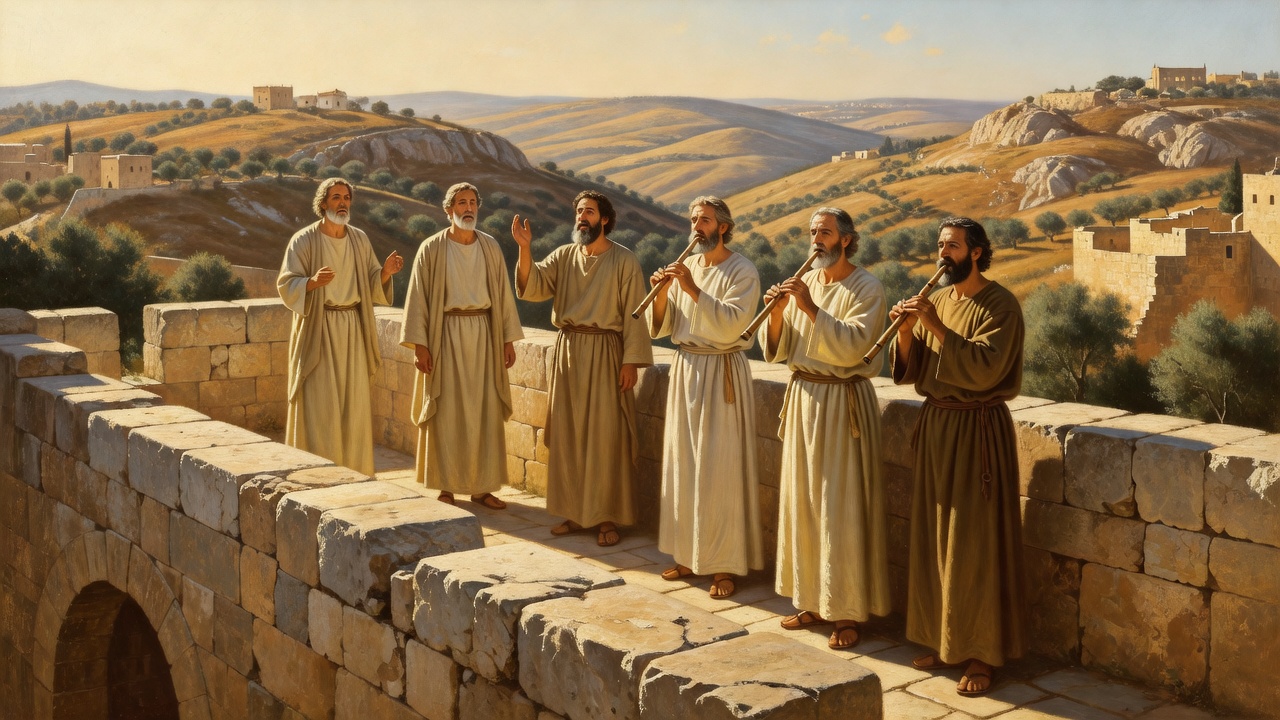
7Epi sila ki chante ansanm avèk sila ki jwe flit yo va di:
“Tout sous bwote yo, se nan ou”.
Você sabia?
Sião e as nações
- No Salmo 87, regiões estrangeiras e historicamente rivais — incluindo Babilônia, Filístia, Tiro e Cuxe — são retratadas como sendo registradas como cidadãs nativas nascidas em Sião, a cidade de Deus.Fontes: o próprio texto bíblico · Zion · Tyre · Babylon
- O nome 'Raabe' no versículo 4 é um termo poético hebraico que significa insolência ou orgulho, empregado na poesia bíblica como uma designação simbólica para o Egito.Fontes: Rahab · o próprio texto bíblico
- O salmo é atribuído aos 'filhos de Corá', um grupo levítico que exercia liderança musical em Jerusalém séculos depois de seu antepassado Corá ter liderado uma rebelião no deserto.Fontes: Korah (Levite) · o próprio texto bíblico
Notas escritas com auxílio de IA a partir de fontes abertas (Theographic Bible Metadata, CC BY-SA 4.0; Easton’s Bible Dictionary, domínio público) e revisadas antes de publicar.
Lugares deste capítulo
- Zion · Hoje: Jerusalem · 31.777, 35.234 · versículos 2, 5
- Babylon · 32.543, 44.422 · versículo 4
- Cush · Hoje: Cush 1 · 16.935, 33.751 · versículo 4
- Egypt · 30.129, 31.308 · versículo 4
- Jerusalem · 31.777, 35.234 · versículos 4, 6, 7
- Philistia · 31.664, 34.546 · versículo 4
- Tyre · 33.271, 35.196 · versículo 4
Só aparecem lugares com identificação de alta confiança (90% ou mais segundo as fontes acadêmicas reunidas pelo OpenBible). Mapa da época: DARE (Digital Atlas of the Roman Empire), CC BY 4.0; mapa atual: © colaboradores do OpenStreetMap; lugares: OpenBible.info (CC BY 4.0).
Créditos e licença desta tradução
Bib Sen An
The Holy Bible in Haitian Creole, 2023 update
copyright © 2017-2023 Ron Smith
Language: Kreyòl Ayisyen (Haitian)
Translation by: Ron Smith
Contributor: Felix Nixon
This translation is made available to you under the terms of the
Creative Commons Attribution Share-Alike license 4.0.
You have permission to share and redistribute this Bible translation in any format and to make reasonable revisions and adaptations of this translation, provided that:
You include the above copyright and source information.
If you make any changes to the text, you must indicate that you did so in a way that makes it clear that the original licensor is not necessarily endorsing your changes.
If you redistribute this text, you must distribute your contributions under the same license as the original.
Pictures included with Scriptures and other documents on this site are licensed just for use with those Scriptures and documents.
For other uses, please contact the respective copyright owners.
Note that in addition to the rules above, revising and adapting God's Word involves a great responsibility to be true to God's Word. See Revelation 22:18-19.
2026-06-11
Fonte: http://ebible.org/hatbsa/ · eBible.org