Jó 10
Bib Sen An · Toque num versículo para ver as referências cruzadas.
1“Mwen rayi pwòp lavi m;
mwen va fè tout fòs plent mwen yo parèt.
Mwen va pale ak anmè ki fonse nan nanm mwen.
2Mwen va di a Bondye: ‘Pa kondane mwen!
Fè m konnen poukisa W ap goumen ak mwen.
3Èske se vrèman bon pou Ou ta oprime;
pou meprize zèv men Ou yo
e pou Ou gade ak favè, manèv a mechan yo?
4Èske zye Ou fèt ak chè? Oswa èske Ou wè
kon yon nonm wè?
5Èske jou Ou yo tankou jou a moun mòtèl,
oswa ane Ou yo tankou ane a yon nonm,
6pou Ou ta dwe chache koupabilite mwen
e fè rechèch dèyè peche m?
7Malgre Ou konnen mwen pa koupab,
sepandan, nanpwen ki ka livre m sòti nan men Ou.’”
8“Se men Ou ki te fòme mwen nèt.
Konsa, èske Ou ta detwi mwen?
9Sonje, souple, ke Ou te fè m kon ajil.
Èske Ou ta fè m retounen pousyè ankò?
10Èske se pa tankou lèt ke Ou te vide mwen
e fè m kaye tankou fwomaj?
11Ou te abiye mwen ak po avèk chè
e koude mwen ansanm nan zo ak gwo venn.
12Ou te ban mwen lavi avèk lanmou dous Ou.
Se swen Ou ki te konsève lespri m.
13Malgre bagay sila yo, Ou te kache yo nan kè Ou.
Mwen konnen ke sa a se avèk ou:
14si m peche, alò, Ou mete tach sou mwen.
Ou pa ta akite m de koupabilite mwen.
15Si mwen mechan, malè a mwen!
Epi si mwen jis, toujou, menm dwe leve tèt mwen.
Mwen chaje ak wont, e byen rekonnesan a mizè mwen.
16Si tèt mwen ta vin leve wo, Ou ta fè lachas
dèyè m tankou yon lyon;
epi ankò, Ou ta montre pouvwa Ou kont mwen.
17Ou renouvle temwayaj Ou kont mwen,
e ogmante kòlè Ou vè mwen.
Dezas monte anwo dezas sou mwen.”
18“Alò, poukisa Ou te fè m sòti nan vant manman m?
Pito ke m te mouri e pa t gen zye ki te wè m!
19Mwen te dwe tankou mwen pa t janm te egziste,
kon yon pote sòti nan vant pou rive nan tonbo.
20Èske jou m yo pa kout?
Rete!
Ralanti sou mwen pou m kab jwenn
yon ti kras kè kontan,
21avan ke m ale—pou mwen pa tounen
nan andwa tenèb ak gwo fènwa!
22Nan peyi sa a ki dezole nèt tankou tenèb la,
nan fon lonbraj san fòm nan, e ki klere tankou fènwa a.”
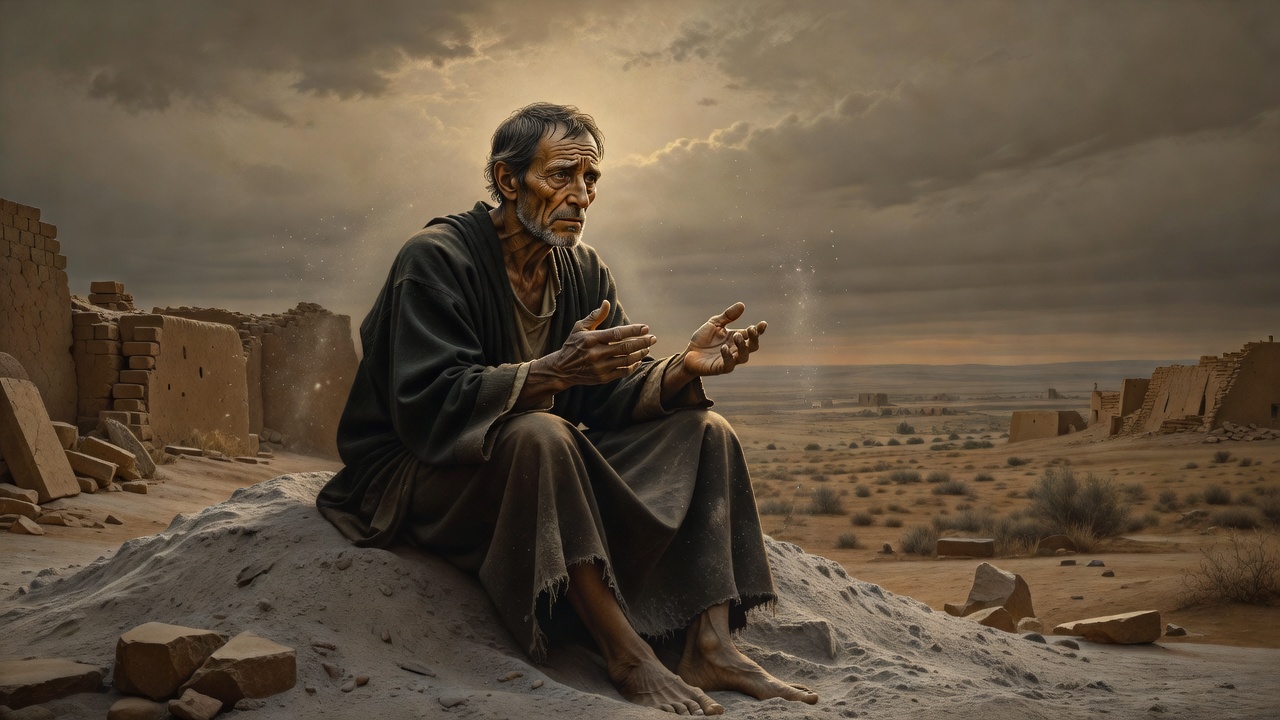
Você sabia?
O clamor de Jó sobre sua criação e mortalidade
- Em seu clamor a Deus, Jó recorre a imagens cotidianas antigas, como a fabricação de queijo e a olaria, para descrever a formação da vida humana no ventre materno, retratando Deus como quem molda o barro, derrama o leite e entretece carne e ossos.Fontes: o próprio texto bíblico
- Jó retrata a morada dos mortos como um lugar de escuridão profunda, sombras e desordem, suplicando a Deus por um breve alívio antes de partir para esse destino sem retorno.Fontes: o próprio texto bíblico
Notas escritas com auxílio de IA a partir de fontes abertas (Theographic Bible Metadata, CC BY-SA 4.0; Easton’s Bible Dictionary, domínio público) e revisadas antes de publicar.
Créditos e licença desta tradução
Bib Sen An
The Holy Bible in Haitian Creole, 2023 update
copyright © 2017-2023 Ron Smith
Language: Kreyòl Ayisyen (Haitian)
Translation by: Ron Smith
Contributor: Felix Nixon
This translation is made available to you under the terms of the
Creative Commons Attribution Share-Alike license 4.0.
You have permission to share and redistribute this Bible translation in any format and to make reasonable revisions and adaptations of this translation, provided that:
You include the above copyright and source information.
If you make any changes to the text, you must indicate that you did so in a way that makes it clear that the original licensor is not necessarily endorsing your changes.
If you redistribute this text, you must distribute your contributions under the same license as the original.
Pictures included with Scriptures and other documents on this site are licensed just for use with those Scriptures and documents.
For other uses, please contact the respective copyright owners.
Note that in addition to the rules above, revising and adapting God's Word involves a great responsibility to be true to God's Word. See Revelation 22:18-19.
2026-06-11
Fonte: http://ebible.org/hatbsa/ · eBible.org