1 Samuel 15
Bib Sen An · Toque num versículo para ver as referências cruzadas.
1Alò, Samuel te di a Saül: “SENYÈ a te voye mwen pou onksyone ou wa sou pèp Li a, sou Israël. Pou sa, koute pawòl a SENYÈ a. 2Konsa pale SENYÈ dèzame yo: ‘Mwen va pini Amalek pou sa li te fè Israël la, jan li te opoze li nan chemen an pandan li t ap vini sòti an Égypte la. 3Alò, ale frape Amalek e detwi tout sa li genyen. Pa fè li gras, men mete a lanmò ni gason, ni fanm, ni timoun ni tibebe, bèf, mouton, chamo ak bourik.’”
4Epi Saül te pase lòd rasanble pèp la e te konte yo nan Thelaïm, de-san-mil sòlda apye yo, di-mil mesye Juda yo. 5Saül te rive kote vil Amalek yo, e li te òganize yon anbiskad nan vale a. 6Saül te di a Kenyen yo: “Ale, sòti kite Amalekit yo pou m pa detwi nou ansanm avèk yo; paske nou te montre favè nou anvè tout fis Israël yo lè yo te monte soti an Égypte.” Konsa, Kenyen yo te sòti nan mitan Amalekit yo.
7Konsa, Saül te bat Amalekit yo soti nan Havila pou rive Schur, ki te bò lès a Égypte la. 8Li te kaptire vivan Agag, wa a Amalekit yo e te detwi nèt tout pèp la avèk lam nepe. 9Men Saül avèk pèp la te lese Agag viv ansanm avèk pi bèl nan mouton yo, bèf yo, bèt gra yo, jenn mouton yo, tout sa ki te bon, e li pa t dakò pou detwi yo nèt. Men tout sa ki te meprize e san valè, yo te vin detwi nèt.
10Alò, pawòl SENYÈ a te vini a Samuel e te di: 11“Mwen regrèt ke M te fè Saül wa, paske li te vire fè bak nan swiv Mwen, e li pa t akonpli lòd Mwen yo.” Konsa, Samuel te vin twouble e li te kriye fò a SENYÈ a pandan tout nwit lan.
12Samuel te leve granmmaten pou rankontre Saül. Yo te pale a Samuel, e te di: “Saül te vini nan Carmel e vwala, li te fè monte yon moniman pou tèt li, e li te vire kontinye desann vè Guilgal.”
13Samuel te vini kote Saül, e Saül te di li: “Beni se ou menm pa SENYÈ a! Mwen te akonpli lòd SENYÈ a.”
14Men Samuel te di li: “Men ki mouton ke m tande k ap blete nan zòrèy mwen la a e ki rèl a bèf ke m tande la a?”
15Saül te di: “Yo te mennen yo soti nan Amalekit yo, paske pèp la te kite pi bèl nan mouton avèk bèf yo pou fè sakrifis bay SENYÈ a, Bondye pa w la. Men tout rès nou te genyen an nou te detwi l nèt.”
16Alò, Samuel te di: “Tann e kite mwen menm di ou sa ke SENYÈ a te di mwen yèswa.”
Epi li te di li: “Pale”!
17Samuel te di: “Èske se pa vre, ke malgre ou te piti nan pwòp zye pa ou, ke ou te devni gran chèf a tribi Israël yo? 18Epi ke SENYÈ a te voye ou fè yon misyon e te di: ‘Ale detwi pechè yo nèt; Amalekit yo, e batay kont yo jiskaske yo fin disparèt.’ 19Pou sa, poukisa ou pa t obeyi vwa SENYÈ a; men ou te kouri sou piyaj la, e te fè sa ki mal nan zye SENYÈ a?”
20Alò Saül te di a Samuel: “Mwen te obeyi vwa SENYÈ a e te fè misyon nan sila SENYÈ a te voye mwen an e te mennen retounen Agag, wa Amalek la, e mwen te detwi nèt tout Amalekit yo. 21Men pèp la te pran nan piyaj mouton avèk bèf yo, pi bèl nan sa ki te anba ve pou destriksyon an, pou fè sakrifis bay SENYÈ a, Bondye ou a nan Guilgal.”
22Samuel te di: “Èske SENYÈ a twouve menm fòs plezi nan ofrann brile yo avèk sakrifis yo ke li jwenn nan obeyi vwa SENYÈ a? Veye byen, obeyisans pi bon ke sakrifis e koute pase grès a belye yo. 23Paske rebelyon se tankou peche divinasyon e refize swiv lòd se tankou inikite avèk idolatri. Akoz ou te refize pawòl SENYÈ a, Li osi te gentan refize ou kòm wa.”
24Alò, Saül te di a Samuel: “Mwen te peche; Mwen te vrèman transgrese kòmand SENYÈ a e pawòl a ou menm yo; paske mwen te pè pèp la e mwen te koute vwa pa yo. 25Alò, pou sa, souple, padone peche mwen e retounen avè m pou m kapab adore SENYÈ a.”
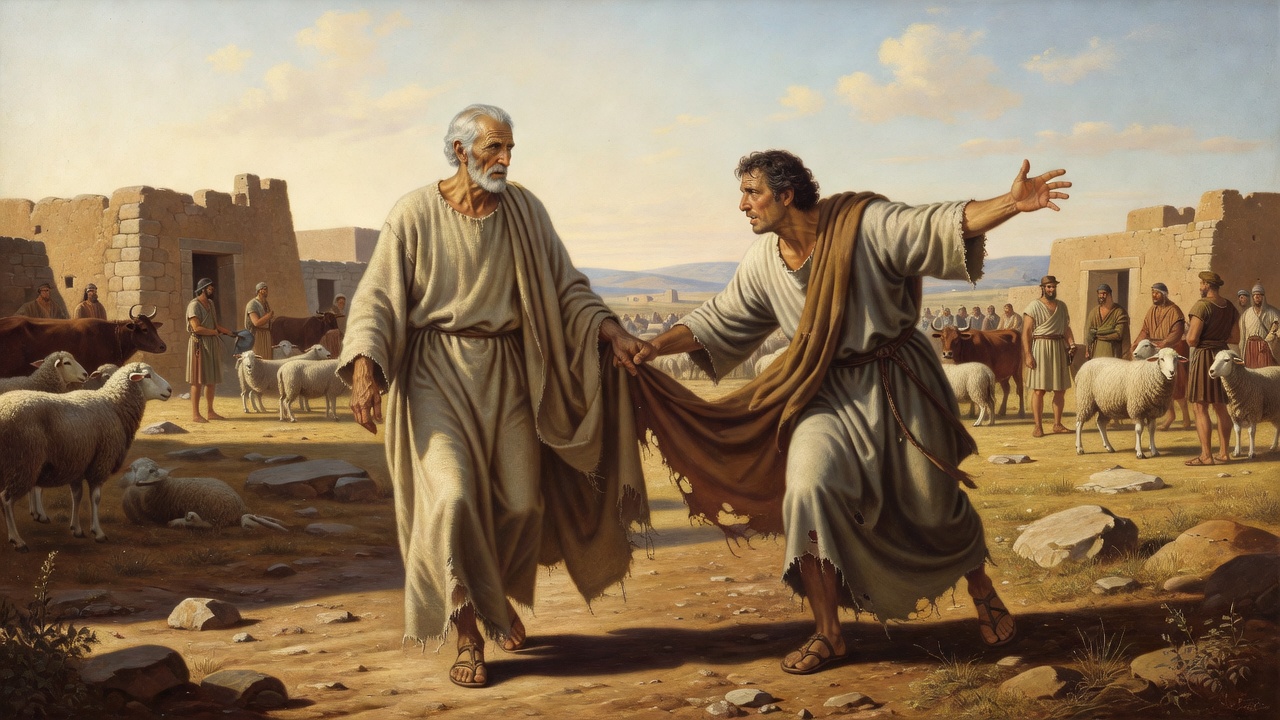
26Men Samuel te di a Saül: “Mwen p ap retounen avè w; paske ou te rejte pawòl a SENYÈ a e SENYÈ a te gentan rejte ou kòm wa sou Israël.” 27Lè Samuel te vire pou l sòti, Saül te sezi bò manto li, e li te vin chire. 28Epi Samuel te di li: “SENYÈ a te dechire wayòm ou an, e Li te bay li a vwazen ou an, ki pi bon pase ou. 29Anplis, Glwa Israël La p ap manti, ni chanje tèt Li. Paske Li pa yon nonm pou Li ta chanje tèt Li.”
30Alò li te di: “Mwen te peche; souple, onore mwen koulye a devan ansyen a pèp mwen yo ak devan Israël e retounen avè m, pou m kapab adore SENYÈ a, Bondye ou a.”
31Konsa, Samuel te swiv Saül retounen e Saül te adore SENYÈ a. 32Alò, Samuel te di: “Mennen ban m Agag, wa Amalekit yo.”
Epi Agag te vin kote li avèk kè kontan. Akoz Agag t ap di: “Asireman gou anmè lanmò a gen tan pase.”
33Men Samuel te di: “Menm jan ke nepe ou te fè fanm yo vin manke pitit; konsa, manman ou va vin manke pitit pami fanm yo.” Epi Samuel te koupe Agag an mòso devan SENYÈ a nan Guilgal.
34Samuel te ale Rama; men Saül te monte vè lakay li nan Guibea ki pou li. 35Samuel pa t wè Saül ankò jis jou li te mouri an. Paske Samuel te gen anpil tristès akoz Saül. Epi SENYÈ a te regrèt ke Li te fè Saül wa sou Israël.
Você sabia?
A desobediência e a rejeição de Saul
- Os amalequitas eram um povo pastoral nômade que habitava as terras áridas entre Havilá e Sur, na fronteira do Egito. O conflito deles com Israel começou quando emboscaram os israelitas após a saída do Egito, o que serve de contexto para o julgamento ordenado neste capítulo.Fontes: o próprio texto bíblico · Amalek · Shur
- Gilgal era um importante centro religioso e judicial onde Samuel costumava administrar a justiça e oferecer sacrifícios. Saul reuniu-se em Gilgal após a batalha contra Amaleque, tornando esse local o cenário onde Samuel declarou que Deus havia rejeitado Saul como rei de Israel.Fontes: o próprio texto bíblico · Gilgal
- O nome Agague era um título ou nome hereditário usado pelos reis dos amalequitas. Embora Saul tenha poupado Agague e o melhor do gado contrariando as instruções, Samuel executou o julgamento contra o rei cativo em Gilgal.Fontes: o próprio texto bíblico · Agag · Amalek
Notas escritas com auxílio de IA a partir de fontes abertas (Theographic Bible Metadata, CC BY-SA 4.0; Easton’s Bible Dictionary, domínio público) e revisadas antes de publicar.
Lugares deste capítulo
- Amalek · 30.648, 34.422 · versículos 2, 3, 5, 8, 20, 32
- Egypt · 30.129, 31.308 · versículos 2, 6, 7
- Havilah · Hoje: in the Arabian Peninsula · 23.000, 46.000 · versículo 7
Só aparecem lugares com identificação de alta confiança (90% ou mais segundo as fontes acadêmicas reunidas pelo OpenBible). Mapa da época: DARE (Digital Atlas of the Roman Empire), CC BY 4.0; mapa atual: © colaboradores do OpenStreetMap; lugares: OpenBible.info (CC BY 4.0).
Créditos e licença desta tradução
Bib Sen An
The Holy Bible in Haitian Creole, 2023 update
copyright © 2017-2023 Ron Smith
Language: Kreyòl Ayisyen (Haitian)
Translation by: Ron Smith
Contributor: Felix Nixon
This translation is made available to you under the terms of the
Creative Commons Attribution Share-Alike license 4.0.
You have permission to share and redistribute this Bible translation in any format and to make reasonable revisions and adaptations of this translation, provided that:
You include the above copyright and source information.
If you make any changes to the text, you must indicate that you did so in a way that makes it clear that the original licensor is not necessarily endorsing your changes.
If you redistribute this text, you must distribute your contributions under the same license as the original.
Pictures included with Scriptures and other documents on this site are licensed just for use with those Scriptures and documents.
For other uses, please contact the respective copyright owners.
Note that in addition to the rules above, revising and adapting God's Word involves a great responsibility to be true to God's Word. See Revelation 22:18-19.
2026-06-11
Fonte: http://ebible.org/hatbsa/ · eBible.org