Lucas 7
Nacom Pejume Diwesi po diwesi pena jume diwesi xua Jesucristo yabara tinatsi · Toque num versículo para ver as referências cruzadas.
Suldau søtøwan nø karub pera pasrabigwei mendig megabigwan Jesús tamarøb
1Yandø misagwan Jesúsbe chab waminchabe, Capernaumsrø kebibene, 2truyu kan romanosmerai suldau, cienelan ashibig, centurión taig, kan karuindiig megabig truba undaaraig tøgagúibe, truibe kwanrrøtøga yandø ke pinamdø palabig tsubig køn. 3Inchen tru cien suldaumeran ashibiibe, Jesúswan wamindi mørabe, judío misaameran karubelø kølli misaameran karua ørøbig køn, nui kwanrriigwan tamartrab attrai. 4Inchen nømbe amba, Jesúsweim pulu kemallabe, ke tiusmanda chib truba inchib trenchibelø køn:
—Tru møwane ñi treeg ka purugumdiig treeg møg køn cha. 5Kaguende yu nam warain pirau maya misagwan undaguig kua, nøashib nam judíosmera tulundzuni yawan maringaruig køn— chib.
6Inchen Jesúsbe nømba iben, yandø yau pub lutau ambene, tru suldaumeran ashibiibe nui trendø linchibelan møilan køsrøn trenchinrrai karua ørøbig køn:
—Señor, øyangatiizhiitø attra tan chinrrai. Kaguende ñi nai yau kebattraimbe, nabe trengatig kømuinatan cha. 7Incha treekkurri ni naashibguen ñun lanrrab arrumur cha. Tammisr cha, treetø chirra chibig køn. Nai karuindiig megabig tammisrig kønrrai. 8Kaguende nagucha mas nørreelø karua pasrig kur cha. Katø treeg køben na karub tøgagúilø suldaumera tøgaig kur cha. Truilanma na møigwan køben: “Inrrø” chibene, ib; katø na møigwan køben: “Amø” chibene, arrub; katø nai karuindiig megabigwan: “Chigøben mar” chibene, marøb inchibig køn cha. Nøbe trendan— chibelø køn.
9Inchen Jesús iigwan mørabe, tru møwan nøguen kwaara asha, nui mendig truba nu misag amøñibelan keesha ashabe, trenchibig køn:
—Nabe ñimun trendamønrrun cha: israelitasmerai utuguen isubigwan nainug pasrig øya nuig wetørramur cha, i møwei lataig.—
10Indiibe tru karua øriilø katøle yau pubene, tru karuindiig megabiibe tabikken waptinchibig køn.
Jesús kan piudai nusrkawan katø øsiirangarub
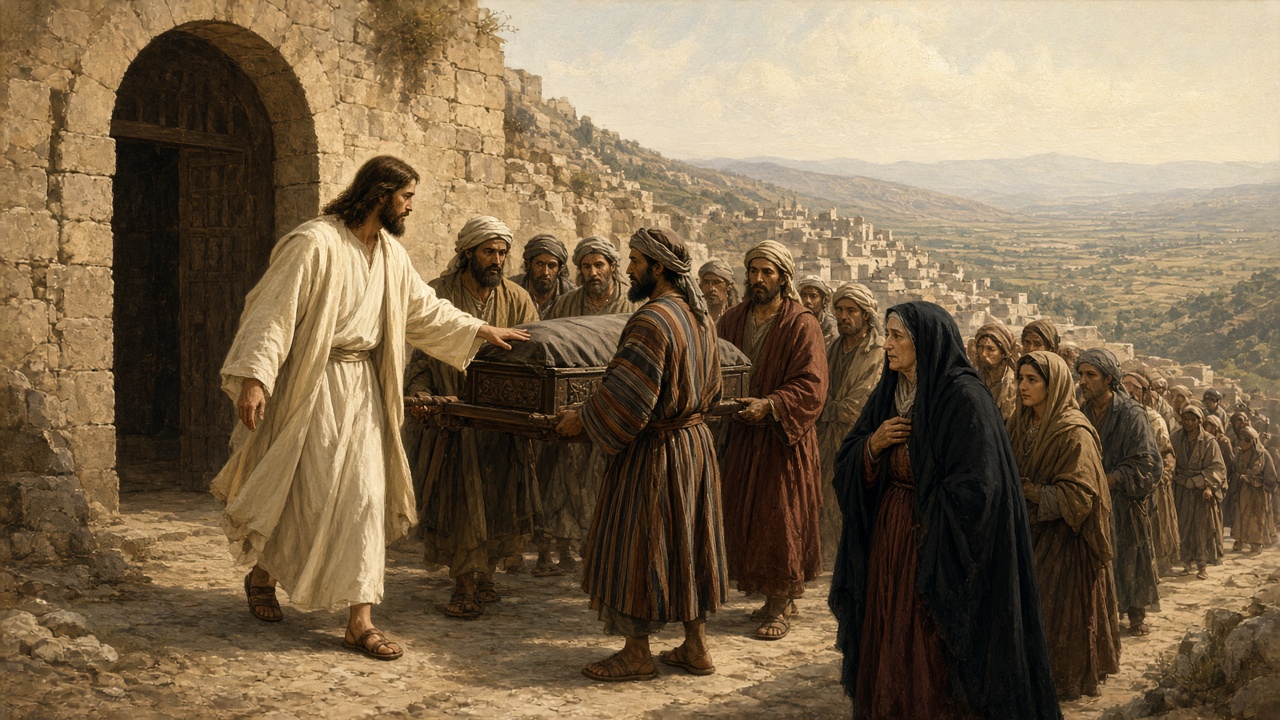
11Yandø øyeeg chab puraiben, Jesúsbe kan pueblo Naín taisrømay iben, nui kusrenanøb pera uniiløba, truba nu misaaba linchibelø køn. 12Inchen tru puebloyu kebambam yaskab pulu pubene, kan kwaigwan sørønrrab muta, amrrubelø køn, tru kwabiibe kandø nusrkain køben, usrimbe piuda. 13Inchen Señorbe tru ishuwan lastima ashabe, trenchibig køn:
—Kishmøta— cha.
14Incha Jesúsbe kemalla, taulwan katøraben, muta ambubeløbe pønrramisren, Jesúsbe kwaigwane trenchiptinchibig køn:
—Matsinø, na ñun ¡kurrø! char— cha.
15Inchen tru kwabiibe kurra, wamisra, waminchib mendøben, Jesúsbe usran tranøbig køn, pera inrrai.
16Inchen iigwan ashene, nømune mayeelanba kørig købiitø ke chindamdiig køben, Tiuswan truba tabig waminchib trenchibelø køn:
—¡Tius maig karuigwan eshkabig purø nuig namui utu kurrin køn! chib. ¡Tiusbe nui misagwan purugunrrab arrin køn!— chib.
17Inchen Judea pirau kerriguba, katø tru pirau tru pøtøgatanwan kerriguba Jesús chi marigwan wammørøbelø køn.
Juan Bautistai kusrenanøb pera uniilø
18Inchen Juanwei kusrenanøb pera uniiløbe øyeeg purayailan kerrigu nun eshkaben, Juanbe nui mendig amøñibelan pailan wama, 19Jesúswan trencha payrrai ørøbig køn: ¿Tru Cristo attrabig købiibe ñi kuin kui, kabe nambe katøganun muniiram kuin kui? 20Inchen tru Juanwei kusrenanøb pera uniiløbe amrrua, Jesúswan kemallabe, trenchibelø køn:
—Juan Bautistabe, ñun payrrai, namun karua ørtan cha. ¿Tru attrabig købiibe ñi kuin kui, kabe nambe katøganun muniiramig kuin chindi?—
21Inchen tru uras, Jesúsbe kwanrreelø truba yamelan tamarøbig køn, chigurrimbunø kaig kwanrrø tøgarmeran køben, kwaimandzig tøgarmeran købengue. Katø truba yam kabgailan ashchai tamarøb inchibig køn. 22Inchabe Jesúsbe Juan karua øriilan trenchibig køn:
—Amba, ñim chi mørigwan, ñim chi asigwan Juanwan eshkanrrigay cha. Kabgailøbe ashen, cojosmerabe amben, asr trerab kwanrrø tøgarmerane nømui kwanrrøwan tamara chishmariilø køben, kalu mørmeeløbe mørøbelø misren, kwailøbe øsiiraben, waachamerane Tiuswei tabig srø wamwan eshkab kusrenaniilø køn cha. 23Mayanguen tab kuig køn chibig køn, nan peg kuitamab isumøtø, na kuitamab isubigweimbe.—
Juan Bautistaimburab maig kuigwan Jesús waminchib
24Incha Juanwei kusrenanøb pera uniilø ambene, Jesúsbe Juanweimburab truba nu misagwan trenchib waminchib pølbasrøbig køn:
—¿Misag warab waraimøsrømbe ñimbe chi ashchab webamgue? cha. ¿Kan caña ambumay, imay isig srua yainaptiigwandeh? cha. 25Trube, ¿chi ashchab webamgue? cha. ¿Kabe kan møg truba tabig keweigwandeh? cha. Ñimbe ashibelø køn cha, truba tabig kebeløbe nømun maig marøg købendø marøb, reymerai yau purrabelø kui cha. 26¿Trube, treeg købene, chi ashchab webambig kø? chibig køn. ¿Kabe Tius maig karuigwan kan eshkabigwandeh? cha. Øø, nabe ñimun trendamønrrun cha: Treegwanwei ashchab webambig køn cha, trurrigu Tius maig karuigwan eshkabigwan lataitøguen kømø, mas nuigwan. 27Juanbe tru Tiuswei wamwan pørigu øyah taig truig køn cha:
“Au, nabe nai wam srua inrrabigwan ñui merrab ørar taig, ñui maywan ñui merrab tamartrai.”
28Nabe ñimun trendamønrrun chibig køn: Maya møguelø kal-labelai utu tru Juan lata nuibe muguen kaagúig køn cha. Inchendø treeg kuindøgucha, Tius nø ashib karub wainuube kan møg chigucha kømíikken mas nuig køn cha, Juan lataguen kømø.—
29Inchen maya misaameraba, tru romasreelayasig an utabeløba Jesús wamindigwan mørabe, Tiusbe maig kønrrabigwan tabig sølgandø marøbig kuin køn chibelø køn, tru Juan piu umbu ulsrainabeløbe. 30Trune tru fariseosmeraba, tru maig maramigwan martrai Moisés pørigwan treeg maramig køn chib kusrenanøbeløbabe nømuimburab Tius maig martrab isua indigwan kaashibelø køn, kaguende truiløbe Juan piu umbu ulsraimeelø kua.
31Katø Señorbe trenchibig køn:
—¿Møin kwaløm møguelane chi latailø køn chinrrab køh? cha. ¿Chi lataig asønan chinrrab køh? cha. 32Kan plazayu ureemera esheerrab purramisra, kangurrin kangurri øyeeg chib trashib purrabelø latailø køn cha:
“Nambe ñimuyasig luswan urringucha,
ñimbe pailamøwei;
cantailø isumdeelø cantaben,
ñimbe miirab kishmøwei indan” chibelø latailø.
33Pøs Juan Bautista pirri mamøwei, vino muchimøwei inchibig arrubene, ñimbe nune, kwaimandzig tøgaig køn, chibelø køn. 34Inchen tru Møg Misra Arrubig mab, muchib inchibig arrubene, trube, ñimbe menrra maptiig køn tamba, menrra muchiptiig køn tamba, romasreelayasig an utabeløba, kaig marøb misaameraba linchibig køn tamba inchibelø køn. 35Inchendø mu møkken nebua isumgaig tru Tius marøb pasraigwane nui ureemerainug ashchai kenamaran— chibig køn.
Jesús Simón fariseowei yau
36Kan møikkøsrøn fariseo Jesúswan nøba lincha manrrab attrai eshkaben, Jesúsbe truigwei yau kebyabe, mishatsigu wamisrøbig køn. 37Inchen tru puebloyutøwei kan kaig marøb ishug tsubig, tru fariseowei yau Jesús mab wan tai wammørøppe, kan alabastro limetayu truba may irrab aceite srua puabe, 38kishib Jesúswei wendau srøb pulu wamisra, nui kappinwan Jesúswei katsig tambal pala kørrøgøb sømara, trugurrimbe nui pusruutøga pinømøra, katsigu muchawa, yandø tru may irrab aceiten nui srøb pala itølushibig køn. 39Inchen tru fariseo Jesúswan manrrab attrai eshkabig ashabe, nuinetø treeg isubig køn: “I møg Tius maig karuigwan eshkabig kuimbe, nun katørabiibe mu ishug kui, kaig marøb ishug kui asin kømbala” cha. 40Inchen Jesúsbe fariseowan trenchibig køn:
—Simón, ñun chigøsrøn tamig tøga war— cha.
Inchen fariseobe:
—Kusrennøbig, eshkarra— chiben,
41Jesúsbe trenchibig køn:
—Kan an pebigwan pailø møguelø nun ulømisrar købig køn cha, kane quinientos denarios ulø købene, kane cincuenta ulø købig køn cha. 42Indiibe truiløbe chugurringuen trannrrabgailø køben, tru an pebøbiibe pailanba paymønrrab kagøbashiptindig køn cha. Treeg købene, ¿i pailøbe tru an pebøbigwan møig mas undaarerah?— cha.
43Inchen Simónbe trenchibig køn:
—Tru mas nu anwan ulø paymø, kagøbasinabig, na møren truig kømmørgøtan— cha.
Inchen Jesúsbe trenchibig køn:
—Søl isua trendan— cha.
44Inchen Jesúsbe ishuwan keesha ashabe, Simónwane trenchibig køn:
—¿I ishuwan ashkuh? cha. Nabe ñui yau kebarruben, nai katsigwan kwalamig ñibe nan pi tranmuben, trune i ishuube nui kappinwan kørrøga sømara, nui pusruutøga pinømørtan cha. 45Ñibe nan muchamuben, trune nøbe na kebarrinukkurri nai srøbmeran muchab wan cha. 46Ñibe nai tur pala aceite srølmuben, nøbe may irrab aceiten nai srøb pala itø lushtan cha. 47Inchawei ñun trendamønrrun chibig køn: I ishuwei truba nørrø kalø mariilan nun ulø paymø pesannaikkurri nøbe truba truba undaaran cha. Inchen møikkøben tre nu kømíigwan ulø paymø pesannainabiibe, tru ulø paymø kagøbashibigwane tre undaaramøn— cha.
48Inchabe tru ishuwane trenchibig køn:
—Ñui kaig mariiløbe payamig kømíig, pesannaig kørrømisran— cha.
49Inchen truyu lincha mab nøba purrabeløbe, nømasiyaitø trenchib mendabelø køn:
—¿Chigøben kaig mariilanguen ulø paymø pesannamig kønrrai marøbiibe, iibe mu møg køh?— cha.
50Inchen Jesúsbe ishuwan trenchibig køn:
—Ñi ñui isubigwan nainuutø pasra tøgagúikkurri, kaigyugurri wesraig kørrømisran cha, møimbe chi isumø, inrrø— cha.
Você sabia?
Fé, compaixão e a pergunta de um profeta
- O Easton's Bible Dictionary (1897) descreve Cafarnaum como uma cidade da Galileia que não é mencionada no Antigo Testamento e que se tornou a cidade que Jesus tratava como sua depois de ser expulso de Nazaré, cenário de muitos episódios da sua vida. Neste capítulo, ele chega ali e encontra o servo muito estimado de um centurião à beira da morte; anciãos judeus rogam, dizendo que o oficial ama a nação deles e construiu a sinagoga deles.Fontes: Capernaum · o próprio texto bíblico
- O Easton's Bible Dictionary (1897) liga o nome Naim a uma palavra hebraica que significa pastos verdes ou amável, e identifica a cidade com a aldeia de Nein, na encosta noroeste do Jebel ed-Duhy, também chamado monte Moré ou Pequeno Hermom, a cerca de quatro milhas de Tabor e vinte e cinco milhas a sudoeste de Cafarnaum, acima da planície de Esdrelão. À porta da cidade, Jesus encontrou o funeral do filho único de uma viúva, e o espanto se espalhou pela multidão.Fontes: Nain · o próprio texto bíblico
- João Batista é apresentado como o precursor do Senhor e como homem de linhagem sacerdotal: seu pai, Zacarias, era sacerdote da turma de Abias, e sua mãe, Isabel, era uma das filhas de Arão. A missão dele é descrita como objeto de profecia, e neste capítulo Jesus diz às multidões que João é mais do que um profeta, o mensageiro enviado adiante para preparar o caminho, enquanto os discípulos de João perguntam se Jesus é aquele que havia de vir.Fontes: John the Baptist · o próprio texto bíblico
Notas escritas com auxílio de IA a partir de fontes abertas (Theographic Bible Metadata, CC BY-SA 4.0; Easton’s Bible Dictionary, domínio público) e revisadas antes de publicar.
Lugares deste capítulo
- Nain · Hoje: Nein · 32.631, 35.350 · versículo 11
- Judea · Hoje: Judea 1 · 31.777, 35.234 · versículo 17
Só aparecem lugares com identificação de alta confiança (90% ou mais segundo as fontes acadêmicas reunidas pelo OpenBible). Mapa da época: DARE (Digital Atlas of the Roman Empire), CC BY 4.0; mapa atual: © colaboradores do OpenStreetMap; lugares: OpenBible.info (CC BY 4.0).
Créditos e licença desta tradução
Nacom Pejume Diwesi po diwesi pena jume diwesi xua Jesucristo yabara tinatsi
New Testament in Guambiano
copyright © 2010 Wycliffe Bible Translators, Inc.
Language: Guambiano
Translation by: Wycliffe Bible Translators, Inc.
Copyright Information
© 2010, Wycliffe Bible Translators, Inc. All rights reserved.
This translation text is made available to you under the
terms of the Creative Commons License: Attribution-Noncommercial-No Derivative Works.
( http://creativecommons.org/licenses/by-nc-nd/3.0/ )
In addition, you have permission to port the text to different file formats, as long as you
do not change any of the text or punctuation of the Bible.
You may share, copy, distribute, transmit, and extract portions
or quotations from this work, provided that you include the above copyright
information:
You must give Attribution to the work.
You do not sell this work for a profit.
You do not make any derivative works that change any of the actual words or punctuation of the Scriptures.
Permissions beyond the scope of this license may be
available if you contact
us with your request.
The New Testament
in Guambiano
© 2010, Wycliffe Bible Translators, Inc. All rights reserved.
This translation is made available to you under the terms of the
Creative Commons Attribution-Noncommercial-No Derivatives license 4.0.
You may share and redistribute this Bible translation or extracts from it in any format, provided that:
You include the above copyright and source information.
You do not sell this work for a profit.
You do not change any of the words or punctuation of the Scriptures.
Pictures included with Scriptures and other documents on this site are licensed just for use with those Scriptures and documents.
For other uses, please contact the respective copyright owners.
2014-04-25
Fonte: http://ebible.org/gum/ · eBible.org