Salmos 120
Tupàn ze'eg · Toque num versículo para ver as referências cruzadas.
Upytywà àwàm henoz taw Tupàn pe
1Hezemumikahy mehe aze'eg Tupàn Tuweharupi Wiko Ma'e pe ihe, hepytywà àwàm henoz pà ihe.
Uwazar heze'eg ihewe a'e.
2O Tuweharupi Wiko Ma'e, hemunyryk kar pe
Hemu'em ma'e wanuwi nehe, hemu'em tuwe ma'e wanuwi nehe.
3Pe hemu'em ma'e pe. Ma'e Tupàn uzapo putar peme a'e nehe.
Ma'e uzapo putar penehe uzepyk pà nehe.
4Upyro putar u'yw haime ma'e amo zauxiapekwer wi nehe. Pezywà putar ipupe penehe uzepyk pà nehe.
Upyhyk putar tàtàpyzgwer imono pà penehe nehe, penehe uzepyk pà nehe.
5Peinuromo hereko haw upuraraw kar ma'erahy ihewe
Mezek ywy rehe hereko haw ài,
Kenar ywy rehe hereko haw ài.
6Amumaw kwarahy tetea'u amo teko wainuinuromo ihe.
A'e teko na'iakatuwawahy kwaw puruàmàtyry'ym 'ymaw rehe wà.
7Zeàmàtyry'ym 'ymaw rehe heze'eg mehe,
— Uruputar zeàmàtyry'ymawhu, i'i a'e teko wà.
Você sabia?
Um clamor por paz no exílio
- O Salmo 120 inicia a série de quinze "cânticos de peregrinação" (ou de subidas), começando com um clamor pessoal por libertação de lábios mentirosos e de um ambiente hostil.Fontes: o próprio texto bíblico
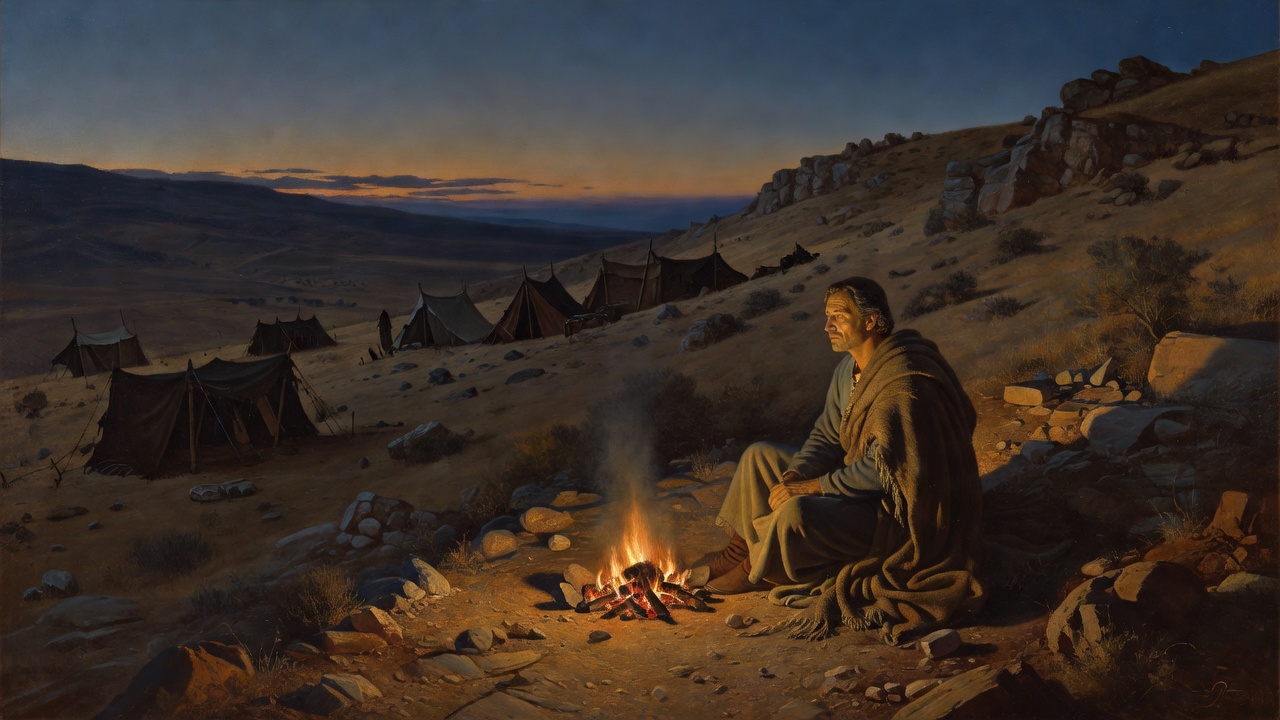
- O salmista lamenta habitar em Meseque e entre as tendas de Quedar. Meseque associava-se a povos do norte perto dos mares Negro e Cáspio, enquanto Quedar referia-se a tribos nômades que viviam em tendas pretas no noroeste da Arábia; juntos, simbolizam terras distantes e estrangeiras, longe da comunidade de adoração.Fontes: Meshech · Kedar · o próprio texto bíblico
Notas escritas com auxílio de IA a partir de fontes abertas (Theographic Bible Metadata, CC BY-SA 4.0; Easton’s Bible Dictionary, domínio público) e revisadas antes de publicar.
Lugares deste capítulo
- Jerusalem · 31.777, 35.234 · versículo 1
- Kedar · 29.811, 39.868 · versículo 5
- Meshech · Hoje: about 200 km around Gordion · 39.655, 31.994 · versículo 5
Só aparecem lugares com identificação de alta confiança (90% ou mais segundo as fontes acadêmicas reunidas pelo OpenBible). Mapa da época: DARE (Digital Atlas of the Roman Empire), CC BY 4.0; mapa atual: © colaboradores do OpenStreetMap; lugares: OpenBible.info (CC BY 4.0).
Créditos e licença desta tradução
Tupàn ze'eg
Bible without Deuterocanon in Guajajára (BR:gub:Guajajára)
copyright © 2007 Wycliffe Bible Translators, Inc.
Language: Guajajára
Translation by: Wycliffe Bible Translators, Inc.
Guajajára [gub], Brazil
Copyright Information
© 2007, Wycliffe Bible Translators, Inc. All rights reserved.
This translation text is made available to you under the
terms of the Creative Commons License: Attribution-Noncommercial-No Derivative Works.
( http://creativecommons.org/licenses/by-nc-nd/3.0/ )
In addition, you have permission to port the text to different file formats, as long as you
do not change any of the text or punctuation of the Bible.
You may share, copy, distribute, transmit, and extract portions
or quotations from this work, provided that you include the above copyright
information:
You must give Attribution to the work.
You do not sell this work for a profit.
You do not make any derivative works that change any of the actual words or punctuation of the Scriptures.
Permissions beyond the scope of this license may be
available if you contact
us with your request.
Printed book ISBN 9788531109713
The Bible without Deuterocanon
in Guajajára
© 2007, Wycliffe Bible Translators, Inc. All rights reserved.
This translation is made available to you under the terms of the
Creative Commons Attribution-Noncommercial-No Derivatives license 4.0.
You may share and redistribute this Bible translation or extracts from it in any format, provided that:
You include the above copyright and source information.
You do not sell this work for a profit.
You do not change any of the words or punctuation of the Scriptures.
Pictures included with Scriptures and other documents on this site are licensed just for use with those Scriptures and documents.
For other uses, please contact the respective copyright owners.
2020-03-30
Fonte: http://ebible.org/gubBl/ · eBible.org