Números 6
Tupàn ze'eg · Toque num versículo para ver as referências cruzadas.
Nazirew wanupe ze'egaw
1Tupàn Tuweharupi Wiko Ma'e uze'eg Moizez pe.
2— Eze'eg Izaew izuapyapyr wanupe nehe, ko heze'eg imume'u pà wanupe nehe. — Awa a'e nehe, kuzà a'e nehe no, aze uzemume'u nazirew romo nehe, Tupàn Tuweharupi Wiko Ma'e pe uma'ereko ma'e romo nehe, 3nu'u kwaw win nehe. Nu'u kwaw kàwiràn xeruwez her ma'e nehe no. Nu'u kwaw wyzài ma'e'a uwà her ma'e itykwer nehe. Nu'u kwaw uwà i'yw wi ipo'o romo pyrer nehe. Nu'u kwaw uwà kwarahy rehe uxinig ma'e kwer nehe. 4Nazirew romo wiko mehe we nu'u kwaw ma'e uwà 'yw wi ur ma'e kwer nehe: ni hà'yzgwer, ni iapirer.
5Nazirew romo wiko mehe we nomonohok kwaw u'aw nehe. Nupin kwaw wamutaw nehe no. Uzemonokatu Tupàn pe ma'ereko haw rehe. Xo a'e ma'e zo uzapo putar nehe. Nuzapo kwaw amo ma'e nehe. I'aw ipuku putar tuwe nehe. Nomonohok kwaw nazirew romo wiko mehe wà nehe. 6I'awpuku wexak kar putar Tupàn pe imonokatu haw purupe nehe. Tuwe nuzeapo kwaw Tupàn henataromo ikatu 'ym ma'e romo nehe. A'e rupi tuwe nuhem kwaw umàno ma'e kwer huwake nehe. Ni u hetekwer huwake ni uhy hetekwer huwake ni wyky'yr, ni wywyr hetekwer huwake ni weinyr hetekwer huwake nuhem kwaw nehe. 8Nazirew romo wiko mehe uzemonokatu putar Tupàn Tuweharupi Wiko Ma'e pe ma'ereko haw pe nehe.
9Aze amo umàno e na'arewahy huwake nehe, aze nezewe mehe umuaiw i'aw nehe, a'e mehe 7 'ar pawire upin putar u'aw nehe. Upin putar wamutaw nehe no. Nezewe mehe ikatu wi putar Tupàn henataromo nehe no. 108 haw 'ar mehe werur putar mokoz wiràmiri xaxeto pe tàpuzràn Tupàn pe imonokatu pyrer pe teixe pe wà nehe: pykahu wà, aze ru'u pyku'i wà. 11Xaxeto omono putar pitài Tupàn pe nehe, ikatu 'ymaw imunàn kar haw romo nehe. Omono putar inugwer hapy paw pyràm romo nehe. Nezewe mehe Tupàn umunàn putar umàno ma'e kwer huwake ihem awer nehe. A'e 'ar mehe we a'e nazirew omonokatu wi putar u'aw Tupàn pe nehe. 12Na'e uzemonokatu wi putar Tupàn Tuweharupi Wiko Ma'e pe ima'ereko haw rehe nehe. I'aw umumaw amo 'ar iaiw ma'e romo. U'ar ipapar mehe nupapar kwaw a'e 'ar nehe. Werur putar àràpuhàràn hawitu ma'e pitài kwarahy hereko har wemiapo kwer ikatu 'ym ma'e imunàn kar haw romo nehe.
13Nazirew umumaw putar Tupàn pe uma'ereko haw 'ar a'e nehe. A'e 'ar mehe Tupàn uzapo kar ma'e izupe. Oho putar tàpuzràn Tupàn pe imonokatu pyrer pe teixe haw pe nehe. 14Omono putar na'iruz ma'ea'yr ikatu 'ymaw hereko 'ymar Tupàn Tuweharupi Wiko Ma'e pe wà nehe: pitài àràpuhàràn hawitu ma'e awa pitài kwarahy hereko har hapy paw pyràm romo, àràpuhàràn hawitu kuzà pitài kwarahy hereko har katu 'ygwer imunàn kar haw romo, àràpuhàràn hawitu ma'e awa Tupàn pe uzemuawyze wi kar haw romo. 15Omono putar kok ipor typy'ak imuapiruru kar 'ym pyrer izupe nehe: typy'ak uhu ma'e arozràn imuku'i pyrer iapo pyrer uri kawer inuromo har, typy'ak pixik ma'e ipew ma'e. Xaxeto omono putar uri kawer pixik hehe nehe. Omono putar arozràn Tupàn pe nehe. Omono putar win izupe nehe no.
16Xaxeto omono putar a'e ma'e paw Tupàn Tuweharupi Wiko Ma'e henataromo nehe. Omono putar ma'e katu 'ygwer imunàn kar haw nehe. Omono putar ma'e hapy paw pyràm nehe no. 17Omono putar àràpuhàràn awa Tupàn Tuweharupi Wiko Ma'e pe uzemuawyze kar haw romo nehe. Omono putar typy'ak imuapiruru kar 'ym pyrer kok por izupe nehe no. Omono putar arozràn izupe nehe. Omono putar win izupe nehe no. 18Tàpuzràn Tupàn pe imonokatu pyrer hukenaw pe nazirew upin putar wàkàg nehe. Upyhyk putar u'aw wer tata pe imono pà nehe, Tupàn imuawyze kar haw hapy haw pupe imono pà nehe.
19Umihir putar izywa kwer nehe. Na'e xaxeto upyhyk putar a'e ho'o kwer nazirew ipo pe imono pà nehe. Omono putar mokoz typy'ak kok pupe arer ipo pe nehe no: uhu ma'e, pixik ma'e no. (Uzapo putar a'e ma'e iàkàg ipin ire nehe). 20Na'e xaxeto omono putar a'e ma'e Tupàn Tuweharupi Wiko Ma'e pe nehe, imono pyr ikatuahy ma'e romo nehe. Xaxeto wiko putar a'e imono pyrer ikatuahy ma'e izar romo nehe. Upyhyk putar àràpuhàràn ipuxi'a nehe. Upyhyk putar henugupy nehe no. Wiko putar a'e ma'e izar romo Tupàn ze'eg rupi katete nehe. A'e re nazirew upuner win i'u haw rehe nehe.
21Amumaw a'e ze'eg Nazirew Tupàn Tuweharupi Wiko Ma'e pe uzemonokatu ma'e rehe har imume'u haw kwez. Aze nazirew umume'u amo ma'e Tupàn pe nehe no, tuwe omono a'e ma'e wemimume'u kwer izupe nehe no.
Xaxeto omono uze'egatu teko wanehe wà
22Tupàn Tuweharupi Wiko Ma'e uze'eg Moizez pe.
23Eze'eg Àràw pe nehe, ta'yr wanupe nehe no. — Pemono ze'egatu teko Izaew izuapyapyr wanehe nehe.
24Tuwe Tupàn Tuweharupi Wiko Ma'e omono uze'egatu penehe nehe, pemonokatu pà nehe.
25Tuwe Tupàn Tuweharupi Wiko Ma'e penereko katu nehe. Tuwe pepuhareko katu nehe.
26Tuwe Tupàn Tuweharupi Wiko Ma'e ume'e penehe peamutar katu pà nehe. Tuwe umur zeàmàtyry'ym 'ymaw peme nehe, peze wanupe nehe, ere wanupe, i'i Tupàn Moizez pe.
27Uze'eg wi Tupàn. — Nezewe mehe Àràw a'e, ta'yr a'e wà no, wenoz putar heze'egatu Izaew wanehe imono pyràm wà nehe. Amono putar heze'egatu wanehe nehe.
Você sabia?
O Voto de Nazireu e a Bênção Sacerdotal
- O voto de nazireu era um período voluntário de consagração especial a Deus, acessível tanto a homens quanto a mulheres. Durante esse tempo, a pessoa devia abster-se totalmente de produtos derivados da videira e de bebidas fermentadas, deixar o cabelo crescer sem cortar e evitar a contaminação ritual por qualquer cadáver, mesmo de familiares próximos.Fontes: o próprio texto bíblico
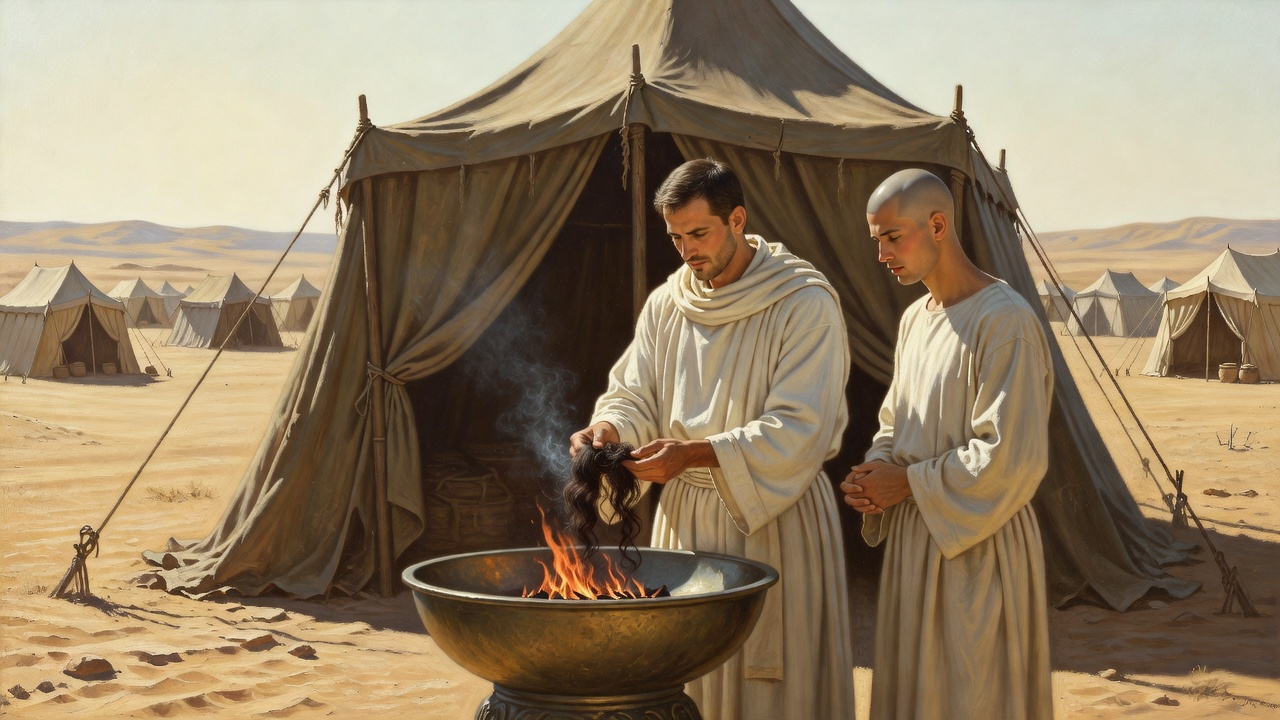
- Ao término do período de separação, o nazireu levava sacrifícios à entrada da Tenda do Encontro, rapava o cabelo e o queimava no fogo sob o sacrifício de comunhão. Depois que o sacerdote apresentava as porções prescritas diante de Deus, o voto se encerrava e a pessoa podia voltar a beber vinho.Fontes: o próprio texto bíblico
- O capítulo se encerra com a bênção sacerdotal que Deus ordenou a Moisés transmitir a Arão e a seus filhos. Ao invocar a proteção, o rosto resplandecente, a graça e a paz de Deus, os sacerdotes colocavam o nome divino sobre o povo de Israel.Fontes: o próprio texto bíblico · Moses · Aaron
Notas escritas com auxílio de IA a partir de fontes abertas (Theographic Bible Metadata, CC BY-SA 4.0; Easton’s Bible Dictionary, domínio público) e revisadas antes de publicar.
Créditos e licença desta tradução
Tupàn ze'eg
Bible without Deuterocanon in Guajajára (BR:gub:Guajajára)
copyright © 2007 Wycliffe Bible Translators, Inc.
Language: Guajajára
Translation by: Wycliffe Bible Translators, Inc.
Guajajára [gub], Brazil
Copyright Information
© 2007, Wycliffe Bible Translators, Inc. All rights reserved.
This translation text is made available to you under the
terms of the Creative Commons License: Attribution-Noncommercial-No Derivative Works.
( http://creativecommons.org/licenses/by-nc-nd/3.0/ )
In addition, you have permission to port the text to different file formats, as long as you
do not change any of the text or punctuation of the Bible.
You may share, copy, distribute, transmit, and extract portions
or quotations from this work, provided that you include the above copyright
information:
You must give Attribution to the work.
You do not sell this work for a profit.
You do not make any derivative works that change any of the actual words or punctuation of the Scriptures.
Permissions beyond the scope of this license may be
available if you contact
us with your request.
Printed book ISBN 9788531109713
The Bible without Deuterocanon
in Guajajára
© 2007, Wycliffe Bible Translators, Inc. All rights reserved.
This translation is made available to you under the terms of the
Creative Commons Attribution-Noncommercial-No Derivatives license 4.0.
You may share and redistribute this Bible translation or extracts from it in any format, provided that:
You include the above copyright and source information.
You do not sell this work for a profit.
You do not change any of the words or punctuation of the Scriptures.
Pictures included with Scriptures and other documents on this site are licensed just for use with those Scriptures and documents.
For other uses, please contact the respective copyright owners.
2020-03-30
Fonte: http://ebible.org/gubBl/ · eBible.org