Jó 7
Tupàn ze'eg · Toque num versículo para ver as referências cruzadas.
Zanereko haw zawaiw katu zanewe
1Zanereko haw ko ywy rehe har zawaiw katu zanewe.
Nuzawy kwaw zauxiapekwer ài zanereko haw. Zane zama'erekoahy zaiko paw rupi.
2Zaiko uma'ereko e ma'e i'àgaw pe upytu'u wer ma'e ài.
Zaiko uma'ereko ma'e uma'ereko awer hekuzar hàro har ài no.
3Amumaw zahy tetea'u ikatu ma'e hàro e pà.
Pyhaw hereko haw tynehem ma'erahy pupe no.
4Ipytunaw ipukua'u a'e.
Awawak tetea'u heker haw rehe pyhaw. Te iahykaw rehe heku'em.
Apuranu wiwi hezehe. — Aipo uhem hepu'àmaw 'ar kury, a'e hezeupe.
5Merua'yr upyk heretekwer wà. Heperew ike'e haw hepyk a'e wà no.
Hepir oxorok. Uhem ipewer izuwi.
6He'ar upaw na'arewahy. Nuzawy kwaw pàn ipyahaw. Na'arew uzàn oho.
He'ar uhem oho ihewi ma'eràro katu haw hezar 'ym pà. Hereko haw nuzawy kwaw ywytu.
7Nema'enukwaw herehe nehe, o Tupàn.
Hereha nuexak pixik kwaw herurywete haw nehe.
8Herexak pe ko 'ar rehe. Ko 'ar pawire naherexak kwaw pe nehe.
Ereme'e putar herehe nehe. Akàzym putar nehe. Naherexak kwaw pe nehe.
Heputupykahy zo nehe
9Umàno ma'e kwer wapyta haw pe wezyw ma'e kwer nuzewyr pixik kwaw nehe.
Nuzawy kwaw ywàkun. Ukwaw ko rupi. Nuzewyr pixik kwaw nehe.
10Nuzewyr kwaw weko haw pe nehe.
Ni amo na'ima'enukwaw pixik kwaw hehe wà.
11A'e rupi napuner kwaw hepyta haw rehe xe heze'eg 'ym pà ihe.
Apuraraw ma'erahy teko. Heze'eg wer.
Hepurumume'u wer ikatu 'ym ma'e ihewe uzeapo ma'e kwer rehe.
Ta'e hepy'a tynehem iro haw pupe a'e xe.
12Aipo aiko àzàg yryhu pe har romo.
Màràzàwe tuwe ereme'e iko herehe.
13— Apytu'u putar heker haw rehe nehe, a'e zepe hezeupe.
Heker haw umumaw putar herahy haw ihewi nehe, a'e zepe hezeupe.
14A'e ma'e rehe heze'eg ire hemukuhem kar pe puahu pupe ne.
Puahu iaiw ma'e pupe hemukyze kar pe ne.
15Aze mo amo hezuka he'azuwyk pà nehe, ikatu mo ihewe.
Hemàno haw ikatu wera'u ko heretekwer pupe hereko haw wi.
16Hereko haw iro ihewe. Nahereko wiwi wer kwaw.
Herezar pe nehe. Naheta kwaw ikatu haw hereko haw rehe.
Màràzàwe ereme'egatu urerehe
17Ma'e romo uruiko. Màràzàwe tuwe urekatu newe.
Màràzàwe tuwe erezekaiw urerehe.
18Màràzàwe tuwe ereme'e urerehe tuweharupi.
Màràzàwe tuwe ureragaw pe tuweharupi.
19Màràn mehe erepytu'u putar herehe neme'e re nehe.
Màràn mehe apuner hepytu'u haw rehe nehe.
20Ma'e ikatu 'ym ma'e azapo, o teko wanehe ume'egatu ma'e.
Màràzàwe tuwe hemuigo kar pe u'yw pupe neremizywà kwer romo,
Aipo hepuhuz katu tuwe newe nezewe.
21Màràzàwe tuwe nereharaz ikatu 'ym ma'e heremiapo kwer wi.
Màràzàwe tuwe neremunàn kwaw hekatu 'ymaw.
Nan kwehe tete aiko putar hetym àwàm pupe ihe nehe.
Herekar putar pe nehe. Naikuwe kwaw nehe.
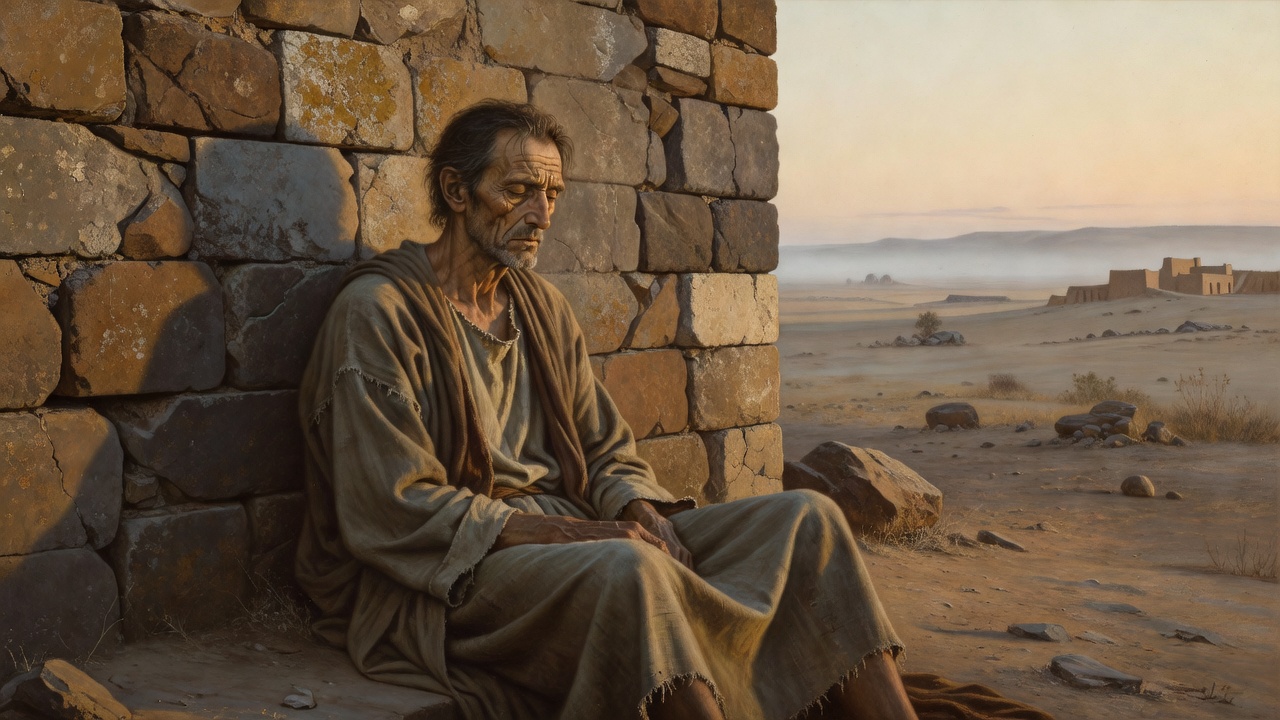
Você sabia?
O Lamento de Jó sobre a Fragilidade e o Sofrimento Humano
- Jó compara a existência humana à vida extenuante de um trabalhador contratado que anseia pela sombra do entardecer e pelo seu salário, ilustrando a rapidez dos dias com a imagem da lançadeira do tecelão.Fontes: o próprio texto bíblico
- Em seu lamento, Jó descreve o Seol como um destino sombrio do qual ninguém retorna à vida terrena, comparando o desaparecimento humano a uma nuvem que se dissipa no ar.Fontes: o próprio texto bíblico
- Jó questiona por que Deus o submete a uma vigilância incessante, perguntando se ele seria tão perigoso quanto o mar turbulento ou um monstro das profundezas para precisar ser mantido sob guarda contínua.Fontes: o próprio texto bíblico
Notas escritas com auxílio de IA a partir de fontes abertas (Theographic Bible Metadata, CC BY-SA 4.0; Easton’s Bible Dictionary, domínio público) e revisadas antes de publicar.
Créditos e licença desta tradução
Tupàn ze'eg
Bible without Deuterocanon in Guajajára (BR:gub:Guajajára)
copyright © 2007 Wycliffe Bible Translators, Inc.
Language: Guajajára
Translation by: Wycliffe Bible Translators, Inc.
Guajajára [gub], Brazil
Copyright Information
© 2007, Wycliffe Bible Translators, Inc. All rights reserved.
This translation text is made available to you under the
terms of the Creative Commons License: Attribution-Noncommercial-No Derivative Works.
( http://creativecommons.org/licenses/by-nc-nd/3.0/ )
In addition, you have permission to port the text to different file formats, as long as you
do not change any of the text or punctuation of the Bible.
You may share, copy, distribute, transmit, and extract portions
or quotations from this work, provided that you include the above copyright
information:
You must give Attribution to the work.
You do not sell this work for a profit.
You do not make any derivative works that change any of the actual words or punctuation of the Scriptures.
Permissions beyond the scope of this license may be
available if you contact
us with your request.
Printed book ISBN 9788531109713
The Bible without Deuterocanon
in Guajajára
© 2007, Wycliffe Bible Translators, Inc. All rights reserved.
This translation is made available to you under the terms of the
Creative Commons Attribution-Noncommercial-No Derivatives license 4.0.
You may share and redistribute this Bible translation or extracts from it in any format, provided that:
You include the above copyright and source information.
You do not sell this work for a profit.
You do not change any of the words or punctuation of the Scriptures.
Pictures included with Scriptures and other documents on this site are licensed just for use with those Scriptures and documents.
For other uses, please contact the respective copyright owners.
2020-03-30
Fonte: http://ebible.org/gubBl/ · eBible.org