Jó 2
Tupàn ze'eg · Toque num versículo para ver as referências cruzadas.
Izo upuraraw ma'erahy mokoz haw
1Uhem uma'ereko ma'e ywate har 'ar kury. Ur uzexak kar pà Tupàn henataromo wà. Wainuromo ur Zurupari a'e no. 2Upuranu Tupàn Tuweharupi Wiko Ma'e Zurupari rehe. — Ma'e wi erezur iko ne, i'i izupe. Uwazar Zurupari ize'eg izupe. — Azekytyar aha ywy rehe ihe, ko rupi, kwe rupi.
3Na'e i'i Tupàn izupe. — Aipo erexak heremiruze'eg Izo. Ywy nànàn neata mehe ri'i, naheta kwaw teko izuwi ikatu wera'u ma'e wà. Naheta kwaw imunar 'ym ma'e izuwi ikatu wera'u ma'e wà. Ukyze ihewi a'e. Uzeagaw ikatu 'ym ma'e iapo 'ym pà no. Nezewe rehe we erezapo kar ma'e ihewe. — Ezapo iaiw ma'e neremimutar Izo pe nehe, a'e newe. Erezapo e a'e ma'e izupe. Nezewe rehe we ikàg a'e rihi. Nuze'eg zemueteahy kwaw herehe.
4Uwazar Zurupari ize'eg izupe. — Aze amo opokok hehe nehe, a'e mehe erexak putar heko haw nehe. Teko nuzekaiw kwaw uma'e paw imumaw paw rehe wà, aze numàno kwaw wà. 5Aze erepokok hehe nehe, aze erepuraraw kar ma'erahy hetekwer pe nehe, erexak putar heko haw nehe. Umur putar uze'egaiw nerehe nehe, i'i Zurupari Tupàn pe.
6Tupàn Tuweharupi Wiko Ma'e uze'eg Zurupari pe kury. — Ikatu. Ezapo neremimutar ikatu 'ym ma'e eho Izo pe nehe. Ezuka zo nehe.
7Na'e Zurupari uhem Tupàn Tuweharupi Wiko Ma'e henatar wi kury. Omono perew tetea'u Izo hetekwer rehe. Upyk ipy wi te iàkàg rehe. 8Wapyk Izo tanimuk tetea'u i'aromo kury. Upyhyk kawaw ikaika pyrer ipehegwer opo pe uzekàràkàràz pà ipupe kury. 9Hemireko uze'eg izupe kury. — Màràzàwe tuwe ereiko we ikatu ma'e romo. Emono neze'egaiw Tupàn rehe nemàno pà nehe 'y, i'i izupe.
10Uwazar Izo ize'eg izupe. — Ereze'eg iko iranaiw ma'e ài. Xipyhyk ikatu ma'e Tupàn hemimur kwer zane. Màràzàwe tuwe naxipyhyk kwaw iaiw ma'e izuwi ur ma'e kwer, i'i. Nezewe rehe we Izo nuzapo pixik kwaw ikatu 'ym ma'e Tupàn henataromo. Numume'u kwaw ni pitài ma'e ikatu 'ym ma'e henataromo.
Imyrypar ur Izo hexak pà wà
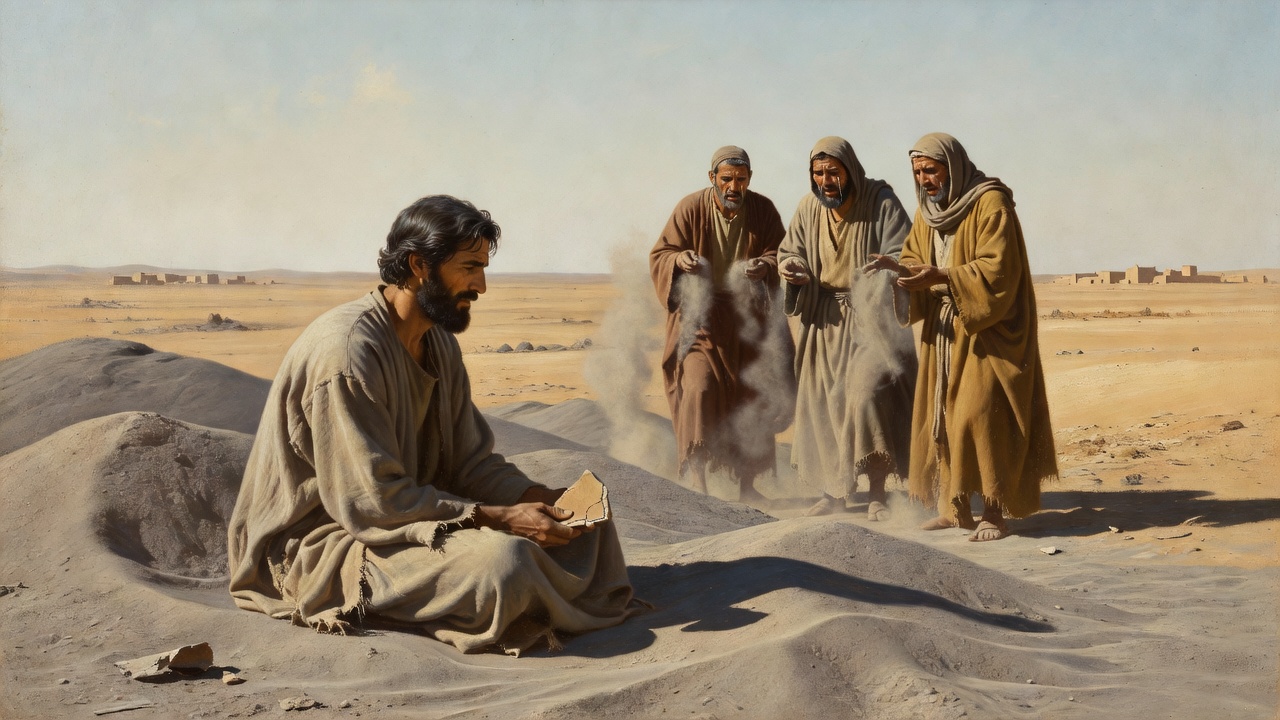
11Heta na'iruz imyrypar Izo pe wà: Eripaz Temà ywy rehe arer, Minaz Xuwa ywy rehe arer, Zopar Nama ywy rehe arer. Amo umume'u iaiw ma'e Izo pe uzeapo ma'e kwer wanupe wà. — Zaha Izo hexak pà nehe ty wà. Iaiw ma'e uzeapo izupe. Ximume'u zanezemumikahy haw zaha izupe nehe, i'i uzeupeupe wà. 12Muite wi hexak mehe nukwaw kwaw Izo a'e wà. Na'e wexak katu wà. — Izo romo hekon azeharomoete, i'i izupe wà. Na'e uzypyrog uzai'o pà uhapukaz pà wà. Umu'i ukamir uzemumikahy haw hexak kar pà wà. Omomor ywy iku'i kwer ywate wà, uwàkàg rehe wà no. 13Na'e wapyk ywy rehe huwake wà kury. Umumaw 7 'ar a'e pe upyta pà izupe uze'eg 'ym pà wà, 'aromo wà, pyhaw wà no. Ta'e wexak ma'erahy tetea'u ipuraraw paw hehe a'e wà xe.
Você sabia?
A Aflição de Jó e a Chegada de Seus Amigos
- No texto hebraico de Jó, o termo traduzido como Satanás aparece com o artigo definido como o adversário ou acusador. Nesse segundo conselho celestial, o adversário argumenta que, embora Jó tenha suportado a perda de seus bens e família, ferir sua própria carne e ossos o faria abandonar sua integridade.Fontes: Satan · o próprio texto bíblico
- Os companheiros de Jó — Elifaz, o temanita, Bildade, o suíta, e Zofar, o naamatita — vieram de regiões distantes associadas à Arábia. A origem de Bildade é ligada a Suá, filho de Abraão com Quetura, enquanto a antiga tradução grega Septuaginta conecta Zofar aos mineus do sul da Arábia.Fontes: Bildad · Zophar · o próprio texto bíblico
- Ao verem o sofrimento extremo de Jó, seus três amigos rasgaram seus mantos, lançaram pó ao ar sobre suas cabeças e sentaram-se com ele no chão em total silêncio por sete dias e sete noites. Essa vigília compartilhada refletia costumes antigos de profundo luto quando a dor era intensa demais para palavras.Fontes: o próprio texto bíblico
Notas escritas com auxílio de IA a partir de fontes abertas (Theographic Bible Metadata, CC BY-SA 4.0; Easton’s Bible Dictionary, domínio público) e revisadas antes de publicar.
Créditos e licença desta tradução
Tupàn ze'eg
Bible without Deuterocanon in Guajajára (BR:gub:Guajajára)
copyright © 2007 Wycliffe Bible Translators, Inc.
Language: Guajajára
Translation by: Wycliffe Bible Translators, Inc.
Guajajára [gub], Brazil
Copyright Information
© 2007, Wycliffe Bible Translators, Inc. All rights reserved.
This translation text is made available to you under the
terms of the Creative Commons License: Attribution-Noncommercial-No Derivative Works.
( http://creativecommons.org/licenses/by-nc-nd/3.0/ )
In addition, you have permission to port the text to different file formats, as long as you
do not change any of the text or punctuation of the Bible.
You may share, copy, distribute, transmit, and extract portions
or quotations from this work, provided that you include the above copyright
information:
You must give Attribution to the work.
You do not sell this work for a profit.
You do not make any derivative works that change any of the actual words or punctuation of the Scriptures.
Permissions beyond the scope of this license may be
available if you contact
us with your request.
Printed book ISBN 9788531109713
The Bible without Deuterocanon
in Guajajára
© 2007, Wycliffe Bible Translators, Inc. All rights reserved.
This translation is made available to you under the terms of the
Creative Commons Attribution-Noncommercial-No Derivatives license 4.0.
You may share and redistribute this Bible translation or extracts from it in any format, provided that:
You include the above copyright and source information.
You do not sell this work for a profit.
You do not change any of the words or punctuation of the Scriptures.
Pictures included with Scriptures and other documents on this site are licensed just for use with those Scriptures and documents.
For other uses, please contact the respective copyright owners.
2020-03-30
Fonte: http://ebible.org/gubBl/ · eBible.org