Jó 14
Tupàn ze'eg · Toque num versículo para ver as referências cruzadas.
Zanereko haw na'ipuku kwaw
1Ure uruiko ikàg 'ym ma'e romo urezexak kar mehe arer we paw rupi ure.
Urereko haw iaikwera'i. Ikatu 'ym ma'e tetea'u uzeapo urewe urereko mehe no.
2Teko nuzawy kwaw ma'eputyr uzaw ire na'arewahy uxinig ma'e wà.
Nuzawy kwaw i'àgaw wà no. Ukwaw ko rupi na'arewahy. Na'arewahy ukàzym no.
3Nuruiko kwaw ikàg ma'e romo. Màràzàwe tuwe erezekaiw urerehe.
Naiko kwaw upuner ma'e romo. Màràzàwe tuwe hereraha pe nerenataromo.
4Teko iaiw ma'e
Nuzapo pixik kwaw ikatu ma'e a'e wà.
5Eremume'u ure'ar heta àwàm urewe paw rupi ne.
Upyta imume'u katu pyrer romo.
Ni amo nupuner kwaw imunànaw rehe amo ae ure'ar imume'u pà wà.
6Epytu'u urerehe neme'e re nehe.
Tuwe urupyta ure zutyka'i nehe.
Tuwe ure zutyka'i urumumaw ure'ar nehe.
Uma'ereko ma'e umumaw u'ar uma'ereko pà. Nezewegatete urumumaw ure'ar.
7Heta ma'e hàrogatu haw ywyra pe.
Aze ximonohok nehe, hezuz wi putar nehe.
Itua'u wi putar nehe.
8Aze hapo izemàner nehe,
Aze izypy kwer umàno ywy pupe nehe,
9Nezewe rehe we aze ximono 'y pixik hehe nehe, hezuz wi putar nehe.
Hàkà wi putar ywyra ipyahu ma'e ài nehe.
10Teko nuiko kwaw ywyra ài wà. Umàno mehe upaw wà.
Wekwe imono re, ma'e pe oho putar wà nehe.
11'Ypaw typaw upaw rupi.
Yrykawhu upytu'u uwyryk ire no.
12Nezewegatete aze heta we ywak nehe,
Urumàno putar upaw rupi katete ure nehe.
Uruzapo putar ureker haw zàwenugar uremàno pà nehe.
Nurupu'àm pixik kwaw a'e re nehe.
Àro putar 'ar ikatu wera'u ma'e ihe nehe
13A, aze mo hemono pe umàno ma'e kwer wapyta haw pe,
Aze mo hemim pe a'e pe nekwahy mehe,
Aze mo a'e re eremume'u he'ar,
— Hema'enukwaw putar nerehe a'e 'ar mehe nehe, aze mo ere ihewe, ikatu wera'u mo ihewe.
14Aipo amo wikuwe wi putar umàno re wà nehe.
Ihe àro putar 'ar ikatu wera'u ma'e ihe nehe.
Heremipuraraw ipaw ire apytu'u putar hàro re nehe.
15Na'e herenoz putar pe nehe. Awazar putar neze'eg newe nehe.
Nerurywete putar herehe nehe. Ta'e heapo pe ne xe.
16Erezekaiw putar herehe iawy haw iapo kar 'ym pà ihewe nehe.
Nereiko kwaw herehe neme'e pà heremiapo ikatu 'ym ma'e hekar pà nehe.
17Nereharaz putar heremiapo kwer ikatu 'ym ma'e wi nehe.
Eremunàn putar heremiawy kwer nehe no.
— Eremumaw zaneremiàro, i'i Izo Tupàn pe
18Ywytyruhu uzekazeka waiko u'au'ar pà wà.
Itahu uhem uwenaw wi wà no.
19'Y u'ar ita rehe imukwamukwar pà.
'y ywy rehe uwyrykahy ma'e weraha ywy uzeinuinuromo.
Nezewegatete eremumaw teko wama'eràrogatu haw wanuwi ne.
20Ereityk teko ne wà. A'e rupi oho tuwe wà.
Amo ae hexakaw eremono wanupe ko ywy wi waho mehe ne wà.
21Aze amo uze'egatu ta'yr wanehe wà, wanu nuenu kwaw wà.
Aze ta'yr u'ar iaiw paw pupe wà, Ni amo numume'u kwaw wanu pe wà.
22Xo wetekwer rehe hahy haw zo ukwaw a'e.
Xo uzemumikahy haw upy'a pe har zo ukwaw.
Você sabia?
A Fragilidade da Vida e a Esperança de Renovação
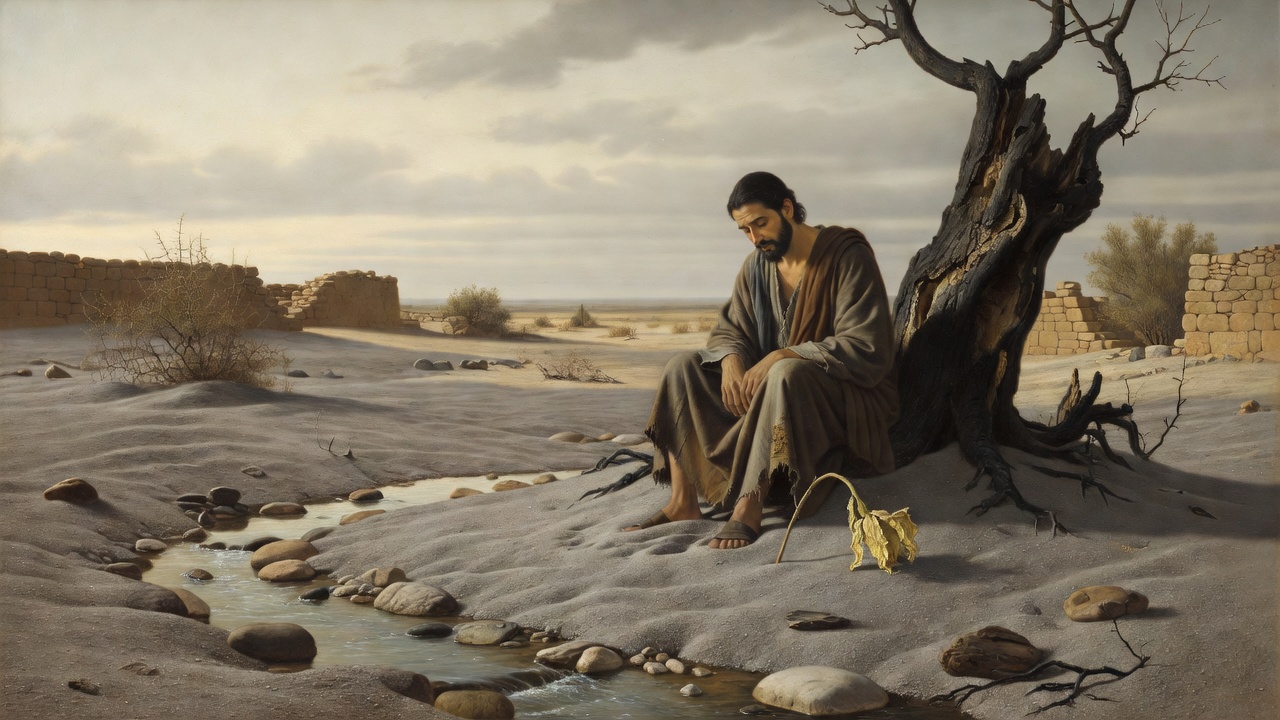
- Neste discurso, Jó contrasta o destino dos mortais com o de uma árvore. Enquanto uma árvore cortada pode brotar novamente ao menor cheiro de água, mesmo que seu tronco pareça morto, o ser humano morre, se deita e não volta a se levantar nesta terra.Fontes: o próprio texto bíblico
- Jó contempla o Sheol como um possível refúgio onde poderia ficar oculto até passar a ira divina, imaginando um momento em que Deus guardaria suas transgressões em um saco selado e chamaria pela obra de Suas mãos.Fontes: o próprio texto bíblico
- Para ilustrar a brevidade e o desgaste da existência humana, o capítulo recorre a metáforas naturais de erosão e efemeridade, comparando a vida a uma sombra passageira, a uma flor murcha e a rochas desgastadas pela água.Fontes: o próprio texto bíblico
Notas escritas com auxílio de IA a partir de fontes abertas (Theographic Bible Metadata, CC BY-SA 4.0; Easton’s Bible Dictionary, domínio público) e revisadas antes de publicar.
Créditos e licença desta tradução
Tupàn ze'eg
Bible without Deuterocanon in Guajajára (BR:gub:Guajajára)
copyright © 2007 Wycliffe Bible Translators, Inc.
Language: Guajajára
Translation by: Wycliffe Bible Translators, Inc.
Guajajára [gub], Brazil
Copyright Information
© 2007, Wycliffe Bible Translators, Inc. All rights reserved.
This translation text is made available to you under the
terms of the Creative Commons License: Attribution-Noncommercial-No Derivative Works.
( http://creativecommons.org/licenses/by-nc-nd/3.0/ )
In addition, you have permission to port the text to different file formats, as long as you
do not change any of the text or punctuation of the Bible.
You may share, copy, distribute, transmit, and extract portions
or quotations from this work, provided that you include the above copyright
information:
You must give Attribution to the work.
You do not sell this work for a profit.
You do not make any derivative works that change any of the actual words or punctuation of the Scriptures.
Permissions beyond the scope of this license may be
available if you contact
us with your request.
Printed book ISBN 9788531109713
The Bible without Deuterocanon
in Guajajára
© 2007, Wycliffe Bible Translators, Inc. All rights reserved.
This translation is made available to you under the terms of the
Creative Commons Attribution-Noncommercial-No Derivatives license 4.0.
You may share and redistribute this Bible translation or extracts from it in any format, provided that:
You include the above copyright and source information.
You do not sell this work for a profit.
You do not change any of the words or punctuation of the Scriptures.
Pictures included with Scriptures and other documents on this site are licensed just for use with those Scriptures and documents.
For other uses, please contact the respective copyright owners.
2020-03-30
Fonte: http://ebible.org/gubBl/ · eBible.org