Jeremias 24
Tupàn ze'eg · Toque num versículo para ver as referências cruzadas.
Mokoz kok ipor pi i'a kwer
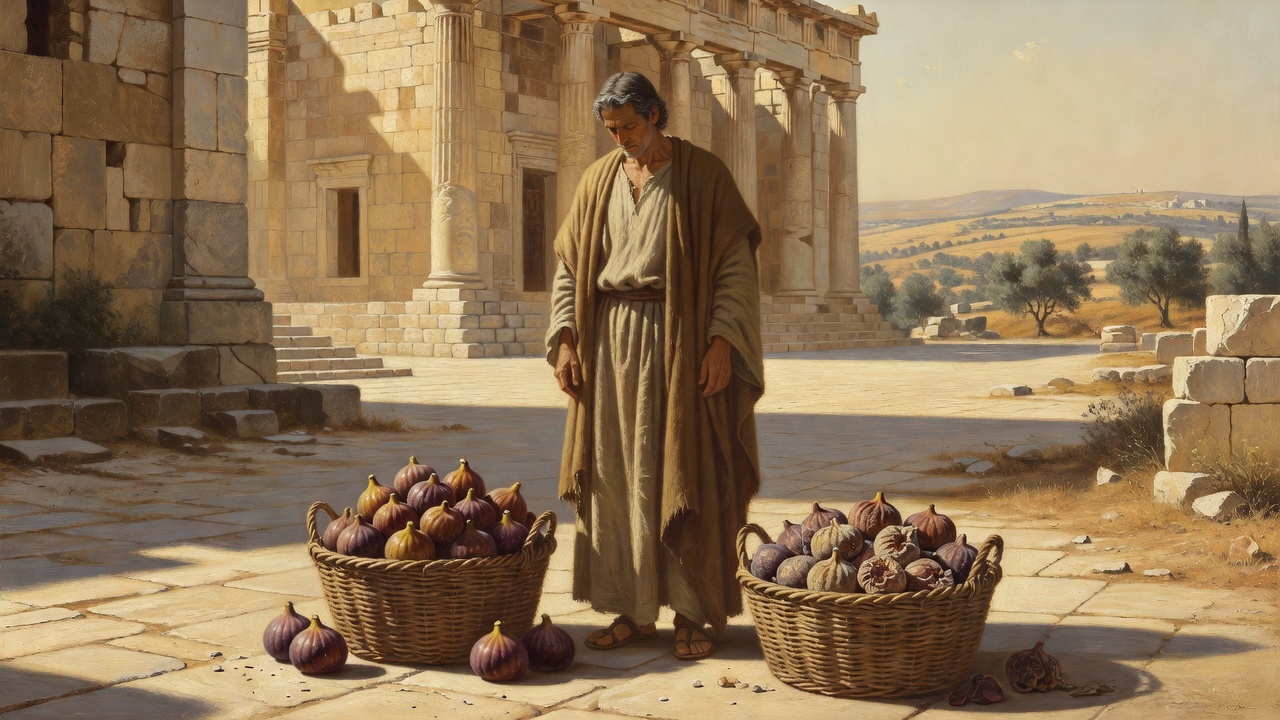
1Aexak ma'e hepuahu haw zàwenugar ihe. A'e ma'e uzeapo Namukononozor Mawiron ywy rehe har wanuwihawete iho re. Weraha Izaew izuapyapyr wemipyhyk kwer romo wà, Zeruzarez tawhu wi uiwy pe wà. Weraha teko tetea'u wà: Zuta ywy rehe har wanuwihawete Zuaki Zeoaki ta'yr, amo tuwihaw Zuta ywy rehe har wà, ywyra kixi har wà, amo ma'e zawaiw ma'e iapo haw kwaw par wà. A'e puahu zàwenugar hexak mehe Tupàn Tuweharupi Wiko Ma'e wexak kar mokoz kok ipor pi i'a kwer tàpuzuhu henataromo har. Kok ipy pupe heta pi i'a kwer ikatuahy ma'e hete na'arewahy ma'e. Inugwer kok pupe heta pi i'a kwer iaiw ma'e. Iaiw tuwe a'e. Teko nupuner kwaw i'u haw rehe wà. 3Na'e Tupàn Tuweharupi Wiko Ma'e upuranu herehe.
— Zeremi, ma'e erexak iko, i'i ihewe. — Pi i'a kwer, a'e izupe. — Ikatu ma'e ikatuahy a'e. Iaiw ma'e iaiwahy a'e. Teko nu'u kwaw wà, a'e izupe. 4Na'e Tupàn uze'eg ihewe.
5Ihe Tupàn Tuweharupi Wiko Ma'e Izaew wazar ihe, amume'u ko ma'e newe ihe kury. Izaew izuapyapyr Mawiron pe heraha pyrer nuzawy kwaw pi i'a kwer ikatu ma'e wà. Apuhareko putar ihe wà nehe. 6Azekaiw putar wanehe nehe. Aruzewyr putar ko ywy rehe ihe wà nehe no. Azapo wi putar teko imono'og pyrer romo ihe wà nehe. Namumaw kwaw ihe wà nehe. Azutym putar ma'eà'yz ài ihe nehe. Nazo'ok kwaw nehe. 7Amono putar heputar haw wapy'a pupe nehe. A'e mehe ipurukwaw wer putar Tupàn Tuweharupi Wiko Ma'e romo hereko haw rehe wà nehe. A'e mehe wiko putar heremiaihu romo wà nehe. Aiko putar wazar romo ihe nehe no. Ta'e uzewyr putar tuwe ihewe wà nehe xe. 8Ihe Tupàn Tuweharupi Wiko Ma'e areko putar amo teko pi i'a kwer iaiw ma'e ài ihe wà nehe. Teko nu'u kwaw a'e pi i'a kwer wà. Nezewegatete nazapo kwaw ikatu ma'e a'e teko wanupe nehe no: Zuta ywy rehe har wanuwihawete Zeneki, tuwihaw hehe we har wà, teko Zeruzarez pe har ko ywy rehe wikuwe ma'e wà, teko Zeruzarez pe har Ezit pe oho ma'e kwer wà. 9Amu'ar putar iaiw haw uhua'u ma'e wanehe ihe nehe. Teko ywy nànànar ipytuhegatu putar ukyze pà hexak mehe wà nehe. Teko upuka putar wanehe wà nehe. Umume'u putar purumupuka kar haw wanehe uze'eg uryweteahy pà wà nehe. Amuhàmuhàz putar ywy tetea'u rehe ihe wà nehe. Teko a'e ywy rehe har umume'uahy iaiw haw a'e teko waner rehe we wà nehe. 10Amono kar putar ikatu 'ym ma'e wakutyr ihe nehe: zeàmàtyry'ymawhu, ma'uhez haw, ma'eahy haw. Te ukàzym putar a'e ywy wi wà nehe, ywy wanupe waipy wanupe heremimono kwer wi wà nehe.
Você sabia?
Os Dois Cestos de Figos
- Jeremias recebeu esta visão depois que o rei Nabucodonosor da Babilônia deportou o rei Jeconias (também chamado de Joaquim), juntamente com as autoridades, artesãos e ferreiros de Jerusalém. Nabucodonosor estabeleceu então Zedequias como rei sobre a população restante em Judá.Fontes: o próprio texto bíblico · Jehoiachin · Zedekiah · Nebuchadnezzar
- Na visão diante do templo, o cesto de figos excelentes e temporãos simboliza os exilados levados para a Babilônia. O Senhor promete preservá-los, dar-lhes um coração para conhecê-lo e trazê-los de volta à sua terra.Fontes: o próprio texto bíblico
- Em contrapartida, o cesto de figos podres e intragáveis simboliza o rei Zedequias, os seus oficiais e o remanescente que permaneceu em Judá ou fugiu para o Egito. Em vez de encontrarem segurança, são advertidos de que enfrentariam desgraça, fome, peste e zombaria entre as nações.Fontes: o próprio texto bíblico · Zedekiah · Egypt
Notas escritas com auxílio de IA a partir de fontes abertas (Theographic Bible Metadata, CC BY-SA 4.0; Easton’s Bible Dictionary, domínio público) e revisadas antes de publicar.
Lugares deste capítulo
- Babylon · 32.543, 44.422 · versículo 1
- Jerusalem · 31.777, 35.234 · versículos 1, 8
- Chaldea · 30.962, 46.104 · versículo 5
- Egypt · 30.129, 31.308 · versículo 8
Só aparecem lugares com identificação de alta confiança (90% ou mais segundo as fontes acadêmicas reunidas pelo OpenBible). Mapa da época: DARE (Digital Atlas of the Roman Empire), CC BY 4.0; mapa atual: © colaboradores do OpenStreetMap; lugares: OpenBible.info (CC BY 4.0).
Créditos e licença desta tradução
Tupàn ze'eg
Bible without Deuterocanon in Guajajára (BR:gub:Guajajára)
copyright © 2007 Wycliffe Bible Translators, Inc.
Language: Guajajára
Translation by: Wycliffe Bible Translators, Inc.
Guajajára [gub], Brazil
Copyright Information
© 2007, Wycliffe Bible Translators, Inc. All rights reserved.
This translation text is made available to you under the
terms of the Creative Commons License: Attribution-Noncommercial-No Derivative Works.
( http://creativecommons.org/licenses/by-nc-nd/3.0/ )
In addition, you have permission to port the text to different file formats, as long as you
do not change any of the text or punctuation of the Bible.
You may share, copy, distribute, transmit, and extract portions
or quotations from this work, provided that you include the above copyright
information:
You must give Attribution to the work.
You do not sell this work for a profit.
You do not make any derivative works that change any of the actual words or punctuation of the Scriptures.
Permissions beyond the scope of this license may be
available if you contact
us with your request.
Printed book ISBN 9788531109713
The Bible without Deuterocanon
in Guajajára
© 2007, Wycliffe Bible Translators, Inc. All rights reserved.
This translation is made available to you under the terms of the
Creative Commons Attribution-Noncommercial-No Derivatives license 4.0.
You may share and redistribute this Bible translation or extracts from it in any format, provided that:
You include the above copyright and source information.
You do not sell this work for a profit.
You do not change any of the words or punctuation of the Scriptures.
Pictures included with Scriptures and other documents on this site are licensed just for use with those Scriptures and documents.
For other uses, please contact the respective copyright owners.
2020-03-30
Fonte: http://ebible.org/gubBl/ · eBible.org