Juízes 21
Tupàn ze'eg · Toque num versículo para ver as referências cruzadas.
Umuàgà'ym wanemireko ràm Mezàmi izuapyapyr wanupe wà kury
1A'e 'ym mehe Mipa tawhu pe, teko Izaew izuapyapyr umume'uahy ko uze'eg Tupàn pe wà. — Ni amo awa Mezàmi izuapyapyr nuwereko kwaw urerazyr wemireko romo a'e wà nehe, i'iahy Tupàn pe wà.
2Teko oho Metew pe wà, Tupàn henataromo wiko pà wà. Upyta a'e pe 'aromo wà. Kwarahy heixe etea'i mehe we wiko a'e pe wà. Uzai'o upaw rupi wahyhaw rupi wà. 3O Tupàn Tuweharupi Wiko Ma'e Izaew wazar ne. Màràzàwe tuwe uzeapo a'e ma'e urewe a'e. Màràzàwe tuwe pitài Izaew ta'yr izuapyapyr ukàzym urewi a'e wà, i'i izupe wà.
4Iku'egwer pe izi'itahy teko upu'àm wà kury. Uzapo amo ma'ea'yr hapy haw a'e pe Tupàn henataromo wà. Uzuka ma'ea'yr Tupàn henataromo wà. Omono ma'e Tupàn pe imuawyze kar har romo wà no. 5— Izaew ta'yr izuapyapyr paw uzeupir oho Mipa pe Tupàn henataromo uzemono'og pà wà. Xo pitài zo noho kwaw wà. Mon aipo noho kwaw wà, i'i uzeupeupe wà. Ta'e a'e 'ym mehe uzapo amo ae wemimume'uahy kwer wà. — Aze amo noho kwaw zanezemono'ogaw pe wà nehe, xiuka a'e teko zane wà nehe, i'i ahyahy uzeupeupe a'e 'ym mehe wà.
6Izaew upuhareko katu wànàm wà, Mezàmi izuapyapyr wà. — Kutàri amo zaneànàm ukàzym zanewi a'e wà, i'i uzeupe wà. 7— Heta we màràmàràn awa Mezàmi izuapyapyr wà. Ma'e xiapo putar wanemireko ràm wanexak pà zane nehe. Ta'e ximume'uahy zanerazyr wamono 'ym àwàm Mezàmi wanupe wanemireko romo zane wà xe.
8A'e rupi upuranu uzehezehe wà. — Ma'enugar Izaew ta'yr izuapyapyr noho kwaw Mipa pe Tupàn henataromo wà, i'i uzeupe wà. Na'e amo umume'u a'e oho 'ym ma'e kwer waner amogwer wanupe wà. — Zamez tawhu Zireaz pe har noho kwaw wà, i'i wanupe wà. 9A'e rupi wenoz tawhu pe har pitàitàigatu wà. Ni amo Zamez Zireaz pe har nuiko kwaw a'e pe wà. 10A'e rupi uze'eg nezewe uzeupeupe wà kury. — Ximono kar 12 miw awa ikàg wera'u ma'e a'e tawhu pe wà nehe, i'i uzeupeupe wà. — Pezuka Zamez Zireaz pe har pe wà nehe. Pezuka awa wà nehe. Pezuka kuzà wà nehe no. Pezuka kwarearer kuzàtàigwer wà nehe no. 11Pezapo nezewe nehe. Pezuka awa paw pe wà nehe. Pezuka kuzà paw pe wà nehe no. Pezuka zo kuzà awa puhe uker pixik 'ym ma'e pe wà nehe, i'i teko zauxiapekwer wanupe wà.
12Wexak 400 kuzà awa puhe oho pixik 'ym ma'e Zamez Zireaz pe wà. Weraha a'e kuzà Xiro Kànàà ywy rehe har pe upytu'u haw pe wà.
13Omono kar uze'eg heraha har Mezàmi Itahu Himom pe wiko ma'e wanupe wà. — Zapytu'u zanezeàmàtyry'ym ire nehe kury, i'i wanupe wà. 14A'e rupi Mezàmi uzewyr wà. Upyhyk a'e 400 kuzàwaza Zamez Zireaz parer wemireko romo wà. Nuhyk kwaw kuzà awa paw wanupe wà rihi. 15A'e rupi teko upuhareko katu Mezàmi wà. Ta'e Tupàn hemimutar rupi pitài Izaew ta'yr ukàzym wanuwi a'e wà xe. 16Na'e Izaew wanuwihaw uze'eg nezewe wà kury. — Naheta kwaw kuzà Mezàmi izuapyapyr wà kury. Ma'e xiapo putar wanemireko ràm wamono'og pà amogwer wanupe zane nehe. 17Na'ikatu kwaw pitài Izaew ta'yr ikàzymaw. Xikar Mezàmi ipaw 'ym àwàm zane nehe. 18Nupuner kwaw zanerazyr wanereko haw rehe wà, i'i teko wanupe wà. Uze'eg nezewe wà, ta'e a'e 'ym mehe omono ze'egaiw awa Mezàmi wanehe wà xe. A'e rupi nomono kwaw wazyr Mezàmi wanupe wanemireko romo wà. 19Uhem etea'i Tupàn pe zanemynykaw Xiro tawhu pe iapo pyràm kury: (Xiro tawhu a'e, Metew huwake kwarahy hemaw ahurehe har kutyr har rehe tuz a'e, Eremona tawhu huwake kwarahy hemaw awyze har kutyr har rehe a'e. Teko oho Metew tawhu wi Xikez tawhu pe amo pe rupi wà. Xiro upyta a'e pe huwake kwarahy hemaw kutyr a'e).
20A'e rupi Izaew wanuwihaw uze'eg Mezàmi wanupe wà kury. — Pezeàmim peho uwà tyw pupe nehe. 21Peme'egatu nehe. Mynykaw 'ar mehe kuzàwaza Xiro pe har upynyk putar oho wà nehe. Pehem uwà tyw wi a'e 'ar mehe we nehe no. Tuwe pitàitàigatu upyhyk amo kuzàwaza wà nehe, Mezàmi ywy rehe waneraha pà wà nehe. 22Nezewe mehe aze wanu uze'egahy wà urewe wà nehe, aze wakywyr uze'egahy wà urewe wà nehe, urupuner nezewe ure'e haw rehe nehe. — Tuwe upyta a'e pe wanemireko romo wà nehe, ta'e Zamez Zireaz waàmàtyry'ym mehe nurupyhyk kwaw kuzà Mezàmi paw wanupe ure xe. Napezuhaw kwaw peze'eg awer, ta'e napemono kwaw penazyr wanupe xe. Imunar penazyr wanehe wà, peze wanupe nehe, i'i tuwihawete awakwer wanupe wà.
23A'e rupi weruzar Mezàmi Izaew wanuwihaw waze'eg wà. Pitàitàigatu wexaexak amo kuzàwaza wemireko ràm romo wà, wapynyk mehe wà. Weraha weko haw pe wà. Uzewyr uiwy pe wà. Uzapo wi wàpuz wà. Uzapo wi tawhu wà no. Upyta a'e pe wiko pà wà. 24Amogwer Izaew uhem oho weko haw pe wànàm wanupe uiwy pe wà.
25A'e 'ar rehe naheta kwaw tuwihawete Izaew waiwy rehe. Pitàitàigatu uzapo ma'e wemimutar rupi katete a'e wà.
Você sabia?
A preservação da tribo de Benjamim
- A assembleia de Israel havia se reunido em Mispá, um ponto elevado em Benjamim usado para reuniões nacionais, onde juraram não dar suas filhas aos benjamitas nem poupar quem faltasse ao encontro. Diante da quase extinção de Benjamim — reduzida a apenas seiscentos homens na rocha de Rimom —, os líderes buscaram soluções extremas para preservar a tribo sem quebrar formalmente o juramento.Fontes: o próprio texto bíblico · Mizpah · Rimmon
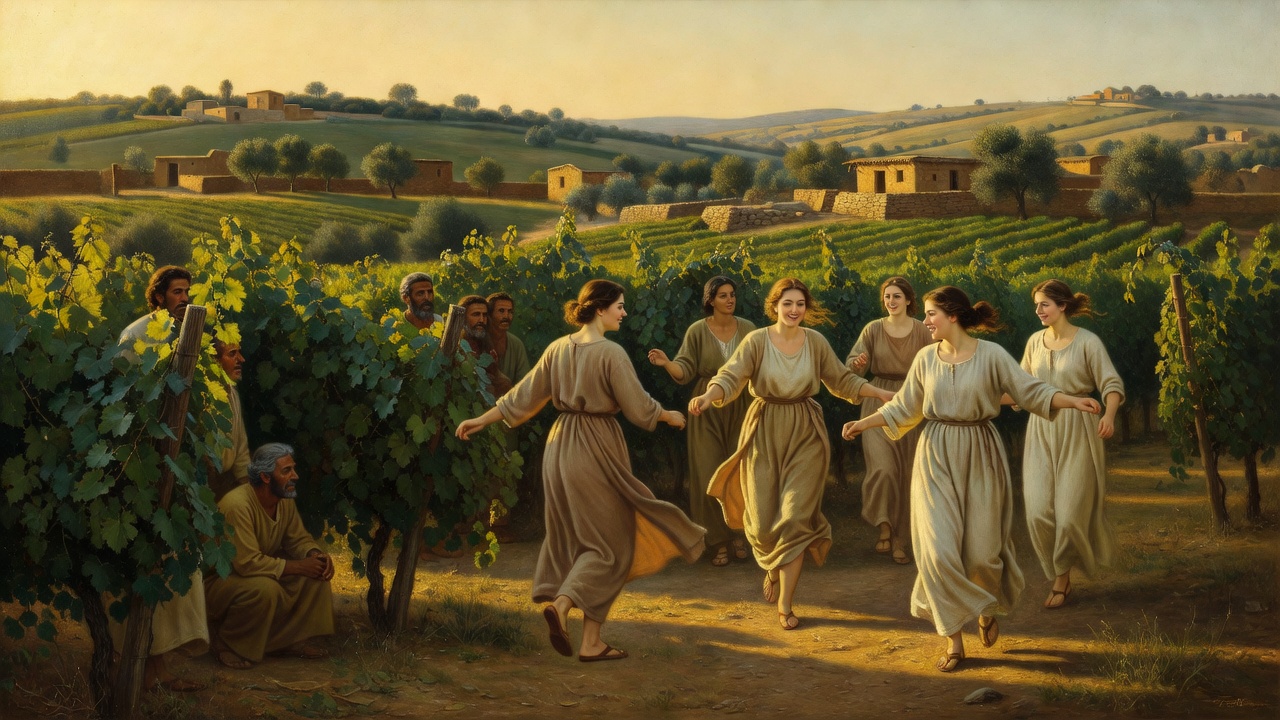
- Para conseguir esposas para os sobreviventes benjamitas, Israel atacou Jabes-Gileade, a leste do Jordão, por não ter comparecido à assembleia, e poupou quatrocentas jovens. Como ainda faltavam mulheres, os anciãos permitiram que os demais benjamitas emboscassem e levassem jovens que dançavam na festa anual ao Senhor em Siló, ao norte de Betel.Fontes: o próprio texto bíblico · Jabesh-gilead · Shiloh · Bethel (of Palestine)
Notas escritas com auxílio de IA a partir de fontes abertas (Theographic Bible Metadata, CC BY-SA 4.0; Easton’s Bible Dictionary, domínio público) e revisadas antes de publicar.
Lugares deste capítulo
- Canaan · 32.767, 35.333 · versículo 12
- Shiloh · Hoje: Khirbet Seilun · 32.056, 35.290 · versículos 12, 19, 21
- Shechem · Hoje: Tell Balatah · 32.214, 35.282 · versículo 19
Só aparecem lugares com identificação de alta confiança (90% ou mais segundo as fontes acadêmicas reunidas pelo OpenBible). Mapa da época: DARE (Digital Atlas of the Roman Empire), CC BY 4.0; mapa atual: © colaboradores do OpenStreetMap; lugares: OpenBible.info (CC BY 4.0).
Créditos e licença desta tradução
Tupàn ze'eg
Bible without Deuterocanon in Guajajára (BR:gub:Guajajára)
copyright © 2007 Wycliffe Bible Translators, Inc.
Language: Guajajára
Translation by: Wycliffe Bible Translators, Inc.
Guajajára [gub], Brazil
Copyright Information
© 2007, Wycliffe Bible Translators, Inc. All rights reserved.
This translation text is made available to you under the
terms of the Creative Commons License: Attribution-Noncommercial-No Derivative Works.
( http://creativecommons.org/licenses/by-nc-nd/3.0/ )
In addition, you have permission to port the text to different file formats, as long as you
do not change any of the text or punctuation of the Bible.
You may share, copy, distribute, transmit, and extract portions
or quotations from this work, provided that you include the above copyright
information:
You must give Attribution to the work.
You do not sell this work for a profit.
You do not make any derivative works that change any of the actual words or punctuation of the Scriptures.
Permissions beyond the scope of this license may be
available if you contact
us with your request.
Printed book ISBN 9788531109713
The Bible without Deuterocanon
in Guajajára
© 2007, Wycliffe Bible Translators, Inc. All rights reserved.
This translation is made available to you under the terms of the
Creative Commons Attribution-Noncommercial-No Derivatives license 4.0.
You may share and redistribute this Bible translation or extracts from it in any format, provided that:
You include the above copyright and source information.
You do not sell this work for a profit.
You do not change any of the words or punctuation of the Scriptures.
Pictures included with Scriptures and other documents on this site are licensed just for use with those Scriptures and documents.
For other uses, please contact the respective copyright owners.
2020-03-30
Fonte: http://ebible.org/gubBl/ · eBible.org