Isaías 64
Tupàn ze'eg · Toque num versículo para ver as referências cruzadas.
1Aze mo eremu'i ywak, aze mo erewezyw, ikatuahy mo urewe.
Aze mo eremuryryryryz kar ywytyruhu nerenataromo, ikatu mo urewe.
2Nuzawy iwer mo 'y
tata hakuahy ma'e i'aromo upupur ma'e.
Neàmàtyry'ymar ukwaw mo nepuner haw wà.
Uryryryryz mo ukyze haw rehe nerenataromo wà.
3Ikatuahy ma'e purumupytuhegatu kar haw iapo mehe,
ma'e ureremiàro 'ym iapo mehe,
erewezyw ywak wi ne.
Ywytyruhu uryryryryz nerenataromo wà.
4Teko nuexak pixik kwaw amo tupàn wà.
Nuenu pixik kwaw amo tupàn rehe ze'egaw wà. Xo ne zo nerexak a'e wà. Xo ne rehe ze'egaw zo wenu wà.
Ni amo tupàn nuexak kar kwaw ikatu ma'e weruzar har wanupe ne ài wà.
5Eremuawyze ikatu ma'e urywete haw rehe iapo har ne wà.
Eremuawyze teko ne wà, aze wiko neremimutar rehe tuweharupi wà.
Erekwahy urewe. Nezewe rehe we uruzapo wi wi ikatu 'ym ma'e uruiko.
Aze uruata wi nerape kwehe arer rupi nehe, xo a'e mehe zo urepyro putar pe nehe.
6Ure paw uruiko ikatu 'ym ma'e romo nerenataromo.
Ureremiapo kwer ikatu ma'e nuzawy kwaw urekamir izipiw ma'e.
Uruiko ma'e huwer uxinig ma'e kwer ài.
Ureremiapo kwer ikatu 'ym ma'e
urereraha muite ywytuaiw ài.
7Naheta kwaw newe uze'eg ma'e wà.
Ni amo nuekar kwaw upytywà àwàm nerehe wà.
Erezeàmim urewi.
Erepuir urewi, ta'e uruzapo ikatu 'ym ma'e tetea'u ure xe.
8Nezewe rehe we, o Tupàn Tuweharupi Wiko Ma'e, ereiko ureru romo ne.
Uruiko ywyzuwa romo. Ereiko ywyzuwa ima'ema'e har romo ywy'a iapo har romo.
Ureapo pe upaw rupi ne.
9Epytu'u nekwahy re urewe nehe, O Tupàn, nema'enukwaw zo ureremiapo kwer ikatu 'ym ma'e rehe tuweharupi nehe.
Uruiko neremiaihu romo.
Nereharaz zo urereko haw wi nehe.
10Tawhu ikatuahy ma'e neremiaihu waneko awer uzeapo ywyxiguhu romo wà.
Zauxiapekwer weityk Zeruzarez wà.
Ywytyr Xiàw rehe naheta kwaw teko wà.
11Tata umumaw
neràpuzuhu uremyter pe har ikatu ma'e ipuràg eteahy ma'e.
Ureipy nemuwete katu ipupe wà.
Tata umumaw neràpuzuhu.
Zauxiapekwer umuaiw ma'e ureremiamutar kwer paw wà.
12Erexak a'e ma'e paw, O Tupàn Tuweharupi Wiko Ma'e.
Aipo nerezapo kwaw ma'e nehe.
Aipo nereze'eg kwaw nehe.
Aipo erezepyk wiwi putar urerehe nehe.
Você sabia?
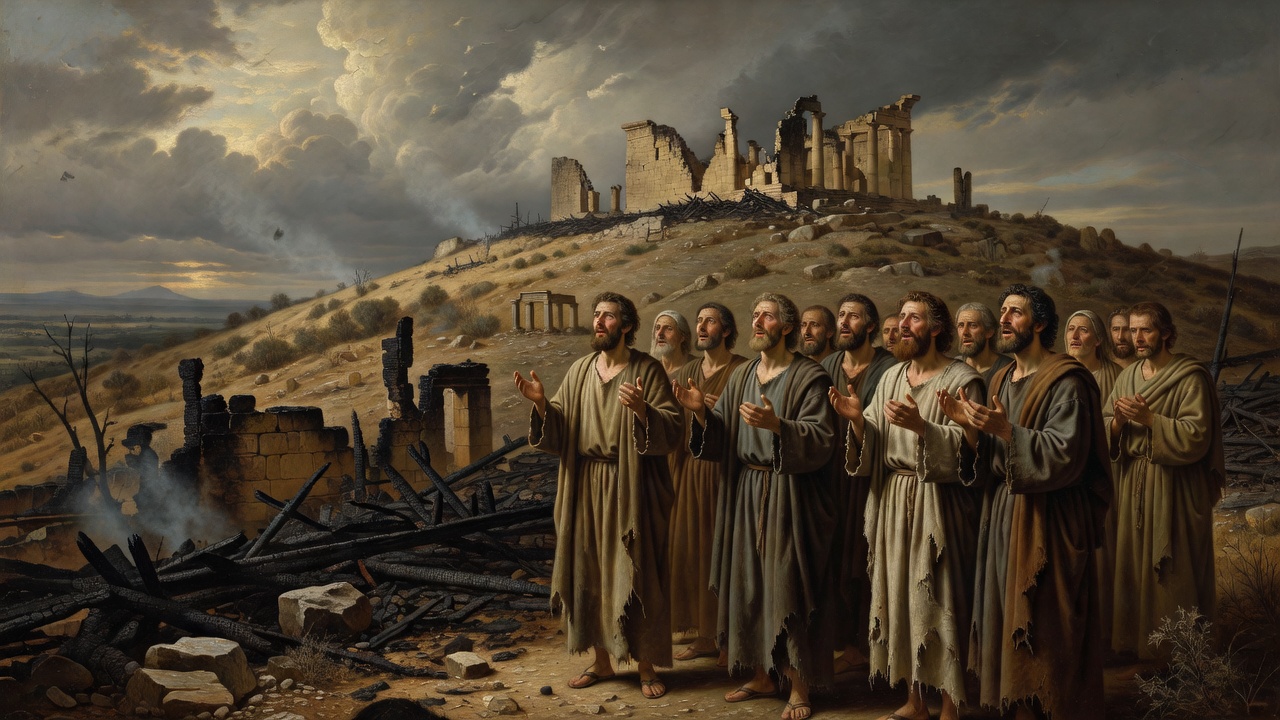
Uma Oração por Misericórdia em Meio às Ruínas
- A passagem começa com uma súplica para que Deus fenda os céus e desça com poder abalador, como fogo que acende a lenha. Contudo, contrasta esse desejo pela presença de Deus com uma confissão da indignidade humana, comparando as pessoas a folhas secas levadas por suas próprias iniquidades.Fontes: o próprio texto bíblico
- Em Isaías 64, a comunidade apela a Deus como Pai e artesão, declarando: "nós somos o barro, e tu és o nosso oleiro". Essa metáfora enfatiza a fragilidade humana e a total dependência de Deus, suplicando por misericórdia divina apesar do reconhecimento de suas culpas.Fontes: o próprio texto bíblico
- O capítulo lamenta a destruição dos espaços sagrados, descrevendo Sião e Jerusalém como desertos e desolações. O texto lamenta especificamente o incêndio e a ruína do templo sagrado onde as gerações passadas haviam prestado louvor.Fontes: o próprio texto bíblico · Zion · Jerusalem
Notas escritas com auxílio de IA a partir de fontes abertas (Theographic Bible Metadata, CC BY-SA 4.0; Easton’s Bible Dictionary, domínio público) e revisadas antes de publicar.
Lugares deste capítulo
Só aparecem lugares com identificação de alta confiança (90% ou mais segundo as fontes acadêmicas reunidas pelo OpenBible). Mapa da época: DARE (Digital Atlas of the Roman Empire), CC BY 4.0; mapa atual: © colaboradores do OpenStreetMap; lugares: OpenBible.info (CC BY 4.0).
Créditos e licença desta tradução
Tupàn ze'eg
Bible without Deuterocanon in Guajajára (BR:gub:Guajajára)
copyright © 2007 Wycliffe Bible Translators, Inc.
Language: Guajajára
Translation by: Wycliffe Bible Translators, Inc.
Guajajára [gub], Brazil
Copyright Information
© 2007, Wycliffe Bible Translators, Inc. All rights reserved.
This translation text is made available to you under the
terms of the Creative Commons License: Attribution-Noncommercial-No Derivative Works.
( http://creativecommons.org/licenses/by-nc-nd/3.0/ )
In addition, you have permission to port the text to different file formats, as long as you
do not change any of the text or punctuation of the Bible.
You may share, copy, distribute, transmit, and extract portions
or quotations from this work, provided that you include the above copyright
information:
You must give Attribution to the work.
You do not sell this work for a profit.
You do not make any derivative works that change any of the actual words or punctuation of the Scriptures.
Permissions beyond the scope of this license may be
available if you contact
us with your request.
Printed book ISBN 9788531109713
The Bible without Deuterocanon
in Guajajára
© 2007, Wycliffe Bible Translators, Inc. All rights reserved.
This translation is made available to you under the terms of the
Creative Commons Attribution-Noncommercial-No Derivatives license 4.0.
You may share and redistribute this Bible translation or extracts from it in any format, provided that:
You include the above copyright and source information.
You do not sell this work for a profit.
You do not change any of the words or punctuation of the Scriptures.
Pictures included with Scriptures and other documents on this site are licensed just for use with those Scriptures and documents.
For other uses, please contact the respective copyright owners.
2020-03-30
Fonte: http://ebible.org/gubBl/ · eBible.org