Isaías 5
Tupàn ze'eg · Toque num versículo para ver as referências cruzadas.
Tupàn hemitygwer uwà tyw
1Amuzàg putar amo zegar haw hemyrypar pe kury,
hemitygwer uwà tyw rehe kury.
Hemyrypar uzutym uwà
'yw ywy katu haw rehe.
2Uhàwykàz ita henuhem pà.
Uzutym uwà 'yw ikatu wera'u ma'e.
Ko myter pe uzapo tàpuz ime'egatu haw iaiha ma'e no.
Uzapo kawawhu uwà imuy'e haw romo no.
Wàro uwà 'yw i'a katu haw.
Xo uwà hazahy ma'e zo hezuz zepe a'e pe.
3Na'e hemyrypar uze'eg nezewe kury.
— Zeruzarez pe har wà. Zuta ywy rehe har wà.
Aipo ihe amuazahy kar uwà. Aze ru'u, aipo a'e ae hazahy.
4Azapo ikatu ma'e paw izupe hepuner haw rupi ihe.
Màràzàwe tuwe i'a kwer hazahy.
Àro uwà hete katu ma'e. Màràzàwe tuwe i'a kwer nahete katu kwaw.
5Amume'u putar heremitygwer uwà tyw pe heremiapo ràm ihe kury.
— Azo'ok putar pari a'e wi nehe.
Aityk putar pàrirogaw imunar ma'e wamunyryk kar haw nehe no.
Amuixe kar putar ma'ea'yr heko pe wà nehe.
Amumaw kar putar uwà rupaw nehe.
6Kukwer romo uzeapo putar nehe.
Ni amo nomonohok kwaw hàkà ikatu 'ym ma'e wà nehe. Ni amo nuweruwaruwak kwaw ywy wà nehe.
Ka'a hezuz putar a'e pe xu rehe we nehe.
Aze'eg putar ywàkun pe nehe.
— Emugyr kar zo àmàn heko rehe nehe, a'e putar izupe nehe.
7Tupàn Tuweharupi Wiko Ma'e Ikàg Wera'u Ma'e iko uwà tyw izar ài,
uwà Tupàn hemimutar a'e,
wiko Izaew romo teko Zuta ywy rehe har romo a'e.
Tupàn weruzar kar uze'eg wanupe.
Nuweruzar kwaw wà. Iaiw ma'e uzapo upuruzuka pà wà.
Wàro ikatu ma'e wanemiapo,
nuexak kwaw. Xo umàno etea'i ma'e wanehapukaz taw zo wenu a'e. — Urepytywà pe nehe, i'i wà.
Tupàn uzepyk ikatu 'ym ma'e iapo har wanehe
8Pezemumikahy nehe, tàpuz tetea'u ime'eg kar har wà.
Tupàn uzepyk putar penehe a'e nehe, ywy pehegwer tetea'u izar wà.
Nan kwehe tete naheta kwaw waneko haw amogwer wanupe nehe.
Xo pe zo peiko putar ko ywy rehe nehe.
9Aenu Tupàn Tuweharupi Wiko Ma'e Ikàg Wera'u Ma'e ize'eg mehe.
— Aityk putar tàpuzuhu uhua'u ma'e ihe wà nehe. Aityk putar tàpuzuhu ipuràg eteahy ma'e ihe wà nehe no.
Ni amo nuiko kwaw wapupe wà nehe.
10Uwà tyw mokoz inemo hereko har
omono putar ru'u xo 20 zutahyky'a por win zo a'e nehe.
100 kir ma'eà'yz
omono putar xo 10 kir arozràn nehe.
11Pezemumikahy nehe, 'ar nànàn kàwiràn i'u har wà.
'Ar katu mehe uwà tykwer win i'u har wà. Pezypyrog izi'itahy. Xo pyhaw zo pepytu'u i'u re.
Peka'u azeharomoete.
12Pepynykaw pe heta zegar haw wioràwiràn rehe we har.
Heta imupu pyr. Heta xi'àm.
Heta tetea'u win i'u pyràm no.
Napezekaiw kwaw Tupàn Tuweharupi Wiko Ma'e hemiapo ràm rehe.
Napezekaiw kwaw hemiapo ko 'ar rehe har rehe no.
13Nahereruzar kwaw heremiaihu wà.
A'e rupi amo zauxiapekwer weraha putar heremiaihu waiwy wi wà nehe.
Teko a'e wà nehe, wanuwihaw a'e wà nehe no, umàno putar uma'uhez pà wiwez tà a'e wà nehe no.
14Umàno ma'e kwer wapyta haw nuzawy kwaw zàwàruhu ima'uhez ma'e nehe.
Uzurupeka putar a'e teko wamokon pà wanuwihaw wamokon pà nehe.
A'e teko wiko upynyk pà uka'u pà wà.
Wiko iaiw ma'e iapo pà wà no.
15Imaranugar putar upaw rupi wà nehe.
Wiko wera'u ma'e wiko putar ikàg 'ym ma'e romo wà nehe.
16Tupàn Tuweharupi Wiko Ma'e Ikàg Wera'u Ma'e uzapo putar ikatu ma'e a'e nehe.
Nezewe mehe wexak kar putar uhua'u haw ikatuahy haw rehe we purupe nehe.
Tupàn uzapo xo ikatu ma'e zo a'e, ikatu 'ym ma'e iapo pixik 'ym pà teko wazàwe a'e.
Nezewe mehe teko paw ukwaw putar ikatuahy haw wà nehe.
17Tawhu paw uzeapo putar ma'e ikaika pyrer romo wà nehe.
Àràpuhàràn hawitu ma'e wexak putar ka'api'i amo àràpuhàrànetea'yr wanehe we a'e pe wà nehe.
18Tupàn uzepyk putar ikatu 'ym ma'e wi utyryk 'ym ma'e hemu'em ma'e wanehe nehe.
Werupuze ukatu 'ymaw heraha hereko uwyramawa ài wà.
19Uze'eg nezewe wà. — Tuwe Tupàn uzapo wemiapo ràm na'arewahy nehe.
Nezewe mehe xikwaw putar hemiapo ràm nehe.
Tuwe Tupàn Izaew Wazar Ikatuahy Ma'e uzapo wemiapo putar haw nehe.
A'e rupi xikwaw putar nehe, i'i wà.
20— Na'ikatu kwaw a'e, aze amo i'i ikatu ma'e rehe nehe, Tupàn uzepyk putar hehe nehe.
— Ikatu a'e, aze amo i'i ikatu 'ym ma'e rehe nehe, Tupàn uzepyk putar hehe nehe no.
Agwer teko uzapo tatainy ipytunahy haw romo wà,
uzapo ipytunahy haw tatainy romo wà no.
Uzapo iro ma'e hete katu ma'e romo wà,
uzapo hete katu ma'e iro ma'e romo wà no.
21Amo teko uzemume'u ma'ekwaw katu har romo wà. Tupàn uzepyk putar wanehe nehe.
— Ma'e paw kwaw katu har romo aiko azeharomoete ihe, aze amo teko i'i uzeupe wà nehe, Tupàn uzepyk putar a'e ma'e imume'u arer wanehe nehe.
22Tupàn uzepyk putar win i'u wera'u har wanehe nehe.
Uzepyk putar kàwiahy tetea'u i'u har wanehe nehe no.
23Aze amo tuwihaw upyhyk temetarer wemu'em àwàm hekuzaromo nehe, Tupàn uzepyk putar hehe nehe.
Agwer tuwihaw umuhem kar ikatu 'ym ma'e iapo har zemunehew paw wi wà. Uzepyk ikatu 'ym ma'e iapo pixik 'ymar wanehe no.
Tupàn uzepyk putar wemiaihu wanehe nehe
24Tata wapy ka'axinig.
Tata heny kwer umumaw ka'api'i.
Nezewegatete pekàzym putar upaw rupi nehe.
Peiko putar ywyra hapo ipuga ma'e kwer ài nehe.
Ywytu weraha ma'eputyr ywyra wi ywyku'i kwer ài a'e.
Naperuzar kwaw Tupàn Tuweharupi Wiko Ma'e Ikàg Wera'u Ma'e ize'eg.
Napezekaiw kwaw Izaew Wazar Ikatuahy Ma'e hemiapo karer rehe.
25A'e rupi Tupàn Tuweharupi Wiko Ma'e wikwahy wemiaihu wanupe.
Upyho opo wanehe uzepyk pà.
Ywytyruhu uryryryryz wà.
Zauxiapekwer wezar umàno ma'e kwer wanetekwer nahu rupi heityk pyrer ài wà.
Nezewe rehe we Tupàn ikwahy haw nupytu'u kwaw.
Upyho opo iko wanehe uzepyk àwàm rehe rihi.
26Tupàn Tuweharupi Wiko Ma'e upir pàn uwer hereko har.
Wenoz amo ywy muite har rehe har wamuwà wà.
Utymyze'eg a'e teko muite har wamur kar pà.
Uzàn wà na'arewahy wà.
27Ni pitài zauxiapekwer a'e ywy rehe har na'ikene'o kwaw wà. Ni pitài zauxiapekwer a'e ywy rehe har nuzepyapi kwaw wà.
Nupytu'u kwaw wà. Nuker kwaw wà.
Uzemuàgà'ym amo wàmàtyry'ym pà wà.
Uzeku'apixi haw umumykahy uzehe wà.
Waxapat ihàm nuzemonohok kwaw.
28Wanu'yw hakwa katu.
Uhyk waywyrapar ma'ezywà àwàm rehe.
Waneimaw kawaru wapyàpe tàtàahy ita ài wà.
Ywyramawa iapu'a ma'e nuzawy kwaw ywytu uzewara ma'e.
29A'e zauxiapekwer okororo zàwàruhu iriàw her ma'e ài wà,
zàwàruhu ipuruzukaiw ma'e miar izuka har ài wà.
Upuze wemizuka kwer imonokatu àwàm me uzemuakyr pà wà.
Ni amo nupuner kwaw hemizuka kwer ipyro haw rehe izuwi wà nehe.
30A'e 'ar ihem mehe
a'e teko wànoànog putar yryhu ài
Izaew wanehe ipuràmàtyry'ym wer pà wà nehe.
Aze amo ume'e ywy rehe wà nehe,
xo ipytunahy haw zo wexak putar wà nehe. Wexak putar zemumikahy haw wà nehe.
Wexak putar ywàkun ipihun ma'e tatainy ipykaw wà nehe.
Você sabia?
A Canção da Vinha e os Seis Ais
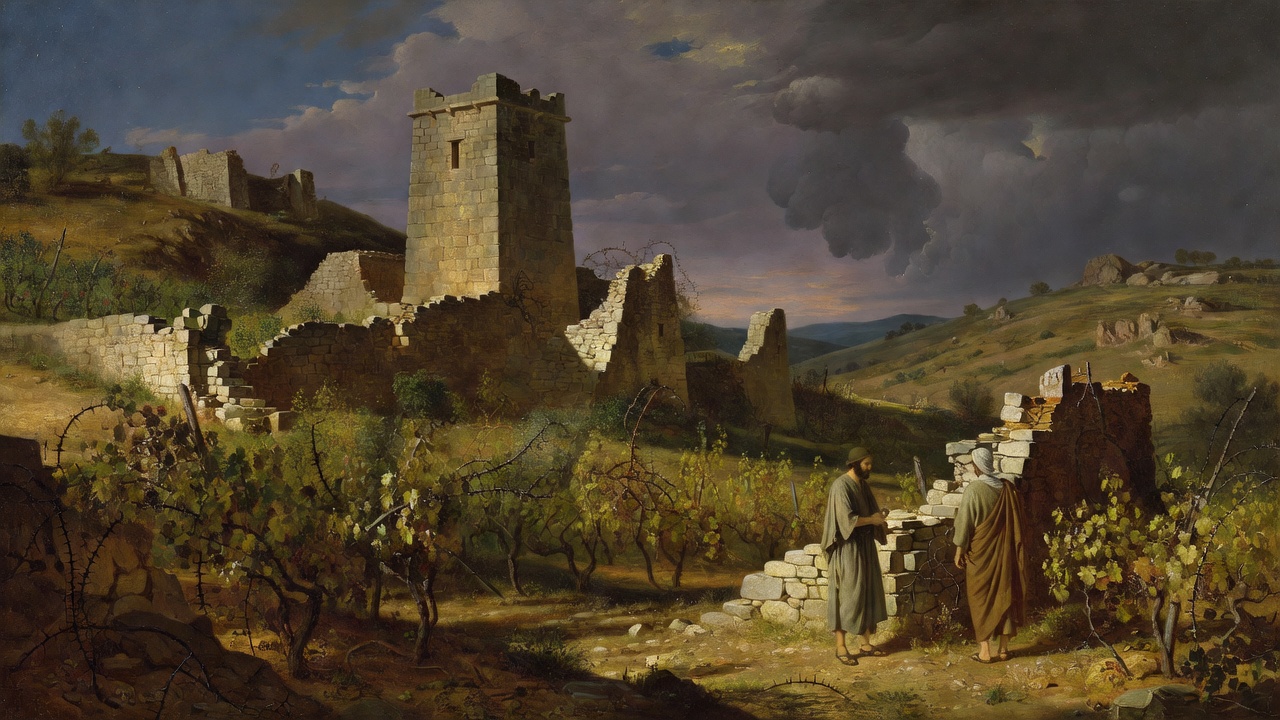
- O cântico de abertura em Isaías 5 descreve o trabalho minucioso da viticultura na antiga Judeia: limpar as pedras de encostas férteis, construir uma torre de vigilância de pedra, cavar um lagar na rocha e plantar videiras nobres protegidas por cerca e muro. O poema transforma-se em uma parábola jurídica na qual a vinha representa a casa de Israel e os homens de Judá, dos quais se esperava justiça em vez de derramamento de sangue.Fontes: o próprio texto bíblico
- O capítulo apresenta uma série de seis ais proféticos que condenam abusos sociais e morais específicos em Judá. Entre eles estão grandes proprietários que acumulavam terras juntando casa a casa e campo a campo, juízes que aceitavam subornos para absolver culpados negando justiça aos inocentes, e líderes que se entregavam a banquetes luxuosos enquanto desprezavam os mandamentos divinos.Fontes: o próprio texto bíblico
- O ministério profético de Isaías em Jerusalém dirigiu-se ao povo de Judá ao longo de um extenso período que começou em meados do século VIII a.C. O capítulo encerra advertindo que o Senhor daria um sinal a exércitos estrangeiros distantes e disciplinados, equipados com carruagens, arcos e cavalos velozes, para executar juízo sobre a terra.Fontes: Jerusalem · Prophecies of Isaiah · o próprio texto bíblico
Notas escritas com auxílio de IA a partir de fontes abertas (Theographic Bible Metadata, CC BY-SA 4.0; Easton’s Bible Dictionary, domínio público) e revisadas antes de publicar.
Lugares deste capítulo
Só aparecem lugares com identificação de alta confiança (90% ou mais segundo as fontes acadêmicas reunidas pelo OpenBible). Mapa da época: DARE (Digital Atlas of the Roman Empire), CC BY 4.0; mapa atual: © colaboradores do OpenStreetMap; lugares: OpenBible.info (CC BY 4.0).
Créditos e licença desta tradução
Tupàn ze'eg
Bible without Deuterocanon in Guajajára (BR:gub:Guajajára)
copyright © 2007 Wycliffe Bible Translators, Inc.
Language: Guajajára
Translation by: Wycliffe Bible Translators, Inc.
Guajajára [gub], Brazil
Copyright Information
© 2007, Wycliffe Bible Translators, Inc. All rights reserved.
This translation text is made available to you under the
terms of the Creative Commons License: Attribution-Noncommercial-No Derivative Works.
( http://creativecommons.org/licenses/by-nc-nd/3.0/ )
In addition, you have permission to port the text to different file formats, as long as you
do not change any of the text or punctuation of the Bible.
You may share, copy, distribute, transmit, and extract portions
or quotations from this work, provided that you include the above copyright
information:
You must give Attribution to the work.
You do not sell this work for a profit.
You do not make any derivative works that change any of the actual words or punctuation of the Scriptures.
Permissions beyond the scope of this license may be
available if you contact
us with your request.
Printed book ISBN 9788531109713
The Bible without Deuterocanon
in Guajajára
© 2007, Wycliffe Bible Translators, Inc. All rights reserved.
This translation is made available to you under the terms of the
Creative Commons Attribution-Noncommercial-No Derivatives license 4.0.
You may share and redistribute this Bible translation or extracts from it in any format, provided that:
You include the above copyright and source information.
You do not sell this work for a profit.
You do not change any of the words or punctuation of the Scriptures.
Pictures included with Scriptures and other documents on this site are licensed just for use with those Scriptures and documents.
For other uses, please contact the respective copyright owners.
2020-03-30
Fonte: http://ebible.org/gubBl/ · eBible.org