Deuteronômio 14
Tupàn ze'eg · Toque num versículo para ver as referências cruzadas.
Pezai'oahy zo umàno ma'e kwer wanehe nehe, heremiaihu 'ym wazàwe nehe
1Uze'eg Moizez teko wanupe. — Peiko Tupàn Tuweharupi Wiko Ma'e Zanezar ta'yr romo. A'e rupi, aze pezai'o amo rehe imàno re nehe, pezekixi zo nehe. Pezupin zo peàkàg nehe. Amo teko uzapo nezewe haw wà. Pezapo zo nezewe haw nehe. 2Ta'e peiko teko Tupàn Tuweharupi Wiko Ma'e Zanezar hemixamixak kwer romo xe. Nuexak kwaw amogwer teko ywy rehe har wà. Xo pe zo penexanexak a'e.
Ma'ea'yr katu ma'e, ikatu 'ym ma'e
3Pe'u zo ma'e Tupàn henataromo ikatu 'ym ma'e nehe. 4Pepuner agwer ma'ea'yr wano'o kwer i'u haw rehe nehe: tapi'ak, àràpuhàràn hawitu ma'e, àràpuhàrànete, 5arapuha, arapuha kazer her ma'e, arapuha kuzà, àràpuhàrànete hehaite ma'e, arapuha àxirop her ma'e, àràpuhàràn hawitu ma'e hehaite ma'e, arapuha huwazuku ma'e. 6Agwer ma'ea'yr paw ipyza'ak wà. U'u ka'api'i wà. A'e rupi pepuner wa'u haw rehe nehe. 7Pe'u zo amo ma'ea'yr nehe, aze naheta kwaw ipyza'akaw izupe nehe, aze nu'u kwaw ka'api'i nehe no. Pe'u zo a'e ma'ea'yr nehe: kawaru kupewa'a, tapixihu, tapixi hehaite ma'e. U'u ka'api'i wà, wapy nuza'ak kwaw. Agwer ma'ea'yr wiko Tupàn henataromo ikatu 'ym ma'e romo peme wà nehe. 8Pe'u zo tàzàhuràn ho'o kwer nehe. Wiko Tupàn henataromo ikatu 'ym ma'e romo peme wà nehe. Wapyza'ak wà. Nezewe rehe we nu'u kwaw ka'api'i wà. Pe'u zo agwer ma'ea'yr pe wà nehe. Pepokok zo wanehe wamàno re nehe.
9Pepuner wyzài pira i'u haw rehe aze heta ipeporàna'i izupe, aze heta ipekwer izupe no. 10Pe'u zo pira ipeporàna'i hereko 'ymar nehe. Pe'u zo pira ipekwer 'ym ma'e nehe. Wiko Tupàn henataromo ikatu 'ym ma'e romo peme wà nehe.
11Pepuner wyzài wiràmiri Tupàn henataromo ikatu ma'e i'u haw rehe nehe. 12Pe'u zo agwer wiràmiri pe wà nehe: wiràhu, apitaw, wiràhu yryhu pe har, 13wiràmiri yryhu pe har axor her ma'e, kàkà, 14zàpuun, 15wiranu, pypy, wiràmiri yryhu pe har kaiwot her ma'e, kawyre, 16hokohu, ake'e, wapehok zàwenugar ixihu ma'e, 17uruhu, zàpuun yryhu pe har, wapehok zàwenugar ixihu ma'e, 18hoko kàwànà her ma'e, hoko xig, zàpuun ikupewyahy ma'e. Pe'u zo anyra nehe no.
19Uwewe ma'e 6 hetymà ma'e paw wiko Tupàn henataromo ikatu 'ym ma'e romo wà. 20Pepuner wyzài 6 hetymà ma'e Tupàn henataromo ikatu ma'e i'u haw rehe nehe.
21Amo miar, amo ma'ea'yr, aze umàno e nehe, aze amo nuzuka kwaw nehe, pe'u zo ho'o kwer nehe. Pepuner imono haw rehe amo ywy rehe har tawhu peywy rehe har pupe wiko ma'e wanupe nehe. Pepuner amo ywy rehe har wanupe ime'egaw rehe nehe no. Pe'u zo nehe. Ta'e peiko teko Tupàn Tuweharupi Wiko Ma'e Zanezar hemixamixak kwer romo pe xe. Àràpuhàràna'yr hawitu ma'e nehe, àràpuhàrànetea'yr nehe, aze pezuka nehe, pemupupur zo ihy kamykwer pupe nehe.
Teko wanemimono'og kwer ikurer Tupàn pe imono pyràm
22Kwarahy nànàn pemono'og arozràn penemimono'og kwer ikurer nehe. Aze heta 10 hyrupor nehe, pemono pitài hyrupor Tupàn pe nehe. 23Tupàn Tuweharupi Wiko Ma'e Zanezar wexak putar amo taw nehe. — Hemuwete katu pe xe nehe, i'i putar peme nehe. Peraha a'e ma'e a'e taw pe nehe. A'e pe Tupàn Tuweharupi Wiko Ma'e Zanezar henataromo pe'u a'e arozràn ikurer nehe. Pe'u win ikurer nehe no. Pe'u uri kawer ikurer nehe no. Tapi'ak imemyr ipy pe'u a'e pe nehe. Àràpuhàràn hawitu imemyr ipy pe'u a'e pe nehe no. Pezapo nezewe haw nehe. Nezewe mehe pekyze putar Tupàn wi tuweharupi nehe. 24Aze imuwete haw muite pewi nehe, aze napepuner kwaw pema'e kurer heraha haw rehe a'e pe nehe, 25pezapo nezewe haw nehe: Peme'eg a'e ikurer nehe. Peraha hekuzar Tupàn imuwete haw pe hemixak kwer pe nehe. A'e ae umur uze'egatu peme arozràn tetea'u imur pà peme a'e. 26Peme'eg penemi'u ràm penemimutar paw a'e pe nehe: tapi'ak ho'o kwer, àràpuhàràn ho'o kwer, win, kàwiràn xeruwez her ma'e, wyzài ma'e penemimutar. A'e pe Tupàn Tuweharupi Wiko Ma'e Zanezar henataromo pe nehe, peànàm wà nehe no, pe'u a'e ma'e penurywete pà penemimutar rupi nehe.
27Peneharaz zo Erewi izuapyapyr tawhu peneko haw pupe wiko ma'e wanuwi nehe. Nupyhyk kwaw ywy Kànàà ywy rehe har inugwer Izaew ta'yr wazuapyapyr wazàwe wà nehe. 28Na'iruz haw kwarahy nànàn pemono'og penemipo'o kwer kurer pitài ma'e 10 ma'e wi henuhem pyrer nehe. Pemonokatu penemimono'og kwer tawhu peneko haw pupe nehe. 29Pemono a'e temi'u Erewi izuapyapyr wanupe nehe, ta'e naheta kwaw ywy wanupe a'e wà xe. Pemono a'e temi'u amo teko ywy hereko 'ymar peinuinuromo wiko ma'e wanupe nehe: amo ywy rehe har peinuromo har wà, tu 'ym ma'e wà, kuzà imen umàno ma'e kwer wà. Nezewe mehe wanemi'u uhyk putar wanupe paw rupi nehe. Pezapo nezewe haw nehe, Nezewe mehe Tupàn Tuweharupi Wiko Ma'e Zanezar umur putar uze'egatu pema'ereko haw nànàn nehe.
Você sabia?
Leis Alimentares e Disposições sobre o Dízimo
- As leis alimentares de Deuteronômio 14 distinguem os animais terrestres puros dos impuros com base em dois critérios físicos: ter o casco fendido e ruminar. As criaturas aquáticas só eram consideradas próprias para o consumo se tivessem tanto barbatanas quanto escamas.Fontes: o próprio texto bíblico
- Para atender às famílias que moravam longe do santuário escolhido, a lei permitia converter os dízimos agrícolas em prata para a viagem. Ao chegar ao local central, os adoradores podiam usar o dinheiro para comprar alimentos festivos e celebrar com sua família.Fontes: o próprio texto bíblico
- A cada três anos, o dízimo da colheita era recolhido e armazenado nas cidades locais em vez de ser levado ao santuário central. Esse suprimento era reservado para sustentar os membros da comunidade que não possuíam herança de terras, como levitas, estrangeiros residentes, órfãos e viúvas.Fontes: o próprio texto bíblico
Notas escritas com auxílio de IA a partir de fontes abertas (Theographic Bible Metadata, CC BY-SA 4.0; Easton’s Bible Dictionary, domínio público) e revisadas antes de publicar.
Créditos e licença desta tradução
Tupàn ze'eg
Bible without Deuterocanon in Guajajára (BR:gub:Guajajára)
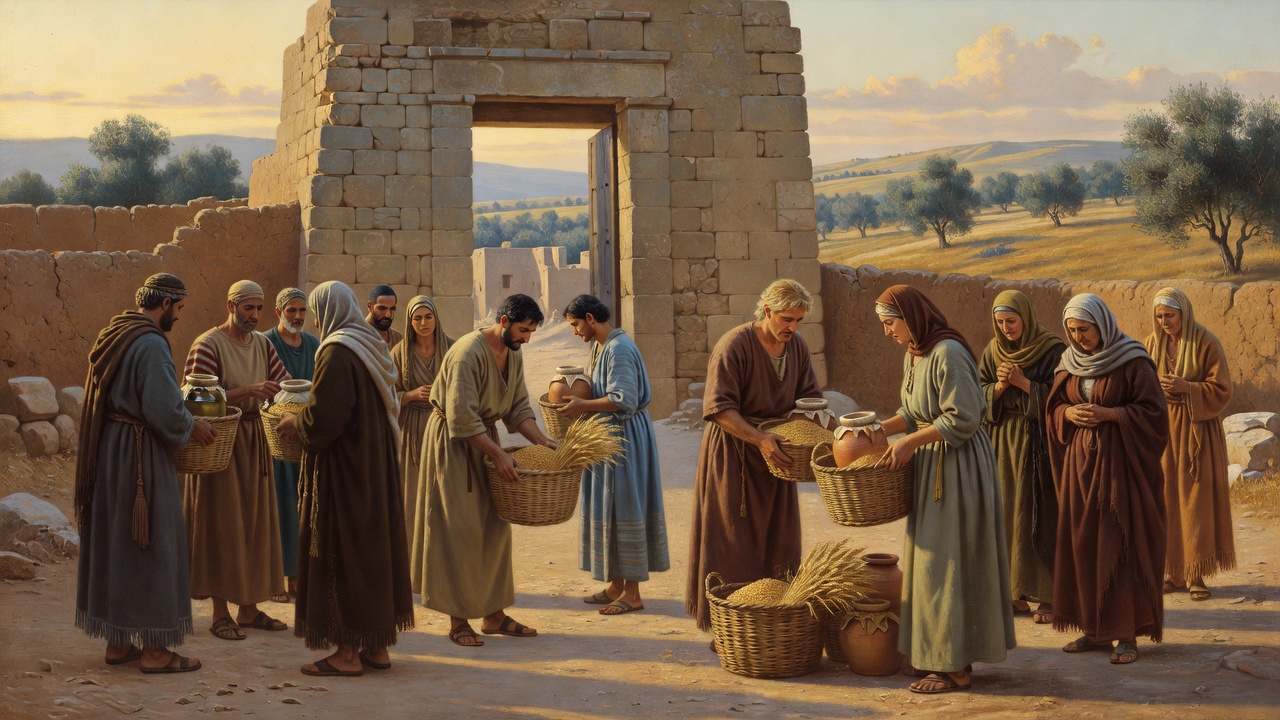
copyright © 2007 Wycliffe Bible Translators, Inc.
Language: Guajajára
Translation by: Wycliffe Bible Translators, Inc.
Guajajára [gub], Brazil
Copyright Information
© 2007, Wycliffe Bible Translators, Inc. All rights reserved.
This translation text is made available to you under the
terms of the Creative Commons License: Attribution-Noncommercial-No Derivative Works.
( http://creativecommons.org/licenses/by-nc-nd/3.0/ )
In addition, you have permission to port the text to different file formats, as long as you
do not change any of the text or punctuation of the Bible.
You may share, copy, distribute, transmit, and extract portions
or quotations from this work, provided that you include the above copyright
information:
You must give Attribution to the work.
You do not sell this work for a profit.
You do not make any derivative works that change any of the actual words or punctuation of the Scriptures.
Permissions beyond the scope of this license may be
available if you contact
us with your request.
Printed book ISBN 9788531109713
The Bible without Deuterocanon
in Guajajára
© 2007, Wycliffe Bible Translators, Inc. All rights reserved.
This translation is made available to you under the terms of the
Creative Commons Attribution-Noncommercial-No Derivatives license 4.0.
You may share and redistribute this Bible translation or extracts from it in any format, provided that:
You include the above copyright and source information.
You do not sell this work for a profit.
You do not change any of the words or punctuation of the Scriptures.
Pictures included with Scriptures and other documents on this site are licensed just for use with those Scriptures and documents.
For other uses, please contact the respective copyright owners.
2020-03-30
Fonte: http://ebible.org/gubBl/ · eBible.org