Gálatas 2
Η Καινή Διαθήκη · Toque num versículo para ver as referências cruzadas.
Paul Accepted by the Other Apostles
1Ἔπειτα διὰ δεκατεσσάρων ἐτῶν πάλιν ἀνέβην εἰς Ἱεροσόλυμα μετὰ Βαρνάβα συμπαραλαβὼν καὶ Τίτον. 2ἀνέβην δὲ κατὰ ἀποκάλυψιν, καὶ ἀνεθέμην αὐτοῖς τὸ εὐαγγέλιον ὃ κηρύσσω ἐν τοῖς ἔθνεσι, κατ᾽ ἰδίαν δὲ τοῖς δοκοῦσι, μήπως εἰς κενὸν τρέχω ἢ ἔδραμον. 3ἀλλ᾽ οὐδὲ Τίτος ὁ σὺν ἐμοί, Ἕλλην ὤν, ἠναγκάσθη περιτμηθῆναι· 4διὰ δὲ τοὺς παρεισάκτους ψευδαδέλφους, οἵτινες παρεισῆλθον κατασκοπῆσαι τὴν ἐλευθερίαν ἡμῶν ἣν ἔχομεν ἐν Χριστῷ Ἰησοῦ, ἵνα ἡμᾶς καταδουλώσωνται, 5οἷς οὐδὲ πρὸς ὥραν εἴξαμεν τῇ ὑποταγῇ, ἵνα ἡ ἀλήθεια τοῦ εὐαγγελίου διαμείνῃ πρὸς ὑμᾶς. 6ἀπὸ δὲ τῶν δοκούντων εἶναί τι (ὁποῖοί ποτε ἦσαν οὐδέν μοι διαφέρει· πρόσωπον Θεὸς ἀνθρώπου οὐ λαμβάνει), ἐμοὶ γὰρ οἱ δοκοῦντες οὐδὲν προσανέθεντο, 7ἀλλὰ τοὐναντίον ἰδόντες ὅτι πεπίστευμαι τὸ εὐαγγέλιον τῆς ἀκροβυστίας καθὼς Πέτρος τῆς περιτομῆς 8(ὁ γὰρ ἐνεργήσας Πέτρῳ εἰς ἀποστολὴν τῆς περιτομῆς, ἐνήργησε καὶ ἐμοὶ εἰς τὰ ἔθνη), 9καὶ γνόντες τὴν χάριν τὴν δοθεῖσάν μοι, Ἰάκωβος καὶ Κηφᾶς καὶ Ἰωάννης, οἱ δοκοῦντες στῦλοι εἶναι, δεξιὰς ἔδωκαν ἐμοὶ καὶ Βαρνάβᾳ κοινωνίας, ἵνα ἡμεῖς εἰς τὰ ἔθνη, αὐτοὶ δὲ εἰς τὴν περιτομήν· 10μόνον τῶν πτωχῶν ἵνα μνημονεύωμεν, ὃ καὶ ἐσπούδασα αὐτὸ τοῦτο ποιῆσαι.
Paul’s Rebuke of Peter
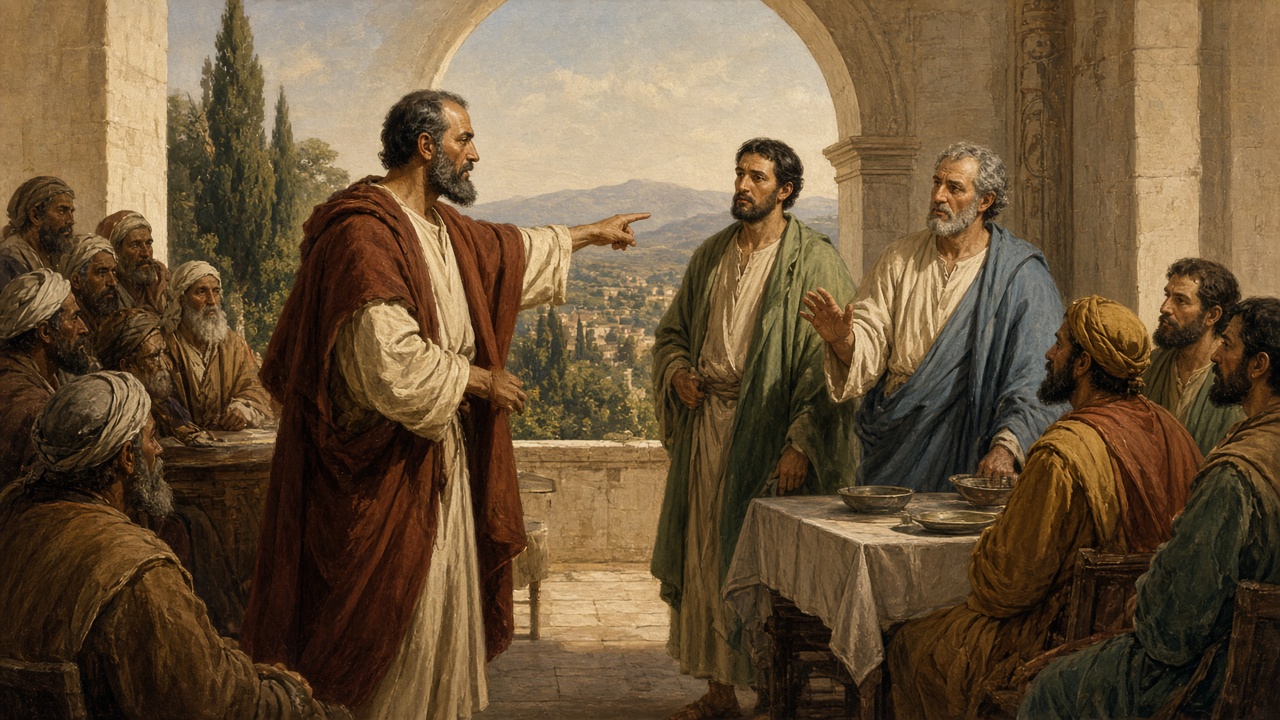
11Ὅτε δὲ ἦλθε Πέτρος εἰς Ἀντιόχειαν, κατὰ πρόσωπον αὐτῷ ἀντέστην, ὅτι κατεγνωσμένος ἦν. 12πρὸ τοῦ γὰρ ἐλθεῖν τινας ἀπὸ Ἰακώβου μετὰ τῶν ἐθνῶν συνήσθιεν· ὅτε δὲ ἦλθον, ὑπέστελλε καὶ ἀφώριζεν ἑαυτὸν φοβούμενος τοὺς ἐκ περιτομῆς. 13καὶ συνυπεκρίθησαν αὐτῷ καὶ οἱ λοιποὶ Ἰουδαῖοι, ὥστε καὶ Βαρνάβας συναπήχθη αὐτῶν τῇ ὑποκρίσει. 14ἀλλ᾽ ὅτε εἶδον ὅτι οὐκ ὀρθοποδοῦσι πρὸς τὴν ἀλήθειαν τοῦ εὐαγγελίου, εἶπον τῷ Πέτρῳ ἔμπροσθεν πάντων, Εἰ σὺ Ἰουδαῖος ὑπάρχων ἐθνικῶς ζῇς καὶ οὐκ Ἰουδαϊκῶς, τί τὰ ἔθνη ἀναγκάζεις Ἰουδαΐζειν;
Justification by Faith
15Ἡμεῖς φύσει Ἰουδαῖοι καὶ οὐκ ἐξ ἐθνῶν ἁμαρτωλοὶ 16εἰδότες ὅτι οὐ δικαιοῦται ἄνθρωπος ἐξ ἔργων νόμου ἐὰν μὴ διὰ πίστεως Ἰησοῦ Χριστοῦ, καὶ ἡμεῖς εἰς Χριστὸν Ἰησοῦν ἐπιστεύσαμεν, ἵνα δικαιωθῶμεν ἐκ πίστεως Χριστοῦ καὶ οὐκ ἐξ ἔργων νόμου, διότι οὐ δικαιωθήσεται ἐξ ἔργων νόμου πᾶσα σάρξ. 17εἰ δὲ ζητοῦντες δικαιωθῆναι ἐν Χριστῷ εὑρέθημεν καὶ αὐτοὶ ἁμαρτωλοί, ἆρα Χριστὸς ἁμαρτίας διάκονος; μὴ γένοιτο. 18εἰ γὰρ ἃ κατέλυσα ταῦτα πάλιν οἰκοδομῶ, παραβάτην ἐμαυτὸν συνίστημι. 19ἐγὼ γὰρ διὰ νόμου νόμῳ ἀπέθανον, ἵνα Θεῷ ζήσω. 20Χριστῷ συνεσταύρωμαι· ζῶ δὲ οὐκέτι ἐγώ, ζῇ δὲ ἐν ἐμοὶ Χριστός· ὃ δὲ νῦν ζῶ ἐν σαρκί, ἐν πίστει ζῶ τῇ τοῦ υἱοῦ τοῦ Θεοῦ τοῦ ἀγαπήσαντός με καὶ παραδόντος ἑαυτὸν ὑπὲρ ἐμοῦ. 21οὐκ ἀθετῶ τὴν χάριν τοῦ Θεοῦ· εἰ γὰρ διὰ νόμου δικαιοσύνη, ἄρα Χριστὸς δωρεὰν ἀπέθανεν.
Você sabia?
Gentios, comunhão e um confronto em Antioquia
- Tito foi com Paulo e Barnabé a Jerusalém. O Easton's Bible Dictionary (1897) diz que ele parece ter sido gentio e que seu nome não aparece em Atos. Paulo escreve que Tito, embora fosse grego, não foi obrigado a circuncidar-se.Fontes: Titus · o próprio texto bíblico
- O confronto posterior ocorreu em Antioquia da Síria, às margens do Orontes, a umas trezentas milhas ao norte de Jerusalém. A cidade ocupava o terceiro lugar entre as cidades do Império Romano, depois de Roma e Alexandria, e foi ali que os crentes foram chamados cristãos pela primeira vez.Fontes: Antioch (Syria) · o próprio texto bíblico
- O Easton's Bible Dictionary (1897) descreve Tiago, citado com Cefas e João como um dos pilares, como cabeça da igreja em Jerusalém, onde presidiu o concílio sobre os gentios. Paulo diz que, antes de chegarem certos homens da parte de Tiago, Cefas costumava comer com os gentios, mas depois se afastou por medo do grupo da circuncisão.Fontes: James (Brother of Jesus) · o próprio texto bíblico
Notas escritas com auxílio de IA a partir de fontes abertas (Theographic Bible Metadata, CC BY-SA 4.0; Easton’s Bible Dictionary, domínio público) e revisadas antes de publicar.
Lugares deste capítulo
- Jerusalem · 31.777, 35.234 · versículo 1
- Antioch · Hoje: Antioch on the Orontes · 36.227, 36.172 · versículo 11
Só aparecem lugares com identificação de alta confiança (90% ou mais segundo as fontes acadêmicas reunidas pelo OpenBible). Mapa da época: DARE (Digital Atlas of the Roman Empire), CC BY 4.0; mapa atual: © colaboradores do OpenStreetMap; lugares: OpenBible.info (CC BY 4.0).
Créditos e licença desta tradução
Η Καινή Διαθήκη
The New Testament in Ancient Greek with critical text notes
Public Domain
Language: Ελληνικά (Greek, Ancient)
Translation by: Maurice A. Robinson
Contributor: Robert Adam Boyd
The Text-Critical Greek New Testament is based upon The New Testament in the Original Greek: Byzantine Textform 2018, compiled and arranged by Maurice A. Robinson and William G. Pierpont.
The following disclaimer is printed in the The New Testament in the Original Greek: Byzantine Textform 2018:
Anyone is permitted to copy and distribute this text or any portion of this text. It may be incorporated in a larger work, and/or quoted from, stored in a database retrieval system, photocopied, reprinted, or otherwise duplicated by anyone without prior notification, permission, compensation to the holder, or any other restrictions. All rights to this text are released to everyone and no one can reduce these rights at any time. Copyright is not claimed nor asserted for either the preface, notes, or the new and revised form of the Greek NT text of this edition, nor for the original form of such as initially released into the public domain by the editors, first as printed textual notes in 1979, continuous-text electronic form 1986–present, and in published editions from 1991, 2005, and 2010.
The permitted use or reproduction of the Greek text or other material contained within this volume (whether by print, electronic media, or other form) does not imply doctrinal or theological agreement by the present editors and publisher with whatever views may be maintained or promulgated by other publishers. For the purpose of assigning responsibility, it is requested that the present editors’ names and the title associated with this text as well as this disclaimer be retained in any subsequent reproduction of this material.
2026-10-02
Fonte: http://ebible.org/grctcgnt/ · eBible.org