Salmos 129
Kitaaba Woyyuu · Toque num versículo para ver as referências cruzadas.
Daadimata Diinota Xiyoonii Irratti Dhikaate
Faaruu Ittiin Ol Bayanu
1Kolbaan Israa'elii,
«Dargaggummaa tiyyaa jalqabanee,
diinoti guddoo na rakkisaneeran;
2«Isaan dargaggummaa tiyyaa jalqabanee,
guddoo na rakkisaneeran;
te'uu malee na hin injifanne.
3Akka nama fichaa qotuu
dudda kiyya babbassanee,
babadhisanee dudda kiyya madeessane.
4Mootiin Waan Maraa ammoo balcha'a;
inni wodaroo worra hama'aa
na irraa kuteera» jettuu ti.
5Worri Xiyoon jibbu martinuu qaanowanee,
gara duubaa deebi'uu ti.
6Akka marra mana irratti latee,
adoo hin guddatin qooruu te'anuu ti;
7marri sun qabaa harka nama isa haamuu,
yookiin hanqafoo isaa hin guutu.
8Worri achiin dabaru,
«Eebbi Mootiin Waan Maraa isiniif te'uu ti!
Nuuti maqaa Mootii Waan Maraatiin
isin eebbinna!» isaaniin hin jedhin.
Você sabia?
Perseverança na Aflição e o Destino dos Inimigos de Sião
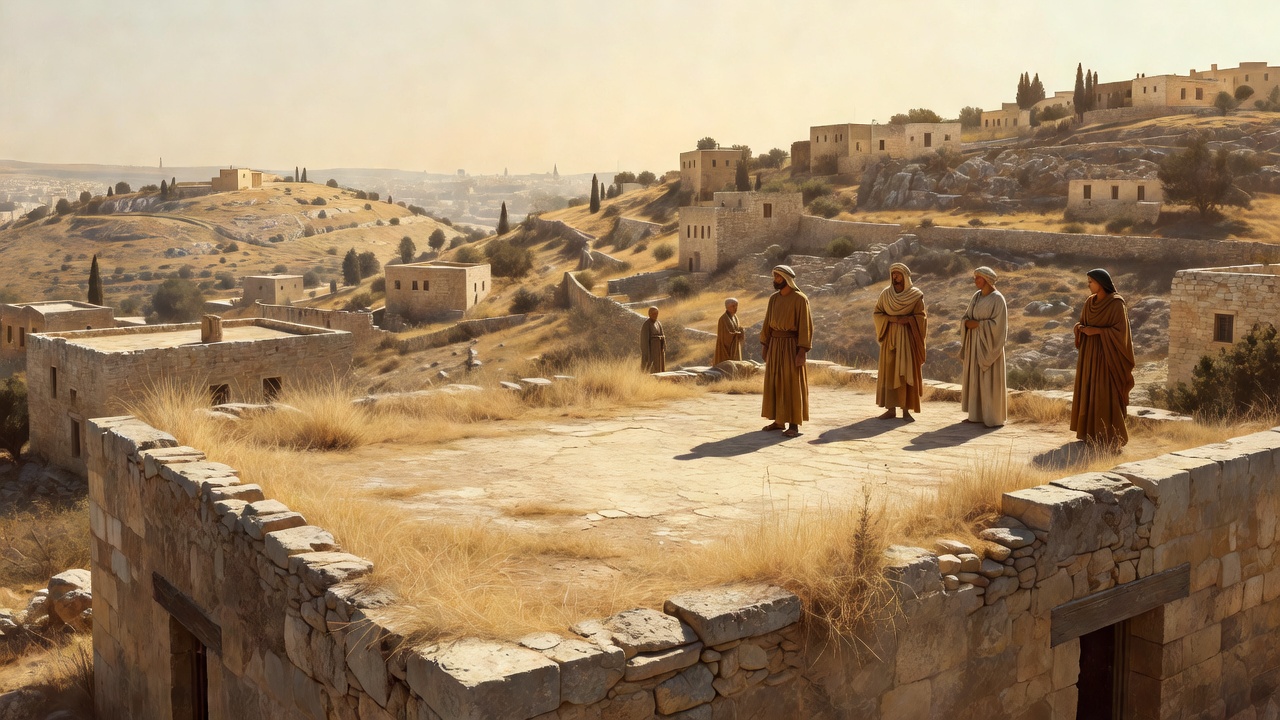
- A imagem da erva nos telhados reflete a arquitetura antiga, na qual os telhados planos eram cobertos com terra batida. As sementes brotavam após as chuvas, mas, como a camada de terra era rasa e exposta ao sol, a vegetação secava antes de amadurecer ou render colheita.Fontes: o próprio texto bíblico
- A saudação mencionada no versículo 8 reflete o costume do antigo Israel, no qual os viajantes e transeuntes abençoavam os ceifeiros e trabalhadores nos campos durante a colheita.Fontes: o próprio texto bíblico
- Sião era a colina em Jerusalém onde o rei Davi construiu sua fortaleza, tornando-se na poesia bíblica uma representação da morada de Deus e de Seu povo.Fontes: o próprio texto bíblico · Zion
Notas escritas com auxílio de IA a partir de fontes abertas (Theographic Bible Metadata, CC BY-SA 4.0; Easton’s Bible Dictionary, domínio público) e revisadas antes de publicar.
Lugares deste capítulo
Só aparecem lugares com identificação de alta confiança (90% ou mais segundo as fontes acadêmicas reunidas pelo OpenBible). Mapa da época: DARE (Digital Atlas of the Roman Empire), CC BY 4.0; mapa atual: © colaboradores do OpenStreetMap; lugares: OpenBible.info (CC BY 4.0).
Créditos e licença desta tradução
Kitaaba Woyyuu
Oromo, Borana-Arsi-Guji: Kitaaba Woyyuu (Bible)
copyright © 2025 The Word for the World International
Language: gujii
Contributor: Bible Society of Ethiopia
This translation is made available to you under the terms of the
Creative Commons Attribution Share-Alike license 4.0.
You have permission to share and redistribute this Bible translation in any format and to make reasonable revisions and adaptations of this translation, provided that:
You include the above copyright and source information.
If you make any changes to the text, you must indicate that you did so in a way that makes it clear that the original licensor is not necessarily endorsing your changes.
If you redistribute this text, you must distribute your contributions under the same license as the original.
Pictures included with Scriptures and other documents on this site are licensed just for use with those Scriptures and documents.
For other uses, please contact the respective copyright owners.
Note that in addition to the rules above, revising and adapting God's Word involves a great responsibility to be true to God's Word. See Revelation 22:18-19.
2025-05-02
Fonte: http://ebible.org/gax/ · eBible.org