Cântico dos Cânticos 7
Biblica® Se aɖeke mebla Biblia zazã o Agbenya La™ · Toque num versículo para ver as referências cruzadas.
Lɔlɔ̃tɔwo ƒe dzeɖoɖo
1Wò, dumegã ƒe vinyɔnu,
atokota dze afɔ na wò loo!
Wò zɔzɔme le tɔxɛ abe dzonu vavã
si aɖaŋuwɔla wɔ la ene.
2Wò agbɔgbɔnu sɔ tebee abe wainkplu
si me wain si wotɔtɔ la mevɔna le o la ene.
Wò alime keke abe bli si woli kɔe,
eye dzogbenya ɖe to ɖee la ene.
3Wò nowo le abe sãdevi eve
siwo nye zi ƒe evenɔviwo la ene.
4Wò kɔ le tsralɛ abe nyiɖuxɔ tsrala ene.
Wò ŋkuwo le abe Hesbon ƒe tsita
si le Bat Rabingbo nu la ene.
Wò ŋɔti le abe Lebanon ƒe xɔ tsrala
si dze ŋgɔ Damasko la ene.
5Wò ta le tegblẽe abe Karmel to ene,
eye wò taɖa le abe fia ƒe avɔ si
wotsɔ ka vovovowo lɔ̃e la ene.
Eƒe dzedzeme ɖe aboyo fia la.
6Èdze tugbe ŋutɔ, eye wò nu hã nyoa ame ŋu.
O lɔlɔ̃, wò nuwɔna ɖe sia ɖe doa dzidzɔ na nye dzi!
7Wò kɔkɔme le abe deti ene,
eye wò nowo le toɖoe
abe atikutsetse siwo le kpo ŋuti la ene.
8Megblɔ be, “Made deti la dzi,
eye malé eƒe tsetsea ɖe asi.”
Wò nowo nenɔ abe wainkpo siwo le wainka ŋu la ene,
wò gbɔgbɔ naʋẽ lĩlĩlĩ abe aplu ene,
9eye wò nu me nenye wain nyuitɔ.
Wain la neto nye lɔlɔ̃tɔ ƒe nu me
kple eƒe aɖutame wɔlii.
10Menye nye lɔlɔ̃tɔ tɔ,
eye eya hã ƒe dzi le yonyeme.
11Nye lɔlɔ̃tɔ, va;
na míayi gbe me,
eye míatsi kɔƒe me adɔ.
12Na míafɔ kaba ayi waingblewo me,
akpɔe ɖa be wainkawo te tsetse,
woƒe seƒoƒowo ke, eye gbotiwo hã le tsetsem mahã;
le afi ma matsɔ nye lɔlɔ̃ na wò.
13Adrikewo le ya ɖem nyuie,
eye atikutsetse vivi vovovowo
le míaƒe ʋɔtru nu, eye medzra yeyeawo
kple xoxoawo siaa ɖo na wò, nye lɔlɔ̃tɔ.
Você sabia?
Poesia de Amor e Paisagem
- O poema descreve a beleza da mulher usando pontos de referência destacados da região. Seus olhos são comparados aos límpidos reservatórios de Hesbom, junto à porta de Bate-Rabim, a leste do Jordão, enquanto seu perfil é comparado a uma torre imponente nas montanhas do Líbano voltada para Damasco.Fontes: o próprio texto bíblico · Heshbon · Bath-rabbim · Lebanon
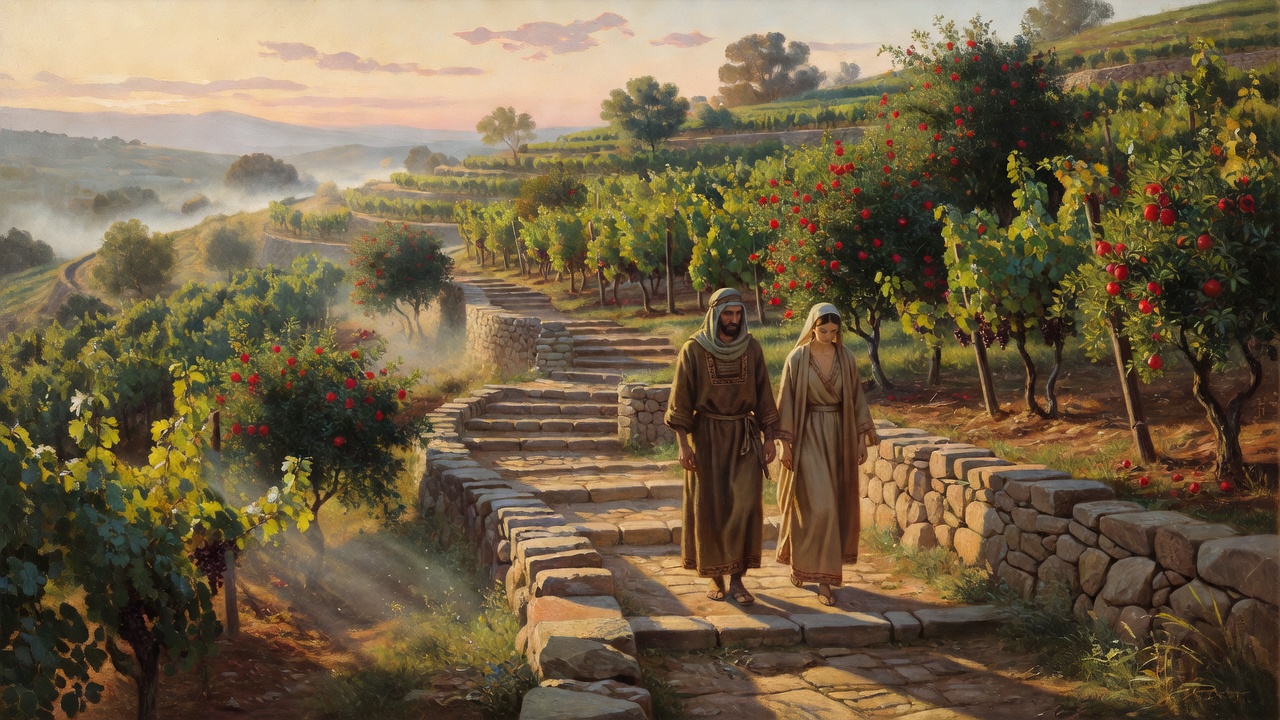
- O capítulo se encerra com um convite para o campo durante a renovação da primavera. Os amados vão conferir o brotar das videiras, a floração das romãzeiras e o aroma das mandrágoras, refletindo a íntima ligação na poesia hebraica antiga entre o romance e a vitalidade da natureza.Fontes: o próprio texto bíblico
Notas escritas com auxílio de IA a partir de fontes abertas (Theographic Bible Metadata, CC BY-SA 4.0; Easton’s Bible Dictionary, domínio público) e revisadas antes de publicar.
Lugares deste capítulo
- Bath-rabbim · Hoje: in Tell Hesban · 31.801, 35.809 · versículo 4
- Damascus · 33.511, 36.306 · versículo 4
- Lebanon · 33.540, 35.584 · versículo 4
- Mount Carmel · 32.672, 35.023 · versículo 5
Só aparecem lugares com identificação de alta confiança (90% ou mais segundo as fontes acadêmicas reunidas pelo OpenBible). Mapa da época: DARE (Digital Atlas of the Roman Empire), CC BY 4.0; mapa atual: © colaboradores do OpenStreetMap; lugares: OpenBible.info (CC BY 4.0).
Créditos e licença desta tradução
Biblica® Se aɖeke mebla Biblia zazã o Agbenya La™ Éwé: Biblica® Se aɖeke mebla Biblia zazã o Agbenya La™ (Bible) of Ghana copyright © 1988, 2006, 2020 Biblica, Inc. Language: eʋegbe Contributor: Biblica, Inc. Dɔwɔƒe si na wò asi ka agbalẽ sia lae nye Creative Commons Attribution-ShareAlike 4.0 International License (CC BY-SA). Ne èdi be yeakpɔ laisensi alo mɔɖegbalẽ sia la, yi ɖe http://creativecommons.org/licenses/by-sa/4.0 alo ŋlɔ agbalẽ na Creative Commons Dɔwɔƒea to adrɛsi sia dzi: Creative Commons, PO Box 1866, Mountain View, CA 94042, USA. Biblica, Inc. na wode Biblica® kple eƒe dzesidenu agbalẽ me, eye woaŋlɔ agbalẽ axɔ mɔɖeɖe tso Biblica, Inc. gbɔ hafi woawɔ Biblica® ƒe dzesidenu la ŋu dɔ. Le CC BY-SA ƒe mɔɖeɖe ƒe sewo nu la, àte ŋu azã agbalẽ sia me nyawo le dɔ bubuwo wɔwɔ me gake ele be nàde dzesi Biblica ƒe dzesidenu la abe ale si wòle ene. Ne ètrɔ asi le agbalẽ sia ŋu alo zãe le mɔ bubu nu la, ele be nàɖe Biblica® ƒe dzesidenu la ɖa. Ele be nàde dzesi tɔtrɔ siwo nèwɔ la ɖe agbalẽ la me eye nàde dzesii be: “Àte ŋu akpɔ Biblica, Inc. ƒe dɔ gbãtɔ le www.biblica.com kple open.bible femaxee.” Ele be nutɔnyenye ƒe dzeside nadze le agbalẽ la ƒe axa si tanya alo nutɔnyenye ƒe dzesi nɔna la ale: Biblica® Se aɖeke mebla Biblia zazã o Agbenya La™ Nutɔnyenye © 1988, 2006, 2020 Biblica, Inc. Biblica® Open Ewe Contemporary Scriptures™ Copyright © 1988, 2006, 2020 by Biblica, Inc. Biblica, Inc. na Dɔwɔƒe si Kpɔa Nutɔnyenye kple Adzɔdodo ƒe Nyawo dzi le Amerika la de “Biblica” kple eƒe dzesidenu agbalẽ me. Woaxɔ mɔɖeɖe na ezazã. “Biblica” is a trademark registered in the United States Patent and Trademark Office by Biblica, Inc. Used with permission. Ele be nàna míaƒe asi naka wò agbalẽ la le laisensi alo mɔɖeɖe ƒe se (CC BY-SA) sia nu. Ne èdi be yeana nyanya Biblica, Inc. tso agbalẽ sia zazã ŋu la, anyo be nàdo ta ɖe mía gbɔ le https://open.bible/contact-us. This work is made available under the Creative Commons Attribution-ShareAlike 4.0 International License (CC BY-SA). To view a copy of this license, visit http://creativecommons.org/licenses/by-sa/4.0 or send a letter to Creative Commons, PO Box 1866, Mountain View, CA 94042, USA. Biblica® is a trademark registered by Biblica, Inc., and use of the Biblica® trademark requires the written permission of Biblica, Inc. Under the terms of the CC BY-SA license, you may copy and redistribute this unmodified work as long as you keep the Biblica® trademark intact. If you modify a copy or translate this work, thereby creating a derivative work, you must remove the Biblica® trademark. On the derivative work, you must indicate what changes you have made and attribute the work as follows: “The original work by Biblica, Inc. is available for free at www.biblica.com and open.bible.” Notice of copyright must appear on the title or copyright page of the work as follows: Biblica® Se aɖeke mebla Biblia zazã o Agbenya La™ Nutɔnyenye © 1988, 2006, 2020 Biblica, Inc. Biblica® Open Ewe Contemporary Scriptures™ Copyright © 1988, 2006, 2020 by Biblica, Inc. Biblica, Inc. na Dɔwɔƒe si Kpɔa Nutɔnyenye kple Adzɔdodo ƒe Nyawo dzi le Amerika la de “Biblica” kple eƒe dzesidenu agbalẽ me. Woaxɔ mɔɖeɖe na ezazã. “Biblica” is a trademark registered in the United States Patent and Trademark Office by Biblica, Inc. Used with permission. You must also make your derivative work available under the same license (CC BY-SA). If you would like to notify Biblica, Inc. regarding your translation of this work, please contact us at https://open.bible/contact-us. This translation is made available to you under the terms of the Creative Commons Attribution Share-Alike license 4.0. You have permission to share and redistribute this Bible translation in any format and to make reasonable revisions and adaptations of this translation, provided that: You include the above copyright and source information. If you make any changes to the text, you must indicate that you did so in a way that makes it clear that the original licensor is not necessarily endorsing your changes. If you redistribute this text, you must distribute your contributions under the same license as the original. Pictures included with Scriptures and other documents on this site are licensed just for use with those Scriptures and documents. For other uses, please contact the respective copyright owners. Note that in addition to the rules above, revising and adapting God's Word involves a great responsibility to be true to God's Word. See Revelation 22:18-19. 2025-05-01
Fonte: http://ebible.org/ewe/ · eBible.org