Jonas 4
Biblica® Se aɖeke mebla Biblia zazã o Agbenya La™ · Toque num versículo para ver as referências cruzadas.
Yona do dɔmedzoe be Yehowa kpɔ nublanui na Ninive
1Ke esi Mawu tsɔ Ninivetɔwo ƒe nu vɔ̃wo ke wo la, Yona do dɔmedzoe vevie. 2Edo gbe ɖa na Yehowa be, “O Yehowa, ɖe menye esiae megblɔ esi mele mía dedu me oa? Esia ta le gɔmedzedzea me la, mesi ɖo ta Tarsis, elabena menya be Mawu, amenuvela kple nublanuikpɔlae nènye. Ègbɔa dzi blewu; lɔlɔ̃ matrɔ bɔ ɖe asiwò, eye nètsɔa nu vɔ̃wo kena. 3Eya ta Yehowa, meɖe kuku ɖe nye agbe ɖa; enyo nam be maku wu be manɔ agbe.”
4Yehowa trɔ biae be, “Enyo be nàdo dɔmedzoe ɖe nu sia ta?”
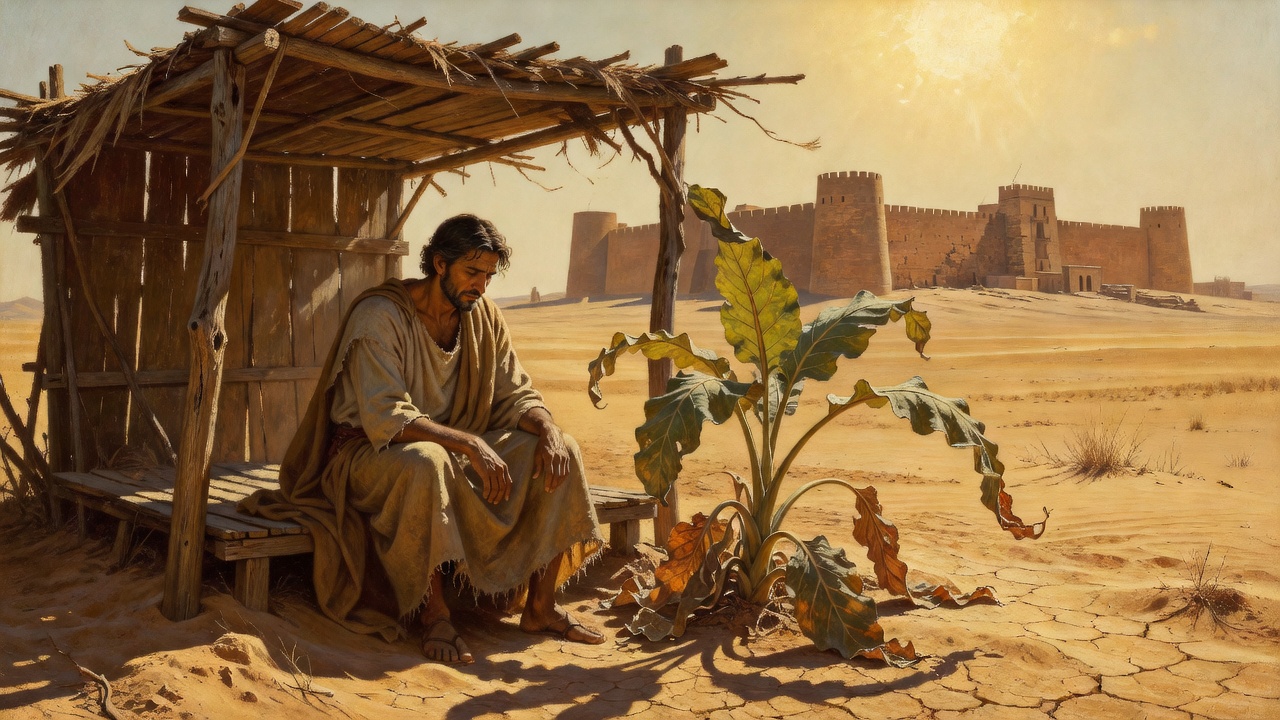
5Ale Yona yi ɖanɔ anyi ɖe dua ƒe ɣedzeƒe lɔƒo nublanuitɔe, eye wòtsɔ aŋgbawo wɔ agbadɔe henɔ ete nɔ lalam be yeakpɔ nu si le dzɔdzɔ ge ɖe dua dzi la ɖa. 6Yehowa, Mawu na yevukutsati mie heɖo vɔvɔli ɖe Yona tame be wòatsi ŋudɔɖuame la nu. Yona kpɔ dzidzɔ ŋutɔ le yevukutsati la ŋuti. 7Ke le fɔŋli la, Mawu na ŋɔ aɖe ɖu yevukutsati la, eye wòyrɔ. 8Esi ɣe dze la, Mawu na ŋdɔ sesẽ la kplɔ ɣedzeƒeya xɔdzo aɖe va ƒo ɖe Yona dzi va se ɖe esime nu te eŋu vevie, eye wòbia be yeaku, elabena egblɔ be, “Enyo nam be maku wu manɔ agbe.”
9Mawu gblɔ na Yona be, “Enyo be nàdo dɔmedzoe esi ati la kua?”
Yona ɖo eŋu be, “Ɛ̃, tɔnye dzɔ be mado dɔmedzoe va se ɖe esime maku!”
10Yehowa gblɔ nɛ be, “Esi ati si dzi mèkpɔ wòtsi o, eya ŋutɔe mie le zã ɖeka me, eye wòku le zã ɖeka me la ƒe ku le vewòm ale ɖe, 11ekema nu ka ta nyemakpɔ nublanui na du gã xɔŋkɔ abe Ninive ene, du si me ame akpe alafa ɖeka kple blaeve siwo menya woƒe ɖusi tso woƒe mia gbɔ o la le kpe ɖe woƒe lã gbogboawo ŋu o ɖo?”
Você sabia?
A ira de Jonas e a compaixão de Deus
- Jonas admite que originalmente tentou fugir em direção a Társis justamente por saber que Deus é misericordioso, compassivo, tardio em irar-se e pronto a desistir do castigo. Sua indignação surgiu quando Deus decidiu poupar Nínive em vez de destruí-la.Fontes: o próprio texto bíblico · Tarshish
- Nínive, a florescente capital do Império Assírio, é descrita ao final do livro como lar de mais de 120.000 pessoas incapazes de discernir entre a mão direita e a esquerda, além de muitos animais. Deus destaca essa vasta população para contrastar a compaixão divina com a preocupação de Jonas por uma única planta ressequida.Fontes: o próprio texto bíblico · Nineveh
Notas escritas com auxílio de IA a partir de fontes abertas (Theographic Bible Metadata, CC BY-SA 4.0; Easton’s Bible Dictionary, domínio público) e revisadas antes de publicar.
Lugares deste capítulo
- Nineveh · 36.359, 43.153 · versículo 11
Só aparecem lugares com identificação de alta confiança (90% ou mais segundo as fontes acadêmicas reunidas pelo OpenBible). Mapa da época: DARE (Digital Atlas of the Roman Empire), CC BY 4.0; mapa atual: © colaboradores do OpenStreetMap; lugares: OpenBible.info (CC BY 4.0).
Créditos e licença desta tradução
Biblica® Se aɖeke mebla Biblia zazã o Agbenya La™ Éwé: Biblica® Se aɖeke mebla Biblia zazã o Agbenya La™ (Bible) of Ghana copyright © 1988, 2006, 2020 Biblica, Inc. Language: eʋegbe Contributor: Biblica, Inc. Dɔwɔƒe si na wò asi ka agbalẽ sia lae nye Creative Commons Attribution-ShareAlike 4.0 International License (CC BY-SA). Ne èdi be yeakpɔ laisensi alo mɔɖegbalẽ sia la, yi ɖe http://creativecommons.org/licenses/by-sa/4.0 alo ŋlɔ agbalẽ na Creative Commons Dɔwɔƒea to adrɛsi sia dzi: Creative Commons, PO Box 1866, Mountain View, CA 94042, USA. Biblica, Inc. na wode Biblica® kple eƒe dzesidenu agbalẽ me, eye woaŋlɔ agbalẽ axɔ mɔɖeɖe tso Biblica, Inc. gbɔ hafi woawɔ Biblica® ƒe dzesidenu la ŋu dɔ. Le CC BY-SA ƒe mɔɖeɖe ƒe sewo nu la, àte ŋu azã agbalẽ sia me nyawo le dɔ bubuwo wɔwɔ me gake ele be nàde dzesi Biblica ƒe dzesidenu la abe ale si wòle ene. Ne ètrɔ asi le agbalẽ sia ŋu alo zãe le mɔ bubu nu la, ele be nàɖe Biblica® ƒe dzesidenu la ɖa. Ele be nàde dzesi tɔtrɔ siwo nèwɔ la ɖe agbalẽ la me eye nàde dzesii be: “Àte ŋu akpɔ Biblica, Inc. ƒe dɔ gbãtɔ le www.biblica.com kple open.bible femaxee.” Ele be nutɔnyenye ƒe dzeside nadze le agbalẽ la ƒe axa si tanya alo nutɔnyenye ƒe dzesi nɔna la ale: Biblica® Se aɖeke mebla Biblia zazã o Agbenya La™ Nutɔnyenye © 1988, 2006, 2020 Biblica, Inc. Biblica® Open Ewe Contemporary Scriptures™ Copyright © 1988, 2006, 2020 by Biblica, Inc. Biblica, Inc. na Dɔwɔƒe si Kpɔa Nutɔnyenye kple Adzɔdodo ƒe Nyawo dzi le Amerika la de “Biblica” kple eƒe dzesidenu agbalẽ me. Woaxɔ mɔɖeɖe na ezazã. “Biblica” is a trademark registered in the United States Patent and Trademark Office by Biblica, Inc. Used with permission. Ele be nàna míaƒe asi naka wò agbalẽ la le laisensi alo mɔɖeɖe ƒe se (CC BY-SA) sia nu. Ne èdi be yeana nyanya Biblica, Inc. tso agbalẽ sia zazã ŋu la, anyo be nàdo ta ɖe mía gbɔ le https://open.bible/contact-us. This work is made available under the Creative Commons Attribution-ShareAlike 4.0 International License (CC BY-SA). To view a copy of this license, visit http://creativecommons.org/licenses/by-sa/4.0 or send a letter to Creative Commons, PO Box 1866, Mountain View, CA 94042, USA. Biblica® is a trademark registered by Biblica, Inc., and use of the Biblica® trademark requires the written permission of Biblica, Inc. Under the terms of the CC BY-SA license, you may copy and redistribute this unmodified work as long as you keep the Biblica® trademark intact. If you modify a copy or translate this work, thereby creating a derivative work, you must remove the Biblica® trademark. On the derivative work, you must indicate what changes you have made and attribute the work as follows: “The original work by Biblica, Inc. is available for free at www.biblica.com and open.bible.” Notice of copyright must appear on the title or copyright page of the work as follows: Biblica® Se aɖeke mebla Biblia zazã o Agbenya La™ Nutɔnyenye © 1988, 2006, 2020 Biblica, Inc. Biblica® Open Ewe Contemporary Scriptures™ Copyright © 1988, 2006, 2020 by Biblica, Inc. Biblica, Inc. na Dɔwɔƒe si Kpɔa Nutɔnyenye kple Adzɔdodo ƒe Nyawo dzi le Amerika la de “Biblica” kple eƒe dzesidenu agbalẽ me. Woaxɔ mɔɖeɖe na ezazã. “Biblica” is a trademark registered in the United States Patent and Trademark Office by Biblica, Inc. Used with permission. You must also make your derivative work available under the same license (CC BY-SA). If you would like to notify Biblica, Inc. regarding your translation of this work, please contact us at https://open.bible/contact-us. This translation is made available to you under the terms of the Creative Commons Attribution Share-Alike license 4.0. You have permission to share and redistribute this Bible translation in any format and to make reasonable revisions and adaptations of this translation, provided that: You include the above copyright and source information. If you make any changes to the text, you must indicate that you did so in a way that makes it clear that the original licensor is not necessarily endorsing your changes. If you redistribute this text, you must distribute your contributions under the same license as the original. Pictures included with Scriptures and other documents on this site are licensed just for use with those Scriptures and documents. For other uses, please contact the respective copyright owners. Note that in addition to the rules above, revising and adapting God's Word involves a great responsibility to be true to God's Word. See Revelation 22:18-19. 2025-05-01
Fonte: http://ebible.org/ewe/ · eBible.org