Jó 4
Biblica® Se aɖeke mebla Biblia zazã o Agbenya La™ · Toque num versículo para ver as referências cruzadas.
Elifaz ƒo nu
1Tete Temanitɔ Elifaz ɖo eŋu na Hiob be,
2“Ne ame aɖe te kpɔ be yeaƒo nu kpli wò la,
ɖe nàgbɔ dzi ɖi aseea?
Ke ame kae ate ŋu azi ɖoɖoe le nu sia ŋuti?
3Bu ale si nèfia nu ame geɖewo
kple ale si nèdo ŋusẽ asi beliwoe ŋuti.
4Wò nyawo lé ame siwo yina anyi dze ge la ɖe te
eye nèdo ŋusẽ klo beliwo.
5Ke azɔ la, dzɔgbevɔ̃e va dziwò,
eye dzi ɖe le ƒo wò;
eƒo wò ƒu anyi eye nèse veve.
6Ɖe wò Mawuvɔvɔ̃ manye wò dzideƒo
eye wò blibodede nanye wò mɔkpɔkpɔ oa?
7“Azɔ bu eŋuti kpɔ.
Ame maɖifɔ ka wohe to na kpɔ?
Afi ka wogblẽ ame dzɔdzɔe dome le kpɔ?
8Abe ale si mede dzesii ene la,
ame siwo ŋlɔ vɔ̃ɖivɔ̃ɖi ƒe agble
eye woƒã dzɔgbevɔ̃e lae ŋenɛ.
9Ne Mawu gbɔ ɖe wo dzi la woyrɔna
eye ne eƒe dziku fla la wotsrɔ̃na.
10Dzatawo aɖe gbe,
axlɔ̃ sesĩe gake woate ŋu aŋe aɖu na dzataviwo.
11Dzata kuna ne mekpɔ nu lé o
eye dzatanɔwo kakana.
12“Wotsɔ nya aɖe vɛ nam le adzame,
nye towo see wotsɔe do dalĩ nam.
13Le drɔ̃ewo me le zã me,
esi amewo dɔ alɔ̃ yi eme ʋĩi la,
14vɔvɔ̃ kple dzodzo nyanyanya lém
eye wona nye ƒuwo katã dzo kpekpekpe.
15Gbɔgbɔ aɖe ɖo asagba va to nye ŋkume yi
eye ɖadoe ɖo to ɖe ŋunye.
16Etɔ gake nyemate ŋu agblɔ nu si wònye o.
Nɔnɔme aɖe va tsi tsitre ɖe ŋkunye me
eye mese gbe bɔlɔe aɖe be,
17‘Ɖe ame kodzogbea anɔ dzɔdzɔe wu Mawua?
Ɖe amegbetɔ anɔ dzadzɛe wu eƒe Wɔlaa?
18Ne Mawu meka ɖe eƒe dɔlawo dzi o
eye wòbua fɔ eƒe dɔlawo be woda vo,
19ʋuu keke, ke wòahanye ame siwo le anyixɔwo me,
ame siwo gɔme woɖo anyi ɖe ke me
eye wogbãa wo bɔbɔe abe ŋɔvi ene!
20Wogbãa wo gudugudu le fɔŋli kple zã dome,
ame aɖeke menyana gɔ̃ hã o,
ale wotsrɔ̃na gbidii.
21Ɖe womehoa woƒe agbadɔkawo, ale be
woaku numanyamanyae oa?’ ”
Você sabia?
O Primeiro Discurso de Elifaz
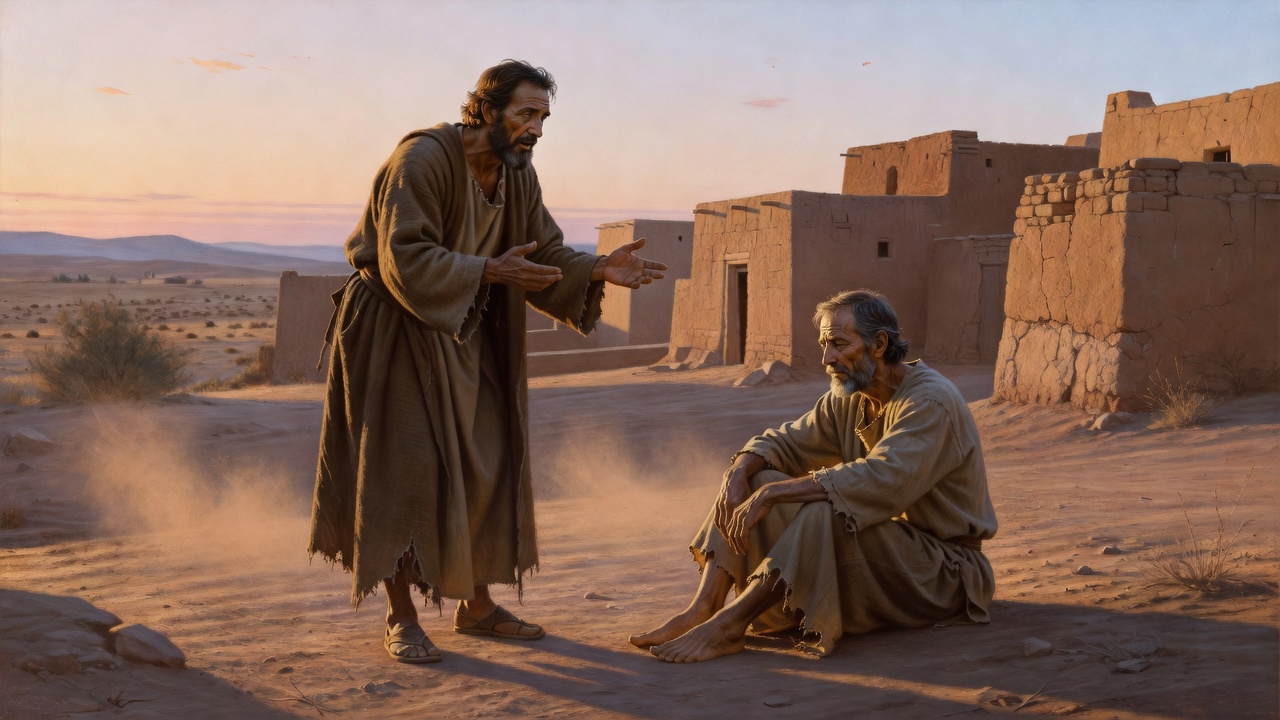
- Elifaz, o temanita, é o primeiro dos companheiros de Jó a responder, rompendo o silêncio de sete dias. Ele reconhece a reputação passada de Jó de consolar e fortalecer os aflitos antes de questionar por que Jó não consegue aplicar essa mesma firmeza ao seu próprio sofrimento.Fontes: o próprio texto bíblico · Eliphaz
- Elifaz introduz o princípio tradicional da retribuição, argumentando que os inocentes nunca perecem e que as pessoas colhem aquilo que semeiam na vida.Fontes: o próprio texto bíblico
- Para fundamentar seu argumento teológico, Elifaz relata uma visão noturna estarrecedora na qual um espírito misterioso surgiu diante dele na escuridão, declarando que mortais frágeis, que habitam em casas de barro, não podem ser mais justos ou puros do que o seu Criador.Fontes: o próprio texto bíblico
Notas escritas com auxílio de IA a partir de fontes abertas (Theographic Bible Metadata, CC BY-SA 4.0; Easton’s Bible Dictionary, domínio público) e revisadas antes de publicar.
Créditos e licença desta tradução
Biblica® Se aɖeke mebla Biblia zazã o Agbenya La™ Éwé: Biblica® Se aɖeke mebla Biblia zazã o Agbenya La™ (Bible) of Ghana copyright © 1988, 2006, 2020 Biblica, Inc. Language: eʋegbe Contributor: Biblica, Inc. Dɔwɔƒe si na wò asi ka agbalẽ sia lae nye Creative Commons Attribution-ShareAlike 4.0 International License (CC BY-SA). Ne èdi be yeakpɔ laisensi alo mɔɖegbalẽ sia la, yi ɖe http://creativecommons.org/licenses/by-sa/4.0 alo ŋlɔ agbalẽ na Creative Commons Dɔwɔƒea to adrɛsi sia dzi: Creative Commons, PO Box 1866, Mountain View, CA 94042, USA. Biblica, Inc. na wode Biblica® kple eƒe dzesidenu agbalẽ me, eye woaŋlɔ agbalẽ axɔ mɔɖeɖe tso Biblica, Inc. gbɔ hafi woawɔ Biblica® ƒe dzesidenu la ŋu dɔ. Le CC BY-SA ƒe mɔɖeɖe ƒe sewo nu la, àte ŋu azã agbalẽ sia me nyawo le dɔ bubuwo wɔwɔ me gake ele be nàde dzesi Biblica ƒe dzesidenu la abe ale si wòle ene. Ne ètrɔ asi le agbalẽ sia ŋu alo zãe le mɔ bubu nu la, ele be nàɖe Biblica® ƒe dzesidenu la ɖa. Ele be nàde dzesi tɔtrɔ siwo nèwɔ la ɖe agbalẽ la me eye nàde dzesii be: “Àte ŋu akpɔ Biblica, Inc. ƒe dɔ gbãtɔ le www.biblica.com kple open.bible femaxee.” Ele be nutɔnyenye ƒe dzeside nadze le agbalẽ la ƒe axa si tanya alo nutɔnyenye ƒe dzesi nɔna la ale: Biblica® Se aɖeke mebla Biblia zazã o Agbenya La™ Nutɔnyenye © 1988, 2006, 2020 Biblica, Inc. Biblica® Open Ewe Contemporary Scriptures™ Copyright © 1988, 2006, 2020 by Biblica, Inc. Biblica, Inc. na Dɔwɔƒe si Kpɔa Nutɔnyenye kple Adzɔdodo ƒe Nyawo dzi le Amerika la de “Biblica” kple eƒe dzesidenu agbalẽ me. Woaxɔ mɔɖeɖe na ezazã. “Biblica” is a trademark registered in the United States Patent and Trademark Office by Biblica, Inc. Used with permission. Ele be nàna míaƒe asi naka wò agbalẽ la le laisensi alo mɔɖeɖe ƒe se (CC BY-SA) sia nu. Ne èdi be yeana nyanya Biblica, Inc. tso agbalẽ sia zazã ŋu la, anyo be nàdo ta ɖe mía gbɔ le https://open.bible/contact-us. This work is made available under the Creative Commons Attribution-ShareAlike 4.0 International License (CC BY-SA). To view a copy of this license, visit http://creativecommons.org/licenses/by-sa/4.0 or send a letter to Creative Commons, PO Box 1866, Mountain View, CA 94042, USA. Biblica® is a trademark registered by Biblica, Inc., and use of the Biblica® trademark requires the written permission of Biblica, Inc. Under the terms of the CC BY-SA license, you may copy and redistribute this unmodified work as long as you keep the Biblica® trademark intact. If you modify a copy or translate this work, thereby creating a derivative work, you must remove the Biblica® trademark. On the derivative work, you must indicate what changes you have made and attribute the work as follows: “The original work by Biblica, Inc. is available for free at www.biblica.com and open.bible.” Notice of copyright must appear on the title or copyright page of the work as follows: Biblica® Se aɖeke mebla Biblia zazã o Agbenya La™ Nutɔnyenye © 1988, 2006, 2020 Biblica, Inc. Biblica® Open Ewe Contemporary Scriptures™ Copyright © 1988, 2006, 2020 by Biblica, Inc. Biblica, Inc. na Dɔwɔƒe si Kpɔa Nutɔnyenye kple Adzɔdodo ƒe Nyawo dzi le Amerika la de “Biblica” kple eƒe dzesidenu agbalẽ me. Woaxɔ mɔɖeɖe na ezazã. “Biblica” is a trademark registered in the United States Patent and Trademark Office by Biblica, Inc. Used with permission. You must also make your derivative work available under the same license (CC BY-SA). If you would like to notify Biblica, Inc. regarding your translation of this work, please contact us at https://open.bible/contact-us. This translation is made available to you under the terms of the Creative Commons Attribution Share-Alike license 4.0. You have permission to share and redistribute this Bible translation in any format and to make reasonable revisions and adaptations of this translation, provided that: You include the above copyright and source information. If you make any changes to the text, you must indicate that you did so in a way that makes it clear that the original licensor is not necessarily endorsing your changes. If you redistribute this text, you must distribute your contributions under the same license as the original. Pictures included with Scriptures and other documents on this site are licensed just for use with those Scriptures and documents. For other uses, please contact the respective copyright owners. Note that in addition to the rules above, revising and adapting God's Word involves a great responsibility to be true to God's Word. See Revelation 22:18-19. 2025-05-01
Fonte: http://ebible.org/ewe/ · eBible.org