Jeremias 9
Biblica® Se aɖeke mebla Biblia zazã o Agbenya La™ · Toque num versículo para ver as referências cruzadas.
1Oo, ɖe nye ta anye tsidzɔƒe
eye nye ŋkuwo anye aɖatsivudo la,
mafa avi zã kple keli na nye dukɔ
ƒe ame siwo wowu.
2Oo, ɖe dzeƒe le asinye le gbegbe na mɔzɔlawo,
anye ne magblẽ nye dukɔ ɖi adzo le wo gbɔ,
elabena wo katã wonye ahasiwɔlawo,
ameha siwo nye nu tovo wɔlawo sɔŋ.
3Yehowa be,
“Wovua woƒe aɖewo abe dati ene
ne woada alakpaŋutrɔ.
Menye nyateƒee wotsɔ le dzi ɖum
le anyigba la dzi o.
Wotsoa nu vɔ̃ ɖeka gbɔ yia bubu gbɔ
eye womenyam o.
4Kpɔ nyuie le xɔlɔ̃wòwo ŋu.
Megaka ɖe nɔviwò ŋutsuwo dzi o,
elabena nɔvi ɖe sia ɖe nye ameblela
eye xɔlɔ̃ ɖe sia ɖe nye ameŋugblẽla.
5Xɔlɔ̃ blea xɔlɔ̃ eye ame aɖeke metoa nyateƒe o.
Wofia aʋatsokaka woƒe aɖewo
eye woɖea fu na wo ɖokuiwo vevie
kple nu vɔ̃ wɔwɔ.
6Amebeble le gã dom ɖe edzi.
Le woƒe amebeble ta la,
wogbe sidzedzem.”
Yehowae gblɔe.
7Eya ta ale Yehowa, Dziƒoʋakɔwo ƒe Aƒetɔ la gblɔe nye esi:
“Kpɔ ɖa malolõ wo ado wo akpɔ,
elabena nu bubu ka mawɔ
le nye dukɔ ƒe nu vɔ̃ ta?
8Woƒe aɖe le abe aŋutrɔ si nu aɖi vɔ̃ɖi le la ene,
elabena woƒoa nu bebletɔe,
ame sia ame tsɔa eƒe nu ƒoa nu na ehavi bubutɔe,
gake le eƒe dzi me la, etre mɔ ɖi nɛ.
9Yehowa be, ‘Ɖe mele be mahe to na wo le esia ta oa?
Ɖe mele be mabia hlɔ̃ dukɔ sia tɔgbi oa?’
10“Mafa avi ado ɣli na towo,
eye madzi konyifaha ɖe gbegbelãnyiƒewo ŋu.
Elabena wozu gbegbe,
ame aɖeke mato afi ma ayi o
eye womagase nyiwo ƒe xɔxlɔ̃ le afi ma o,
dziƒoxewo gɔ̃ hã si dzo eye gbemelãwo hã si.
11“Mawɔ Yerusalem wòazu glikpo gbagbã si woli kɔe
kple nɔƒe na amegaxiwo, eye mawɔ Yuda duwo
woazu aƒedo ale be ame aɖeke manɔ wo me o.”
12Ame kae nye nunyala si ase nu sia gɔme? Ame kae Yehowa fia nu eye wòate ŋu aɖe eme? Nu ka ta anyigba gblẽ eye wowɔe wòle abe gbegbe si ame aɖeke mate ŋu ato ayi o la ene?
13Yehowa be, “Elabena wogblẽ nye se si metsɔ ɖo woƒe ŋkume la ɖi. Womeɖo tom alo wɔ nye se dzi o. 14Ke boŋ wodze woƒe dzi dzeaglãwo yome hekplɔ Baalwo ɖo abe ale si wo fofowo fia woe ene.” 15Eya ta ale Yehowa, Dziƒoʋakɔwo ƒe Aƒetɔ la, Israel ƒe Mawu la gblɔe nye esi: “Kpɔ ɖa, mana dukɔ sia naɖu nu veve, eye woano aɖitsi. 16Makaka wo ɖe dukɔwo dome, dukɔ siwo woawo ŋutɔ alo wo fofowo menya o eye mati wo yome kple yi va se ɖe esime metsrɔ̃ wo keŋkeŋ.”
17Ale Yehowa, Dziƒoʋakɔwo ƒe Aƒetɔ la gblɔe nye esi:
“Mibu eŋuti azɔ! Miyɔ nyɔnu avihadzilawo vɛ.
Miyɔ esiwo tea ŋu dzinɛ nyuie.
18Mina woava kaba ne woadzi aviha na mí
va se ɖe esime aɖatsi nalolõ ɖe ŋku dzi na mí,
eye aɖatsi nado bababa tso míaƒe ŋku me.
19Wose aviɣli le Zion.
‘Aleke wohetsrɔ̃ mí ale!
Aleke míaƒe ŋukpe lolo ale!
Ele be míadzo le míaƒe anyigba dzi,
elabena míaƒe aƒewo zu aƒedo!’ ”
20Azɔ la, Oo nyɔnuwo,
mise Yehowa ƒe nya,
mike miaƒe towo ɖe eƒe numenyawo ŋuti.
Mifia mia vinyɔnuwo ale si woado ɣlii.
Mifia konyifaha mia nɔewo
21Ku to míaƒe fesrewo nu ge ɖe mía dzi.
Ege ɖe míaƒe mɔ sesẽwo me.
Ekplɔ ɖeviwo dzoe le mɔtatawo dzi
eye wòɖe ɖekakpuiwo ɖa le dua ƒe ablɔ me.
22Gblɔ be, “Ale Yehowa gblɔe nye esi:
“ ‘Amegbetɔwo ƒe ŋutilã kukuwo akaka abe
gbeɖuɖɔ wolɔ kɔ ɖe agble dzi ene.
Woanɔ abe nukue nuŋela ŋe ƒo ɖi,
eye ame aɖeke meli afɔ wo o ene.’ ”
23Ale Yehowa gblɔe nye esi:
“Nunyala megatsɔ eƒe nunya ƒo adegbee
alo ŋusẽtɔ natsɔ eƒe ŋusẽ aƒo adegbee
alo kesinɔtɔ natsɔ eƒe kesinɔnuwo aƒo adegbee o,
24ke boŋ ame si aƒo adegbe la,
neƒo adegbe tso nu sia ŋu be,
yenyam hese gɔnyeme nyuie be nyee nye Yehowa,
ame si nye dɔmenyotɔ,
ʋɔnu dzɔdzɔe drɔ̃la kple dzɔdzɔetɔ le anyigba dzi
eye esiawo mee medzɔa dzi le,”
Yehowae gblɔe.
25Yehowa be, “Ŋkekewo li gbɔna, esi mahe to na ame siwo tso aʋa le ŋutilã me ko. 26Woawoe nye Egipte, Yuda, Edom, Amon, Moab kple ame siwo katã le dzogbenyigba siwo le didiƒe la dzi, elabena le nyateƒe me la, dukɔ siawo katã metso aʋa o. Israel ƒe aƒe blibo la gɔ̃ hã metso aʋa le dzi me o.”
Você sabia?
Lamento sobre o Engano e a Ruína
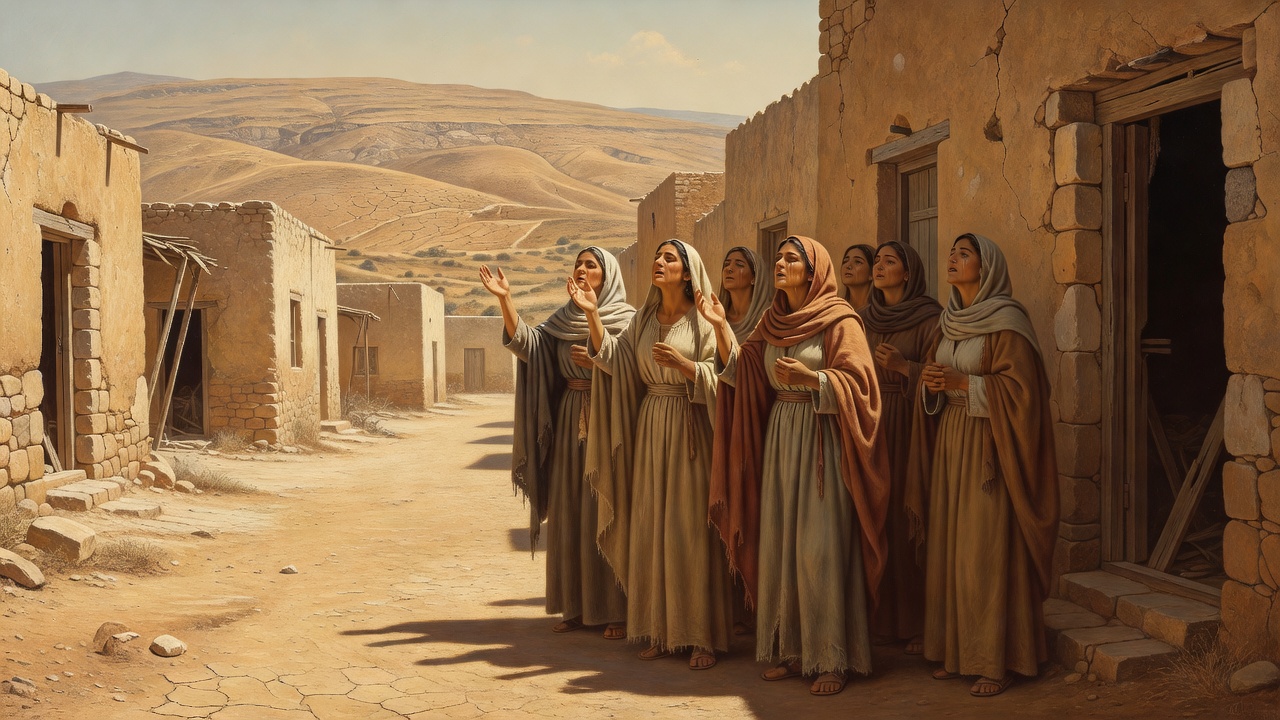
- Na cultura do antigo Oriente Próximo, pranteadoras profissionais experientes eram convocadas durante grandes calamidades e funerais para liderar lamentos públicos e ensinar cânticos fúnebres às próximas gerações.Fontes: o próprio texto bíblico
- O texto adverte contra o orgulho na sabedoria humana, no poder militar ou nas riquezas materiais, apresentando o verdadeiro conhecimento de Deus — caracterizado pela bondade, justiça e retidão — como o único motivo legítimo de glória.Fontes: o próprio texto bíblico
- O capítulo agrupa Judá com seus vizinhos regionais — Egito, Edom, Amom e Moabe —, advertindo que marcas religiosas externas, como a circuncisão física, não oferecem proteção se o coração permanecer incircunciso e desobediente.Fontes: o próprio texto bíblico · Edom · Ammon · Moab
Notas escritas com auxílio de IA a partir de fontes abertas (Theographic Bible Metadata, CC BY-SA 4.0; Easton’s Bible Dictionary, domínio público) e revisadas antes de publicar.
Lugares deste capítulo
- Jerusalem · 31.777, 35.234 · versículo 11
- Zion · Hoje: Jerusalem · 31.777, 35.234 · versículo 19
- Ammon · 31.955, 35.934 · versículo 26
- Edom · 30.746, 35.604 · versículo 26
- Egypt · 30.129, 31.308 · versículo 26
- Moab · Hoje: Moab 1 · 31.181, 35.701 · versículo 26
Só aparecem lugares com identificação de alta confiança (90% ou mais segundo as fontes acadêmicas reunidas pelo OpenBible). Mapa da época: DARE (Digital Atlas of the Roman Empire), CC BY 4.0; mapa atual: © colaboradores do OpenStreetMap; lugares: OpenBible.info (CC BY 4.0).
Créditos e licença desta tradução
Biblica® Se aɖeke mebla Biblia zazã o Agbenya La™ Éwé: Biblica® Se aɖeke mebla Biblia zazã o Agbenya La™ (Bible) of Ghana copyright © 1988, 2006, 2020 Biblica, Inc. Language: eʋegbe Contributor: Biblica, Inc. Dɔwɔƒe si na wò asi ka agbalẽ sia lae nye Creative Commons Attribution-ShareAlike 4.0 International License (CC BY-SA). Ne èdi be yeakpɔ laisensi alo mɔɖegbalẽ sia la, yi ɖe http://creativecommons.org/licenses/by-sa/4.0 alo ŋlɔ agbalẽ na Creative Commons Dɔwɔƒea to adrɛsi sia dzi: Creative Commons, PO Box 1866, Mountain View, CA 94042, USA. Biblica, Inc. na wode Biblica® kple eƒe dzesidenu agbalẽ me, eye woaŋlɔ agbalẽ axɔ mɔɖeɖe tso Biblica, Inc. gbɔ hafi woawɔ Biblica® ƒe dzesidenu la ŋu dɔ. Le CC BY-SA ƒe mɔɖeɖe ƒe sewo nu la, àte ŋu azã agbalẽ sia me nyawo le dɔ bubuwo wɔwɔ me gake ele be nàde dzesi Biblica ƒe dzesidenu la abe ale si wòle ene. Ne ètrɔ asi le agbalẽ sia ŋu alo zãe le mɔ bubu nu la, ele be nàɖe Biblica® ƒe dzesidenu la ɖa. Ele be nàde dzesi tɔtrɔ siwo nèwɔ la ɖe agbalẽ la me eye nàde dzesii be: “Àte ŋu akpɔ Biblica, Inc. ƒe dɔ gbãtɔ le www.biblica.com kple open.bible femaxee.” Ele be nutɔnyenye ƒe dzeside nadze le agbalẽ la ƒe axa si tanya alo nutɔnyenye ƒe dzesi nɔna la ale: Biblica® Se aɖeke mebla Biblia zazã o Agbenya La™ Nutɔnyenye © 1988, 2006, 2020 Biblica, Inc. Biblica® Open Ewe Contemporary Scriptures™ Copyright © 1988, 2006, 2020 by Biblica, Inc. Biblica, Inc. na Dɔwɔƒe si Kpɔa Nutɔnyenye kple Adzɔdodo ƒe Nyawo dzi le Amerika la de “Biblica” kple eƒe dzesidenu agbalẽ me. Woaxɔ mɔɖeɖe na ezazã. “Biblica” is a trademark registered in the United States Patent and Trademark Office by Biblica, Inc. Used with permission. Ele be nàna míaƒe asi naka wò agbalẽ la le laisensi alo mɔɖeɖe ƒe se (CC BY-SA) sia nu. Ne èdi be yeana nyanya Biblica, Inc. tso agbalẽ sia zazã ŋu la, anyo be nàdo ta ɖe mía gbɔ le https://open.bible/contact-us. This work is made available under the Creative Commons Attribution-ShareAlike 4.0 International License (CC BY-SA). To view a copy of this license, visit http://creativecommons.org/licenses/by-sa/4.0 or send a letter to Creative Commons, PO Box 1866, Mountain View, CA 94042, USA. Biblica® is a trademark registered by Biblica, Inc., and use of the Biblica® trademark requires the written permission of Biblica, Inc. Under the terms of the CC BY-SA license, you may copy and redistribute this unmodified work as long as you keep the Biblica® trademark intact. If you modify a copy or translate this work, thereby creating a derivative work, you must remove the Biblica® trademark. On the derivative work, you must indicate what changes you have made and attribute the work as follows: “The original work by Biblica, Inc. is available for free at www.biblica.com and open.bible.” Notice of copyright must appear on the title or copyright page of the work as follows: Biblica® Se aɖeke mebla Biblia zazã o Agbenya La™ Nutɔnyenye © 1988, 2006, 2020 Biblica, Inc. Biblica® Open Ewe Contemporary Scriptures™ Copyright © 1988, 2006, 2020 by Biblica, Inc. Biblica, Inc. na Dɔwɔƒe si Kpɔa Nutɔnyenye kple Adzɔdodo ƒe Nyawo dzi le Amerika la de “Biblica” kple eƒe dzesidenu agbalẽ me. Woaxɔ mɔɖeɖe na ezazã. “Biblica” is a trademark registered in the United States Patent and Trademark Office by Biblica, Inc. Used with permission. You must also make your derivative work available under the same license (CC BY-SA). If you would like to notify Biblica, Inc. regarding your translation of this work, please contact us at https://open.bible/contact-us. This translation is made available to you under the terms of the Creative Commons Attribution Share-Alike license 4.0. You have permission to share and redistribute this Bible translation in any format and to make reasonable revisions and adaptations of this translation, provided that: You include the above copyright and source information. If you make any changes to the text, you must indicate that you did so in a way that makes it clear that the original licensor is not necessarily endorsing your changes. If you redistribute this text, you must distribute your contributions under the same license as the original. Pictures included with Scriptures and other documents on this site are licensed just for use with those Scriptures and documents. For other uses, please contact the respective copyright owners. Note that in addition to the rules above, revising and adapting God's Word involves a great responsibility to be true to God's Word. See Revelation 22:18-19. 2025-05-01
Fonte: http://ebible.org/ewe/ · eBible.org