Jó 35
Wycliffe's Bible with Modern Spelling (Enhanced) · Toque num versículo para ver as referências cruzadas.
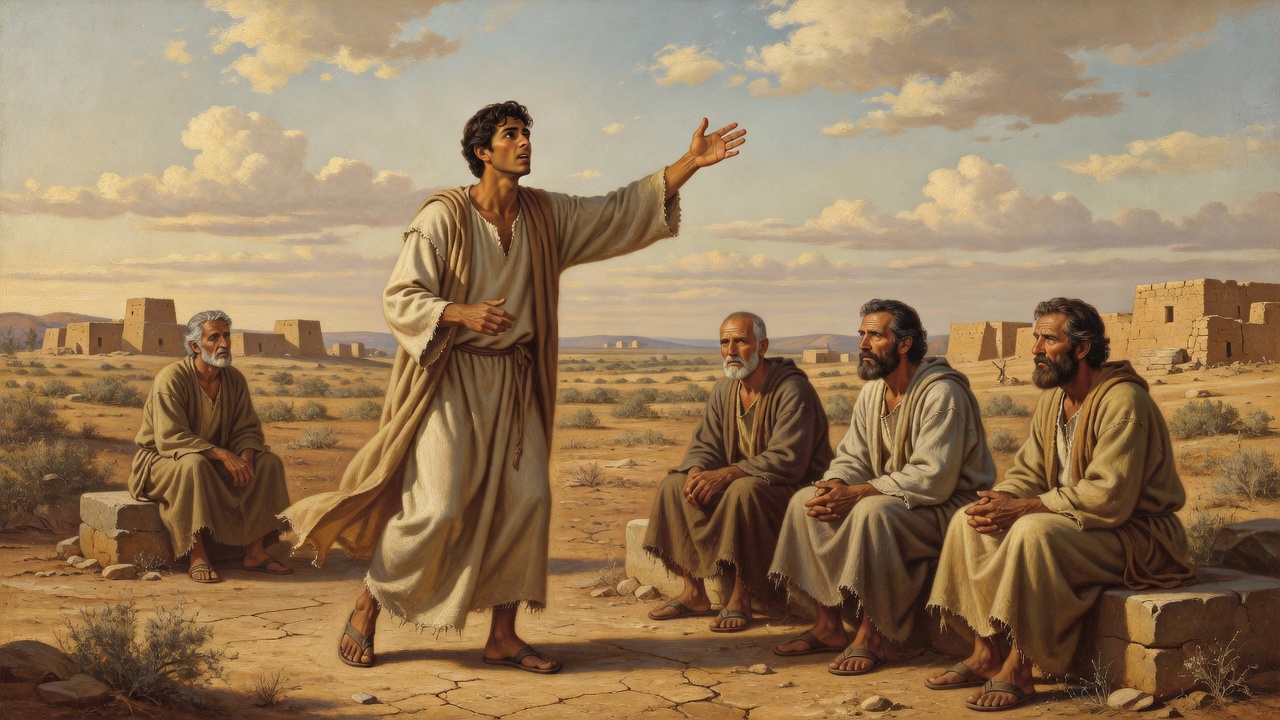
Elihu Recalls God’s Justice
1Therefore Elihu spake again, (and said) these things,
2Whether thy thought seemeth even, either rightful, to thee, that thou shouldest say, I am right-fuller than God? [or I am more rightwise than God?]
3For thou saidest, That, that is good, pleaseth not thee; either what profiteth it to thee, if I do sin? (For thou hast said, What is good, pleaseth thee not; or what profiteth it to me, if I do not sin?)
4Therefore I shall answer to thy words, and to thy friends with thee.
5See thou, and behold (the) heaven (s) (or and look at the sky), and behold thou the air, and know that God is higher than thou. [Behold heaven, and look, and mindfully see the clouds, (all) that is higher than thou.]
6If thou sinnest, what shalt thou harm him? and if thy wickednesses be multiplied, what shalt thou do against him? (If thou sinnest, what harm shalt thou do to him? and if thy wickednesses be multiplied, what shalt thou do to him?)
7Certainly if thou doest justly, what shalt thou give to him; either what shall he take of thine hand? (And if thou doest righteously, what shalt thou give him? or what shall he receive from thy hand?)
8Thy wickedness shall annoy a man, which is like thee, (or Thy wickedness shall harm a man, who is just like thee); and thy rightwiseness shall help the son of a man.
9Men shall cry for the multitude of false challengers, and they shall wail for the violence of the power of tyrants.
10And Job said not, Where is God, that made me, and that gave songs in the night? (And no one hath said, Where is God, who made me, and gave songs in the night, that is, hope in the darkness?)
11And the which teacheth us above the beasts of [the] earth, and he shall teach us above the birds of (the) heaven (s). (And who teacheth us more than the beasts of the earth, and the birds of the air.)
12There they shall cry, and God shall not hear them, for the pride of evil men. (And they shall cry for help, but God shall not hear them, because of the pride of evil people.)
13For God shall not hear without cause, and Almighty God shall behold the causes of each man. (For God shall not listen to vanity, that is, to vain, or empty, things, nor shall Almighty God consider the importuning of these people.)
14Yea, when thou sayest, He beholdeth not; be thou deemed before him, and abide thou him (or wait thou for him, and be thou judged before him).
15For now the Lord bringeth not in his strong vengeance, (n)either he vengeth felonies greatly here. (But here and now, the Lord bringeth not in his strong vengeance, nor greatly avengeth felonies;)
16Therefore Job openeth his mouth in vain, and multiplieth words without knowing. (and so Job openeth his mouth in vain, or in futility, and multiplieth words without knowledge.)
Você sabia?
Eliú sobre a Independência de Deus e o Clamor Humano
- Eliú intervém após o encerramento do debate entre Jó e seus três companheiros, apresentando uma série de discursos que vai dos capítulos 32 a 37.Fontes: Elihu · o próprio texto bíblico
- Neste capítulo, Eliú defende a transcendência de Deus ao convidar Jó a observar os céus e as nuvens, argumentando que o pecado humano não prejudica a Deus e a justiça humana não O enriquece.Fontes: o próprio texto bíblico
- Eliú também aborda por que os clamores de socorro sob opressão às vezes não recebem resposta, afirmando que as pessoas frequentemente clamam apenas por alívio da dor em vez de buscar a Deus, seu Criador, com verdadeira humildade.Fontes: o próprio texto bíblico
Notas escritas com auxílio de IA a partir de fontes abertas (Theographic Bible Metadata, CC BY-SA 4.0; Easton’s Bible Dictionary, domínio público) e revisadas antes de publicar.
Créditos e licença desta tradução
Wycliffe's Bible with Modern Spelling (Enhanced)
English: Wycliffe's Bible Modern Spelling (Enhanced) (with Deuterocanon)
Copyright © 2001,2010,2011,2012,2013,2015 Terry Noble
Language: English
Dialect: Archaic
Translation by: Terry Noble
Wycliffe's Bible with Modern Spelling (Enhanced)
Wycliffe’s Bible with Modern Spelling (Enhanced) is a composite of my Wycliffe’s Bible, a modern-spelling version of the 14th century Middle English translation, consisting of Wycliffe’s Old Testament and Wycliffe’s New Testament, and my modern-spelling version of Wycliffe’s Apocrypha. These books contain literally tens of thousands of rewritten verses, presented in parentheses “( ) “, to provide help in comprehending the 14th century Middle English vocabulary and grammar. Wycliffe’s Apocrypha also includes the books of the Apocrypha from the 1st edition of the King James Version of the Bible.
This translation is made available to you under the terms of the
Creative Commons Attribution-Noncommercial-No Derivatives license 4.0.
You may share and redistribute this Bible translation or extracts from it in any format, provided that:
You include the above copyright and source information.
You do not sell this work for a profit.
You do not change any of the words or punctuation of the Scriptures.
Pictures included with Scriptures and other documents on this site are licensed just for use with those Scriptures and documents.
For other uses, please contact the respective copyright owners.
2019-09-25
Títulos de seção adaptados da Berean Standard Bible (domínio público); não fazem parte do texto bíblico desta tradução.
Fonte: http://ebible.org/engwyc2018/ · eBible.org