Eclesiastes 6
Wycliffe's Bible with Modern Spelling (Enhanced) · Toque num versículo para ver as referências cruzadas.
The Futility of Life
1Also another evil there is (or There is also another evil), which I saw under the sun; and certainly it is oft used with men.
2A man is, to whom God gave riches, and chattel, and honour; and nothing faileth to his soul of all things which he desireth; and God giveth not power to him, that he eat thereof, but a strange man shall devour it. This is vanity, and a great wretchedness. (There is a person, to whom God gave riches, and possessions, and honour; and he lacketh nothing of all the things which he desireth; but God giveth him not the power to enjoy those things, but a stranger shall enjoy them. This is empty and futile, and a great wretchedness.)
3If a man engendereth an hundred free sons, and hath many days of age, and his soul useth not the goods of his chattel, and wanteth burying; I pronounce of this man, that a dead-born child is better than he. (Yea, if a man begetteth a hundred sons, and hath many years of age, and yet he is not able to enjoy the good things in his life, and at the last he even lacketh a proper burial, or a proper tomb; I declare of this man, that a still-born child is better than he.)
4For he cometh in vain, and goeth to darknesses; and his name shall be done away by forgetting.
5He saw not the sun, neither knew the diversity of good and of evil;
6also though he live two thousand years, and useth not goods; whether all things hasten not to one place? (even if he live two thousand years, he hath not enjoyed the good things in his life; and do not all hasten to one and the same place?)
7All the travail of a man is in his mouth, but the soul of him shall not be [ful] filled with goods. (All the labour of a person is for his mouth, yet his belly, or his appetite, shall never be fulfilled with enough good things.)
8What hath a wise man more than a fool? and what hath a poor man, but that he go thither, where is life? (What more hath a person who is wise, than a person who is a fool? or what hath someone who is poor, but that he go there, with a knowledge, or with an understanding, of life?)
9It is better to see that, that thou covetest, than to desire that, that thou knowest not; but also this is vanity, and presumption of spirit. (It is better to see what thou covetest, than to desire what thou knowest not; but this is also empty and futile, like chasing the wind.)
10The name of him that shall come, is called now, and it is known, that he is a man, and he may not strive in doom against a stronger than himself. (The name of what is to come is known and understood, and it is also known, that one cannot argue in court against someone stronger than oneself.)
11Words be full many, and have much vanity in disputing. What need is it to a man to seek greater things than himself; (There can be a great many words, but there is much that is empty and futile in disputing, or in arguing. What profiteth it to someone,)
12since he knoweth not, what shall befall to him in his life, in the number of (the) days of his pilgrimage, and in the time that passeth as (a) shadow? either who may show to him, what thing under [the] sun shall come after him?
Você sabia?
A Vaidade da Riqueza Insatisfeita
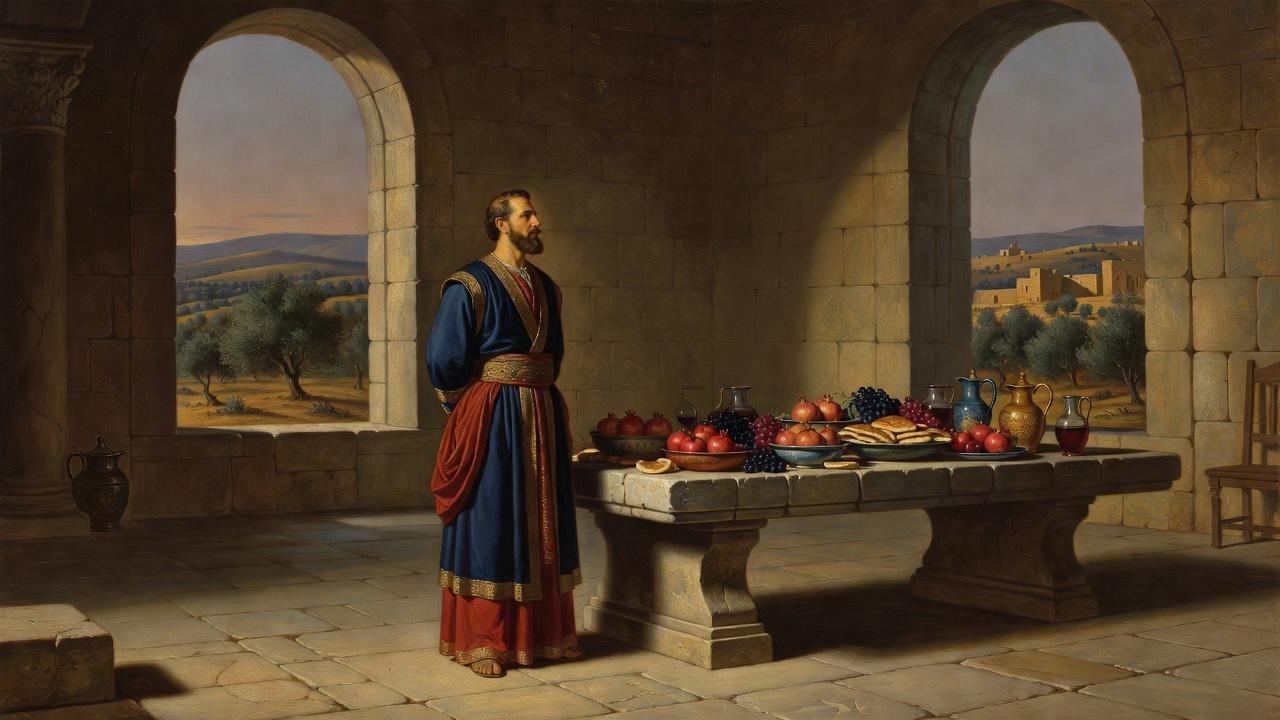
- No pensamento antigo, ter uma vida longa e gerar muitos filhos eram considerados os maiores sinais de bênção. No entanto, Eclesiastes observa que mesmo viver dois mil anos e gerar cem filhos é algo vazio se a pessoa não puder desfrutar de sua prosperidade ou receber um sepultamento digno.Fontes: o próprio texto bíblico
- O autor aponta que, embora o trabalho humano seja dedicado a suprir necessidades físicas básicas como o alimento, o apetite e os desejos permanecem continuamente insatisfeitos. Ele contrasta o contentamento com o que está presente diante dos olhos com a busca incessante de desejos errantes.Fontes: o próprio texto bíblico
- O capítulo enfatiza as limitações humanas, ressaltando que os mortais não podem contender com o que foi estabelecido por alguém mais forte do que eles. Como a vida é fugaz como uma sombra, o ser humano não pode saber plenamente o que é bom para si nem prever o que acontecerá depois de sua partida.Fontes: o próprio texto bíblico
Notas escritas com auxílio de IA a partir de fontes abertas (Theographic Bible Metadata, CC BY-SA 4.0; Easton’s Bible Dictionary, domínio público) e revisadas antes de publicar.
Créditos e licença desta tradução
Wycliffe's Bible with Modern Spelling (Enhanced)
English: Wycliffe's Bible Modern Spelling (Enhanced) (with Deuterocanon)
Copyright © 2001,2010,2011,2012,2013,2015 Terry Noble
Language: English
Dialect: Archaic
Translation by: Terry Noble
Wycliffe's Bible with Modern Spelling (Enhanced)
Wycliffe’s Bible with Modern Spelling (Enhanced) is a composite of my Wycliffe’s Bible, a modern-spelling version of the 14th century Middle English translation, consisting of Wycliffe’s Old Testament and Wycliffe’s New Testament, and my modern-spelling version of Wycliffe’s Apocrypha. These books contain literally tens of thousands of rewritten verses, presented in parentheses “( ) “, to provide help in comprehending the 14th century Middle English vocabulary and grammar. Wycliffe’s Apocrypha also includes the books of the Apocrypha from the 1st edition of the King James Version of the Bible.
This translation is made available to you under the terms of the
Creative Commons Attribution-Noncommercial-No Derivatives license 4.0.
You may share and redistribute this Bible translation or extracts from it in any format, provided that:
You include the above copyright and source information.
You do not sell this work for a profit.
You do not change any of the words or punctuation of the Scriptures.
Pictures included with Scriptures and other documents on this site are licensed just for use with those Scriptures and documents.
For other uses, please contact the respective copyright owners.
2019-09-25
Títulos de seção adaptados da Berean Standard Bible (domínio público); não fazem parte do texto bíblico desta tradução.
Fonte: http://ebible.org/engwyc2018/ · eBible.org