1 João 3
Wycliffe's Bible with Modern Spelling (Enhanced) · Toque num versículo para ver as referências cruzadas.
Children of God
1See ye what manner charity the Father gave to us (or See what kind of love the Father gave us), that we be named the sons of God, and be his sons. For this thing the world knew not us, for it knew not him.
2Most dear brethren (or Most dear brothers), now we be the sons of God, and yet it appeared not, what we shall be. We know, that when he shall appear, we shall be like him, for we shall see him as he is.
3And each man that hath this hope in him, maketh himself holy, as he is holy.
4Each man that doeth sin, doeth also wickedness, and sin is wickedness.
5And ye know, that he appeared to do away sins, and sin is not in him.
6Each man that dwelleth in him, sinneth not; and each that sinneth, seeth not him, neither knew him. (Each one who remaineth in him, or who liveth in him, sinneth not; and each one who sinneth, seeth not him, nor knoweth him.)
7Little sons, (let) no man deceive you; he that doeth rightwiseness, is just, as also he is just.
8He that doeth sin, is of the devil; for the devil sinneth from the beginning. In this thing the Son of God appeared, that he undo the works of the devil. (He who doeth sin, is of the Devil; for the Devil sinneth from the beginning. The Son of God appeared for this, yea, that he destroy the works of the Devil.)
9Each man that is born of God, doeth not sin; for the seed of God dwelleth in him, and he may not do sin, for he is born of God. (Each one who is born of God, or who is a child of God, sinneth not; for God’s seed liveth in him, and so he cannot do sin, for he is born of God or he is a child of God.)
10In this thing the sons of God be known, and the sons of the fiend, (or By this the sons of God be known, and also the sons of the Devil). Each man that is not just, is not of God, and he that loveth not his brother [is not of God].
Love One Another
11For this is the telling, that ye heard at the beginning, that ye love each other; (For this is the tiding, or the message, that ye heard from the beginning, that ye should love one another;)
12not as Cain, that was of the devil, and slew his brother. And for what thing slew he him? for his works were evil, and his brother’s (were) just. (not as Cain, who was of the Devil, and murdered his brother. And why did he murder him? for his works were evil, and his brother’s works were righteous.)
13Brethren (or Brothers), do not ye wonder, if the world hateth you.
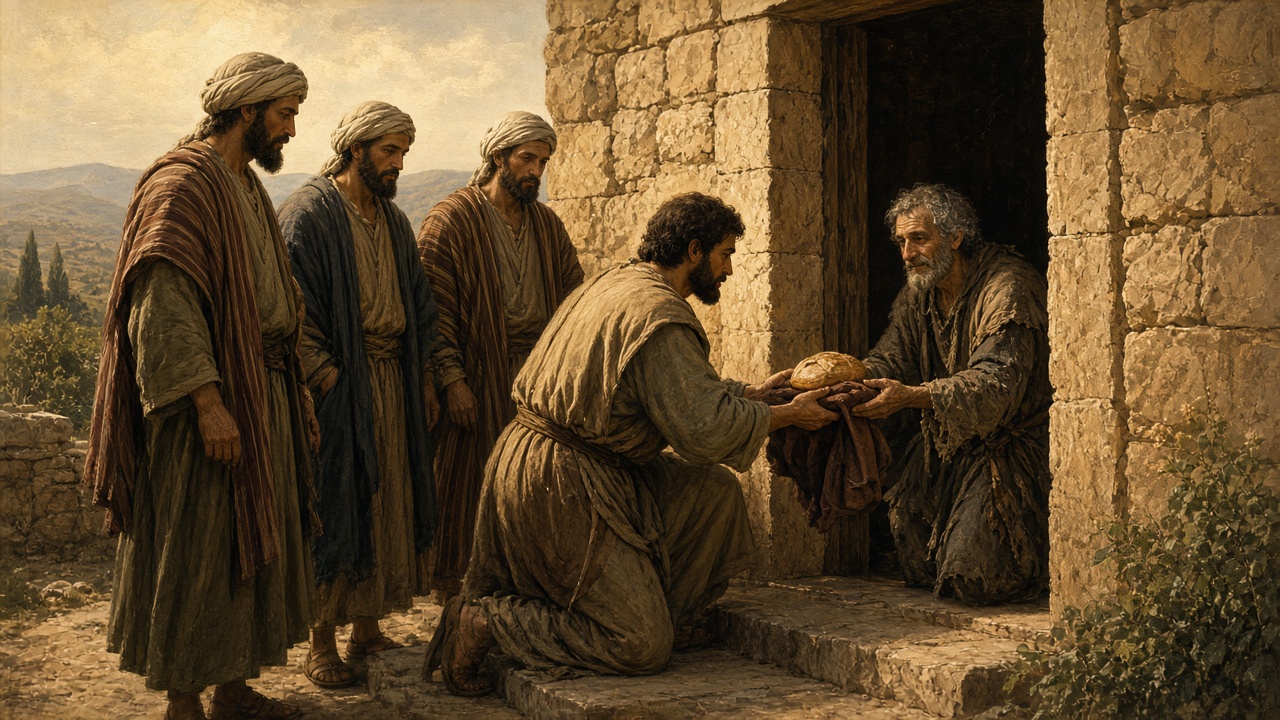
14We know, that we be translated from death to life, for we love (the) brethren. He that loveth not, (yet) dwelleth in death. (We know, that we be transferred from death unto life, for we love the brothers. He who loveth not, remaineth yet in death, or still liveth in death.)
15Each man that hateth his brother, is a manslayer; and ye know, that each manslayer hath not everlasting life dwelling in him. (Each one who hateth his brother, is a murderer; and ye know, that no murderer hath Eternal Life living within him, or that no murderer hath eternal life dwelling within him.)
16In this thing we have known the charity of God, for he put his life for us, and we owe to put our lives for our brethren. (In this we have known the love of God, for he gave his life for us, and so we ought to give our lives for our brothers.)
17He that hath the chattel [or the substance] of this world, and seeth that his brother hath need, and closeth his entrails from him, how dwelleth the charity of God in him? (or how can he say that the love of God dwelleth within him?)
18My little sons, love we not in word, neither in tongue, but in work and truth.
19In this thing we know, that we be of (the) truth, and in his sight we admonish our hearts.
20For if our heart reproveth us (or For if our conscience rebuketh us), God is more than our heart, and knoweth all things.
21Most dear brethren, if our heart reproveth not us, we have trust to God; (Most dear brothers, if our conscience rebuketh us not, then we have God’s trust;)
22and whatever we shall ask, we shall receive of him, for we keep his commandments, and we do those things that be pleasant before him. (and whatever we shall ask, we shall receive from him, for we obey his commands, and we do those things that be pleasing before him.)
23And this is the commandment of God, that we believe in the name of his Son Jesus Christ, and that we love each other, as he gave behest to us. (And this is God’s command, that we believe in the name of his Son Jesus Christ, and that we love one another, as he commanded us.)
24And he that keepeth his commandments, dwelleth in him, and he in him, (or And he who obeyeth his commands, remaineth in him, and he in him). And in this thing we know, that he dwelleth in us, by the Spirit, whom he gave to us.
Você sabia?
Filhos de Deus e amor fraterno
- A advertência para não ser como Caim lembra o primogênito de Adão e Eva, lavrador da terra, cujo irmão Abel seguia a vida pastoral. Eles apresentaram ofertas: a de Abel, dos primogênitos e da gordura do rebanho, foi aceita como mais excelente, e Caim, cuja oferta era do fruto da terra, ficou muito irado. A carta diz que Caim era do maligno e assassinou Abel porque as suas próprias obras eram más e as de seu irmão eram justas.Fontes: Cain · o próprio texto bíblico
- Neste capítulo, odiar o irmão é tratado como homicídio: todo aquele que odeia seu irmão é homicida, e a vida eterna não reside num homicida. O amor se conhece porque Jesus entregou a sua vida por nós, e se diz aos leitores que devem entregar a vida pelos irmãos.Fontes: o próprio texto bíblico
- Os filhos de Deus se distinguem dos filhos do diabo por praticar a justiça e por amar o irmão. A mensagem ouvida desde o princípio é que devemos amar uns aos outros, e o mandamento de Deus é crer no nome de seu Filho, Jesus Cristo, e amar uns aos outros como ele ordenou.Fontes: o próprio texto bíblico
Notas escritas com auxílio de IA a partir de fontes abertas (Theographic Bible Metadata, CC BY-SA 4.0; Easton’s Bible Dictionary, domínio público) e revisadas antes de publicar.
Créditos e licença desta tradução
Wycliffe's Bible with Modern Spelling (Enhanced)
English: Wycliffe's Bible Modern Spelling (Enhanced) (with Deuterocanon)
Copyright © 2001,2010,2011,2012,2013,2015 Terry Noble
Language: English
Dialect: Archaic
Translation by: Terry Noble
Wycliffe's Bible with Modern Spelling (Enhanced)
Wycliffe’s Bible with Modern Spelling (Enhanced) is a composite of my Wycliffe’s Bible, a modern-spelling version of the 14th century Middle English translation, consisting of Wycliffe’s Old Testament and Wycliffe’s New Testament, and my modern-spelling version of Wycliffe’s Apocrypha. These books contain literally tens of thousands of rewritten verses, presented in parentheses “( ) “, to provide help in comprehending the 14th century Middle English vocabulary and grammar. Wycliffe’s Apocrypha also includes the books of the Apocrypha from the 1st edition of the King James Version of the Bible.
This translation is made available to you under the terms of the
Creative Commons Attribution-Noncommercial-No Derivatives license 4.0.
You may share and redistribute this Bible translation or extracts from it in any format, provided that:
You include the above copyright and source information.
You do not sell this work for a profit.
You do not change any of the words or punctuation of the Scriptures.
Pictures included with Scriptures and other documents on this site are licensed just for use with those Scriptures and documents.
For other uses, please contact the respective copyright owners.
2019-09-25
Títulos de seção adaptados da Berean Standard Bible (domínio público); não fazem parte do texto bíblico desta tradução.
Fonte: http://ebible.org/engwyc2018/ · eBible.org