Isaías 47
Wycliffe's Bible with Modern Spelling · Toque num versículo para ver as referências cruzadas.
The Humiliation of Babylon
1Thou virgin, the daughter of Babylon, go down, sit thou in dust, sit thou in [the] earth; a king’s seat is not to the daughter of [the] Chaldees, for thou shalt no more be called soft and tender.
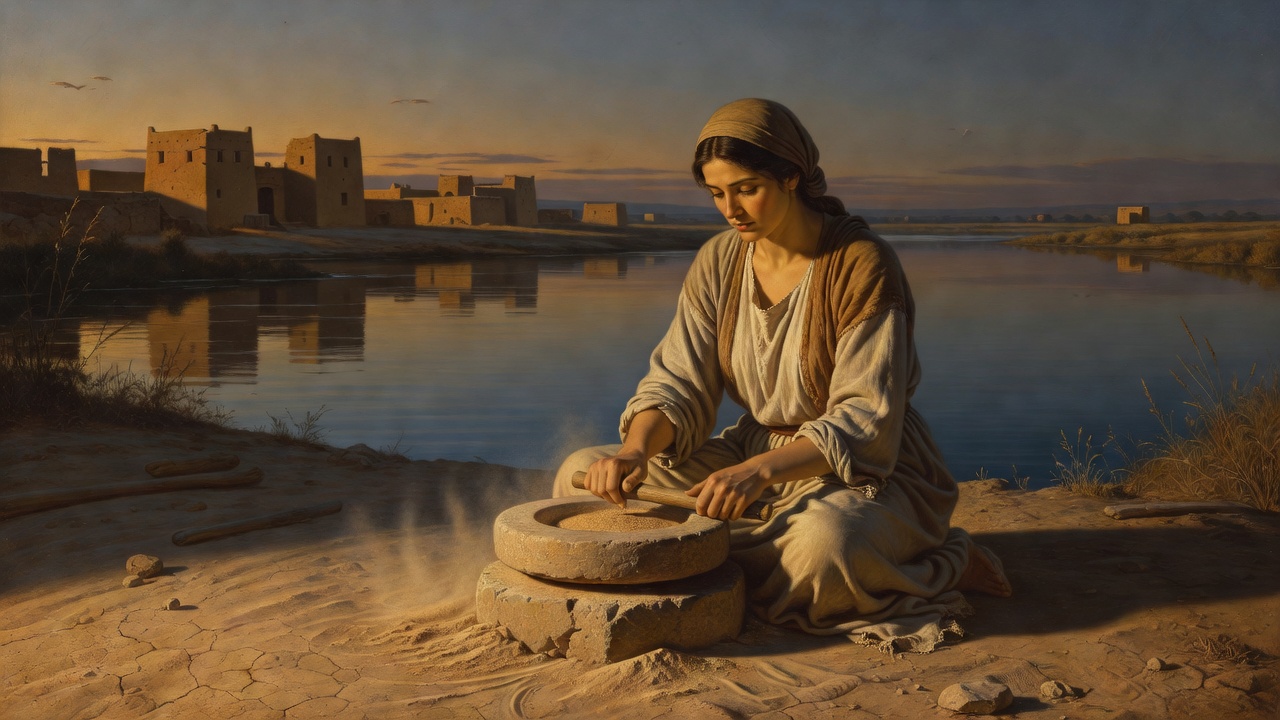
2Take thou a quernstone, and grind thou meal; make thou naked thy filth-hood, discover the shoulder, show the hips, pass thou [over the] floods.
3Thy shame shall be showed, and thy shame shall be seen; I shall take vengeance, and no man shall against-stand me.
4Our again-buyer, the Lord of hosts is his name, the Holy of Israel.
5Daughter of Chaldees, sit thou, be thou still, and enter into darknesses, for thou shalt no more be called the lady of realms.
6I was wroth on my people, I defouled mine heritage, and I gave them in thine hand, and thou settedest not mercies to them; thou madest grievous the yoke greatly on an eld [or old] man,
7and thou saidest, Without end I shall be [a] lady; thou puttedest not these things on thine heart, neither thou bethoughtest on thy last thing.
8And now, thou delicate, and dwelling trustily, hear these things, which sayest in thine heart, I am, and besides me there is no more; I shall not sit [a] widow, and I shall not know barrenness.
9These two things, barrenness and widowhood, shall come to thee suddenly in one day; all things came on thee for the multitude of thy witchcrafts, and for the great hardness of thine enchanters, either tregetours.
10And thou haddest trust in thy malice, and saidest, None is that seeth me; this, thy wisdom and thy knowing, deceived thee; and thou saidest in thine heart, I am, and besides me there is none other.
11Evil shall come [up] on thee, and thou shalt not know the beginning thereof; and wickedness or wretched-ness shall fall [up] on thee, which thou shalt not be able to cleanse; wretched-ness which thou knowest not, shall come [up] on thee suddenly.
12Stand thou with thine enchanters, and with the multitude of thy witches, in which thou travailedest from thy youth; if in hap they profit anything to thee, either if thou mayest be made the stronger.
13Thou failedest in the multitude of thy counsels; the false diviners of heaven stand, and save thee, which beheld stars, and numbered months, that they should tell by them things to coming [or to come] to thee.
14Lo! they be made as stubble, the fire hath burnt them; they shall not deliver their life from the power of flame; coals be not, by which they shall be warmed, neither fire, that they sit at it.
15So those things be made to thee in which ever thou travailedest; thy merchants from thy youth erred, each man in his way; none is, that shall save thee.
Você sabia?
A queda da Babilônia
- A Babilônia é personificada como uma rainha mimada e filha nobre que é abruptamente humilhada. Em vez de se sentar em segurança em um trono luxuoso, ela recebe a ordem de se sentar no pó e realizar o trabalho servil de moer farinha com pedras de moinho.Fontes: o próprio texto bíblico
- O capítulo destaca a confiança da Babilônia em práticas ocultas e na observação das estrelas. O profeta desafia os astrólogos, feiticeiros e prognosticadores mensais da cidade a se apresentarem, declarando que suas artes queimarão como palha e não poderão impedir a ruína repentina.Fontes: o próprio texto bíblico
- A Babilônia, situada ao longo do rio Eufrates, na Caldeia, teve permissão para dominar o povo de Deus como instrumento de juízo. No entanto, o texto repreende o império por não demonstrar misericórdia, destacando que impôs jugos pesados até mesmo sobre os idosos.Fontes: Babylon · o próprio texto bíblico
Notas escritas com auxílio de IA a partir de fontes abertas (Theographic Bible Metadata, CC BY-SA 4.0; Easton’s Bible Dictionary, domínio público) e revisadas antes de publicar.
Lugares deste capítulo
Só aparecem lugares com identificação de alta confiança (90% ou mais segundo as fontes acadêmicas reunidas pelo OpenBible). Mapa da época: DARE (Digital Atlas of the Roman Empire), CC BY 4.0; mapa atual: © colaboradores do OpenStreetMap; lugares: OpenBible.info (CC BY 4.0).
Créditos e licença desta tradução
Wycliffe's Bible with Modern Spelling
English: Wycliffe's Bible Modern Spelling (with Deuterocanon)
Copyright © 2001,2010,2011,2012,2013,2015 Terry Noble
Language: English
Dialect: Archaic
Translation by: Terry Noble
Wycliffe’s Bible with Modern Spelling, was made in response to requests from readers who wanted my Wycliffe’s Old and New Testaments and Apocrypha in one volume. Printing limitations dictated the number of pages available to me and the letter size. In my previous books, Wycliffe’s Bible, Wycliffe’s Old Testament, Vols. 1 amp 2, Wycliffe’s New Testament, and Wycliffe’s Apocrypha, I have tens of thousands of rewritten verses, presented in parentheses “( )”, to provide help in comprehending the 14th century Middle English vocabulary and grammar. In this present volume, with space at a premium, those “helps” had to be eliminated, to make room for the text of the Apocrypha.
This translation is made available to you under the terms of the
Creative Commons Attribution-Noncommercial-No Derivatives license 4.0.
You may share and redistribute this Bible translation or extracts from it in any format, provided that:
You include the above copyright and source information.
You do not sell this work for a profit.
You do not change any of the words or punctuation of the Scriptures.
Pictures included with Scriptures and other documents on this site are licensed just for use with those Scriptures and documents.
For other uses, please contact the respective copyright owners.
2019-09-26
Títulos de seção adaptados da Berean Standard Bible (domínio público); não fazem parte do texto bíblico desta tradução.
Fonte: http://ebible.org/engwyc2017/ · eBible.org