Isaías 64
Noah Webster Bible · Toque num versículo para ver as referências cruzadas.
A Prayer for God’s Power
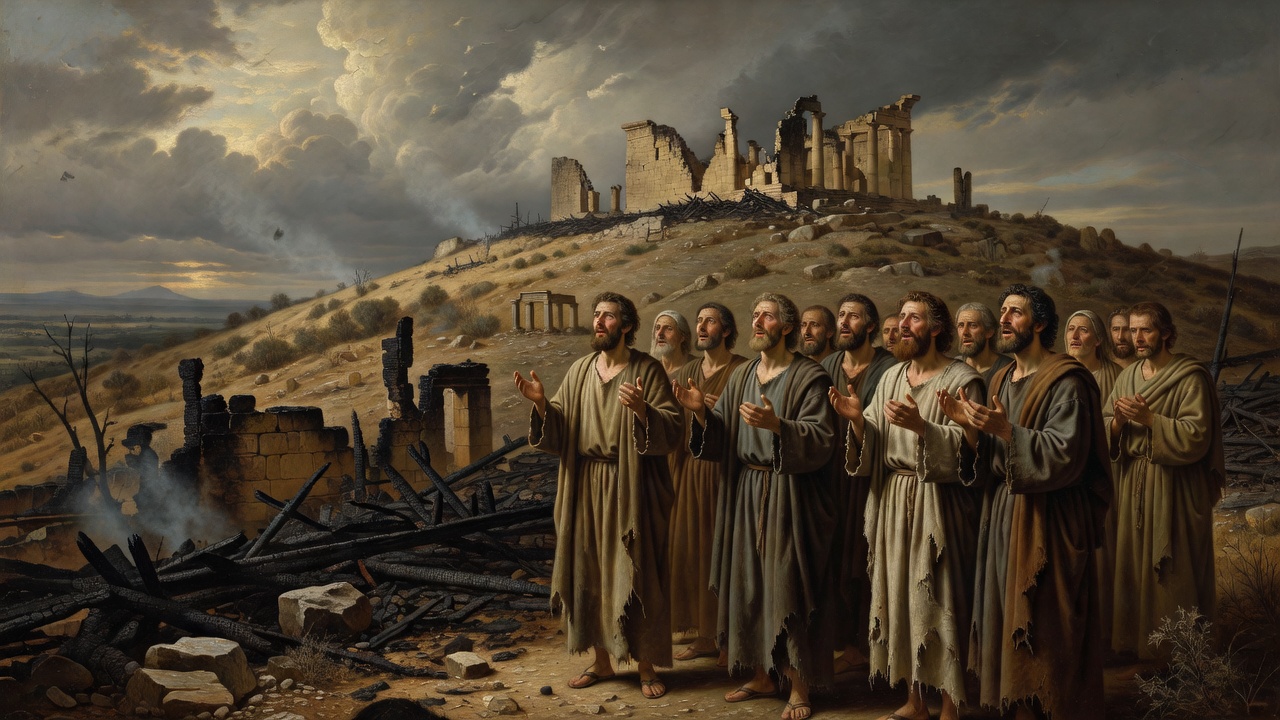
1Oh that thou wouldst rend the heavens, that thou wouldst come down, that the mountains might flow down at thy presence, 2As when the melting fire burneth, the fire causeth the waters to boil, to make thy name known to thy adversaries, that the nations may tremble at thy presence! 3When thou didst terrible things which we looked not for, thou camest down, the mountains flowed down at thy presence. 4For since the beginning of the world men have not heard, nor perceived by the ear, neither hath the eye seen, O God, besides thee, what he hath prepared for him that waiteth for him. 5Thou meetest him that rejoiceth, and worketh righteousness, those that remember thee in thy ways: behold, thou art wroth; for we have sinned: in those is continuance, and we shall be saved. 6But we are all as an unclean thing , and all our righteousnesses are as filthy rags; and we all do fade as a leaf; and our iniquities, like the wind, have taken us away. 7And there is none that calleth upon thy name, that stirreth up himself to take hold of thee: for thou hast hid thy face from us, and hast consumed us, because of our iniquities. 8But now, O LORD, thou art our father; we are the clay, and thou our potter; and we all are the work of thy hand. 9Be not very wroth, O LORD, neither remember iniquity for ever: behold, see, we beseech thee, we are all thy people. 10Thy holy cities are a wilderness, Zion is a wilderness, Jerusalem a desolation. 11Our holy and our beautiful house, where our fathers praised thee, is burned with fire: and all our pleasant things are laid waste. 12Wilt thou refrain thyself for these things , O LORD? wilt thou hold thy peace, and grievously afflict us?
Você sabia?
Uma Oração por Misericórdia em Meio às Ruínas
- A passagem começa com uma súplica para que Deus fenda os céus e desça com poder abalador, como fogo que acende a lenha. Contudo, contrasta esse desejo pela presença de Deus com uma confissão da indignidade humana, comparando as pessoas a folhas secas levadas por suas próprias iniquidades.Fontes: o próprio texto bíblico
- Em Isaías 64, a comunidade apela a Deus como Pai e artesão, declarando: "nós somos o barro, e tu és o nosso oleiro". Essa metáfora enfatiza a fragilidade humana e a total dependência de Deus, suplicando por misericórdia divina apesar do reconhecimento de suas culpas.Fontes: o próprio texto bíblico
- O capítulo lamenta a destruição dos espaços sagrados, descrevendo Sião e Jerusalém como desertos e desolações. O texto lamenta especificamente o incêndio e a ruína do templo sagrado onde as gerações passadas haviam prestado louvor.Fontes: o próprio texto bíblico · Zion · Jerusalem
Notas escritas com auxílio de IA a partir de fontes abertas (Theographic Bible Metadata, CC BY-SA 4.0; Easton’s Bible Dictionary, domínio público) e revisadas antes de publicar.
Lugares deste capítulo
Só aparecem lugares com identificação de alta confiança (90% ou mais segundo as fontes acadêmicas reunidas pelo OpenBible). Mapa da época: DARE (Digital Atlas of the Roman Empire), CC BY 4.0; mapa atual: © colaboradores do OpenStreetMap; lugares: OpenBible.info (CC BY 4.0).
Créditos e licença desta tradução
Noah Webster Bible
The Holy Bible, Containing the Old and New Testaments, in the Common Version, with Amendments of the language by Noah Webster, LL.D.
Public Domain
Language: English
Dialect: archaic American
Translation by: Noah Webster
2024-08-01
Títulos de seção adaptados da Berean Standard Bible (domínio público); não fazem parte do texto bíblico desta tradução.
Fonte: http://ebible.org/engwebster/ · eBible.org