Isaías 42
Noah Webster Bible · Toque num versículo para ver as referências cruzadas.
Here Is My Servant
1Behold my servant, whom I uphold; my elect, in whom my soul delighteth; I have put my spirit upon him: he shall bring forth judgment to the Gentiles. 2He shall not cry, nor lift up, nor cause his voice to be heard in the street. 3A bruised reed shall he not break, and the smoking flax shall he not quench: he shall bring forth judgment to truth. 4He shall not fail nor be discouraged, till he hath set judgment in the earth: and the isles shall wait for his law. 5Thus saith God the LORD, he that created the heavens, and expanded them; he that spread forth the earth, and that which it produceth; he that giveth breath to the people upon it, and spirit to them that walk therein. 6I the LORD have called thee in righteousness, and will hold thy hand, and will keep thee, and give thee for a covenant of the people, for a light of the Gentiles; 7To open the blind eyes, to bring out the prisoners from the prison, and them that sit in darkness out of the prison-house. 8I am the LORD: that is my name: and my glory will I not give to another, neither my praise to graven images. 9Behold, the former things have come to pass, and new things do I declare: before they spring forth I tell you of them.
A New Song of Praise
10Sing to the LORD a new song, and his praise from the end of the earth, ye that go down to the sea, and all that is in it; the isles, and their inhabitants. 11Let the wilderness and its cities lift up their voice , the villages that Kedar doth inhabit: let the inhabitants of the rock sing, let them shout from the top of the mountains. 12Let them give glory to the LORD, and declare his praise in the isles. 13The LORD will go forth as a mighty man, he will stir up jealousy like a man of war: he will cry, yes, roar; he will prevail against his enemies. 14I have long time held my peace; I have been still, and restrained myself: now will I cry like a travailing woman; I will destroy and devour at once. 15I will make waste mountains and hills, and dry up all their herbs; and I will make the rivers to be islands, and I will dry up the pools. 16And I will bring the blind by a way that they knew not; I will lead them in paths that they have not known: I will make darkness light before them, and crooked things straight. These things will I do for them, and not forsake them. 17They shall be turned back, they shall be greatly ashamed, that trust in graven images, that say to the molten images, Ye are our gods.
Israel Is Deaf and Blind
18Hear, ye deaf; and look, ye blind, that ye may see. 19Who is blind, but my servant? or deaf, as my messenger that I sent? who is blind as he that is perfect, and blind as the LORD'S servant? 20Seeing many things, but thou observest not; opening the ears, but he heareth not. 21The LORD is well pleased for his righteousness' sake; he will magnify the law, and make it honorable. 22But this is a people robbed and pillaged; they are all of them snared in holes, and they are hid in prison-houses; they are for a prey, and none delivereth; for a spoil, and none saith, Restore. 23Who among you will give ear to this? who will hearken, and hear for the time to come? 24Who gave Jacob for a spoil, and Israel to the robbers? did not the LORD, he against whom we have sinned? for they would not walk in his ways, neither were they obedient to his law. 25Therefore he hath poured upon him the fury of his anger, and the strength of battle: and it hath set him on fire around, yet he knew not; and it burned him, yet he laid it not to heart.
Você sabia?
O Servo do SENHOR e o Cântico Universal de Louvor
- Isaías 42 apresenta o Servo escolhido de Deus, designado para trazer justiça suavemente às nações e ser luz para os prisioneiros sem quebrar a cana trilhada. Mais adiante no mesmo capítulo, Israel também é chamado de servo, embora retratado como cego, surdo e saqueado por desobedecer à lei de Deus.Fontes: o próprio texto bíblico
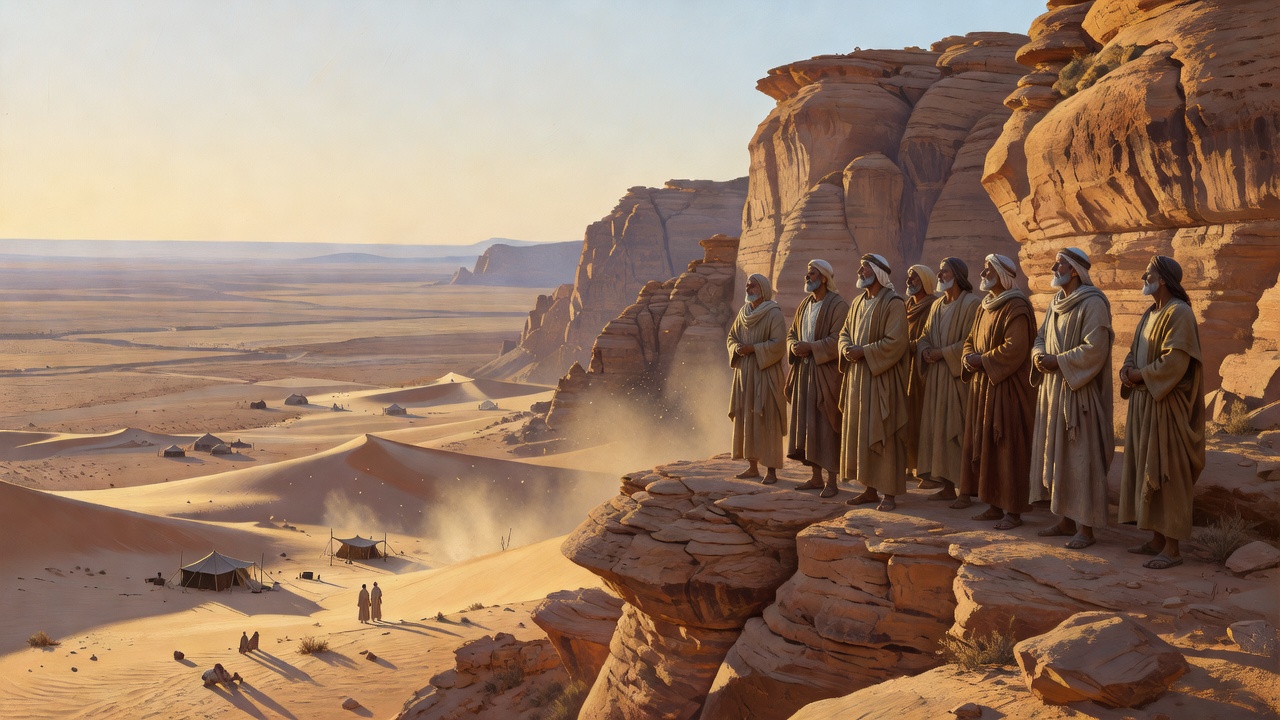
- O chamado profético ao louvor alcança regiões desérticas remotas, mencionando expressamente os povoados de Quedar e as escarpas de Selá. Quedar refere-se às tribos árabes nômades que viviam em tendas pretas no noroeste da Arábia, enquanto Selá, que significa rocha, era uma fortaleza em Edom, mais tarde conhecida como Petra.Fontes: o próprio texto bíblico · Kedar · Sela
Notas escritas com auxílio de IA a partir de fontes abertas (Theographic Bible Metadata, CC BY-SA 4.0; Easton’s Bible Dictionary, domínio público) e revisadas antes de publicar.
Lugares deste capítulo
- Kedar · 29.811, 39.868 · versículo 11
Só aparecem lugares com identificação de alta confiança (90% ou mais segundo as fontes acadêmicas reunidas pelo OpenBible). Mapa da época: DARE (Digital Atlas of the Roman Empire), CC BY 4.0; mapa atual: © colaboradores do OpenStreetMap; lugares: OpenBible.info (CC BY 4.0).
Créditos e licença desta tradução
Noah Webster Bible
The Holy Bible, Containing the Old and New Testaments, in the Common Version, with Amendments of the language by Noah Webster, LL.D.
Public Domain
Language: English
Dialect: archaic American
Translation by: Noah Webster
2024-08-01
Títulos de seção adaptados da Berean Standard Bible (domínio público); não fazem parte do texto bíblico desta tradução.
Fonte: http://ebible.org/engwebster/ · eBible.org