Deuteronômio 14
Noah Webster Bible · Toque num versículo para ver as referências cruzadas.
Clean and Unclean Animals
1Ye are the children of the LORD your God: ye shall not cut yourselves, nor make any baldness between your eyes for the dead. 2For thou art a holy people to the LORD thy God, and the LORD hath chosen thee to be a peculiar people to himself, above all the nations that are upon the earth. 3Thou shalt not eat any abominable thing. 4These are the beasts which ye shall eat: the ox, the sheep, and the goat, 5The hart, and the roebuck, and the fallow-deer, and the wild-goat, and the pygarg, and the wild ox, and the chamois. 6And every beast that parteth the hoof, and cleaveth the cleft into two claws, and cheweth the cud among the beasts, that ye shall eat. 7Nevertheless, these ye shall not eat, of them that chew the cud, or of them that divide the cloven hoof; the camel, and the hare, and the coney: for they chew the cud, but divide not the hoof; therefore they are unclean to you. 8And the swine, because it divideth the hoof, yet cheweth not the cud, is unclean to you: ye shall not eat of their flesh, nor touch their dead carcass. 9These ye shall eat, of all that are in the waters: all that have fins and scales shall ye eat: 10And whatever hath not fins and scales ye may not eat; it is unclean to you. 11Of all clean birds ye shall eat. 12But these are they of which ye shall not eat: the eagle, and the ossifrage, and the ospray, 13And the glede, and the kite, and the vultur after his kind, 14And every raven after his kind, 15And the owl, and the night-hawk, and the cuckow, and the hawk after his kind, 16The little owl, and the great owl, and the swan, 17And the pelican, and the gier-eagle, and the cormorant, 18And the stork, and the heron after her kind, and the lapwing, and the bat. 19And every creeping animal that flieth is unclean to you: they shall not be eaten. 20But of all clean fowls ye may eat. 21Ye shall not eat of any thing that dieth of itself: thou shalt give it to the stranger that is in thy gates, that he may eat it; or thou mayest sell it to an alien: for thou art a holy people to the LORD thy God. Thou shalt not seethe a kid in his mother's milk.
Giving Tithes
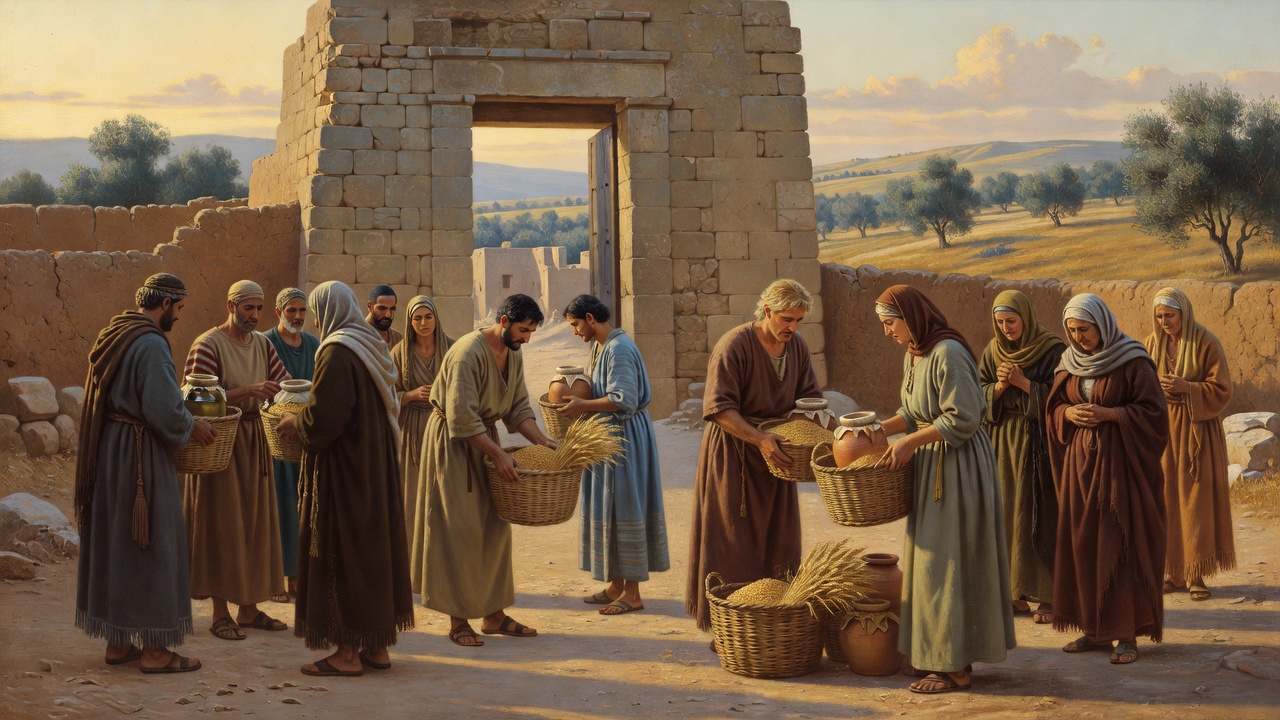
22Thou shalt truly tithe all the increase of thy seed, that the field bringeth forth year by year. 23And thou shalt eat before the LORD thy God, in the place which he shall choose to place his name there, the tithe of thy corn, of thy wine, and of thy oil, and the firstlings of thy herds and of thy flocks; that thou mayest learn to fear the LORD thy God always. 24And if the way is too long for thee, so that thou art not able to carry it; or if the place is too far from thee, which the LORD thy God shall choose to set his name there, when the LORD thy God hath blessed thee: 25Then shalt thou turn it into money, and bind up the money in thy hand, and shalt go to the place which the LORD thy God shall choose: 26And thou shalt bestow that money for whatever thy soul desireth, for oxen, or for sheep, or for wine, or for strong drink, or for whatever thy soul desireth: and thou shalt eat there before the LORD thy God, and thou shalt rejoice, thou, and thy household. 27And the Levite that is within thy gates, thou shalt not forsake him; for he hath no part nor inheritance with thee. 28At the end of three years thou shalt bring forth all the tithe of thy increase the same year, and shalt lay it up within thy gates: 29And the Levite, (because he hath no part nor inheritance with thee) and the stranger, and the fatherless, and the widow, who are within thy gates, shall come, and shall eat and be satisfied; that the LORD thy God may bless thee in all the work of thy hand which thou doest.
Você sabia?
Leis Alimentares e Disposições sobre o Dízimo
- As leis alimentares de Deuteronômio 14 distinguem os animais terrestres puros dos impuros com base em dois critérios físicos: ter o casco fendido e ruminar. As criaturas aquáticas só eram consideradas próprias para o consumo se tivessem tanto barbatanas quanto escamas.Fontes: o próprio texto bíblico
- Para atender às famílias que moravam longe do santuário escolhido, a lei permitia converter os dízimos agrícolas em prata para a viagem. Ao chegar ao local central, os adoradores podiam usar o dinheiro para comprar alimentos festivos e celebrar com sua família.Fontes: o próprio texto bíblico
- A cada três anos, o dízimo da colheita era recolhido e armazenado nas cidades locais em vez de ser levado ao santuário central. Esse suprimento era reservado para sustentar os membros da comunidade que não possuíam herança de terras, como levitas, estrangeiros residentes, órfãos e viúvas.Fontes: o próprio texto bíblico
Notas escritas com auxílio de IA a partir de fontes abertas (Theographic Bible Metadata, CC BY-SA 4.0; Easton’s Bible Dictionary, domínio público) e revisadas antes de publicar.
Créditos e licença desta tradução
Noah Webster Bible
The Holy Bible, Containing the Old and New Testaments, in the Common Version, with Amendments of the language by Noah Webster, LL.D.
Public Domain
Language: English
Dialect: archaic American
Translation by: Noah Webster
2024-08-01
Títulos de seção adaptados da Berean Standard Bible (domínio público); não fazem parte do texto bíblico desta tradução.
Fonte: http://ebible.org/engwebster/ · eBible.org