Atos 15
Text-Critical English New Testament · Toque num versículo para ver as referências cruzadas.
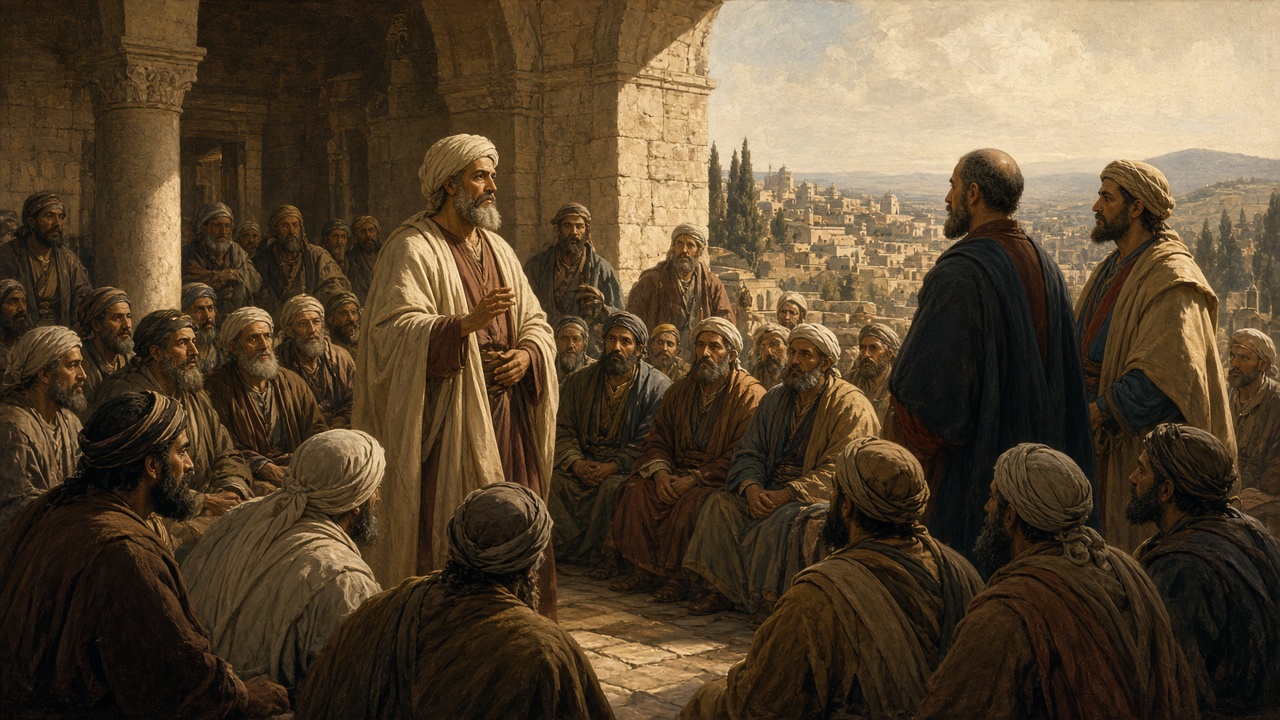
The Jerusalem Council
1Then some men came down from Judea and were teaching the brothers: “If you are not circumcised according to the custom of Moses, you cannot be saved.” 2Therefore, when Paul and Barnabas had a great dissension and debate with them, the brothers appointed Paul and Barnabas and some others from among the believers to go up to the apostles and elders in Jerusalem to discuss this issue. 3After being sent on their way by the church, they passed through Phoenicia and Samaria and brought great joy to all the brothers when they described in detail the conversion of the Gentiles. 4When they arrived in Jerusalem, they were welcomed by the church, the apostles, and the elders, and they reported all that God had done through them. 5But some of the believers who belonged to the sect of the Pharisees stood up, saying, “It is necessary to circumcise the Gentiles and command them to keep the law of Moses.”
6So the apostles and the elders gathered together to consider this matter. 7After there had been much debate, Peter stood up and said to them, “Brothers, you know that in the early days God made a choice among us, that by the words of my mouth the Gentiles would hear the message of the gospel and believe. 8And God, who knows the heart, testified to them by giving them the Holy Spirit, just as he did to us. 9He made no distinction between us and them, purifying their hearts by faith. 10Now then, why are you putting God to the test by placing a yoke on the neck of the disciples that neither our fathers nor we have been able to bear? 11On the contrary, we believe that we are saved by the grace of the Lord Jesus in the same way they are.”
12Then the entire assembly fell silent as they listened to Barnabas and Paul tell of all the signs and wonders God had performed through them among the Gentiles. 13When they had finished speaking, James replied, “Brothers, listen to me. 14Simeon has related how God first visited the Gentiles, to take from among them a people for his name. 15The words of the prophets are in agreement with this, just as it is written:
16‘After this I will return
and rebuild the tabernacle of David that has fallen;
I will rebuild its ruins
and erect it again,
17so that the rest of mankind may seek the Lord,
even all the Gentiles who are called by my name,
says the Lord, who does all these things.’
18All God's works are known to him from long ago. 19Therefore my judgment is that we should not create difficulties for those among the Gentiles who turn to God, 20but that we should write to them, telling them to abstain from things defiled by idols, from fornication, from what has been strangled, and from blood. 21For from generations of old, Moses has had those who preach him in every city, because he is read in the synagogues every Sabbath.”
The Letter to Gentile Believers
22Then it seemed good to the apostles and to the elders, together with the whole church, to send men chosen from among them to Antioch with Paul and Barnabas, namely, Judas (called Barsabbas) and Silas, leading men among the brothers, 23and to send with them this letter they had written: “The apostles, elders, and brothers, to the Gentile brothers in Antioch, Syria, and Cilicia: Greetings. 24Since we have heard that certain men, whom we did not authorize, have gone out from us and troubled you with their words, unsettling your minds by saying that you must be circumcised and keep the law, 25it seemed good to us, having come to one accord, to send you men chosen from among us, along with our beloved Barnabas and Paul, 26who have risked their lives for the name of our Lord Jesus Christ. 27Therefore we have sent Judas and Silas, who will tell you the same things in their own words. 28For it seemed good to the Holy Spirit and to us to lay upon you no further burden than these essentials: 29You must abstain from what has been sacrificed to idols, from blood, from what has been strangled, and from fornication. If you keep yourselves from these things, you will do well. Farewell.”
30So when these men had been sent off, they went to Antioch, and after gathering the congregation together, they delivered the letter. 31When the people read it, they rejoiced over its encouragement. 32Then Judas and Silas, who were themselves prophets, encouraged and strengthened the brothers with many words. 33After spending some time there, they were sent off to the apostles in peace by the brothers. 35But Paul and Barnabas stayed in Antioch, teaching and preaching, along with many others, the good news of the word of the Lord.
Paul and Barnabas Part Company
36After some days had gone by, Paul said to Barnabas, “Let us return and visit our brothers in every city where we proclaimed the word of the Lord, to see how they are doing.” 37Now Barnabas wanted to bring John (who was also called Mark). 38But Paul thought it best not to bring this man who had deserted them in Pamphylia and had not gone on with them in their work. 39So there arose a sharp disagreement, with the result that they parted from one another. Barnabas took Mark and sailed off to Cyprus, 40but Paul chose Silas and departed, once he had been committed by the brothers to the grace of God. 41And he went through Syria and Cilicia, strengthening the churches.
Você sabia?
O concílio sobre os crentes gentios
- A controvérsia começou em Antioquia, às margens do Orontes, cerca de trezentas milhas ao norte de Jerusalém, cidade que então ocupava o terceiro lugar entre as cidades do Império Romano, depois de Roma e Alexandria. A caminho do concílio, Paulo e Barnabé passaram pela Fenícia, uma faixa litorânea de cerca de cento e vinte milhas, e pela Samaria. Uma nota cronológica data o Concílio de Jerusalém em 46 d.C.Fontes: Antioch (Syria) · Phenicia · o próprio texto bíblico · Jerusalem Council
- O Easton's Bible Dictionary (1897) afirma que Tiago, a quem chama de irmão ou parente próximo de Jesus, dirigia a igreja em Jerusalém e presidiu o concílio sobre os gentios. A carta que se seguiu foi endereçada aos crentes gentios em Antioquia, na Síria e na Cilícia. A Cilícia, província de origem de Paulo e província marítima romana no sudeste da Ásia Menor desde 67 a.C., incluía sua cidade natal, Tarso.Fontes: James (Brother of Jesus) · o próprio texto bíblico · Cilicia · Paul
- Judas, chamado Barsabás, e Silas, também conhecido como Silvano, eram profetas e homens de destaque da igreja de Jerusalém, enviados para confirmar pessoalmente a decisão do concílio. Um desentendimento posterior e acirrado por causa de João Marcos, primo de Barnabé, separou os dois missionários: Barnabé levou Marcos e embarcou para Chipre, enquanto Paulo escolheu Silas. Uma nota cronológica data essa separação em 47 d.C.Fontes: o próprio texto bíblico · Silas · John Mark · Paul and Barnabas part ways
Notas escritas com auxílio de IA a partir de fontes abertas (Theographic Bible Metadata, CC BY-SA 4.0; Easton’s Bible Dictionary, domínio público) e revisadas antes de publicar.
Lugares deste capítulo
- Antioch · Hoje: Antioch on the Orontes · 36.227, 36.172 · versículos 1, 22, 23, 30, 35
- Judea · Hoje: Judea 1 · 31.777, 35.234 · versículo 1
- Jerusalem · 31.777, 35.234 · versículos 2, 3, 4, 22, 23, 33
- Phoenicia · 33.271, 35.196 · versículo 3
- Samaria · Hoje: Samaria 2 · 32.276, 35.195 · versículo 3
- Cilicia · 36.913, 34.892 · versículos 23, 41
- Syria · Hoje: Syria 2 · 33.511, 36.306 · versículos 23, 41
- Pamphylia · 37.000, 31.000 · versículo 38
- Cyprus · 35.000, 33.000 · versículo 39
Só aparecem lugares com identificação de alta confiança (90% ou mais segundo as fontes acadêmicas reunidas pelo OpenBible). Mapa da época: DARE (Digital Atlas of the Roman Empire), CC BY 4.0; mapa atual: © colaboradores do OpenStreetMap; lugares: OpenBible.info (CC BY 4.0).
Créditos e licença desta tradução
Text-Critical English New Testament
The New Testament based on the Byzantine Text with extensive text-critical footnotes
Copyright © 2022 Robert Adam Boyd
Language: English
"The Text-Critical English New Testament" and "Byzantine Text Version" are trademarks of Robert Adam Boyd. If you adapt, remix, transform, or in any other way change the translation or footnotes, you may not call it "The Text-Critical English New Testament" or "Byzantine Text Version".
This translation is made available to you under the terms of the
Creative Commons Attribution license 4.0.
You may share and redistribute this Bible translation or extracts from it in any format, provided that:
You include the above copyright and source information.
If you make any changes to the text, you must indicate that you did so in a way that makes it clear that the original licensor is not necessarily endorsing your changes.
Pictures included with Scriptures and other documents on this site are licensed just for use with those Scriptures and documents.
For other uses, please contact the respective copyright owners.
Note that in addition to the rules above, revising and adapting God's Word involves a great responsibility to be true to God's Word. See Revelation 22:18-19.
2026-10-02
Fonte: http://ebible.org/engtcent/ · eBible.org