Levítico 1
Targum Onkelos Etheridge · Toque num versículo para ver as referências cruzadas.
Sobre este livro
Sobre Levítico
- O Dicionário Bíblico de Easton (1897) apresenta Levítico como o terceiro livro do Pentateuco e como o terceiro livro de Moisés. O nome, usado na Vulgata seguindo a LXX, reflete o assunto principal do livro: o serviço levítico.Fontes: Easton: Leviticus
- Easton afirma que todas as ordenanças do livro foram entregues no espaço de um mês, o primeiro mês do segundo ano depois do Êxodo. No verbete sobre o Sinai, também chamado Horebe, diz que os hebreus chegaram a essa região montanhosa no terceiro mês após o Êxodo e permaneceram acampados cerca de um ano inteiro, e que todo o Levítico registra o que ocorreu ali.Fontes: Easton: Leviticus · Mount Sinai
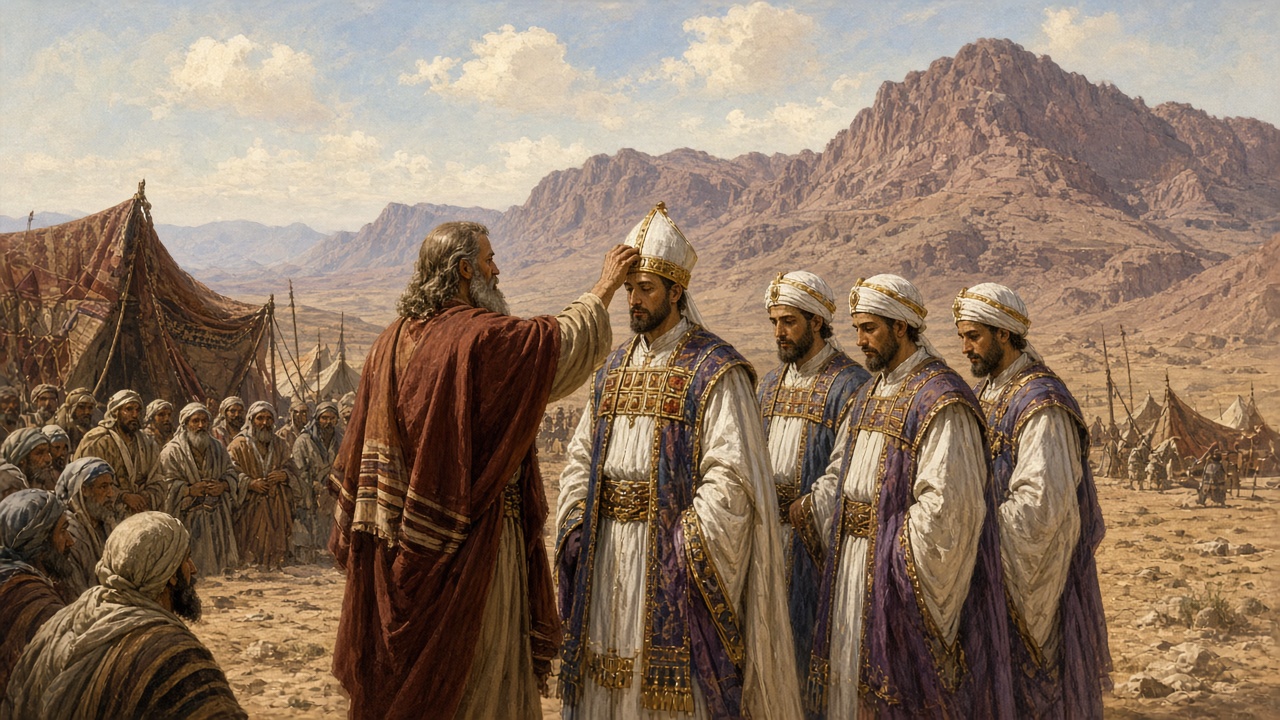
- Os capítulos 1 a 7 trazem leis sobre holocaustos, ofertas de manjares e ofertas de ação de graças, depois sobre ofertas pelo pecado e ofertas pela culpa, e sobre os deveres dos sacerdotes ao oferecer sacrifícios. Os capítulos 8 a 10 relatam a consagração de Arão e de seus filhos, a primeira oferta de Arão por si mesmo e pelo povo, e a morte de Nadabe e Abiú, feridos de morte e sepultados fora do acampamento depois de oferecerem fogo estranho, isto é, fogo comum não tomado do grande altar de bronze. Os capítulos 11 a 16 tratam da pureza e dos sacrifícios e ordenanças para afastar a impureza.Fontes: Easton: Leviticus · Nadab · Abihu
- Easton descreve os capítulos 17 a 20 como leis que marcam a separação entre Israel e os outros povos. Outras leis tratam da pureza pessoal dos sacerdotes e do consumo das coisas sagradas, das ofertas sem defeito e da devida celebração das grandes festas nos capítulos 23 e 25. Seguem-se promessas e advertências sobre a obediência, o livro termina com uma seção sobre votos, e Easton observa que Deus é quem fala diretamente em quase todo o livro.Fontes: Easton: Leviticus
- Nos ritos do capítulo 16, um bode está associado a Azazel, termo que a Authorized Version traduz por scapegoat e que a Revised Version mantém como Azazel. Easton relata que alguns intérpretes judeus o entendem como um lugar no deserto, cerca de doze milhas a leste de Jerusalém, enquanto outros o tomam como um espírito maligno ou até Satanás, e registra também o sentido de raiz: separação.Fontes: Azazel
Notas escritas com auxílio de IA a partir de fontes abertas (Theographic Bible Metadata, CC BY-SA 4.0; Easton’s Bible Dictionary, domínio público) e revisadas antes de publicar.
Laws for Burnt Offerings
1And the Lord called unto Mosheh, and the Lord spake with him from the tabernacle of ordinance, saying: 2Speak with the sons of Israel, and say to them: When one of you will bring an offering before the Lord of the cattle, of oxen or of sheep, you shall offer your oblations.
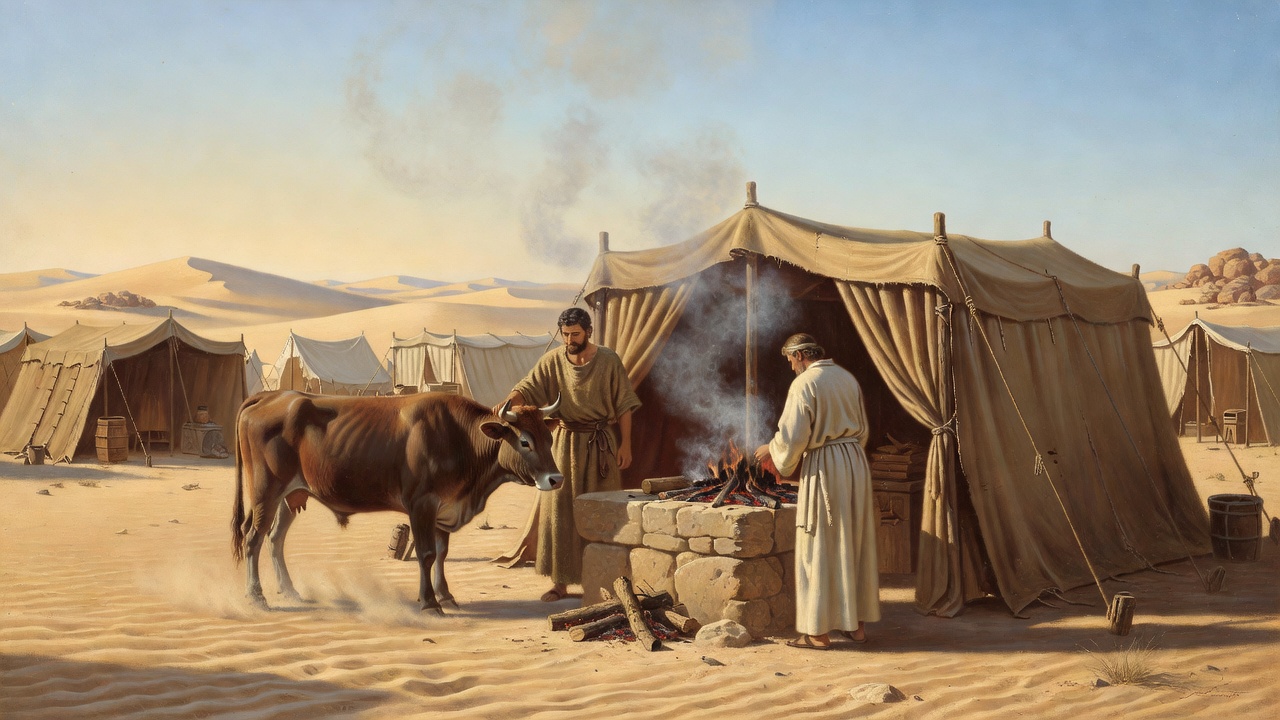
3If his oblation be a burnt offering of the oxen, (it shall be) a male, unblemished; he shall offer him at the door of the tabernacle of ordinance; he shall offer him for acceptance before the Lord. 4And he shall lay his hand upon the head of the burnt offering, that it may be acceptable for him to propitiate on his behalf. 5And he shall sacrifice the young bullock before the Lord; and the sons of Aharon the priest shall bring the blood, and sprinkle the blood round about upon the altar which is at the door of the tabernacle of ordinance. 6And he shall take away (the skin) of the burnt offering, and divide it, by its members. 7And the sons of Aharon the priest shall put fire upon the altar, and lay the wood in order upon the fire. 8And the priests, the sons of Aharon, shall arrange the limbs and the head and the fat on the wood upon the fire which is on the altar. 9But his inwards and his legs he shall wash with water; and the priest shall burn the whole upon the altar an entire burnt offering, an oblation to be received with acceptance before the Lord.
10And if his oblation be from the flock, of the sheep or the young of the goats for a burnt offering, he shall bring a perfect male. 11And he shall sacrifice him at the north side of the altar before the Lord; and the priests the sons of Aharon shall sprinkle his blood round about upon the altar. 12And he shall divide him by his members, and his head and his feet; and the priest shall lay them upon the wood which is on the fire upon the altar. 13But the inwards and the legs he shall wash with water, and the priest shall bring the whole and burn (it) upon the altar: it is a whole burnt offering, an oblation to be received with acceptance before the Lord.
14But if the burnt offering of his oblation before the Lord be from fowl, he shall bring his oblation from the turtles or the young of a pigeon. 15And the priest shall offer it upon the altar, and pour its blood by the side of the altar: 16And he shall remove its crop with its food, and throw it on the east side of the altar, at the place where they empty the ashes. 17And he shall cleave it through its wings, (but) divide (it) not; and the priest shall burn it at the altar upon the wood that is on the fire: it is a burnt offering, an oblation that shall be received with acceptance before the Lord.
Você sabia?
O Holocausto
- As instruções para o holocausto previam diferentes condições materiais, permitindo ofertas do gado, do rebanho (ovelhas ou cabras) ou aves (rolinhas ou pombinhos). Para o gado e o rebanho, exigia-se um macho sem defeito.Fontes: o próprio texto bíblico
- O ritual estabelecia uma divisão clara de tarefas entre o adorador e os sacerdotes. O ofertante trazia o animal, colocava a mão sobre sua cabeça para expiação, abatia-o, esfolava-o e lavava suas partes internas, enquanto os filhos de Arão aspergiam o sangue e queimavam toda a oferta sobre o altar.Fontes: o próprio texto bíblico · Aaron
Notas escritas com auxílio de IA a partir de fontes abertas (Theographic Bible Metadata, CC BY-SA 4.0; Easton’s Bible Dictionary, domínio público) e revisadas antes de publicar.
Créditos e licença desta tradução
Targum Onkelos Etheridge
The Targums of Onkelos and Jonathan Ben Uzziel On the Pentateuch With The Fragments of the Jerusalem Targum From the Chaldee by J. W. Etheridge, M.A. First Published 1862-65.
Public Domain
Language: English
2020-12-20
Títulos de seção adaptados da Berean Standard Bible (domínio público); não fazem parte do texto bíblico desta tradução.
Fonte: http://ebible.org/engoke/ · eBible.org