Romanos 15
The Orthodox Jewish Bible · Toque num versículo para ver as referências cruzadas.
Accept One Another
1We, the strong, ought to support the weaknesses of those without chizzuk, and not to please ourselves. 2Let each of us please his re'a with a view to what is beneficial, for upbuilding. 3For even Rebbe, Melech HaMoshiach did not please himself; but, as it is written, V'CHERPOT CHORPECHA NAF'LU ALAI (The reproaches of those who reproach You have fallen on me). 4For as much as was written beforehand was written for our limudei kodesh, in order that through savlanut and through the nechamah of the Kitvei Hakodesh we might hold fast tikvah (hope). 5May the G-d of savlanut and of nechamah give you to live in harmony among yourselves in accordance with Rebbe, Melech HaMoshiach Yehoshua, 6In order that with achdus of mind and voice you might give kavod to the Elohim and Avi of Adoneinu Rebbe, Melech HaMoshiach Yehoshua.
Christ the Servant of Jews and Gentiles
7Therefore, treat each other as orchim ratzuy (welcome guests), as Rebbe, Melech HaMoshiach welcomed you, to the kavod of Hashem (glory of G-d).
8For I declare that Moshiach has become Mesharet Bnei HaMilah (Servant, Minister of the Circumcised) for the sake of the Emes Hashem (the truth of G-d), to confirm the havtachot given to the Avot, 9And in order that the Goyim might give praise to Hashem for His chaninah (mercy). As it is written, For this reason I will confess You among the Goyim and sing praises unto Your Name. 10Furthermore it says, HARNINU GOYIM AMMO (Rejoice, Goyim with His people). 11And again, HALELU ES ADONOI KOL GOYIM SHABBECHUHU KOL HAUMMIM (Baruch Hashem, Praise the L-rd, all you Goyim, and let all the peoples praise Him). 12And again Yeshayah says, The SHORESH OF YISHAI (the Root of Jesse), shall come forth, even the one who arises to rule the GOYIM; in him (the Gentiles, the nations) shall put their TIKVAH (hope). 13May the Elohei HaTikvah (the G-d of hope) fill you with simcha and shalom in believing, that you may overflow in tikvah (hope), in the ko'ach (power) of the Ruach Hakodesh.
Paul the Minister to the Gentiles
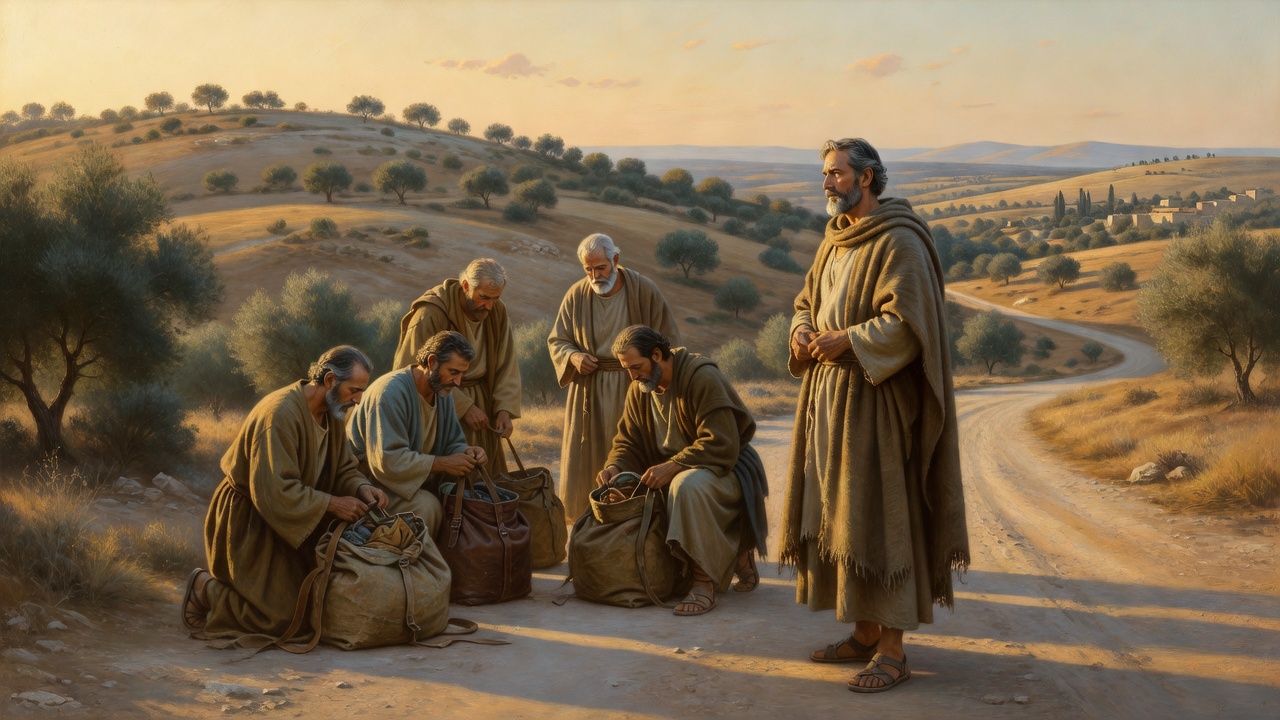
14Achim b'Moshiach of mine, I myself am convinced concerning you, that you yourselves too are full of yosher (rectitude), full of da'as, able also to admonish one another. 15But I wrote to you rather bluntly in this iggeret hakodesh in part as a way of reminding you, by virtue of the chesed (unmerited favor, gift of grace) given me from Hashem, 16To be a mesharet (minister, servant) of Rebbe, Melech HaMoshiach Yehoshua to the Goyim, serving the Besuras HaGeulah of Hashem, administering with a kohenʼs avodas kodesh service the minchah offering to Hashem of the Goyim, that this offering might be acceptable, mekudash (set apart as holy) in the Ruach Hakodesh. 17Therefore I have this glorying in Moshiach Yehoshua in reference to what concerns G-d. 18For I will not presume to say anything, except of what Moshiach has accomplished through me for the mishma'at of the peoples, by word and deed, 19By the ko'ach of otot u'moftim (signs and wonders), by the power of the Ruach Hakodesh; so that from Yerushalayim in a sweep round to Illyricum, I have preached the Besuras HaGeulah Hashem, 20Thus making it my hasagos (aspiration) to preach the Besuras HaGeulah where Moshiach has not been named, lest I build on anotherʼs yesod (foundation). 21But, as it is written, “Those who had not been told about Him will see, and those who had not heard shall understand.”
22For this reason I have also regularly been prevented from coming to you.
Paul’s Travel Plans
23But now, als (since) I no longer have scope in these regions and have had a tshuka (longing) to come to you for many years, 24When I travel to Spain…For I hope to see you as I pass through and to be sent on my way there by you, once I have had the full pleasure of being with you for a time. 25But now I am traveling to Yerushalayim in avodas kodesh service to the Kedoshim (Messianic Jews in Jerusalem). 26For the kehillot of Moshiach (Messianic congregations) in Macedonia and Achaia (Greece) chose to make some tzedakah (contribution) for the aniyim (poor) among the Kedoshim in Yerushalayim. 27For they chose to do so and owe them a choiv (debt), for if the non-Jews have received a share in their spiritual affairs, they ought to minister to the Messianic Jews in material affairs. 28When, therefore, I have completed this (collection journey avodas kodesh service) and sealed this p'ri (fruit) to them, I will go by way of you to Spain. 29And I have da'as that when I come to you, I will come in the fullness of the Birkat HaMoshiach.
30I appeal to you, Achim b'Moshiach, through Adoneinu Moshiach Yehoshua and the ahavas HaRuach Hakodesh, to contend with me in your tefillos to Hashem on my behalf, 31that I might be delivered from those without mishma'at in Yehudah and my avodas kodesh service to Yerushalayim might be acceptable to the Kedoshim, 32That I might come to you in simcha (joy) birtzon Hashem (in the will of G-d) and be mutually refreshed by your hitkhabrut (fellowship) in the Messianic Chavurah. 33V'Elohei HaShalom im kulechem. Omein. (May the G-d of peace be with you all. Amen.)
Você sabia?
A esperança dos gentios e o caminho para o oeste
- Paulo escreve que proclamou plenamente o evangelho de Cristo desde Jerusalém, dando a volta até o Ilírico. O dicionário bíblico de Easton (1897) situa essa região a noroeste da Macedônia, na costa oriental do Adriático, e a descreve como então quase inteiramente compreendida na Dalmácia; afirma que ele percorreu o Ilírico na terceira viagem missionária, que foi o distrito mais distante que alcançou na pregação e que uma viagem pela Macedônia o teria levado até as fronteiras dessa região.Fontes: o próprio texto bíblico · Illyricum
- Ele espera ver os crentes de Roma a caminho da Espanha e, depois de entregar em Jerusalém a contribuição da Macedônia e da Acaia, partir para a Espanha passando por eles. O dicionário bíblico de Easton (1897) registra essa intenção, mas observa que não há evidência de que ele a tenha realizado, embora alguns pensem que provavelmente o fez entre a sua primeira e a sua segunda prisão.Fontes: o próprio texto bíblico · Spain
- Citando Isaías, ele diz que a Raiz de Jessé apareceria e se levantaria para governar os gentios, e que os gentios poriam nele a sua esperança. Jessé foi o pai de Davi, e o dicionário bíblico de Easton (1897) afirma que a expressão raiz de Jessé é usada para o Messias, enquanto tronco de Jessé é usada para a família de Davi.Fontes: o próprio texto bíblico · Jesse
Notas escritas com auxílio de IA a partir de fontes abertas (Theographic Bible Metadata, CC BY-SA 4.0; Easton’s Bible Dictionary, domínio público) e revisadas antes de publicar.
Lugares deste capítulo
- Illyricum · 43.539, 16.483 · versículo 19
- Jerusalem · 31.777, 35.234 · versículos 19, 25, 26, 27, 31
- Rome · 41.892, 12.485 · versículo 24
- Spain · Hoje: Hispania · 40.210, -4.350 · versículos 24, 28
- Achaia · 38.720, 22.540 · versículo 26
- Macedonia · 41.600, 22.540 · versículo 26
- Judea · Hoje: Judea 1 · 31.777, 35.234 · versículo 31
Só aparecem lugares com identificação de alta confiança (90% ou mais segundo as fontes acadêmicas reunidas pelo OpenBible). Mapa da época: DARE (Digital Atlas of the Roman Empire), CC BY 4.0; mapa atual: © colaboradores do OpenStreetMap; lugares: OpenBible.info (CC BY 4.0).
Créditos e licença desta tradução
The Orthodox Jewish Bible
The Orthodox Jewish Bible - Tanakh and Orthodox Jewish Brit Chadasha - The Holy Bible
copyright © 2002-2011, 2021, 2024 Artists for Israel International
Language: English
Contributor: Artists for Israel International
THE ORTHODOX JEWISH TANAKH
Artists For Israel Intl Inc.
This version also appears with the Orthodox Yiddish Triglot which presents the Hebrew Yiddish script in Latin script and an English word for word translation, available at afii.org/Torah
To donate PayPal.Me
This translation is made available to you under the terms of the
Creative Commons Attribution license 4.0.
You may share and redistribute this Bible translation or extracts from it in any format, provided that:
You include the above copyright and source information.
If you make any changes to the text, you must indicate that you did so in a way that makes it clear that the original licensor is not necessarily endorsing your changes.
Pictures included with Scriptures and other documents on this site are licensed just for use with those Scriptures and documents.
For other uses, please contact the respective copyright owners.
Note that in addition to the rules above, revising and adapting God's Word involves a great responsibility to be true to God's Word. See Revelation 22:18-19.
2026-01-06
Títulos de seção adaptados da Berean Standard Bible (domínio público); não fazem parte do texto bíblico desta tradução.
Fonte: http://ebible.org/engojb/ · eBible.org