Provérbios 17
The Orthodox Jewish Bible · Toque num versículo para ver as referências cruzadas.
Better a Dry Morsel in Quietness
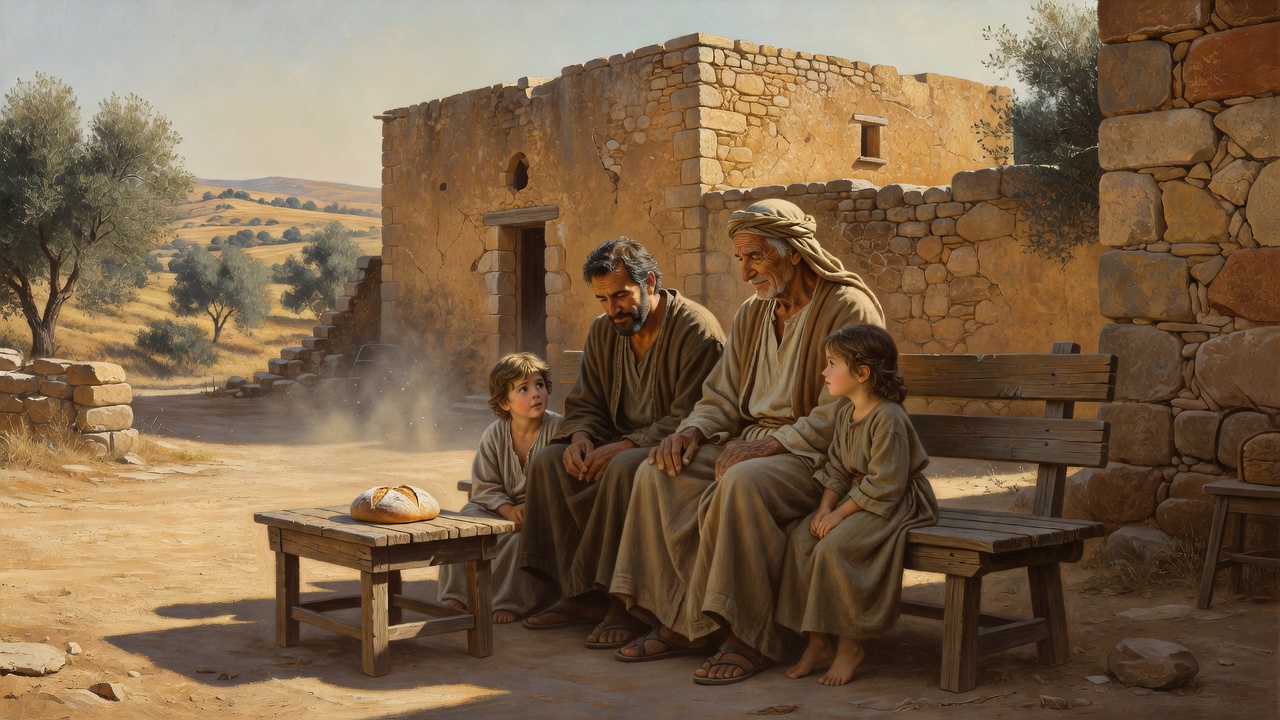
1Better is a dry crust, and quietness therewith,
than a bais full of zevakhim (sacrificial religious meals) with strife.
2An eved maskil (wise servant) shall have rule over a ben that causeth shame,
and shall have a share of the nachalah among the achim.
3The crucible is for kesef, and the furnace for zahav,
but Hashem is the testor of hearts.
4An evildoer giveth heed to false sfatayim (lips),
and a sheker (liar) giveth ear to a spiteful lashon.
5He who mocketh the poor showeth contempt for his Oseh (Maker),
and he that gloats at calamities shall not go unpunished.
6Bnei banim are the ateret of zekenim;
and the tiferet of banim are their avot.
7Eloquent speech becometh not a naval (fool),
much less do lying sfatayim (lips) a ruler.
8A shochad (gift, bribe) is like a charm in the eynayim of him that hath it:
wherever he turneth, he prospereth.
9He that covereth a peysha (transgression) seeketh love;
but he that repeateth a matter separateth the best of friends.
10Ge'arah (scolding) goeth deeper into a meiven
than a hundred blows into a kesil (fool).
11A rah seeketh only rebellion;
therefore a merciless malach shall be sent to him.
12Let an ish meet a dov robbed of her cubs
rather than a kesil in his folly.
13He who rewardeth ra'ah for tovah,
ra'ah shall not depart from his bais.
14The beginning of madon (strife) is like releasing mayim,
therefore stop contention before a quarrel begins.
15He that justifieth the rashah,
and he that condemneth the tzaddik,
even they both are to'evah to Hashem.
16Why is there the purchase price in the yad of a kesil (fool) to acquire chochmah,
seeing he hath no lev for it?
17The re'a (friend) loveth at all times,
and a brother is born for tzarah (adversity).
18Adam devoid of lev shaketh hands in pledge,
and becometh the security deposit for his neighbor.
19He loveth peysha (transgression, sin) that loveth strife,
and he that maketh his threshold high seeketh shever (fracture).
20He that hath a crooked mind findeth no tov,
and he that hath a deceitful lashon falleth into ra'ah.
21He that begetteth a kesil doeth it to his sorrow,
and the avi naval hath no simchah.
22A lev same'ach doeth tov like a medicine,
but a downcast ruach drieth up the bones.
23A rasha accepts a shochad (bribe) out of the kheyk (bosom),
to pervert the orkhot mishpat (paths of justice).
24Chochmah is before the meiven (discerning one);
but the eynayim of a kesil are on the ends of ha'aretz.
25A ben kesil is a ka'as (grief) to aviv (his father),
and bitterness to her that bore him.
26Also to punish the tzaddik is not tov,
nor to flog officials for their yashar (uprightness, integrity).
27He that hath da'as spareth his words,
and an ish tevunah (man of understanding) is of a calm ruach.
28Even a fool, when he holdeth his peace, is counted chacham,
and he that shutteth his sfatayim (lips) is esteemed a man of understanding.
Você sabia?
Sabedoria para os relacionamentos, a fala e o coração
- As antigas técnicas metalúrgicas usavam cadinhos para a prata e fornalhas de alto calor para o ouro a fim de separar o metal precioso das impurezas. O provérbio utiliza esse processo de refino para ilustrar como o Senhor examina e prova as motivações mais profundas do coração humano.Fontes: o próprio texto bíblico
- A imagem de iniciar uma contenda como o rompimento de uma represa reflete os antigos diques de irrigação e contenção de água. Uma pequena rachadura em uma barragem de terra rapidamente se alarga em uma torrente incontrolável, ilustrando por que os conflitos devem ser contidos antes de se espalharem.Fontes: o próprio texto bíblico
- Na literatura sapiencial bíblica, a moderação na fala e a manutenção de um espírito calmo são marcas essenciais de entendimento. Provérbios observa que o silêncio está tão associado à prudência que até mesmo o insensato que refreia suas palavras pode ser considerado sábio.Fontes: o próprio texto bíblico
Notas escritas com auxílio de IA a partir de fontes abertas (Theographic Bible Metadata, CC BY-SA 4.0; Easton’s Bible Dictionary, domínio público) e revisadas antes de publicar.
Créditos e licença desta tradução
The Orthodox Jewish Bible
The Orthodox Jewish Bible - Tanakh and Orthodox Jewish Brit Chadasha - The Holy Bible
copyright © 2002-2011, 2021, 2024 Artists for Israel International
Language: English
Contributor: Artists for Israel International
THE ORTHODOX JEWISH TANAKH
Artists For Israel Intl Inc.
This version also appears with the Orthodox Yiddish Triglot which presents the Hebrew Yiddish script in Latin script and an English word for word translation, available at afii.org/Torah
To donate PayPal.Me
This translation is made available to you under the terms of the
Creative Commons Attribution license 4.0.
You may share and redistribute this Bible translation or extracts from it in any format, provided that:
You include the above copyright and source information.
If you make any changes to the text, you must indicate that you did so in a way that makes it clear that the original licensor is not necessarily endorsing your changes.
Pictures included with Scriptures and other documents on this site are licensed just for use with those Scriptures and documents.
For other uses, please contact the respective copyright owners.
Note that in addition to the rules above, revising and adapting God's Word involves a great responsibility to be true to God's Word. See Revelation 22:18-19.
2026-01-06
Títulos de seção adaptados da Berean Standard Bible (domínio público); não fazem parte do texto bíblico desta tradução.
Fonte: http://ebible.org/engojb/ · eBible.org