Levítico 27
The Orthodox Jewish Bible · Toque num versículo para ver as referências cruzadas.
Rules about Valuations
1And Hashem spoke unto Moshe, saying, 2Speak unto the Bnei Yisroel, and say unto them, When a man shall articulate a neder, the nefashot shall be for Hashem by thy evaluation. 3And thy evaluation shall be of the zachar from esrim shanim even unto shishim shanah, even thy evaluation shall be fifty shekels kesef, after the shekel HaKodesh. 4And if it be a nekevah, then thy evaluation shall be shloshim shekel. 5And if it be from chamesh shanim even unto esrim shanah, then thy evaluation shall be of the zachar esrim shekel, and for the nekevah aseret shekalim. 6And if it be from a month old even unto chamesh shanim, then thy evaluation shall be of the zachar chamishah shekalim kesef, and for the nekevah thy evaluation shall be shloshet shekalim kesef. 7And if it be from shishim shanah and above, if it be a zachar, then thy evaluation shall be chamishah asar shekel, and for the nekevah asarah shekalim. 8But if he be poorer than thy evaluation, then he shall present himself before the kohen, and the kohen shall value him; according to the ability of the one who vowed the neder shall the kohen value him.
9And if it be a behemah, whereof men bring a korban unto Hashem, all that any man giveth of such unto Hashem shall be kodesh. 10He shall not exchange it, nor substitute it, a tov for a rah, or rah for tov: and if he shall at all substitute behemah for behemah, then it and its temurah (substitute) shall be kodesh. 11And if it be any behemah temeiah, of which they do not offer a korban unto Hashem, then he shall present the behemah before the kohen; 12And the kohen shall value it, whether it be tov or rah; as thou valuest it, who art the kohen, so shall it be. 13But if he will at all redeem it, then he shall add chamishito (a fifth part thereof) unto thy evaluation.
14And when a man shall set apart as kodesh his bais to be kodesh unto Hashem, then the kohen shall evaluate it, whether it be tov or rah; as the kohen shall set the value of it, so shall it remain. 15And if he that set it apart as kodesh will redeem his bais, then he shall add the fifth part of the kesef of thy evaluation unto it, and it shall be his.
16And if a man shall set apart as kodesh unto Hashem some part of a sadeh of his possession, then thy evaluation shall be according to its seeding; an area seeded by a homer of barley shall be valued at chamishim shekel kesef. 17If he set apart as kodesh his sadeh from the Shnat HaYovel, according to thy evaluation it shall remain.
18But if he set apart as kodesh his sadeh after the Yovel, then the kohen shall reckon unto him the kesef according to the shanim that remain, even unto the Shnat HaYovel, and it shall be deducted from thy evaluation. 19And if he that set apart as kodesh the sadeh will in any wise redeem it, then he shall add the fifth part of the kesef of thy evaluation unto it, and it shall be his. 20And if he will not redeem the sadeh, or if he have sold the sadeh to ish acher (another man), it shall not be redeemed any more. 21But the sadeh, when it is released in the Yovel, shall be kodesh unto Hashem, as a sadeh hacherem (devoted); the possession thereof shall be the kohenʼs.
22And if a man set apart as kodesh unto Hashem a sadeh which he hath bought, which is not of the fields of his possession, 23Then the kohen shall reckon unto him the worth of thy evaluation, even unto the Shnat HaYovel: and he shall give thine evaluation in that day, as kodesh unto Hashem. 24In the Shnat HaYovel the sadeh shall return and revert unto him of whom it was bought, even to him to whom the Achuzzat HaAretz (Ancestral Heritage of the Land) did belong. 25And all thy evaluations shall be according to the shekel HaKodesh; twenty gerah shall be the shekel.
26Only the bechor of the behemah, which should be Hashemʼs Bechor, no man shall set it apart as kodesh; whether it be shor (ox), or seh (sheep): it is Hashemʼs. 27And if it be of a behemah hatemeiah, then he shall redeem it according to thine evaluation, and shall add a fifth part of it thereto; or if it be not redeemed, then it shall be sold according to thy evaluation.
28Nevertheless, no cherem (devoted thing), that a man shall devote unto Hashem of all that he hath, both of adam and behemah, and of the sadeh of his possession, shall be sold or redeemed; every cherem is kodesh kodashim unto Hashem. 29No cherem, which shall be devoted of men, shall be redeemed; but shall surely be put to death.
Instruction on Tithes
30And all the ma'aser HaAretz (tithe of the Land), whether of the zera HaAretz, or of the pri HaEtz, is Hashemʼs; it is kodesh unto Hashem. 31And if a man will at all redeem ought of his ma'aserot (tithes), he shall add thereto the fifth part thereof. 32And concerning the ma'aser of the herd, or of the flock, even of whatsoever passeth under the rod, the tenth shall be kodesh unto Hashem. 33He shall not search whether it be tov or rah, neither shall he change it; and if he substitute it at all, then both it and the temurah (exchange, substitute) shall be kodesh; it shall not be redeemed. (Isaiah 53: Moshiach our temurah!)
34These are the mitzvot, which Hashem commanded Moshe for the Bnei Yisroel in Mt. Sinai.
Você sabia?
Votos, Avaliações e as Leis do Sinai
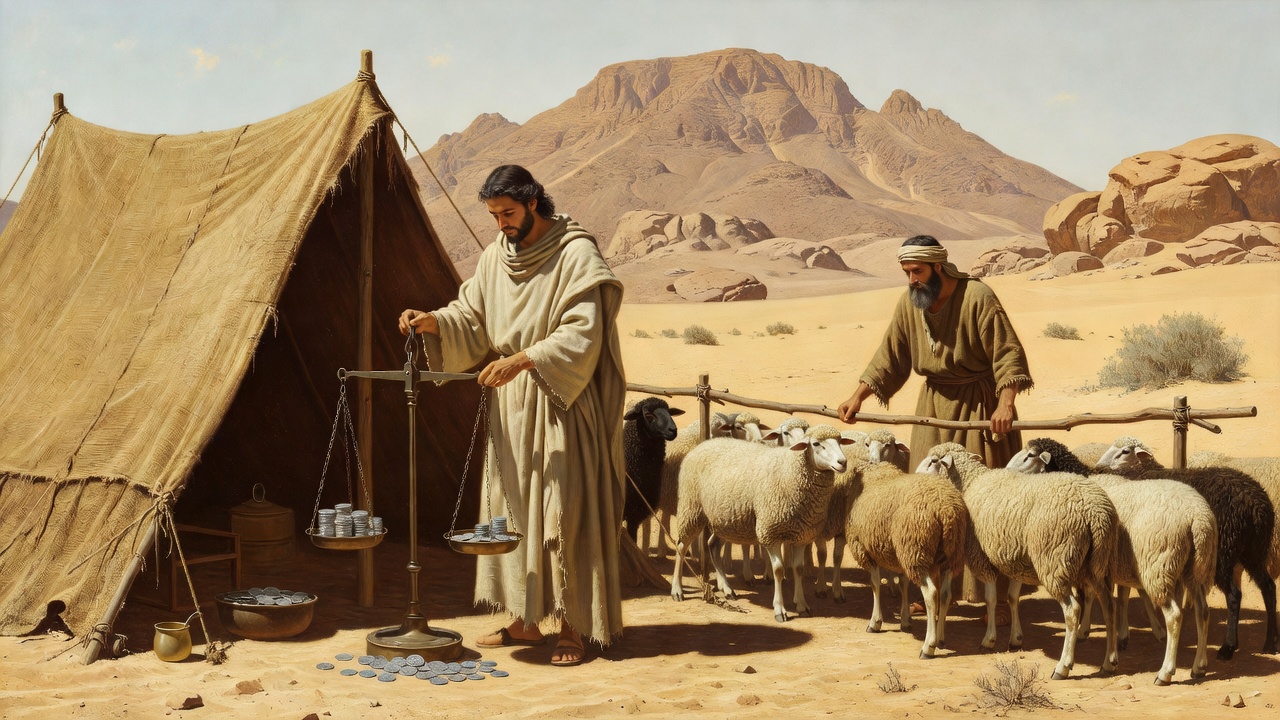
- Quando os israelitas consagravam casas, terras, animais impuros ou dízimos agrícolas a Deus, muitas vezes podiam resgatá-los pagando o valor avaliado mais um acréscimo de um quinto desse preço.Fontes: o próprio texto bíblico
- Pessoas dedicadas por voto recebiam valores monetários padronizados com base na idade e no sexo, calculados pelo siclo do santuário, equivalente a vinte geras. Caso quem fizesse o voto fosse pobre demais para pagar a taxa fixa, o sacerdote estabelecia um valor ajustado à sua capacidade financeira.Fontes: o próprio texto bíblico
- O livro de Levítico termina afirmando que esses mandamentos foram dados a Moisés no monte Sinai, onde os israelitas permaneceram acampados por cerca de um ano após o Êxodo.Fontes: o próprio texto bíblico · Mount Sinai
Notas escritas com auxílio de IA a partir de fontes abertas (Theographic Bible Metadata, CC BY-SA 4.0; Easton’s Bible Dictionary, domínio público) e revisadas antes de publicar.
Créditos e licença desta tradução
The Orthodox Jewish Bible
The Orthodox Jewish Bible - Tanakh and Orthodox Jewish Brit Chadasha - The Holy Bible
copyright © 2002-2011, 2021, 2024 Artists for Israel International
Language: English
Contributor: Artists for Israel International
THE ORTHODOX JEWISH TANAKH
Artists For Israel Intl Inc.
This version also appears with the Orthodox Yiddish Triglot which presents the Hebrew Yiddish script in Latin script and an English word for word translation, available at afii.org/Torah
To donate PayPal.Me
This translation is made available to you under the terms of the
Creative Commons Attribution license 4.0.
You may share and redistribute this Bible translation or extracts from it in any format, provided that:
You include the above copyright and source information.
If you make any changes to the text, you must indicate that you did so in a way that makes it clear that the original licensor is not necessarily endorsing your changes.
Pictures included with Scriptures and other documents on this site are licensed just for use with those Scriptures and documents.
For other uses, please contact the respective copyright owners.
Note that in addition to the rules above, revising and adapting God's Word involves a great responsibility to be true to God's Word. See Revelation 22:18-19.
2026-01-06
Títulos de seção adaptados da Berean Standard Bible (domínio público); não fazem parte do texto bíblico desta tradução.
Fonte: http://ebible.org/engojb/ · eBible.org