Levítico 21
The Orthodox Jewish Bible · Toque num versículo para ver as referências cruzadas.
[EMOR]
1And Hashem said unto Moshe, Speak unto the kohanim the Bnei Aharon, and say unto them, There shall none be made tamei for the dead among his people; 2But for his close kin, that is near unto him, that is, for his em, and for his av, and for his ben, and for his bat, and for his ach. 3And for his betulah achot (virgin sister), that is close unto him, which hath had no ish (husband); for her may he be made tamei. 4But he shall not make himself tamei, being a ba'al (leader, chief man) among his people, to profane himself. 5They shall not shave their head bald, neither shall they shave off the corner of their beard, nor make any cuttings in their basar. 6They shall be kedoshim unto Eloheihem, and not commit Chillul ha-shem against the Shem of Eloheihem; for the offerings of Hashem made by eish and the lechem of Eloheihem they do offer; therefore they shall be kodesh.
7They shall not take an isha that is a zonah, or chalalah (desecrated woman) neither shall they take an isha gerusha (divorced woman) from her ish; for he is kadosh unto Elohav. 8Thou shalt set him apart as kodesh therefore; for he offereth the lechem of Eloheicha; he shall be makriv kadosh (holy offering) unto thee: for I, Hashem, the One setting you apart as kodesh, am kadosh.
9And the bat of any kohen, if she profane herself by playing the zonah, she profaneth her av; she shall be burned with eish.
10And he that is the Kohen HaGadol among his brethren, upon whose head the Shemen Hamishchah (Anointing Oil) was poured, and that is ordained to put on the garments, shall not in mourning uncover his head, nor rend his garments; 11Neither shall he go in to any dead body, nor make himself tamei for his av, or for his em; 12Neither shall he go out of the Mikdash, nor profane the Mikdash Elohav; for the nezer shemen mishchat Elohav (consecration of the anointing oil of his G-d) is upon him: I am Hashem. 13And he shall take an isha in her virginity. 14An almanah, or a gerusha, or chalalah, or a zonah, these shall he not take; but he shall take a betulah of his own people to wife. 15Neither shall he profane his zera among his people; for I Hashem do set him apart as kodesh.
16And Hashem spoke unto Moshe, saying, 17Speak unto Aharon, saying, Whosoever he be of thy zera in their dorot that hath any defect, let him not approach to offer the lechem of Elohav. 18For whatsoever ish he be that hath a mum, he shall not approach; an ish ivver, or a pise'ach (lame), or he who is disfigured or malformed, 19Or an ish that has a crippled regel or a crippled yad, 20Or hunchback, or a dwarf, or that hath a defect in his eye, or festering, or running sores, or damaged of testicle; 21No ish that hath a mum of the zera Aharon HaKohen shall come near to offer the offerings of Hashem made by eish; he hath a mum; he shall not come near to offer the lechem Elohav. 22He shall eat the lechem Elohav, both of the kodshei hakodashim, and of hakodashim. 23Only he shall not go near unto the Parochet (curtain), nor come near unto the Mizbe'ach, because he hath a mum on him; that he profane not My Mikdash; for I Hashem do set them apart as kodesh.
24And Moshe told it unto Aharon, and to his Banim, and unto all the Bnei Yisroel.
Você sabia?
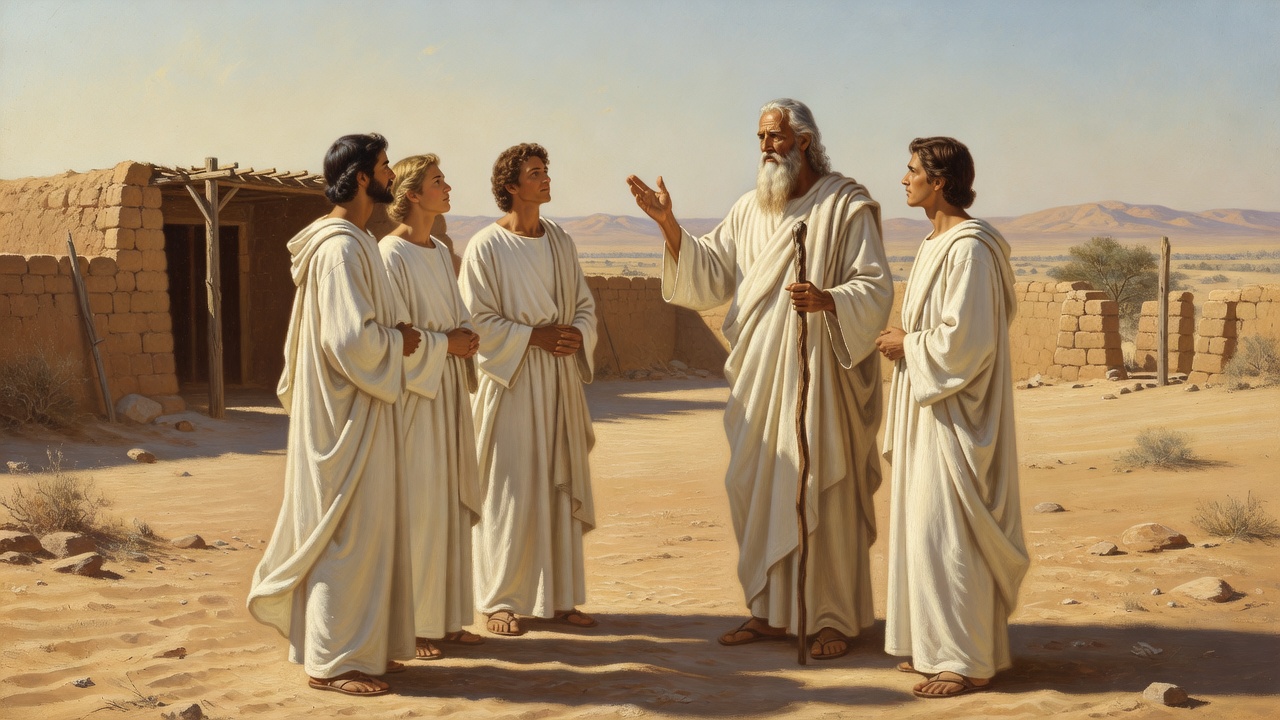
Santidade e Requisitos para o Sacerdócio
- Os sacerdotes comuns só podiam guardar luto por parentes consanguíneos imediatos — pais, filhos e irmãos solteiros —, enquanto o sumo sacerdote era estritamente proibido de se contaminar por qualquer cadáver, incluindo seus próprios pais, e não podia rasgar suas vestes em sinal de luto.Fontes: o próprio texto bíblico
- Enquanto os sacerdotes comuns eram proibidos de se casar com mulheres divorciadas ou prostitutas, o sumo sacerdote tinha uma exigência ainda mais rigorosa: só podia se casar com uma virgem do seu próprio povo.Fontes: o próprio texto bíblico
- Os descendentes de Arão com defeitos físicos ou lesões eram impedidos de apresentar ofertas queimadas no altar, mas ainda tinham permissão plena para comer das porções de alimentos santos e santíssimos.Fontes: o próprio texto bíblico
Notas escritas com auxílio de IA a partir de fontes abertas (Theographic Bible Metadata, CC BY-SA 4.0; Easton’s Bible Dictionary, domínio público) e revisadas antes de publicar.
Créditos e licença desta tradução
The Orthodox Jewish Bible
The Orthodox Jewish Bible - Tanakh and Orthodox Jewish Brit Chadasha - The Holy Bible
copyright © 2002-2011, 2021, 2024 Artists for Israel International
Language: English
Contributor: Artists for Israel International
THE ORTHODOX JEWISH TANAKH
Artists For Israel Intl Inc.
This version also appears with the Orthodox Yiddish Triglot which presents the Hebrew Yiddish script in Latin script and an English word for word translation, available at afii.org/Torah
To donate PayPal.Me
This translation is made available to you under the terms of the
Creative Commons Attribution license 4.0.
You may share and redistribute this Bible translation or extracts from it in any format, provided that:
You include the above copyright and source information.
If you make any changes to the text, you must indicate that you did so in a way that makes it clear that the original licensor is not necessarily endorsing your changes.
Pictures included with Scriptures and other documents on this site are licensed just for use with those Scriptures and documents.
For other uses, please contact the respective copyright owners.
Note that in addition to the rules above, revising and adapting God's Word involves a great responsibility to be true to God's Word. See Revelation 22:18-19.
2026-01-06
Fonte: http://ebible.org/engojb/ · eBible.org